
It’s not about collecting rare objects; it’s the very real sense of possession of a piece of the Earth’s very distant history. For many collectors, teeth in fossils are the most fascinating and inciting. Simply put, they are strong and beautiful and have a vivid connection to how animals lived and fed in ancient times. These fossil teeth for sale boast a range of crafty and beautiful motifs that appeal to everyone on both aesthetic and scientific levels.
Teeth are quite different from bones in that they fossilize densely and over long periods of time. The structure of the enamel within them helps them withstand a dozen million years of shifts in the Earth’s solid body—making them interesting and useful, especially when it comes to learning, displaying, and collecting out of a specific lens—land and sea.
Why Are Fossil Teeth the Best Place to Start?
Fossil teeth offer clarity in a way few other fossils do. The incision patterns on the shapes of the serrated edges provide insight into the hunting and feeding habits of a particular animal. Despite the lack of expert knowledge, collectors can discern the disparity of the same species and environment without effort, which makes the plunging line of study easier to bear.
Most collectors take off with teeth, and this can be mainly because of the following:
-
Enamel can withstand fractures better as compared to bone
-
Small fossil teeth for sale that can be fitted in any corner of the room.
-
Visual features help with identification
-
Specimens exist from many species and eras
This natural accessibility often sparks deeper curiosity about prehistoric life.
From Land Predators to Ocean Giants
Terrestrial dinosaur teeth and marine predator teeth reflect two entirely different ecosystems. Carnivores on land traditionally have teeth that are often curved and serrated, which is perfect for cutting meat. In contrast, predators in the sea have lickety-split teeth that grip, puncture, or crush slippery creatures. Collectors who buy fossil teeth for sale will comprehend the design of these differences among predators, who reach the peak of aggression in the conquest of their environments.
Building a collection that includes both land and sea specimens adds contrast and tells a broader story of ancient life on Earth.
What Makes a Fossil Tooth Authentic and Valuable?
Authenticity is one of the most important considerations when collecting fossil teeth. Genuine specimens show signs of mineral replacement, natural wear, and coloration that developed over millions of years underground. Polished surfaces or shiny coatings are generally easy to spot. Uniform textures, especially with repeating patterns, are good indicators of recent work on the artifact.
Collectors know which characteristics of a shark tooth are natural: the color, brightness, serrations, and context of the fossil in question. All these ensure that any specimen obtained is authentic and of scientific importance.
How Do Dinosaur Teeth Fossils for Sale Differ by Species?
With the rising popularity, many individuals crave to know what fossil teeth for sale from a range of theropod species look like. Since their extinction, each dinosaur left behind various teeth with unique properties in size, thickness, malleability, and sometimes serration. These allow the comparison of the said warm-blooded meat-eaters in terms of their occupied time and space.
The study of fossils provides insight into aspects such as predation methods, predator size, and the development and adaptation over time, making every piece purchased more valuable than simply resting in the showcase.
Building a Focused Collection With Confidence
An excellent fossil collection is thematic. Some collectors prefer to expand within a single species when comparing predators across various environments. It is useful to have a focus, as it helps avoid buying everything and makes every new acquisition more meaningful.
The most common collection themes are
-
A series of teeth of a single genus of dinosaur of different sizes.
-
Fossils were collected at a particular stratigraphic formation.
-
Terrestrial Predators vs. Marine Predators.
Fossil teeth are also a popular aspect of collecting, as there is often a surplus of fossil teeth for sale in the market.
From Megalodon to the Iconic T. Rex
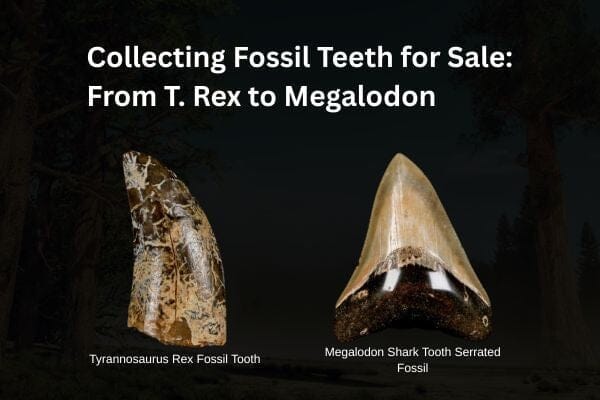
The T rex tooth, with its noticeable thickness of the enamel and defined serrations, is one of the most coveted specimens in many collections. As compared with the giant Megalodon teeth, the t rex tooth brings out the two major Earth predators, land and sea.
Collectors at this point usually look for credible sources that emphasize authenticity, the items' origin, and accurate identification. For such collectors, Fossil Age Minerals is a good choice, as they offer well-vetted products and straightforward educational assistance. If you want to enrich your assortment with fossils that have prehistoric significance, review their offer and choose the ones that most strongly represent ancient living forms.


