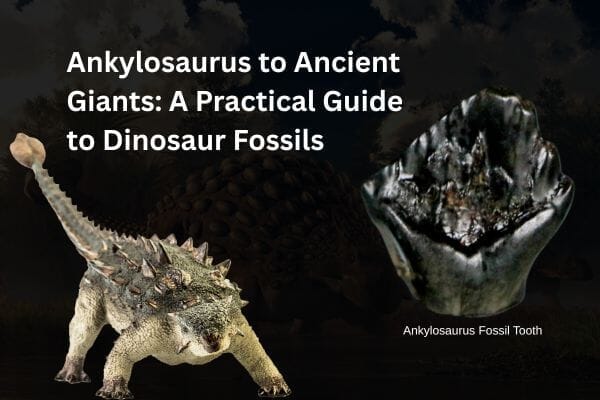
Long ago, when the present-day landscapes were not even on the horizon, the planet Earth was inhabited by astonishingly evolving organisms. Among them, Ankylosaurus was a heavily armored plant-eater built like a living tank. The enormous bony plates and the mighty tail's striking club were natural protective measures, formed through adaptations over millions of years. The remains of such species provide a straightforward understanding of the way of life during the late Cretaceous period, thereby laying the groundwork for a deeper understanding of prehistoric ecosystems.
This naturally leads to a more profound look at what makes fossils of certain species extremely valuable to researchers and collectors.
What Makes Ankylosaurus Fossils So Distinct
Armoured dinosaurs are rarely discovered because of the decay of their bodies and the process of fossilization. Whenever an armoured dinosaur's remains are found, they normally consist of:
-
Osteoderms (armour plates) that depict the defensive structure
-
Tail club fragments pointing to the combat behaviour
-
Skull parts give information about the diet and the animal's sensory ability
Since these components are not often discovered together, even a portion of a fossil can be of great importance both for science and collectors.
How Brachiosaurus Changed Our View of Prehistoric Scale
Brachiosaurus fossils had a significant impact on how long-necked dinosaurs were thought of in terms of size and movement. The animal was the tallest of all sauropods because its forelimbs were longer than its hind limbs, and its feeding territory was the upper canopy of the forest. The gigantic bones indicate where the weight went and how quick the movements of these incredibly big animals.
The discovery of fossils changed not only scientific outlook but also public interest in large fossils around the globe, feeding into the established museum and private collection networks. The next things to discuss are how the fossils come to light and how they are examined.
From Excavation to Display: How Fossils Gain Value
The fossil journey is not finished after the digging out and unearthing phase. The factors that determine the value are as follows:
-
Geological context and documented location
-
Level of restoration needed
-
Scientific verification and legal provenance
Professionally prepared preparation keeps the fossil intact and, at the same time, looks like its original self. In case the fossil's history was very clear, then its long-term value for either study or display would be stronger. This brings us to the practical considerations buyers often overlook.
What Fossils Reveal About Ancient Environments
Fossils are not just indicators of the appearance of animals that lived in the past; they are also an important tool for scientists to study these animals' habitats. The environment around a fossil at the time of its formation is often so well preserved that it provides crucial clues to researchers regarding the landscape and climate of the time.
Key details scientists study include:
-
The nature of the sediment that encased a fossil can indicate if the animal was living close to rivers, in forests, on coasts, or in open plains
-
Patterns of tooth wear that give an indication of the diet and the available types of vegetation
-
The density and structure of bones can provide information about the animal's movement, body weight, and activity level during the day.
Analyzing fossils of various species together reveals the functioning of complete ecosystems rather than just individual organisms. The broader view provided by this analysis helps clarify the impact of changes in climate, topography, and vegetation on survival and extinction processes.
Preserving the Past for the Future
Fossils are not only ancient remains but also the most recent stories of living, adapting, and extinct dinosaurs. The responsible collection of fossils keeps the stories alive, preserves them correctly, and, most of all, with respect.
If you are after genuine specimens, Fossil Age Minerals is the right place to be. They assist collectors by providing verified fossils, accompanying history, and support during the selection. Their skill turns a question into an answer. Should you consider introducing a genuine ancient item to your collection, a careful purchase will ensure that dinosaur heritage is passed on to future generations.


