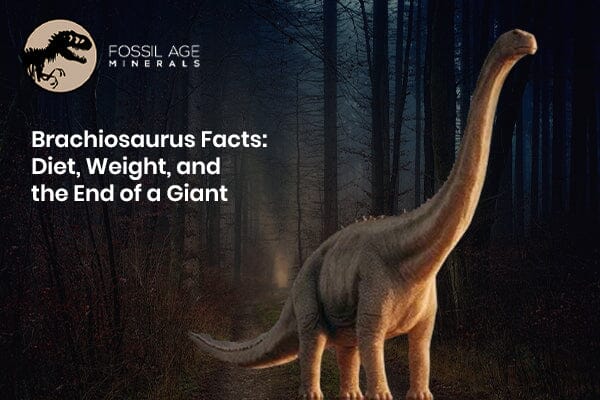
Few dinosaurs evoke the imagination like Brachiosaurus. The tallest, longest-necked, largest dinosaur, this giant herbivore is one of the most recognisable dinosaurs ever to be discovered. Unlike many long-necked dinosaurs, Brachiosaurus had longer front legs than hind legs and an upward-sloping posture, which enabled it to browse vegetation high above the ground.
Brachiosaurus lived during the Late Jurassic period, approximately 154 to 150 million years ago. With its huge body and unique adaptations, Brachiosaurus was one of the dominant herbivores in the vegetated areas in which it lived.
A Dinosaur Built for Height
The Brachiosaurus was one of the tallest of all dinosaurs. Its long neck gave it the advantage of eating food that other plant-eating dinosaurs couldn’t reach.
Things that made it unique when it came to food:
-
Long front legs lift the body
-
Long neck reaches up to high items
-
The head is small in relation to the body
-
Large bones support an enormous body
This body design gave Brachiosaurus the ability to eat from the top of trees, limiting competition between it and other plant-eaters.
Life in the Late Jurassic
Brachiosaurus lived in a very different world. The warm climate and abundant plant life supported a variety of dinosaurs, reptiles, and early mammals in a thriving ecosystem.
Its habitat was probably made of:
-
Forest
-
River floodplain
-
Fern region
-
Conifers and cycads
These would have provided abundant plant life for the huge animal to consume, and its large size may have kept it safe from many predators, especially once it reached adulthood.
Understanding the Brachiosaurus Diet
Brachiosaurus' diet consisted entirely of millions of miles of plants. Its physical traits indicate that Brachiosaurus was a specialized browser feeding mostly on leaves, shoots, and branches growing at the top of the world.
Food possibly included:
-
Conifer Tree
-
Ginkgo
-
Cycads
-
Ferns
-
And other Jurassic plants
Due to its size, a large volume of forage would have had to be eaten each day. Brachiosaurus’s long neck allowed it to reach high food without having to constantly move its huge body.
This was an advantage in ecosystems where it would have had easy access to a dependable food supply.
How Much Did Brachiosaurus Weigh?
One of the reasons Brachiosaurus has become so famous is its size. Weighing between 30 and 50 tons as an adult, though estimates differ, would have made it one of the heaviest land animals living during the Jurassic.
Its weight was carried on:
-
Thick limb bones
-
A robust skeletal structure
-
Wide feet so the pressure wouldn't damage the ground
-
Large-mouthed muscles to support the large bones in movement
While enormous in size, studies have shown that Brachiosaurus was able to travel unimpeded large distances in search of food and water.
These dimensions made Brachiosaurus one of the most formidable animals that ever walked the Earth.
Why Did Brachiosaurus Become Extinct?
Brachiosaurus went extinct before the famous asteroid strike that wiped out the dinosaurs. It lived in the Late Jurassic period, while the impact took place at the end of the Cretaceous period, long afterward.
Before it disappeared, Brachiosaurus likely faced environmental changes over time, including:
-
Climate changes
-
Vegetation changes
-
Habitat loss and habitat changes
-
Intra-ecosystem competition
Brachiosaurus went extinct well before the notorious asteroid broke the dinosaur age. Its disappearance predated the asteroid impact at the end of the Cretaceous period by millions of years because it lived in the Late Jurassic period.
Instead of disappearing abruptly, the Brachiosaurus was part of a larger flux in dinosaur diversity that took place as ecosystems evolved through geologic time.
It is an example of how even the most prosperous lineages were not immune to the changing conditions of their environment.
The Legacy of a Jurassic Giant
While the Brachiosaurus lived and died several million years ago, its bones continue to reveal details of life in the Jurassic. Its impressive body shape, specialized diet, and size make it one of the best studied and most admired dinosaurs.
With the discovery of Brachiosaurus fossils, scientists are gaining a better understanding of prehistoric ecosystems and the incredible variety of life that once roamed ancient lands.
Conclusion
Brachiosaurus is one of the most mesmerizing dinosaurs discovered. Its unique lifestyle as a plant-eating dinosaur and its gigantic size and height had a remarkable impact on its long life in the Jurassic ages. Its adapted feeding mechanisms and its importance in prehistoric ecosystems – every fossil discovery offers such insights.
Questions about how much does a brachiosaurus weighs still intrigue many dinosaur lovers, as it underlines the vast size and scale of this majestic creature. Suppose you want to learn more about authentic ancient history, share. Fossil Age Minerals provides carefully curated fossils that allow you to connect with real fossils and the amazing history of our planet. Their collection inspires explorer the real pieces of worlds long past.


