
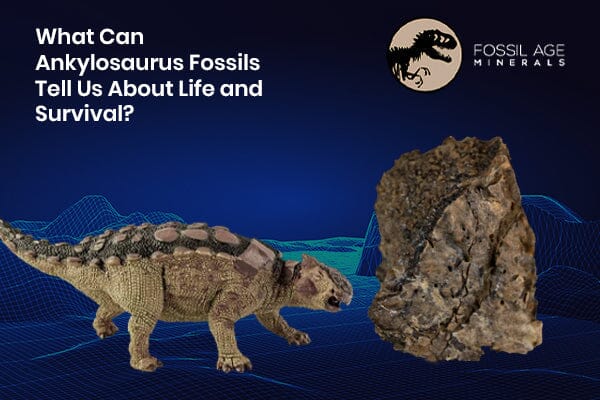
An ankylosaurus fossil offers an extremely interesting opportunity to learn about the existence of perhaps the most well-guarded species of dinosaurs, which have existed since time immemorial. This dinosaur inhabited the Earth during the Late Cretaceous period, when Ankylosaurus had already evolved into the unique form of defense, strength, and feeding abilities it possessed, enabling it to coexist with many powerful predators of its time.
Fossils not only provide insights into the appearance of extinct creatures but also offer a glimpse into their way of life. For instance, from Ankylosaurus fossils, we can learn how the dinosaur lived, from the bones and teeth found to the signs of predator attacks.
How Bones Supported an Armored Lifestyle
Ankylosaurus had a very unique body when compared to other dinosaurs. This wide body was positioned close to the ground and held up by stout, strong legs that could support a lot of weight.
Some adaptations seen through its fossilized skeleton are as follows:
-
Strong limb bones used to hold armor
-
Wide hips that provided good balance
-
Stout joints used for stability
-
A stout tail used for holding a club
This indicates that the Ankylosaurus did not need to run but needed strength. It was a steady creature that moved through its environment while eating plants, despite living in a dangerous world.
What Can Teeth Tell Us About Ankylosaurus?
As fascinating as armor can be, it is the teeth that provide further evidence about the animal’s capacity to survive, in terms of what the Ankylosaurus ate.
Ankylosaurus's tooth demonstrates how well-equipped it was for chewing plants. In contrast to the teeth of a meat-eating dinosaur, the ankylosaurus’s teeth were small and suited to cropping vegetation.
The probable diet of the Ankylosaurus may include:
-
Ferns
-
Shrubs
-
Cycads
-
Various other kinds of vegetation
Because of its small head, positioned low to the ground, the Ankylosaurus could easily reach vegetation, and because of tooth regeneration, old or worn-out teeth would never impede its ability to obtain food.
Armor Built for Survival
The most unique characteristic of Ankylosaurus was its armor. The animal had thick bone plates called osteoderms embedded in its skin, forming a protective armor that shielded much of its body.
These elements included:
-
Back armor
-
Armor skull bones
-
Defensive spikes
-
Tail club
The armor was more than a showy adaptation. Instead, it provided a protective shield, reducing the risk of injury.
For a herbivore dinosaur, Ankylosaurus followed a completely different approach compared to others. Instead of depending on speed and group behavior, it developed a body structure that would discourage predation.
Traces of Encounters With Predators
At times, fossils can reveal information about the difficulties Ankylosaurus faced during its lifetime. Some fossils indicate that the animal was at times under attack from other creatures.
This is supported by the presence of several marks left on fossil bones:
-
Healed bone breaks
-
Destruction of the body armor
-
Signs that indicate that Ankylosaurus recovered from any injury
-
Indications of a possible attack on the animal
The healing of most injuries indicates that the animal usually escaped these attacks. This is because of the unique armor that allowed it to avoid being killed.
Reconstructing Life From Fossil Evidence
From a perspective in which the skeletal remains, teeth, armor, and other injuries sustained by this dinosaur are considered together, it is possible to form a picture of Ankylosaurus.
As shown in the fossil record, Ankylosaurus had:
-
Adapted to a herbivorous existence
-
Evolved a means of defense through its physical body
-
Faced threats from predators
-
Lived in different habitats
Not as individual discoveries, but in cooperation with one another, these fossils provide a greater account of the lives of Ankylosaurus in prehistoric times.
Conclusion
The fossils of Ankylosaurus give more information about its body beyond just physical attributes. This is because the fossils show how the dinosaur ate, defended itself, and survived in an incredibly hostile environment. By studying the bones, teeth, armor, and injuries, scientists can learn about the kind of life the resilient creature led.
Of particular interest are fossil finds related to ankylosaurus t rex bite marks, where we see firsthand the evidence of an interaction between two prehistoric legends of the Late Cretaceous era.
If you want to see real fossils from prehistoric times, visit Fossil Age Minerals, the source of high-quality, reliable fossils that let you connect with Earth's history in a very tangible way.


