
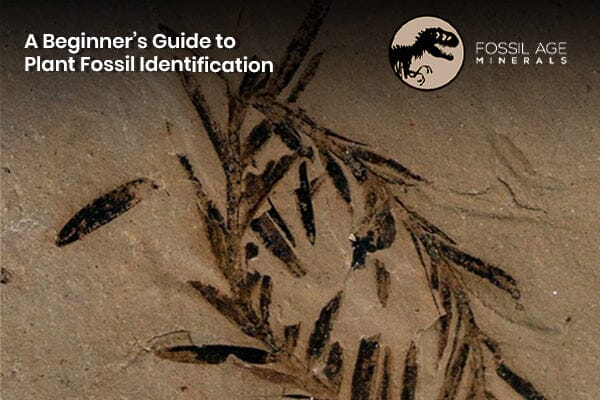
Plant fossil discoveries function as scientific tools that scientists use to reconstruct events from ancient times that extend back millions of years. All features of the stone, including its imprint, texture, and pattern, are preserved, providing proof of historical climate patterns, environmental states, and ecosystem relationships. Beginners find the process complicated because they must determine which components to focus on before they can begin working on them.
What Makes Plant Fossils Different from Others?
The preservation of plant remains differs from that of bones and shells because their delicate nature requires different methods of preservation. The material typically exists as impressions that create thin carbon layers that show plant outlines on rock surfaces. The fossils show external features of organisms but lack internal structure, which makes identification depend on their visual characteristics.
You will encounter:
-
Patterns formed in rock
-
Carbon films displaying plant forms
-
Compression fossils containing high-quality preservation
The study of form and structure is more important than the assessment of the density or hardness of substances.
Where Plant Fossils Are Commonly Found
Most plant fossils form in environments where plant material could settle gently and be buried quickly. It occurs in places that were once riverbeds, lake floors, and swampy terrains. The plant remains were preserved through the passage of time, which advanced sediment layers above them.
Shale and limestone are perfect initial materials for novices since they preserve their intricate features. The act of dividing these rocks exposes the remains of leaf and stem formations inside them.
How Do You Identify Leaf Patterns?
Leaf fossils have identifiable structures that make them easiest for researchers due to the presence of structures recognisable to the naked eye. Through a thorough examination of its growth, the plant can reveal hidden secrets.
First, observe its general shape before checking its different components. Focus on the following components during your investigation:
-
Veins (parallel, branched, or net-like)
-
General shape (oval, elongated, or lobed)
-
Edges (serrated or smooth)
An examination of the above qualities would make it easier for you to compare with plants that are already known to exist. You are now able to connect your research to existing plant categories.
Understanding Texture and Impressions
The surface texture of an object provides concealed information that helps to determine its fundamental properties. Scientists studying plant fossils must investigate beyond the visible shape of the fossil and proceed to study its complete surface.
You might notice:
-
Fine ridges or grooves
-
Differences in thickness
-
Slight variations in surface patterns
The details enable identification of the plant's actual texture, which includes soft, woody, and fibrous characteristics. The slightest marks contain important data that requires careful examination to understand.
Can Beginners Identify Fossils Without Tools?
Your work can start without advanced equipment requirements. The first step of identification requires basic observation techniques, which require extended time for complete examination of the subject.
Start by:
-
Using natural light to highlight details
-
Gently cleaning the surface
-
Observing from different angles
People can use a magnifying glass to assist their work, but it remains an optional tool. Your pattern recognition skills will develop automatically as you continue your practice.
Geological Context and Why It Matters
Fossil identification requires knowledge of the fossil's originating location. The plant identification process depends on two key factors, which include the rock type and its corresponding age.
Specific plant species become associated with particular geological time periods. The recognition of this connection allows you to improve your accuracy in determining potential outcomes.
The process of identification achieves greater accuracy when visual information is combined with geological information.
Conclusion
Learning to identify fossils requires time because people need to observe and develop their natural curiosity. The examination of fossils leads to your increasing understanding, which helps you to recognize patterns more easily through time. Your exploration of fossil plants will lead you to discover their ability to show detailed information about Earth's ancient landscapes.
Fossil Age Minerals provides authentic specimens together with educational materials that help beginners at all levels of learning. Their collection offers a way to transform basic interest into actual knowledge about ancient plant life.


