
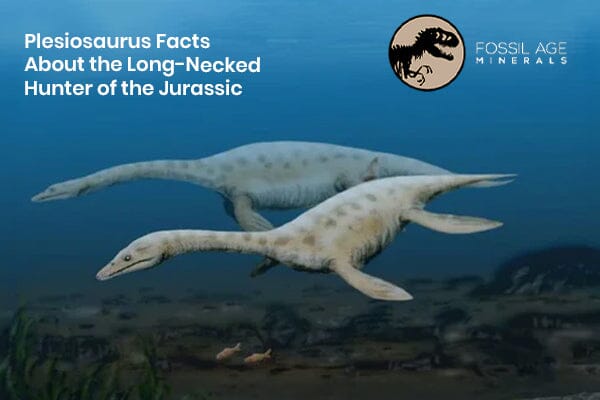
The Jurassic Period oceans contained strange creatures that served as their main predators. Plesiosaurus stood out as one of the rare aquatic predators from that time period because of its unusual appearance. The marine reptile used its long neck and wide body, together with its strong flippers, to navigate ancient waters at high speeds. Plesiosaurus facts remain interesting to scientists because the animal exhibits features that differ from those of typical hunting animals of its historical period.
As a marine reptile, the plesiosaurus is frequently misidentified as a dinosaur. Its unique body design enabled the creature to successfully hunt across extensive ancient oceanic waters.
What Made the Plesiosaurus Different From Other Marine Reptiles?
A distinctive trait of the plesiosaurus is its extraordinarily long neck. Some species had more than 30 neck vertebrae, which enabled them to swim with exceptional flexibility.
The predator used various physical attributes to maintain its survival:
-
Four strong flippers for swimming
-
Sharp teeth designed for gripping prey
-
A streamlined body for smoother movement
-
Long necks that helped reach prey quickly
The plesiosaurus used both agility and precise hunting techniques to hunt marine animals, which larger marine reptiles needed to overpower through their physical strength.
Body Structure Adaptation of Plesiosaurus
Adapted to life in water, Plesiosaurus could swim effectively in water, but it could not walk on land. Flippers were used as aids to move through water, just like wings do, as scientists suggest. These helped conserve energy during long trips.
During hunting, Plesiosaurus used its neck as one of its most important organs. This creature used its head to capture fish and squid without moving its body, since it did not chase the prey but rather waited until it was caught.
Because of such a body structure, the plesiosaurus became the most specialized sea hunter of its age.
How Did the Plesiosaurus Hunt in Jurassic Seas?
The plesiosaurus likely hunted smaller marine animals that lived in open-water environments. Fossil evidence shows that the creature consumed fish alongside squid-like animals and various soft-bodied creatures.
Researchers believe that the studied entity used the following techniques:
-
Ambushing prey with quick neck movements
-
Swimming silently beneath schools of fish
-
Using sharp teeth to trap slippery animals
-
Navigating shallow coastal waters for feeding
The ocean predator used its hunting techniques to capture prey through precise timing rather than physical strength, distinguishing it from other ocean predators of its time.
Understanding the Plesiosaurus Habitats
Plesiosaurus primarily inhabited wide, warm shallows that flooded large areas of the world during the Jurassic Period. The areas offered abundant sea life, making them ideal feeding grounds for predators.
The extinct seas acted as an endless source of food for the plesiosaurs due to the variety of food available, such as ammonites, fish, and many other reptiles. Fossils recovered from the regions that now form Europe, North America, and Australia prove the widespread existence of these animals.
The calm regions served as good training grounds for young plesiosaurs who needed to learn to swim without encountering predators.
Why Plesiosaurus Fossils Continue to Fascinate Researchers
Plesiosaurus remains provide important clues about marine life during the Jurassic Period. The skeletons of these animals contain numerous delicate bones that need to be preserved completely for scientists to understand their underwater movement and natural behavior.
Researchers study:
-
Neck structure and flexibility
-
Tooth shape and feeding patterns
-
Flipper size and swimming ability
-
Bone density, which determines buoyancy
Each fossil discovery provides new evidence about ancient ocean ecosystems and the evolutionary development of marine reptiles, which took place over millions of years.
Putting the Jurassic Sea Hunter Tale together
Plesiosaurus is among the most famous reptile species discovered for its unique physique and hunting capabilities. Prehistoric oceans created all parts of the body, including the long neck and strong fins.
Current discoveries of a plesiosaurus specimen help us understand ancient ecosystems of the Jurassic era that can be researched by scientists and collectors. Fossil Age Minerals offers fossils of prehistoric animals and information regarding ancient reptiles to meet the needs of people interested in them.


