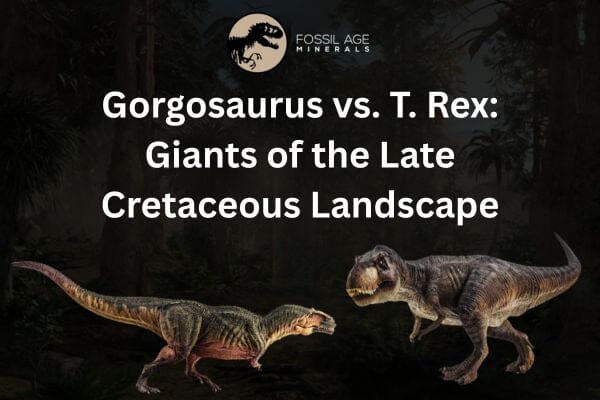
The most fearsome dinosaur, T. Rex, is mostly the one that comes to mind when the Late Cretaceous giants are imagined. However, a long time ago, Gorgosaurus roamed the deserts of what is now North America. The fossils have been studied by the scientists who have worked out their life, diets, and fights, etc. Thus, we can see through a window into an era when several tyrannosaurs coexisted in the same habitats.
The Late Cretaceous Stage: Setting the Scene
Approximately 76 to 66 million years ago, North America was split by a shallow inland sea. The western landmass, Laramidia, featured floodplains, forests, and river valleys teeming with herbivorous dinosaurs like hadrosaurs, ceratopsians, and ankylosaurs. Predators like Gorgosaurus and later T. Rex occupied the top of the food chain.
-
Lush vegetation supported large herds of prey
-
Multiple predator species coexisted but adapted differently
-
Fossil sites today reveal this rich and dynamic ecosystem
Understanding the environment helps explain why these predators evolved differently, even though they shared a common lineage.
Gorgosaurus: How Did This Fleet-Footed Hunter Survive?
Gorgosaurus was small compared to the T Rex (about 26-30 feet long and weighing up to 2 tons); it could run faster and be more nimble due to its long legs, lighter bone structure, and long, narrow skull.
-
The diet presumably included duckbilled dinosaurs and smaller herbivores.
-
Front-facing eyes provided great stereoscopic vision while chasing prey.
-
Numerous quick and precise striking adaptations were found in the fossil skeletons.
This capacity for speed and precision enabled Gorgosaurus to flourish across the wetlands, as a machine combining lethal speed and lethal precision in its strikes, rather than merely brute force.
T. Rex: The Apex Predator
In contrast, T. Rex was huge, measuring over 40 feet and having a maximum weight of 9 tons. The fossils show that it had a huge head with strong jaws and sharp teeth that could crush bones, so it was able to bring down very large animals. Its physical characteristics suggest that it used to hide and wait for its prey, depending on strength, not speed.
-
Thick, banana-shaped teeth could crush bone
-
Robust limbs supported a heavier body for overpowering large herbivores
-
Fossils indicate occasional injuries from prey, showing confrontational hunting
The combination of sheer size and bite force placed T. Rex at the top of the predator hierarchy, shaping its ecological niche for survival.
What Can Fossils Tell Us About Predator-Prey Dynamics?
The analysis of fossilized bones and teeth provides astonishing insights. The T. Rex fossil exhibits marks from its bite on herbivore bones, indicating it was a top predator. Likewise, the Gorgosaurus fossils suggest hunting habits that favor the speedy and agile.
-
Bite marks and tooth wear indicate diet characteristics
-
Fossil assemblages point out that Gorgosaurus' prey were different from adult T. Rex
-
Young tyrannosaurs probably did not compete with adults because they occupied different niches
The patterns indicate that the predators shared resources without direct confrontation; this is an example of ecological partitioning in the past.
Comparing Survival Strategies: Agility vs. Strength
The two carnivorously depicted predators are an example of the variation among tyrannosaurs in terms of their adaptations. Gorgosaurus was a very fast and precise hunter that depended on its agility to survive. On the other hand, T. rex was a powerful and strong hunter who could take on the largest of the herbivores. Both of these tactics worked well, and therefore, the animals were able to coexist in a very diverse ecosystem.
-
Gorgosaurus: smaller, faster, agile
-
T. rex: larger, stronger, bone-crushing
Nature's forces fitted each of them to draw the maximum out of the very habitat they were in. While comparing these characters, scientists not only draw the lines of predatory behavior but also the paths of the evolutionary forces that shaped them.
How Can Modern Enthusiasts Connect with These Dinosaurs?
Fossils today give enthusiasts the opportunity for the enthusiasts to see these ancient predators by themselves. Very rare remnants, like Tyrannosaurus fossils for sale, offer a chance to study anatomy, behavior, and evolution directly. Fossil Age Minerals provides authentic and well-documented fossils that help collectors, educators, and researchers connect with the life of the past in a non-invasive way and thus be responsible about it.
Having a fossil is not just having something for showcasing — it is a physical connection to the era of the Gorgosaurus and T. Rex that was the Late Cretaceous.


