
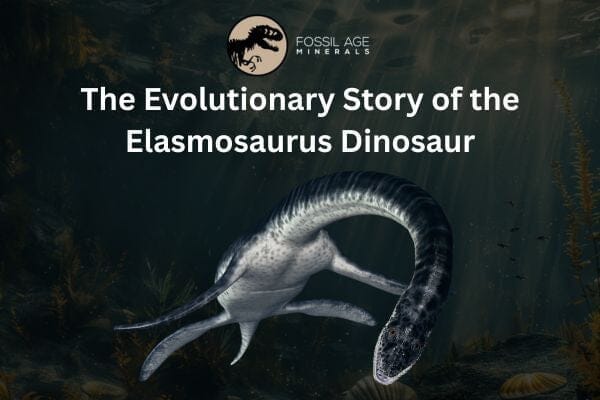
The elasmosaurus dinosaur represents one of the most remarkable evolutionary paths in prehistoric marine life. The marine reptile used its long neck, slender body, and strong flippers to live successfully in the ancient oceans. The animal lived during the same period as dinosaurs but belonged to a different group of marine reptiles that evolved independently.
Scientists study this creature's evolution to understand how prehistoric oceans formed. The research demonstrates how animals develop new skills to adapt to their changing habitats throughout their lives. The evolutionary history of this species shows how it adapted its form to survive in a marine environment with numerous competitors.
What Was the Elasmosaurus, and Where Did It Live?
This marine reptile lived during the Late Cretaceous period, when vast inland seas covered large parts of North America and other regions. The warm, shallow waters created ideal conditions, allowing marine life to thrive. The exhibit contained
-
A neck that could extend over 20 feet
-
A relatively small head for catching prey
-
Four strong flippers for smooth swimming
-
A streamlined body designed for aquatic life
The animal used its physical traits to swim quickly through water while hunting fish and squid. The animal developed specialized traits that helped it survive better in open sea environments.
Elasmosaurus Evolved in Ancient Oceans
The evolutionary story began when reptiles developed their capacity to live in aquatic environments. Over millions of years, certain species returned to marine habitats, eventually leading to the emergence of plesiosaurs. Natural selection led to the development of more effective swimming and hunting abilities, as well as ocean-survival traits.
The main evolutionary transitions included these developments:
-
Limbs transforming into flippers
-
Bodies are becoming more hydrodynamic
-
Necks lengthening to improve feeding range
-
Lungs are adapting for efficient breathing at the surface
The development process took longer because the changes required multiple generations to complete. Marine reptiles maintained their supremacy in ancient oceans by evolving traits that enabled them to thrive in underwater environments.
Why Did Elasmosaurus Develop Such a Long Neck?
The marine reptile species was most readily identified by its unusual neck length. This adaptation enabled the organism to obtain food and survive. The extended neck enabled the creature to move toward its target silently and execute its attack without shifting its entire body.
The adaptation delivered multiple benefits, which included:
-
Greater flexibility when hunting
-
Access to prey in narrow spaces
-
Reduced detection by predators or prey
-
Improved balance while swimming
The long neck became the main feature that distinguished the creature from all other marine reptiles and helped its survival through evolution.
What Can Fossils Tell Us About Their Evolution?
The scientific understanding of marine reptile evolution advances through ongoing fossil discoveries. Researchers studying Elasmosaurus discovered its unique body structure to be an intriguing aspect of their research. Fossil analysis has evolved through several stages to reveal how animals moved, what they ate, and where they lived.
Scientists use fossils to:
-
Reconstruct skeletal structure
-
Study growth patterns
-
Identify evolutionary relationships
-
Understand the prehistoric ecosystem
The study of each discovery reveals how marine reptiles evolved as they interacted with their natural environment. The research results demonstrate living organisms' ability to adapt to various environmental changes.
Why Does This Marine Reptile Still Fascinate Scientists?
The evolutionary path of this species continues to drive scientific research today. The species is a key research focus due to its distinctive physical structure and its ability to thrive in marine environments. The study of prehistoric marine reptiles enables scientists to investigate how biodiversity develops, how species go extinct, and how environmental conditions have shifted throughout Earth's history.
For collectors and enthusiasts, a genuine elasmosaurus fossil offers a meaningful connection to this prehistoric story. Fossil Age Minerals provides carefully sourced specimens that allow individuals to explore natural history through authentic fossils.
The process of discovering these pieces helps people better understand Earth's history while promoting their ongoing fascination with how life developed in ancient oceans.


