
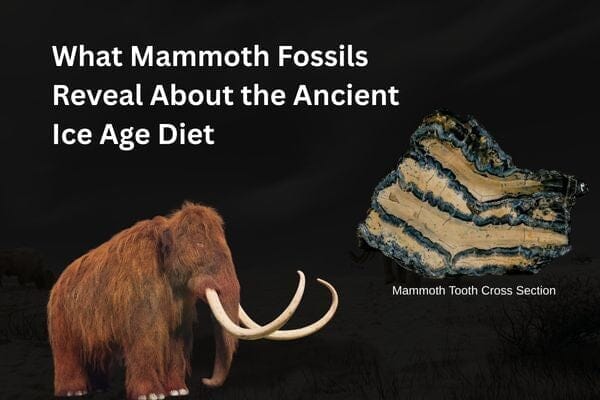
The diet of mammoths reveals compelling insights into the natural world in the Ice Age. Thousands of millennia ago, these hairy giants inhabited extremely cold environments – some of the coldest periods in the planet’s history. By providing information about mammoth fossils, researchers may examine teeth, analyze stomach contents, and even examine whole frozen bodies, which can yield more clues about diet factors that aided the flourishing of certain animals.
These findings "not only answered our questions but in reality have revealed how mammoths adapted to Arctic conditions, the kinds of ecosystems existing in the Ice Age, and how ancient food webs once gave support to these huge herbivores.
Every discovery tells a fascinating story about ancient life, interlinking ancient plant species, important climate changes, and the presence of these iconic beings as a single unit.
Frozen Evidence Encased in Ice and Earth
The most remarkable aspect of recent mammoth research has been the preservation of some specimens in permafrost areas. The frozen soil of Siberia and Alaska preserved remains for tens of thousands of years, occasionally keeping stomach contents almost intact.
Among the many scarce finds, the researchers have identified the following grasses:
-
Sedges
-
Flowering plants
-
Shrubs
-
Mosses
Such scientific results also increased the curiosity of people when they imagine a world's history, causing many collectors and school teachers to look for genuine pieces, which justifies why there is an increase of interest in genuinely scientifically acquired mammoth fossils for sale.
How Teeth Tell the Story of a Mammoth’s Diet
Mammoth teeth provide important clues about feeding behaviors. Mammoth teeth were designed for grinding purposes since the molars are flat and large, while the open roots allowed the action of continual, constant growth during a mammoth's entire life. This phenomenon mainly applies when chewing coarse grasses and woody plants.
A detailed assessment of tooth wear reveals how:
• Grazing continued through each part of the day
• Dependence on fibrous plant material was very heavy
• Seasonal diet fluctuations in the diet were caused by seasonal plant availability.
Microscopic plant remains found in the grooves of the teeth clearly indicate a diet mostly of grasses and sedges, which were constantly chewed. Grazing allows the processes of chewing and digesting the tougher plant material derived from the harsh Ice Age vegetation to take place.
Traces of Ancient Meals Inside Fossilized Remains
In some interesting finds, scientists discovered partially digested plant remains in the preserved stomachs of mammoths, providing direct evidence of what individual mammoths feasted on before their demise.
These remains included:
-
Buttercups
-
Various wildflowers
-
Steppe grasses
-
Twigs and Bark
The inclusion of such a variety shows that mammoths were not strict feeders; they were likely to feed on whatever nature provided in profusion at any certain time. Fewer dietary plants may additionally have comprised mammalian remains not listed herein, but conclusions cannot be drawn because of partial preservation or interpretation of data. Mammoths likely took advantage of nutrient-rich, sweet grasses and flowers available during late springs and summers, while in winter they relied on deteriorating forage comprising twigs and bark.
How Isotopes Reveal Long-Term Feeding Habits
Specific chemical signatures can identify the type of vegetation mammoths consumed over their lifetimes.
The studies indicate that:
-
The mammoths ate cold-climate vegetation
-
They grazed on the open grassland
-
Their presence had an impact on the feeding cycle in Ice Age ecosystems
This path opens up the possibility of understanding mammoths not just as consumers of food but as engines of dynamic landscape change.
Why Mammoth Diet Research Matters Today
Understanding the diet of mammoths can provide vital insight into ancient climate conditions and environmental changes; the feeding habits also reveal how the ecosystems are subject to cold and fluctuating temperatures.
Even more so, this information enables research into so many crucial questions, such as:
-
Vegetation adaptations to Ice Age conditions
-
The consequences of megafauna on vegetation
-
The reasons behind the eventual extinction of large herbivorous animals
From Scientific Discovery to Collector Interest
With greater knowledge of mammoths' diet comes an increased obsession with these mighty creatures among the general public, which has largely driven the booming trade in mammoth fossils, primarily for collectors, educators, and museum entities seeking genuine examples that connect them to the Ice Age.
Such excursions into ancient life took the form of timeless items, such as tusks and teeth, or less complete skeletons, in the early days. In an ethical, thoroughly documented setting, such fossils become priceless educational tools through which ancient ecosystems find a place in modern classrooms and curated collections.
Conclusion: Exploring Prehistoric Life with Fossil Age Minerals
Within the remains lies the true story of what the mammoths ate, a tale yet to be deciphered by scholarship and fancy. Ethical fossil acquisition and conscientious scientific research contribute to the collective preservation of Earth's spectacularly mysterious epochs. Fossil Age Minerals provides carefully cultivated collections of fossils for education, research, and ethical fossil seeking.
The core of these findings revolves around a mammoth bone, which maintains essential information about ancient body structures and development processes, and environmental adaptation methods.
If you’re interested in the research on Ice Age history and in seeing real, genuine animal remains from the past Ice Age ecosystems. Fossil Age Minerals, authorized and genuine, is the gateway to a prehistoric world, allowing fossil collectors, educators, and enthusiasts to experience deep time through real, usable fossil treasures.


