


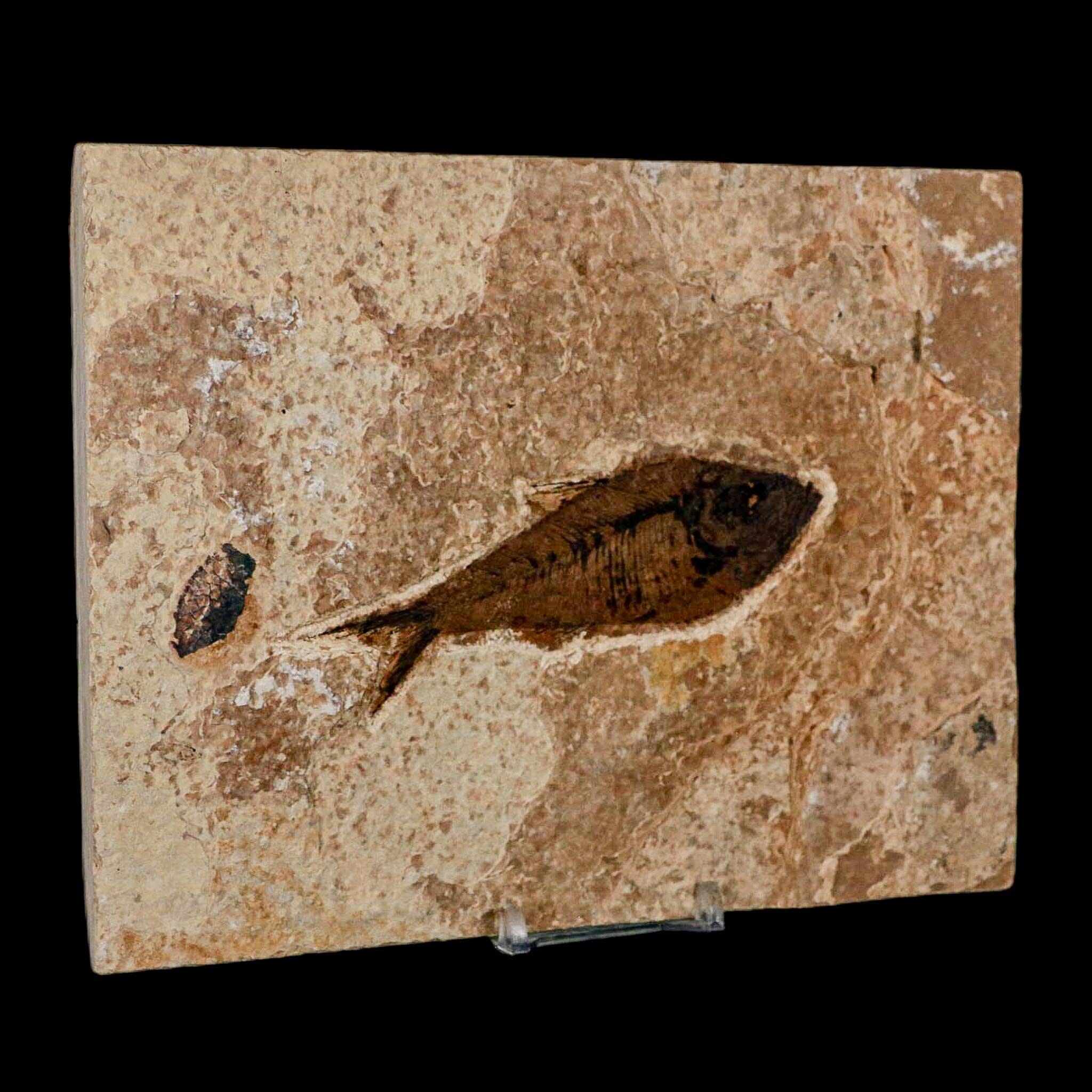




Description
Location: Kemmerer, Wyoming
Weight: 1 Pound 5.3 Ounces
Dimensions: 7 Inches Long, 5.5 Inches Wide, 0.6 Inches Thick (Plate)
Fish Dimensions: 4.2 Inches Long, 1.3 Inches Wide
Comes with a Free Stand.
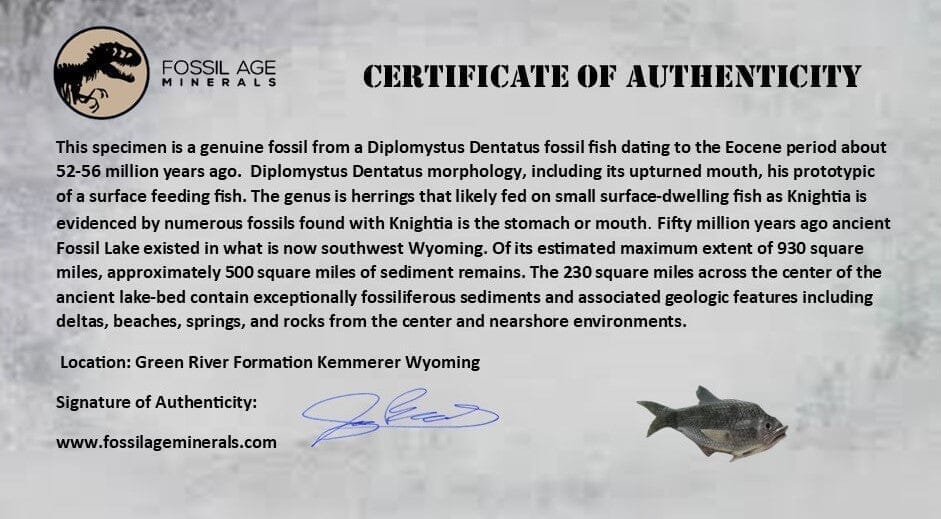
Comes with a Certificate of Authenticity.
The item pictured is the one you will receive.
56 million years old, Eocene age.
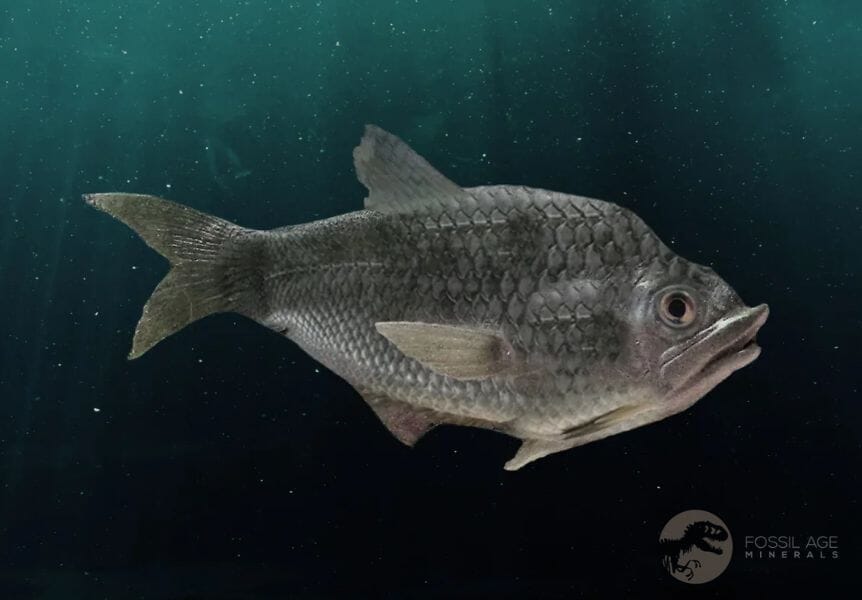
The fish Diplomystus dentatus displays a distinctive upturned mouth that reflects its feeding behavior near the water’s surface. This anatomical adaptation suggests that Diplomystus was well-suited to capturing prey swimming at or just below the surface. As a close relative of modern herrings, it likely consumed small fish and similar organisms. Fossil specimens that contain Knightia within their stomach regions provide rare, direct confirmation of this feeding strategy.
Fossil Lake, which existed around 50 million years ago, once covered a vast area of what is now southwestern Wyoming. At its maximum size, the lake spanned roughly 930 square miles, forming a large and diverse freshwater ecosystem. Although erosion has reduced the extent of preserved deposits, approximately 500 square miles of lake sediments remain today. Of these, about 230 square miles consist of central lake-bed deposits that are particularly well known for their finely laminated limestone and exceptional fossil content.
The lake’s environmental chemistry was a key factor in preserving fossils. Reduced oxygen levels and specific chemical conditions slowed decomposition and minimized scavenging, allowing organisms to be buried quickly in thin sediment layers. This process created one of the world’s most important fossil fish deposits. In addition to fish, Fossil Lake preserves a wide range of life, including plants, insects, crustaceans, amphibians, reptiles, birds, and mammals. Together, these fossils provide an extraordinarily detailed picture of a Paleogene freshwater ecosystem and the surrounding subtropical landscape.

Please be aware of the nature of fossils:
Being buried underground for millions of years under immense pressure is a tough process. Rarely does a fossil emerge intact and perfect. Most fossils require some restoration, and some are modified by humans to improve their appearance. These features are part of the fossil's natural charm and should not be seen as flaws.