
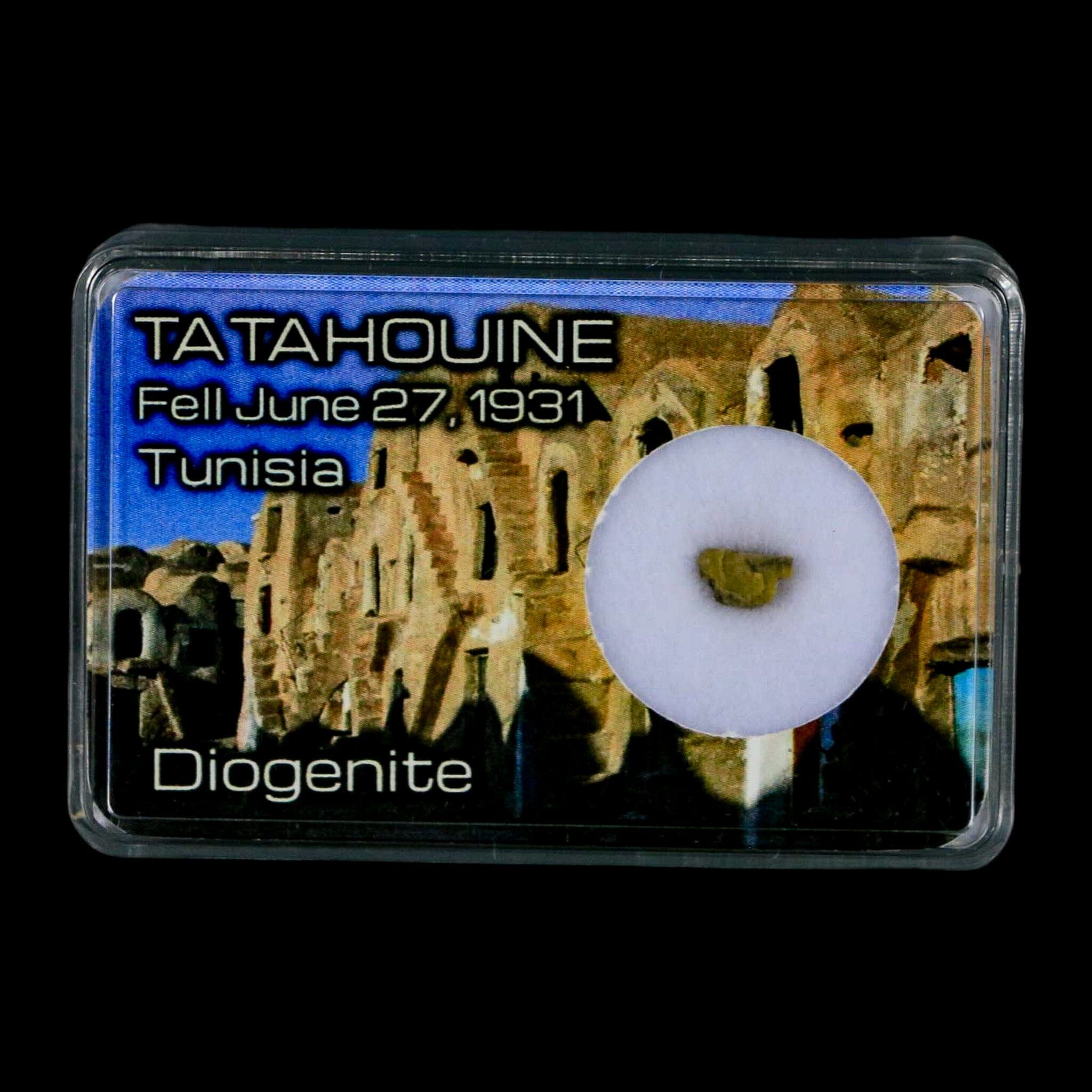


Description
Location: Tunisia
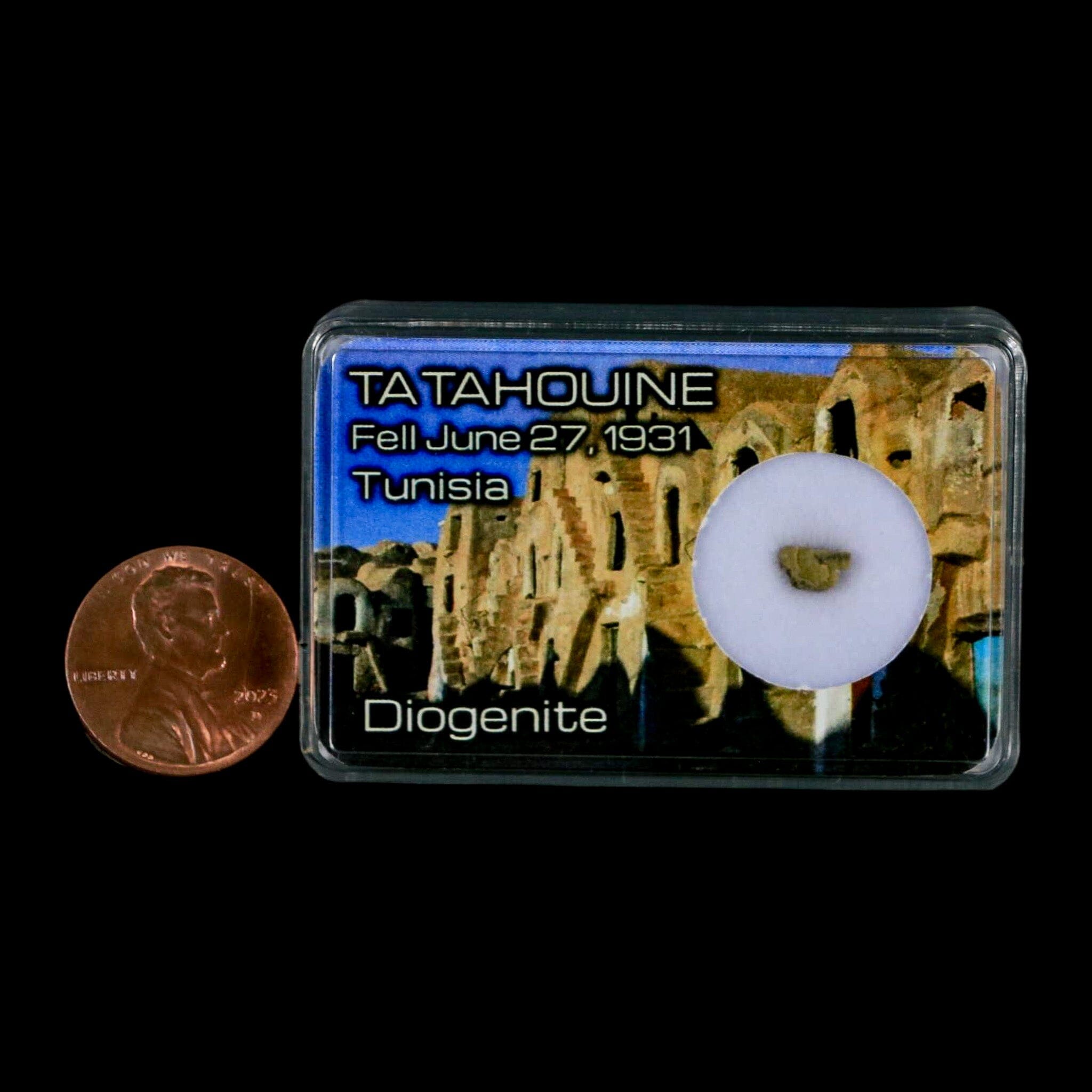
Weight: 0.4 Ounces (Display)
Dimensions: 2.3 Inches Long, 1.5 Inches Wide, 0.6 Inches Thick (Display)
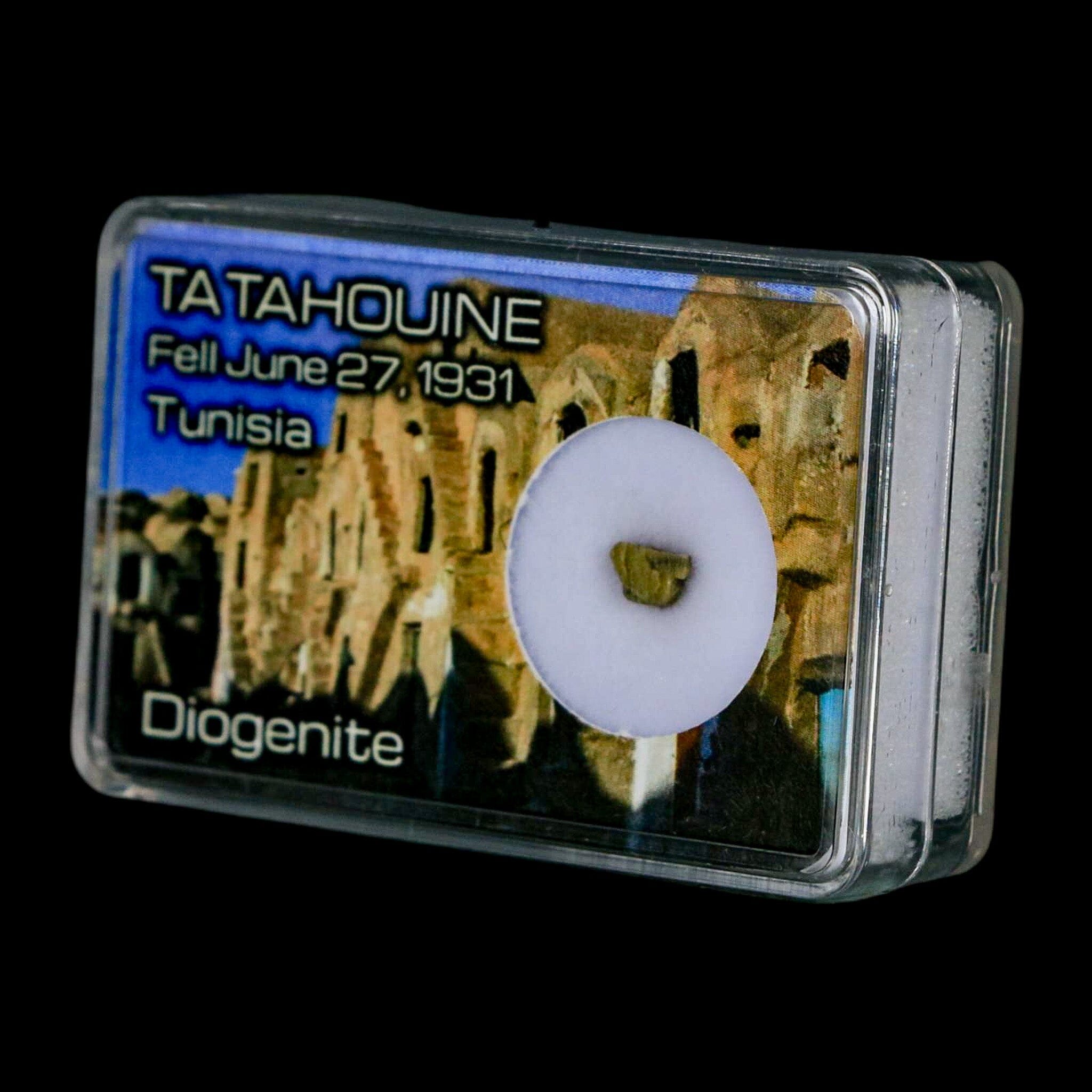
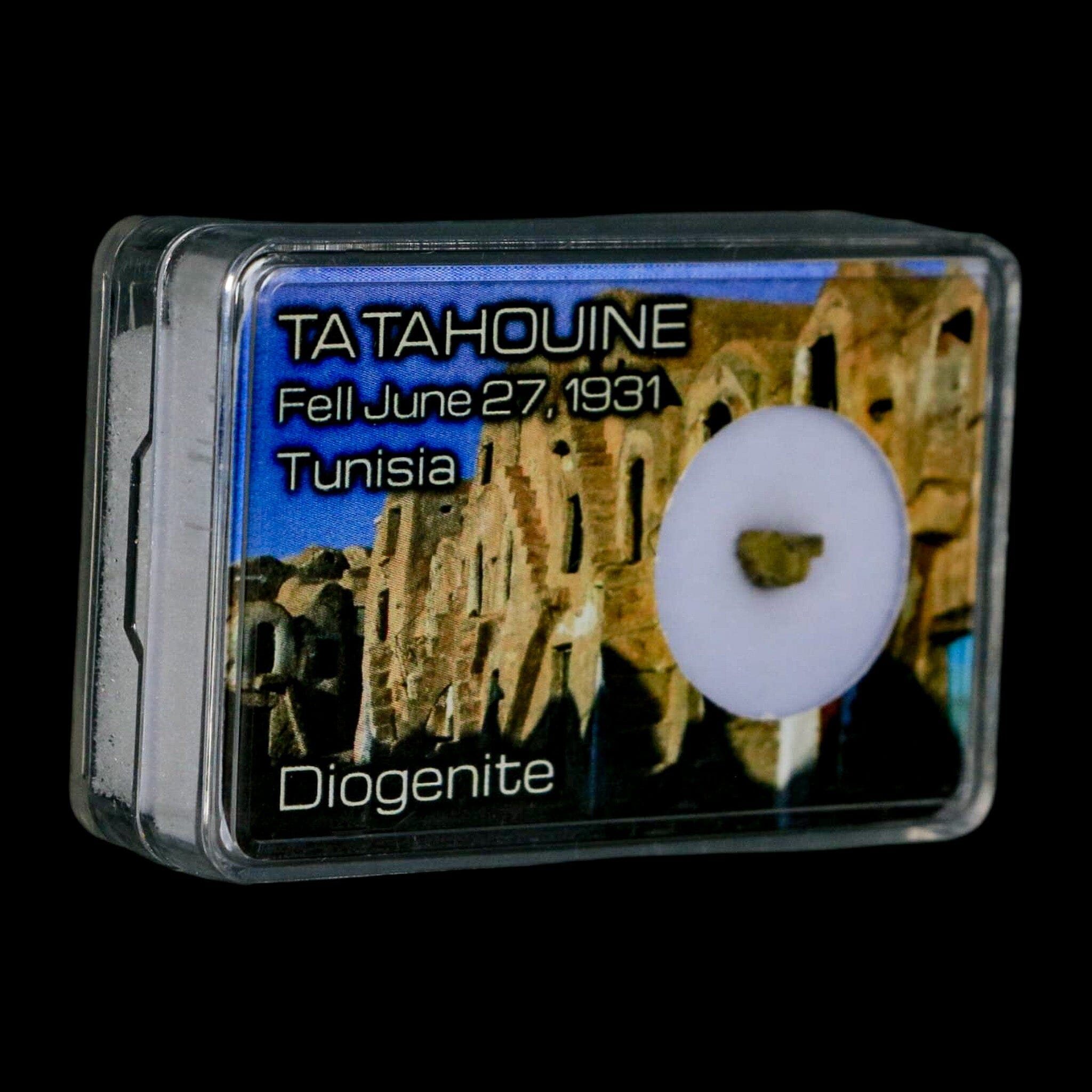
Comes with a Free Display Case.
The item pictured is the one you will receive.
The Tatahouine Diogenite represents a remarkable window into planetary evolution, belonging to the achondrite family of stony meteorites that have undergone differentiation processes mirroring those of terrestrial planets. Believed to originate from asteroid 4 Vesta, this specimen fell to Earth on June 24, 1931, carrying pristine evidence of the early solar system's formation. Dominated by orthopyroxene—an iron and magnesium-rich mineral—the meteorite displays the characteristic dark coloration and substantial density typical of its classification. Its coarse-grained texture reflects the deliberate cooling that permitted crystal development, while potential cumulate structures suggest formation through crystal accumulation within a molten environment. This distinguished specimen offers collectors and researchers an authentic connection to the cosmos, embodying millions of years of planetary history within its crystalline matrix.
The formation of diogenites is closely linked to the geological history of Vesta. It is hypothesized that these meteorites formed from differentiated basaltic magma on Vesta's surface. As Vesta cooled, heavier minerals like orthopyroxene crystallized first and settled towards the bottom of magma chambers. Over time, impacts on Vesta could have excavated these materials and ejected them into space, where they eventually fell to Earth as meteorites.
The Tatahouine Diogenite specimen illuminates the mechanisms of planetary differentiation, revealing how celestial bodies stratify according to density and composition. As a member of the HED meteorite group—alongside howardites and eucrites—this achondrite shares a common ancestry with asteroid 4 Vesta, yet maintains distinct mineralogical characteristics that distinguish it within this classification framework. The study of such specimens enables scientists to reconstruct the thermal and chemical conditions that prevailed during the early solar system's development, while simultaneously offering comparative insights into the evolutionary pathways of similar bodies throughout our cosmic neighborhood. This June 24, 1931 fall represents an invaluable research resource, bridging our understanding of planetary processes and the fundamental composition of the solar system's formative era.