
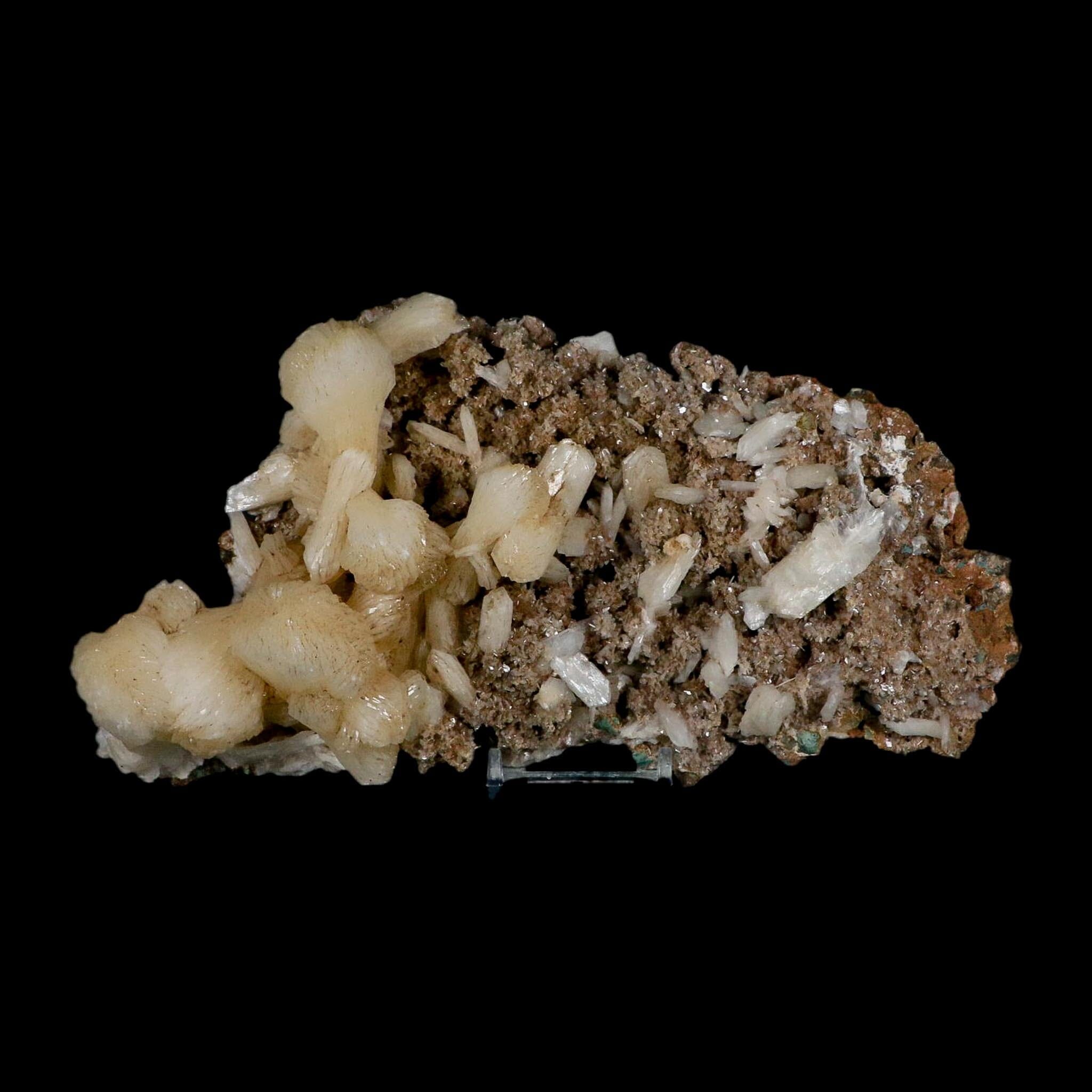
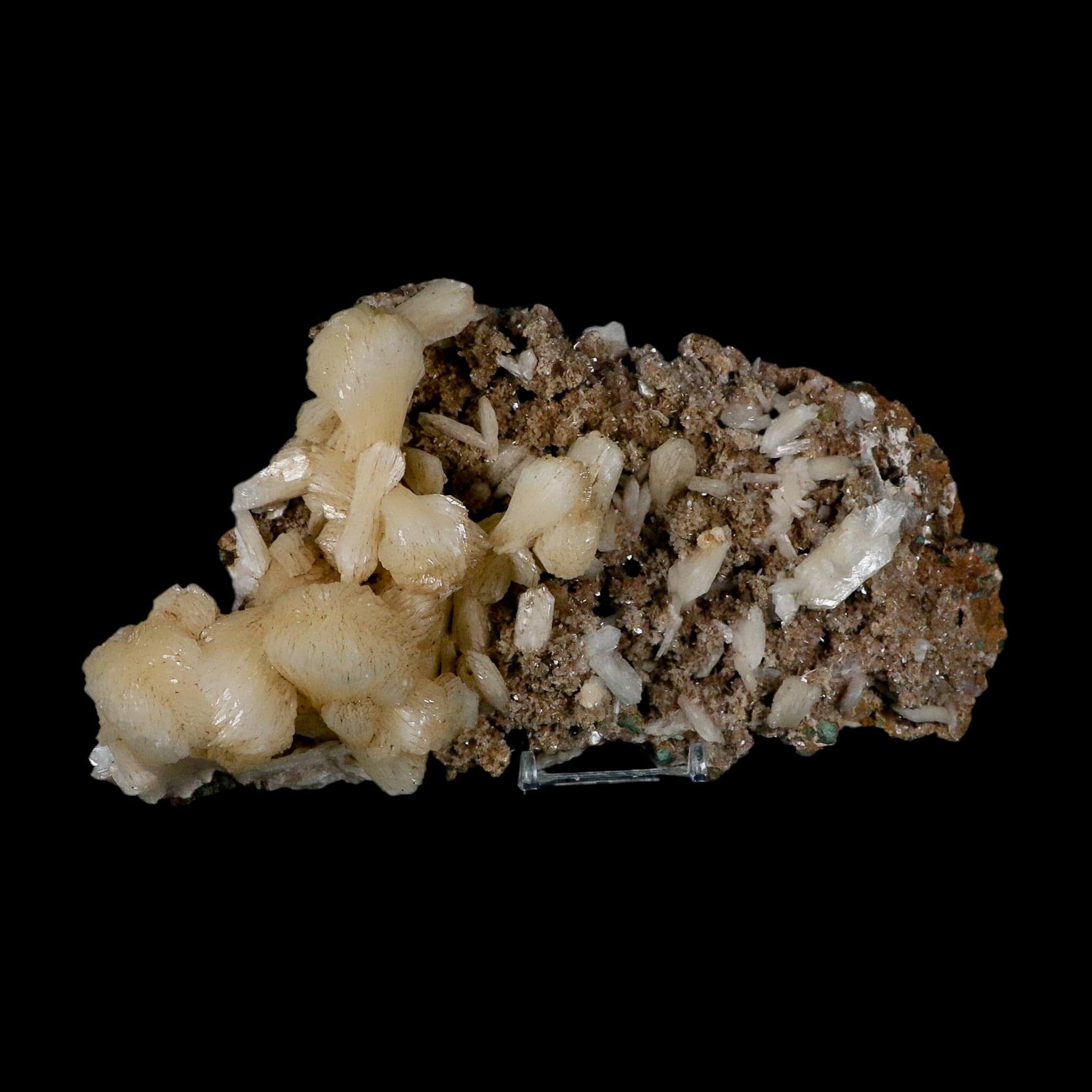
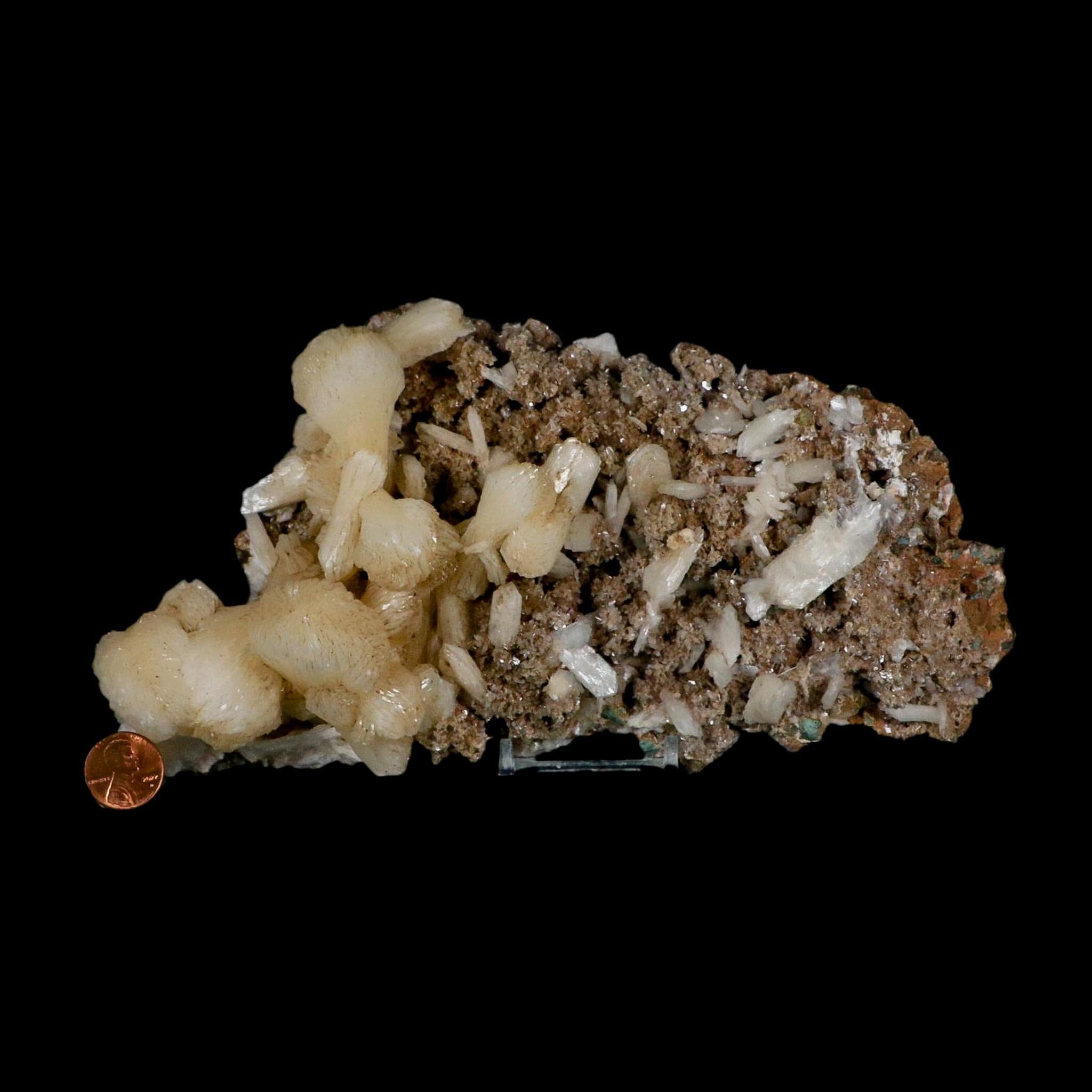
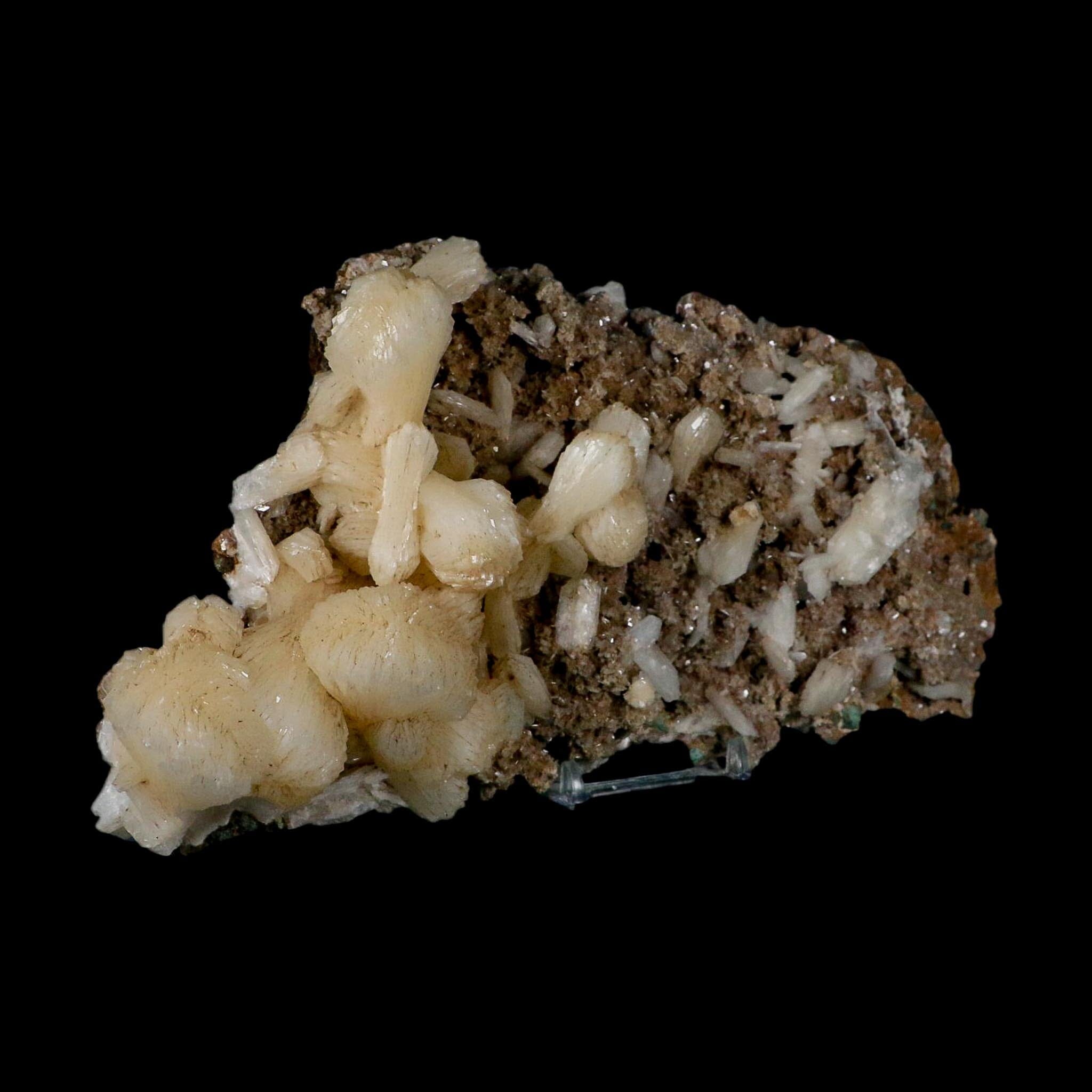
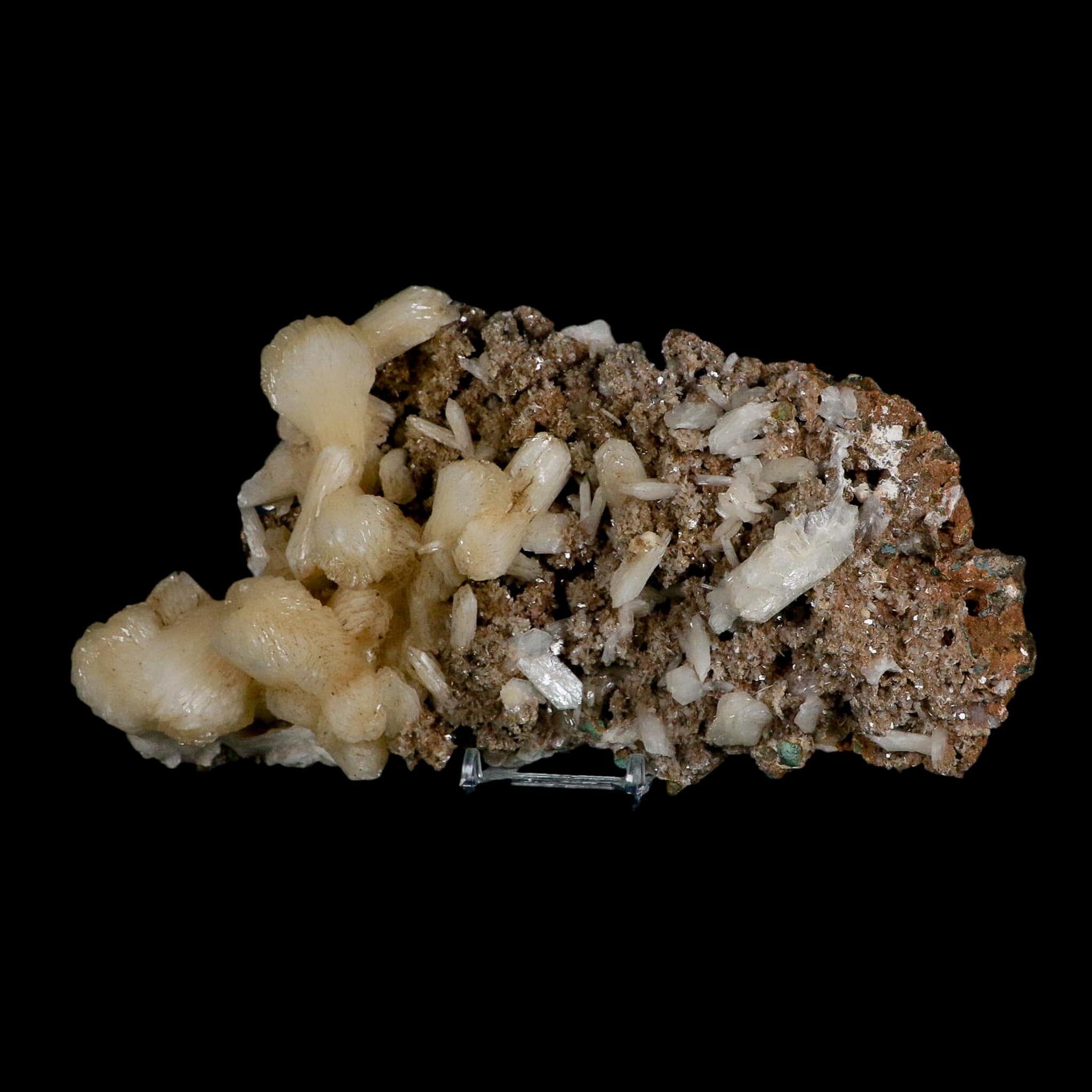
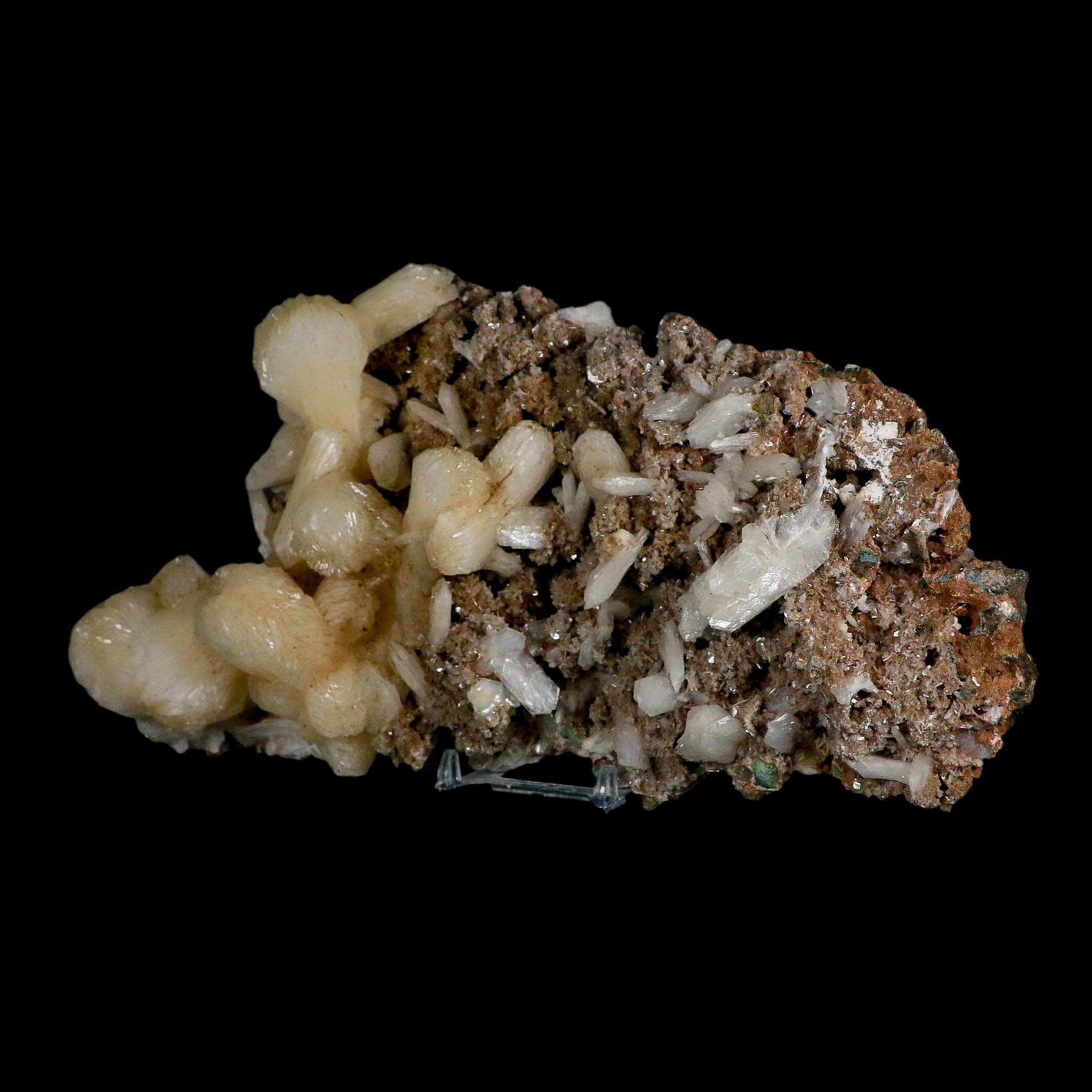
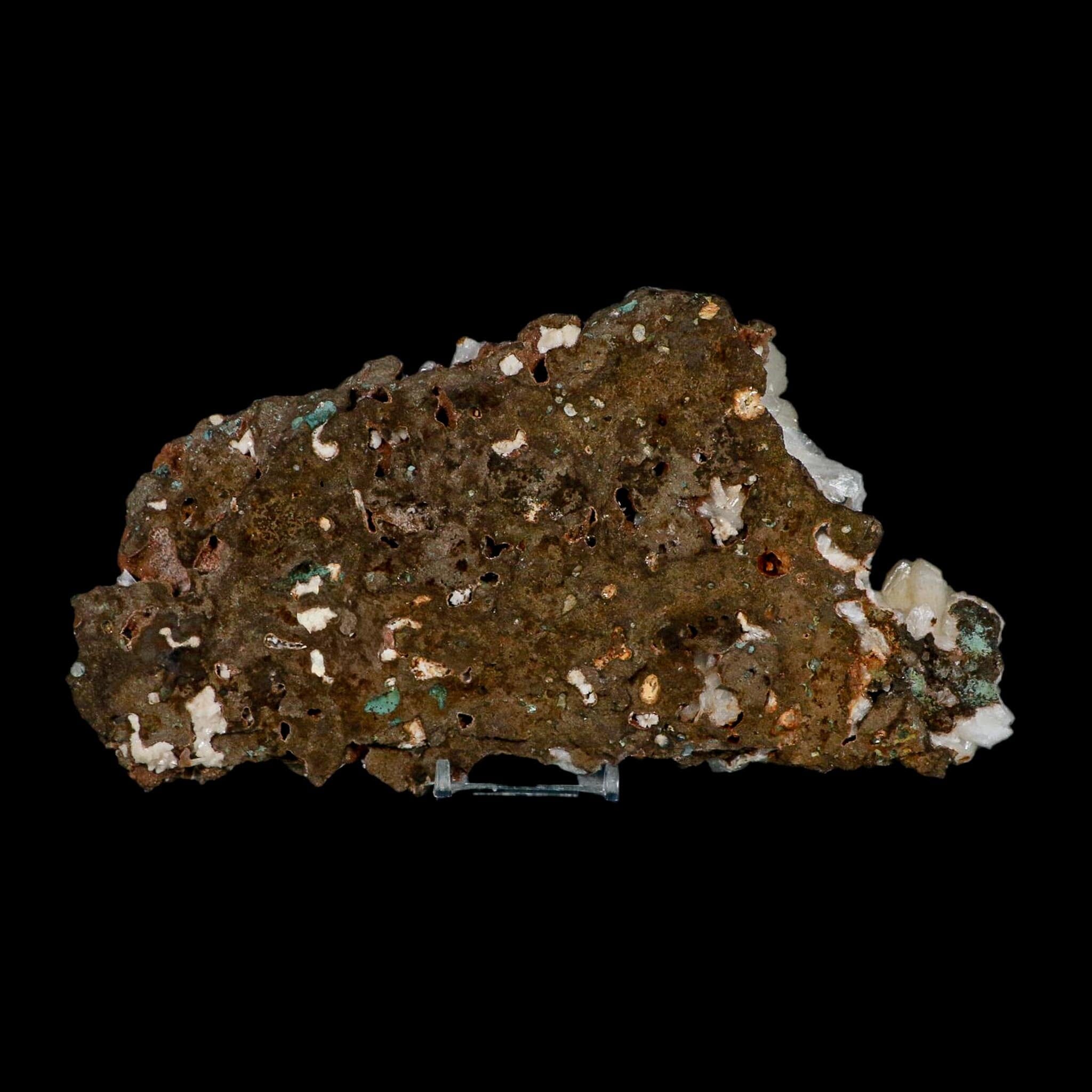


Description
Location: India
Weight: 1 Pound 11.4 Ounces
Dimensions: 8.9 Inches Long,4.6 Inches Wide, 1.8 Inches Thick
Comes with a Free Stand.
The item pictured is the one you will receive.
Stilbite from India is celebrated worldwide for its distinctive architectural crystal formations and warm, pastel coloration. While Stilbite occurs in volcanic rocks across the globe, the basalt quarries of Maharashtra—particularly around Jalgaon and Pune—produce the largest, most aesthetically refined specimens ever discovered. Indian Stilbite is most renowned for its soft peachy-salmon, orange, and cream hues, colored by trace amounts of iron inclusions suspended within the crystal lattice during formation.
Geological Formation in the Deccan Traps
Like its frequent companion Apophyllite, Indian Stilbite owes its existence to the cataclysmic volcanic eruptions that formed the Deccan Traps roughly 66 million years ago. As massive volumes of basaltic flood lavas blanketed the Indian subcontinent and began to cool, trapped gases formed extensive subterranean cavities and vesicles.
Over millennia, circulating hydrothermal groundwater rich in silica, aluminum, calcium, and sodium seeped into these open basalt pockets. As temperatures gradually dropped between, these mineralizing solutions precipitated out, allowing Stilbite crystals to grow freely along the cavity walls. Because Stilbite typically crystallizes at slightly lower temperatures than some associated minerals, it often coats earlier-forming Quartz or green Apophyllite, creating spectacular multi-mineral assemblages.
Physical Properties & Diagnostic Features
-
Crystal Habit: The most diagnostic visual feature of Stilbite is its tendency to form distinct "bowtie" or sheaf-like aggregates. These structures occur because individual tabular crystals fan out slightly from a central point as they grow, creating a constricted middle that expands into wide, fanned terminations resembling a sheaf of wheat.
-
Cleavage and Luster: The mineral's name derives from the Greek stilbein ("to glitter"), referencing the brilliant, pearly luster along its perfect cleavage planes. While the outer faces of the crystals display a glassy (vitreous) luster, broken surfaces or cleavage faces shimmer with an intense, mother-of-pearl sheen.
-
Hardness: Stilbite is a relatively soft zeolite, registering between 3.5 and 4 on the Mohs hardness scale. Because of its low hardness and perfect cleavage in one direction, it is delicate and can be easily scratched or cleaved by harder minerals or careless handling.
Collector Value & Care
High-grade Indian Stilbite is highly sought after by collectors for its architectural beauty, soft pastel coloration, and its frequent appearance on contrasting matrices of dark basalt, icy-clear Apophyllite, or sparkling micro-crystalline Quartz. Because Stilbite is a hydrous mineral containing abundant water molecules trapped within its open zeolite channels, specimens should be protected from harsh cleaning chemicals, acidic solutions, and direct exposure to high heat, which can cause the crystals to dehydrate, crack, or lose their pearly luster.