


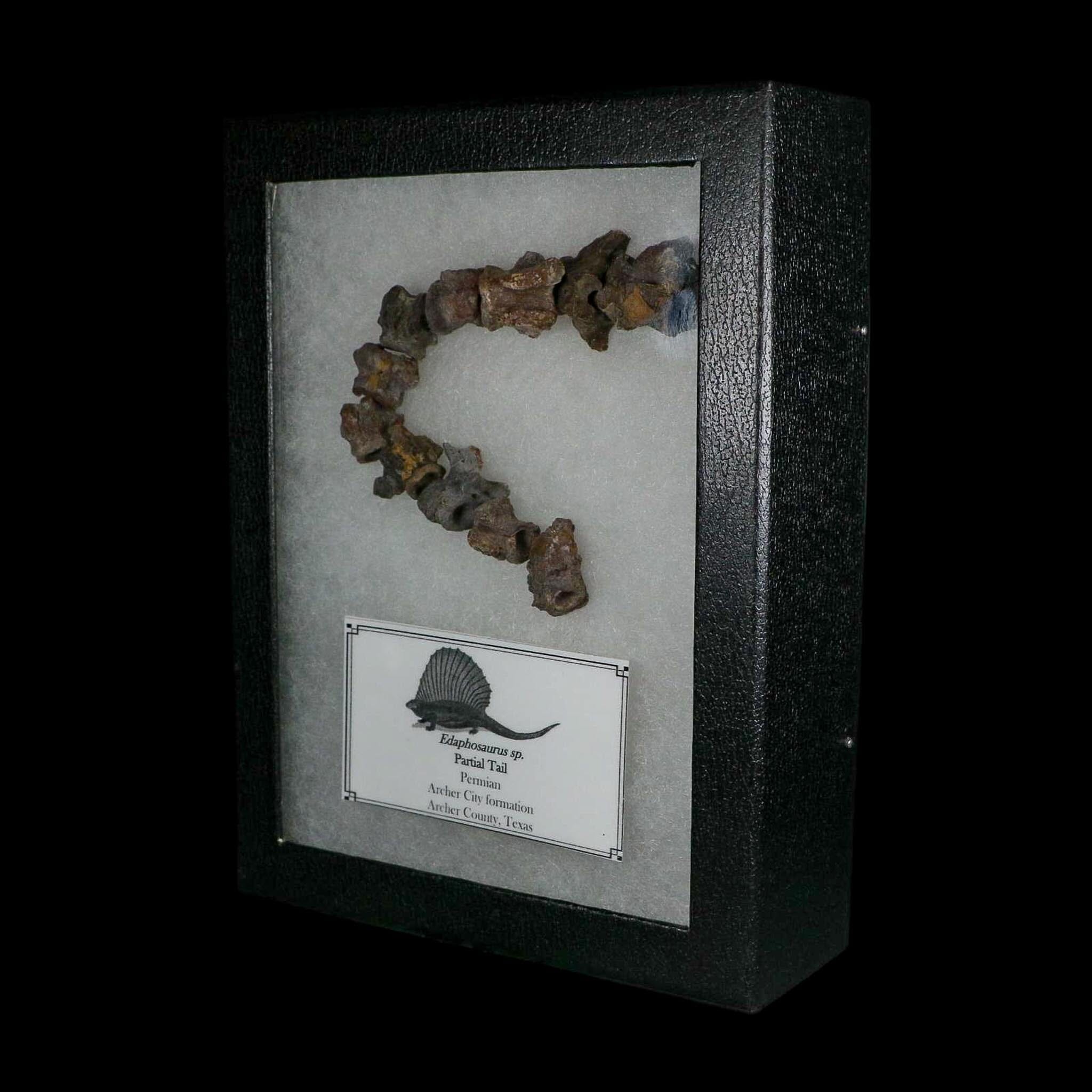


Description
Location: Archer City Formation, Archer County, Texas
Weight: 15 Ounces
Dimensions: 8.1 Inches Long, 6.2 Inches Wide, 2.2 Inches Thick (With Riker Display)
Tail Vertebrae Dimensions: 7 Inches Long
Comes with a Free Ricker Display.
The item pictured is the one you will receive.
Edaphosaurus is a genus of extinct, herbivorous synapsids that inhabited North America and Europe during the Late Carboniferous and Early Permian periods, approximately 303.4 to 272.5 million years ago. First described by the American paleontologist Edward Drinker Cope in 1882, the name is derived from the Greek edaphos ("pavement") and sauros ("lizard"), referring to the dense clusters of crushing teeth found on the palate and lower jaws. These specialized dental plates enabled Edaphosaurus to process tough vegetation, making it one of the earliest known large herbivorous amniote tetrapods.
The most distinctive anatomical feature of Edaphosaurus is the large, sail-like structure extending from its dorsal vertebrae. Unlike the sail of the contemporary apex predator Dimetrodon, which featured smooth, tapering spines, the neural spines of Edaphosaurus were equipped with numerous lateral crossbars, giving the sail a unique, comb-like appearance. Paleontologists have proposed various functions for this structure, including thermoregulation, display for mate selection, or species recognition. Fossils of this genus have been recovered primarily from the Texas Red Beds, with additional specimens identified in New Mexico, Oklahoma, West Virginia, Ohio, and eastern Germany. These findings provide critical evidence for the diversification of terrestrial vertebrates during the Paleozoic Era.
