
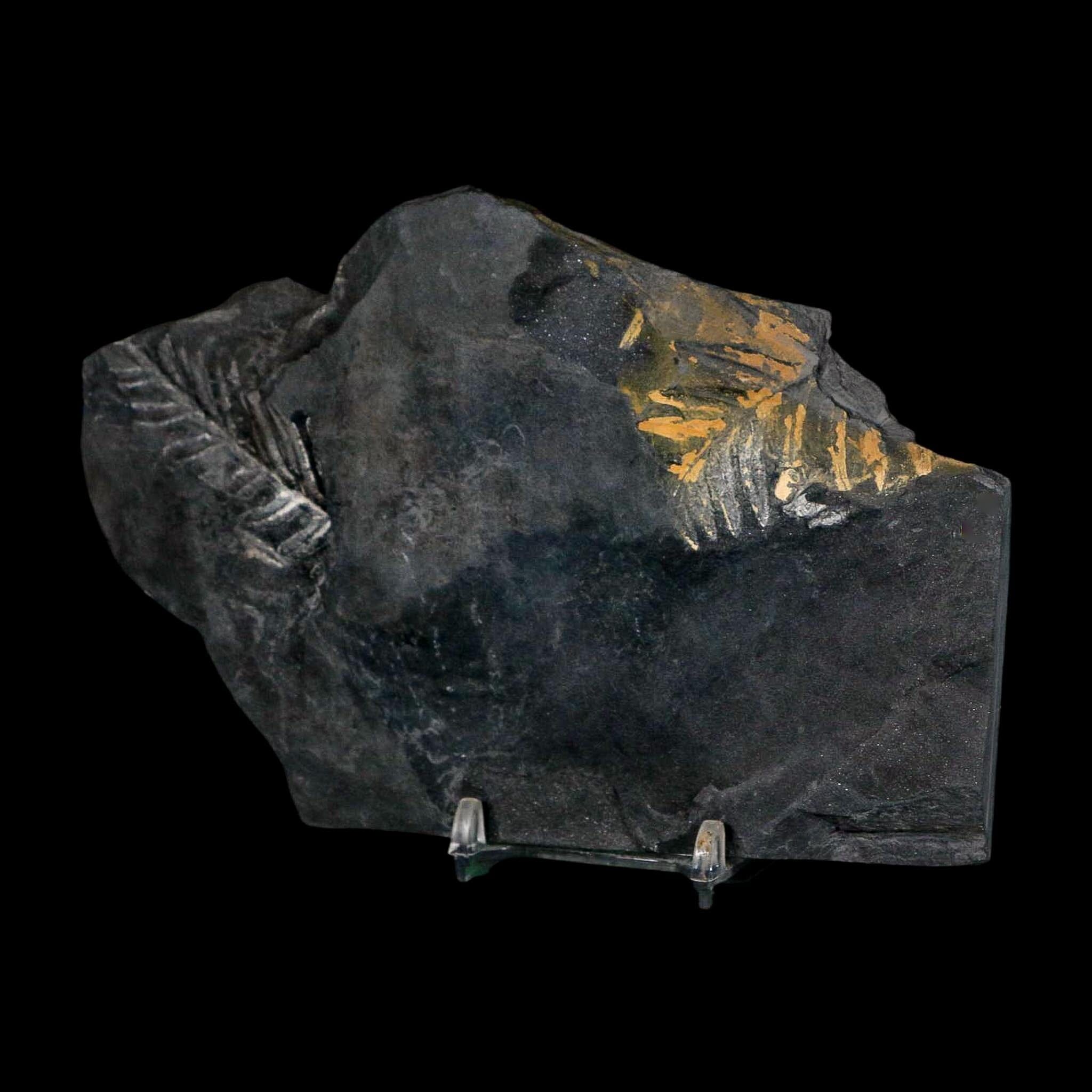
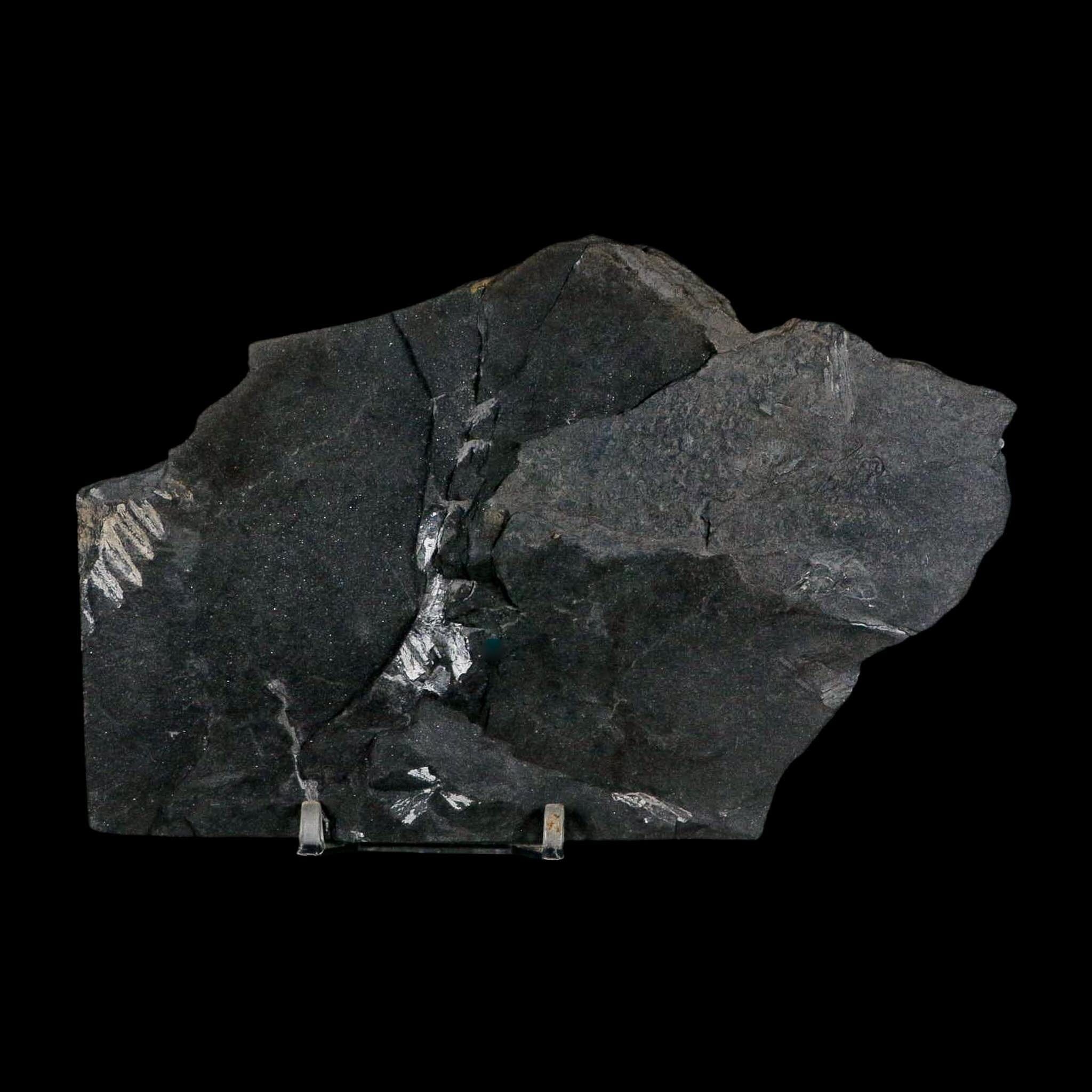


Description
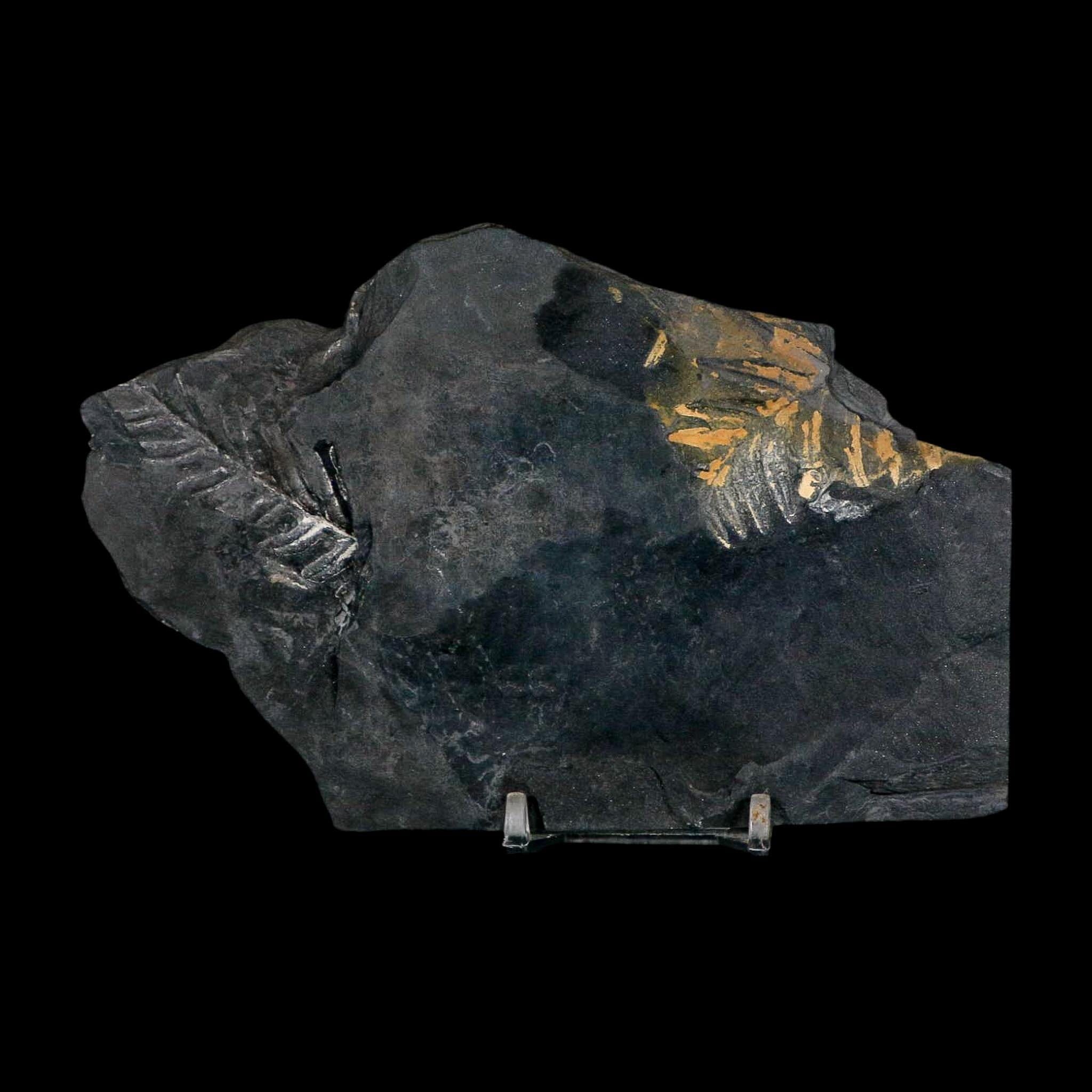
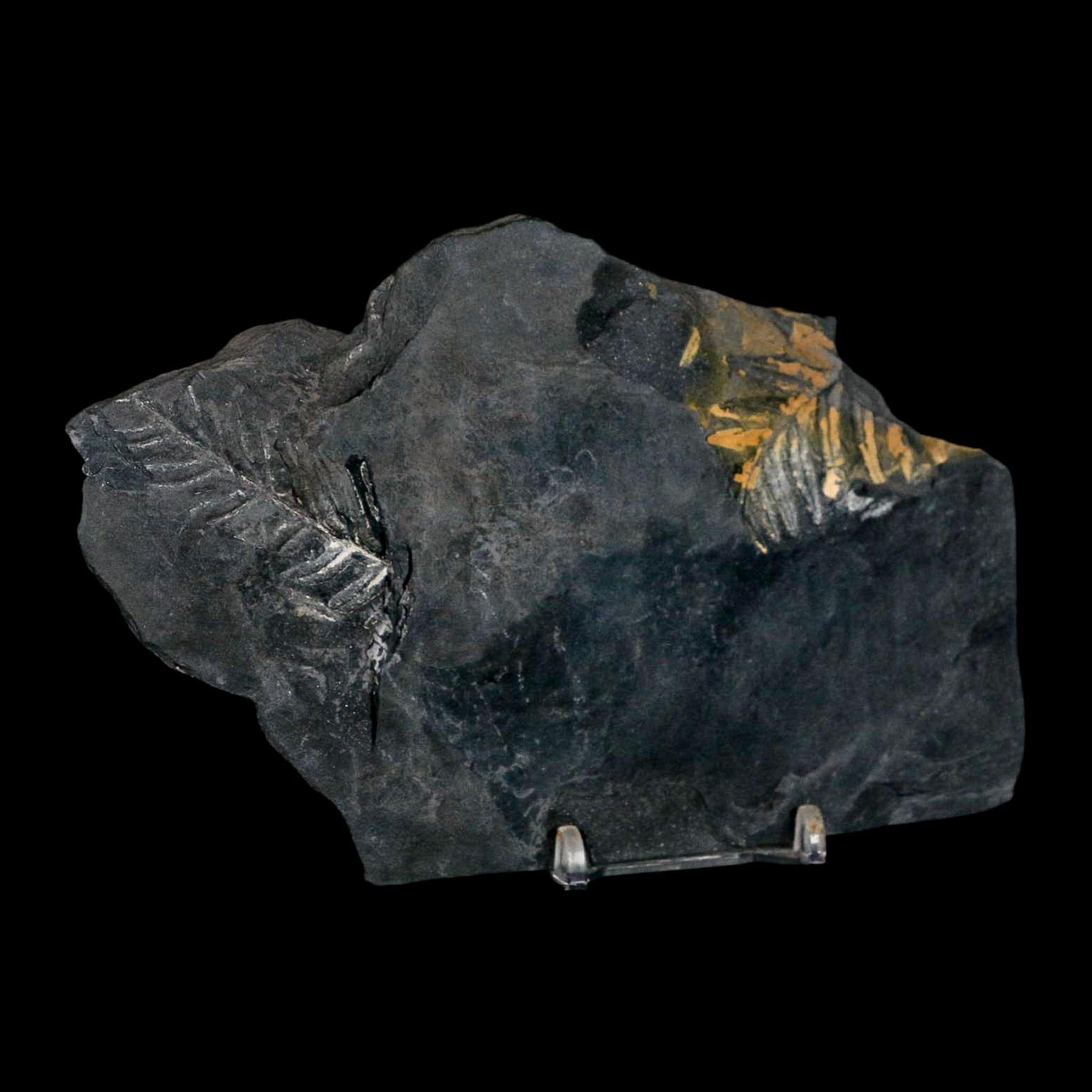
Location: Llewellyn Formation, St Clair, Pennsylvania
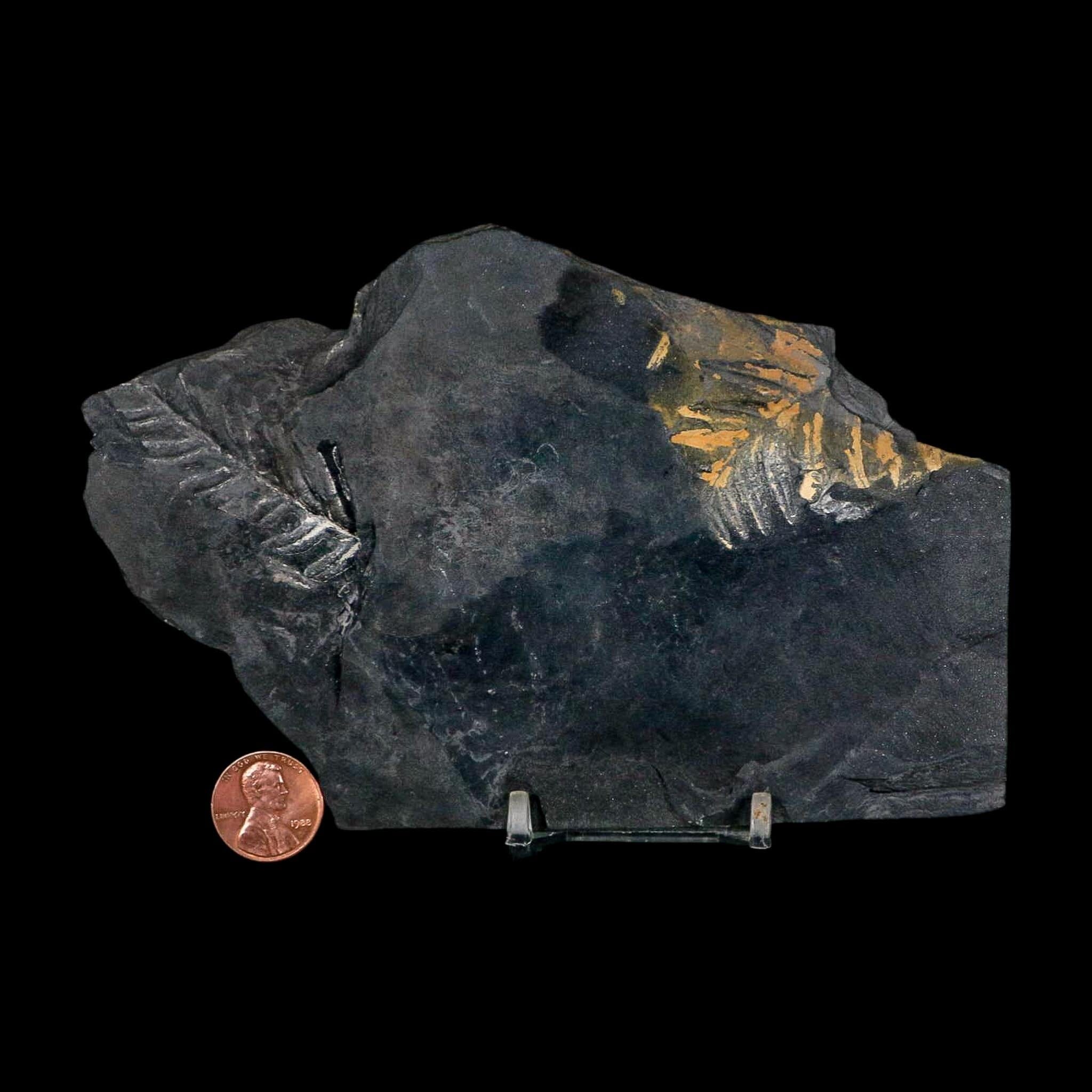
Weight: 6.6 Ounces
Dimensions: 6 Inches Long, 4 Inches Wide, 0.6 Inches Thick (Plate)
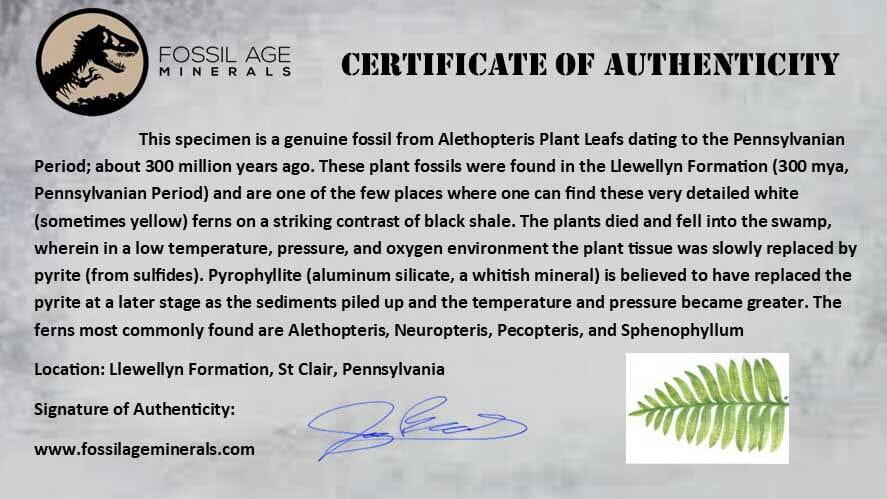
Comes with a Certificate of Authenticity.
Comes with a Free Stand.
The item pictured is the one you will receive.
Pennsylvanian Age, 300 million years old.
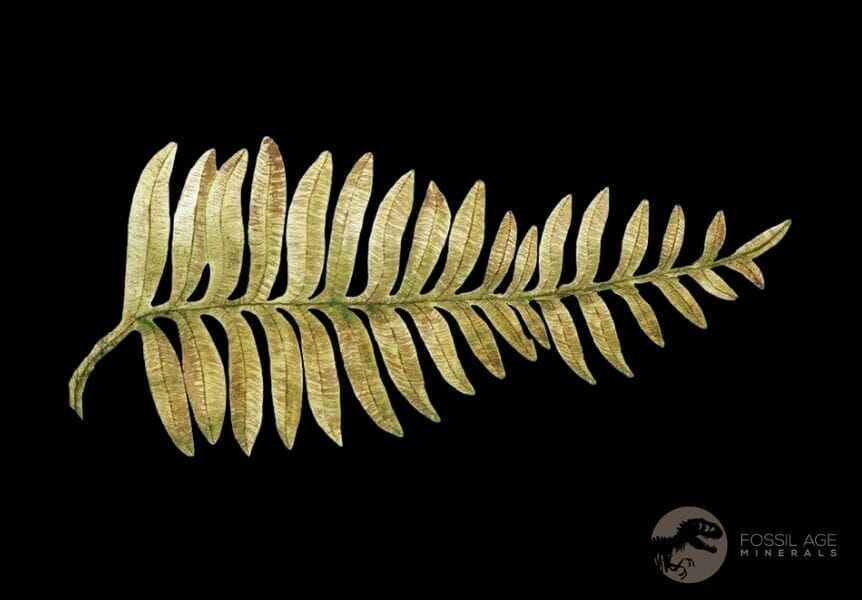
Alethopteris Sp Fern Fossil
The fossil plants of the Llewellyn Formation represent some of the most visually striking examples of Carboniferous vegetation ever discovered. Dating to the Pennsylvanian Period, approximately 300 million years ago, these fossils preserve delicate fern and seed-fern impressions in bright white or yellow tones set dramatically against dark black shale. This contrast is the result of a complex fossilization process that began when ancient swamp plants died and settled into oxygen-poor wetlands, where decay slowed, and mineral replacement could occur.
During burial, sulfide-rich conditions allowed pyrite to gradually replace the original plant tissues, preserving fine botanical details such as leaf veins and frond structures. As sediment layers thickened and pressure increased over millions of years, pyrophyllite — a pale aluminum silicate mineral — likely replaced the earlier pyrite, producing the light-colored fossil patterns seen today. Common fossil plants found in these deposits include Alethopteris, Neuropteris, Pecopteris, and Sphenophyllum, species that once formed dense Carboniferous coal-swamp ecosystems.
Fossil plants from this era provide crucial evidence of Earth’s prehistoric climate and environments. During the Carboniferous, extensive swamp forests dominated many regions, generating organic deposits that would eventually become coal seams. As global climates shifted toward cooler, drier conditions near the end of the period, many giant club mosses and horsetails declined, marking a major transition in plant evolution. The Llewellyn Formation captures this lost world in remarkable detail, making it an important site for both paleontologists and fossil collectors interested in ancient plant life.
