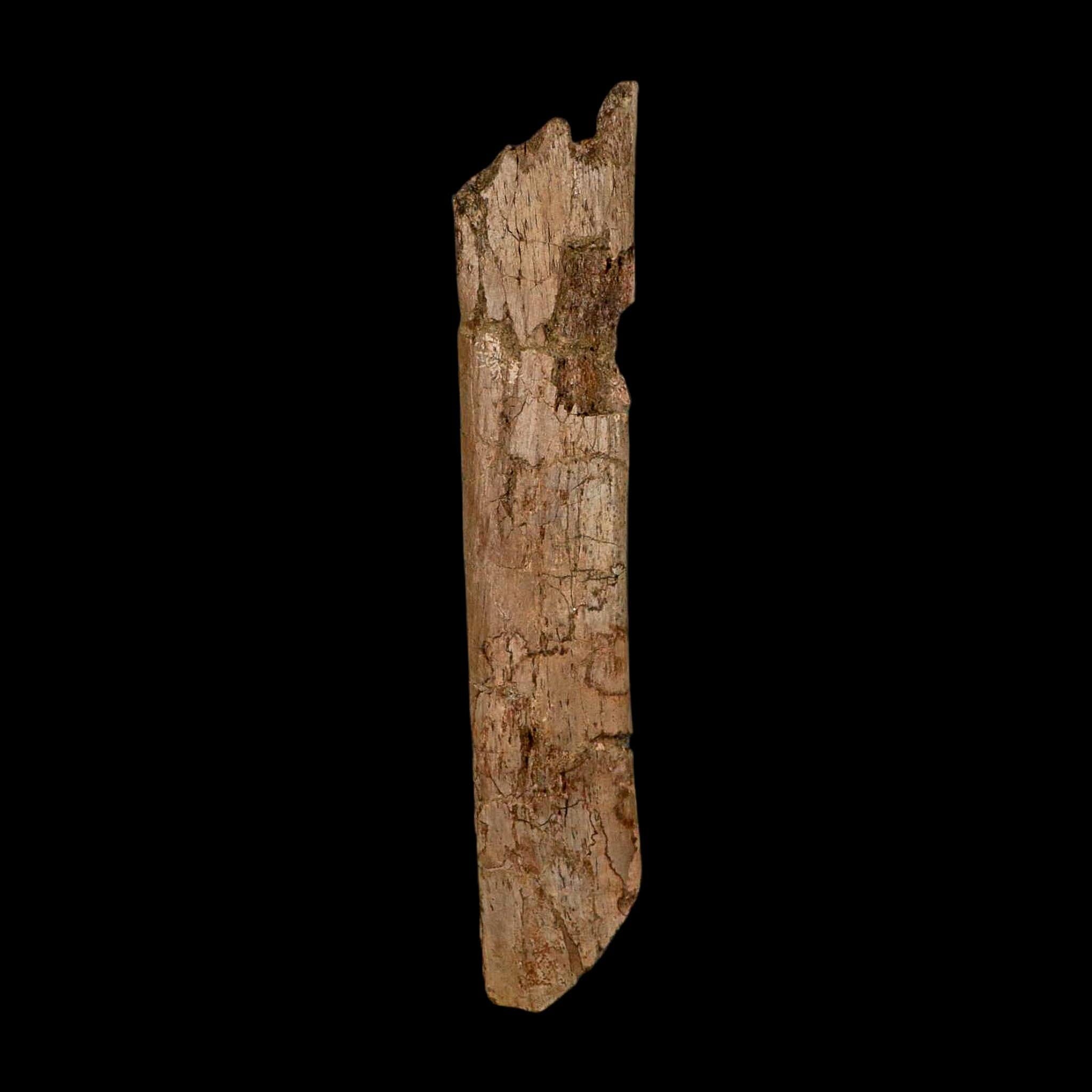
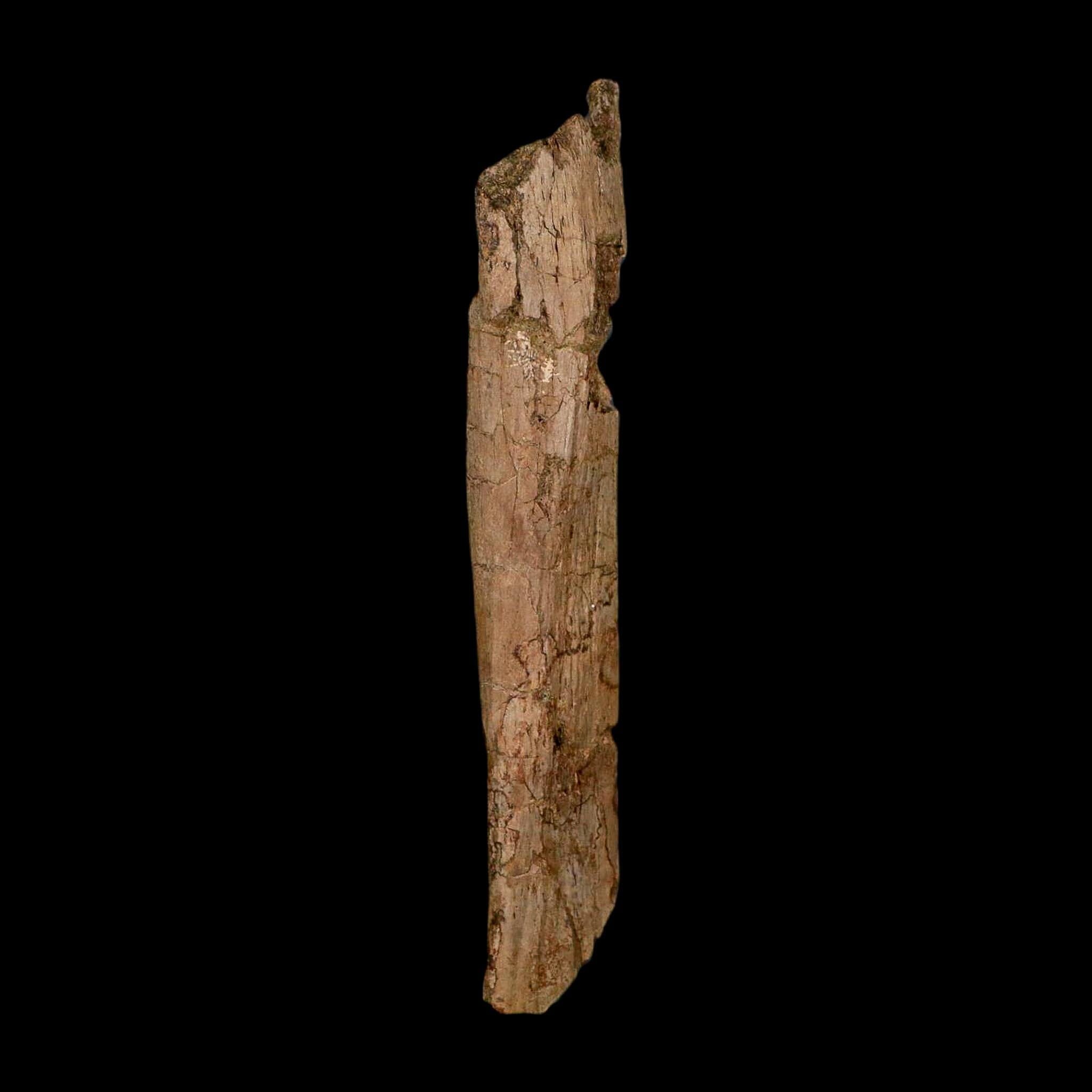
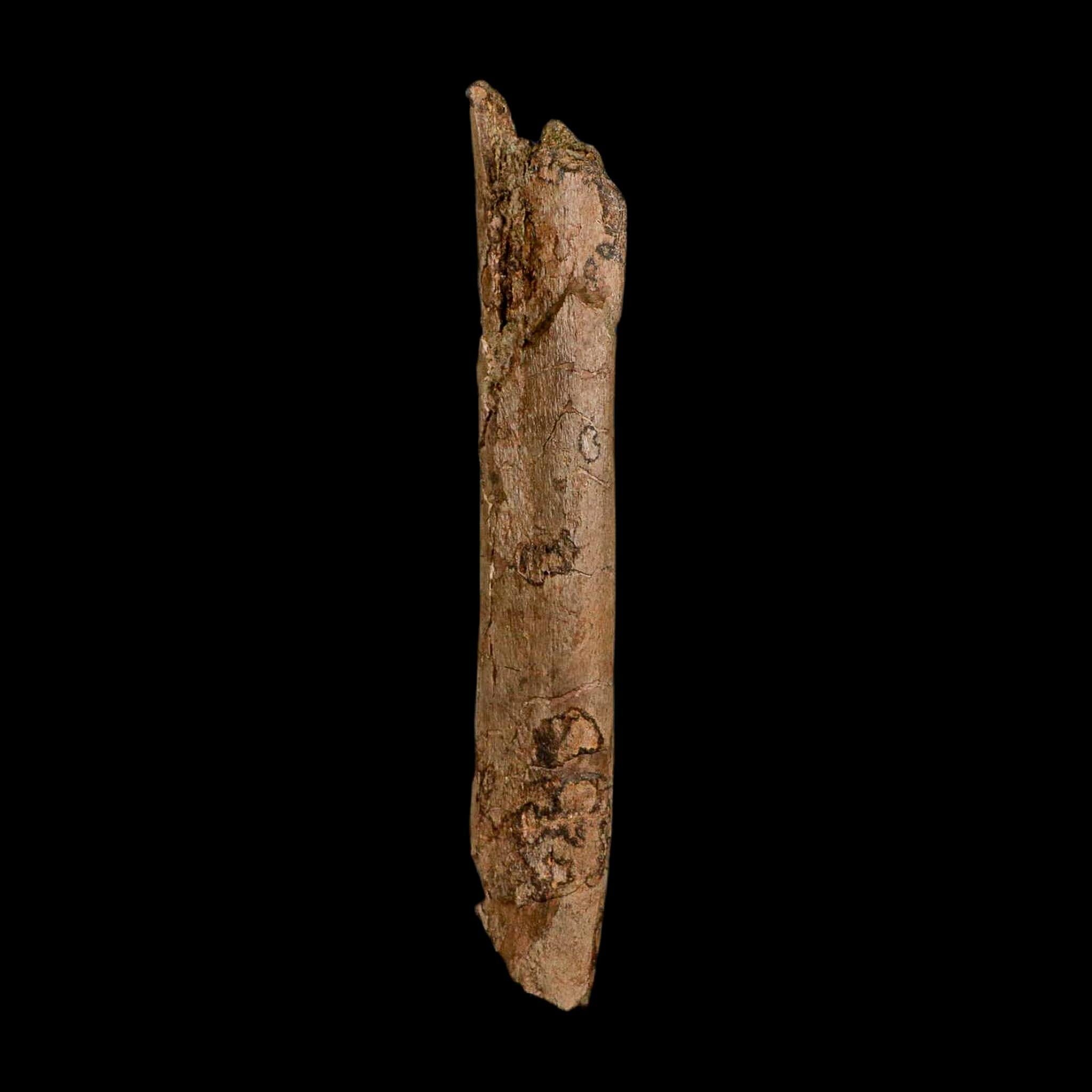
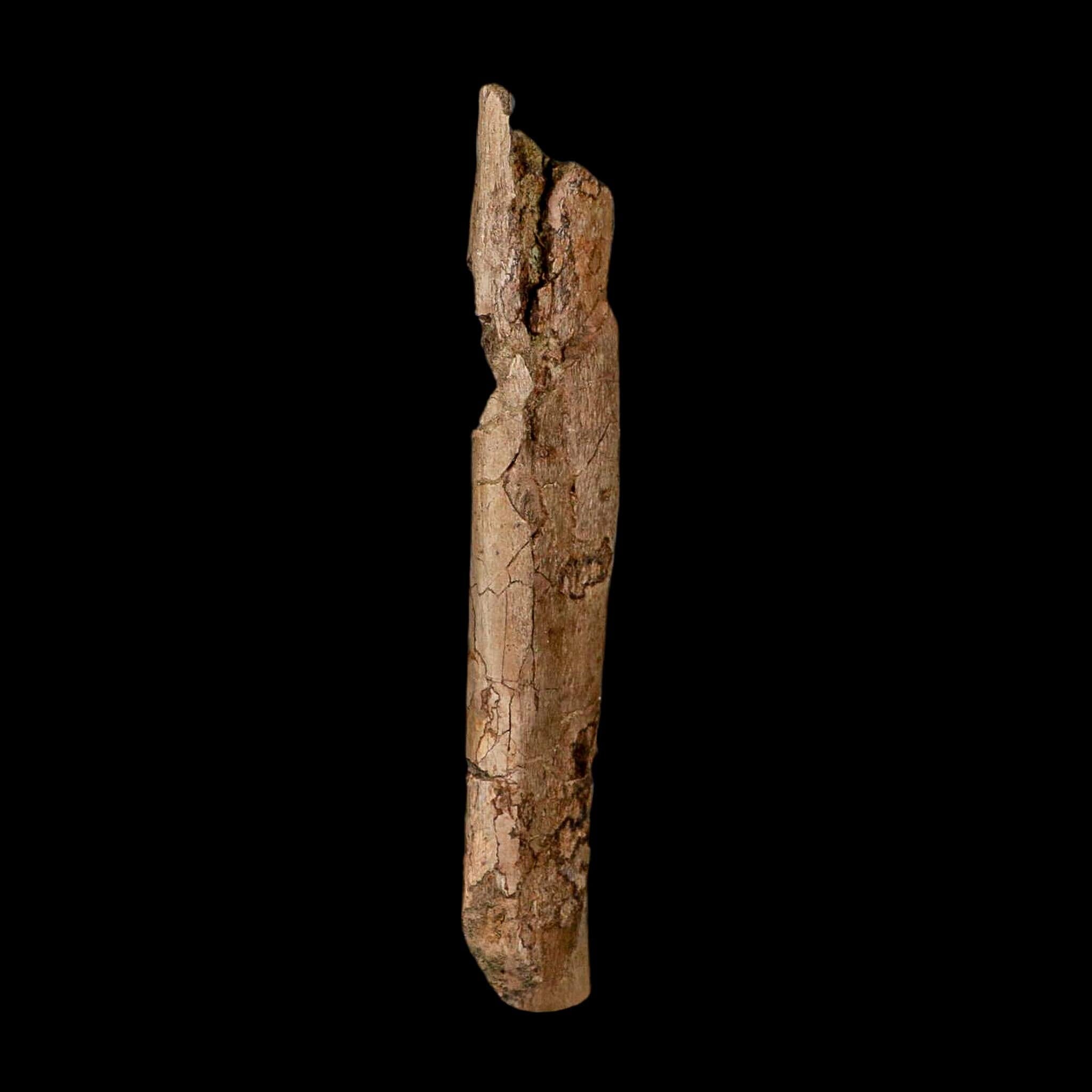
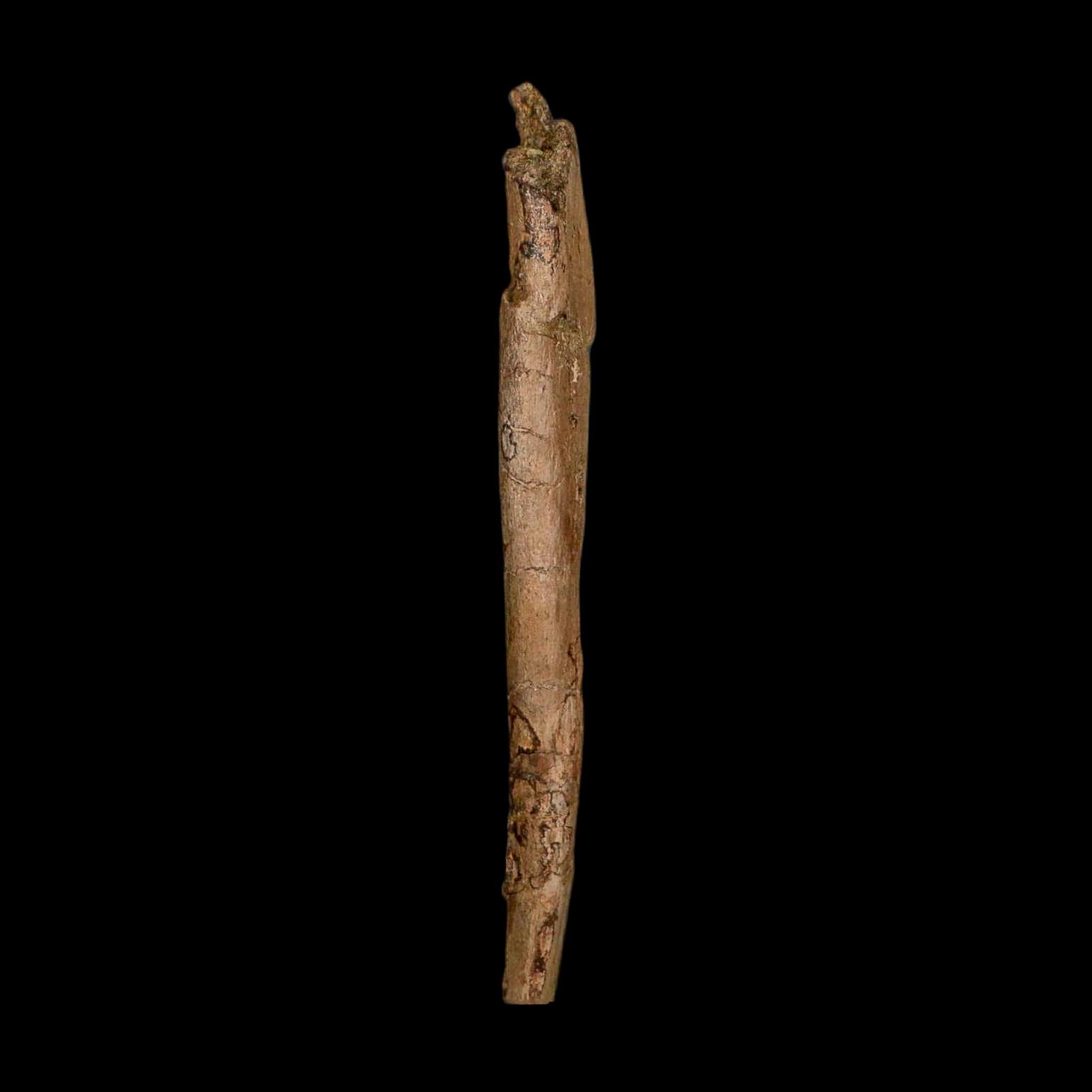


Description
Location: Hell Creek Formation, Montana (Private Land Origin)
Weight: 5.3 Ounces (With Metal Stand)
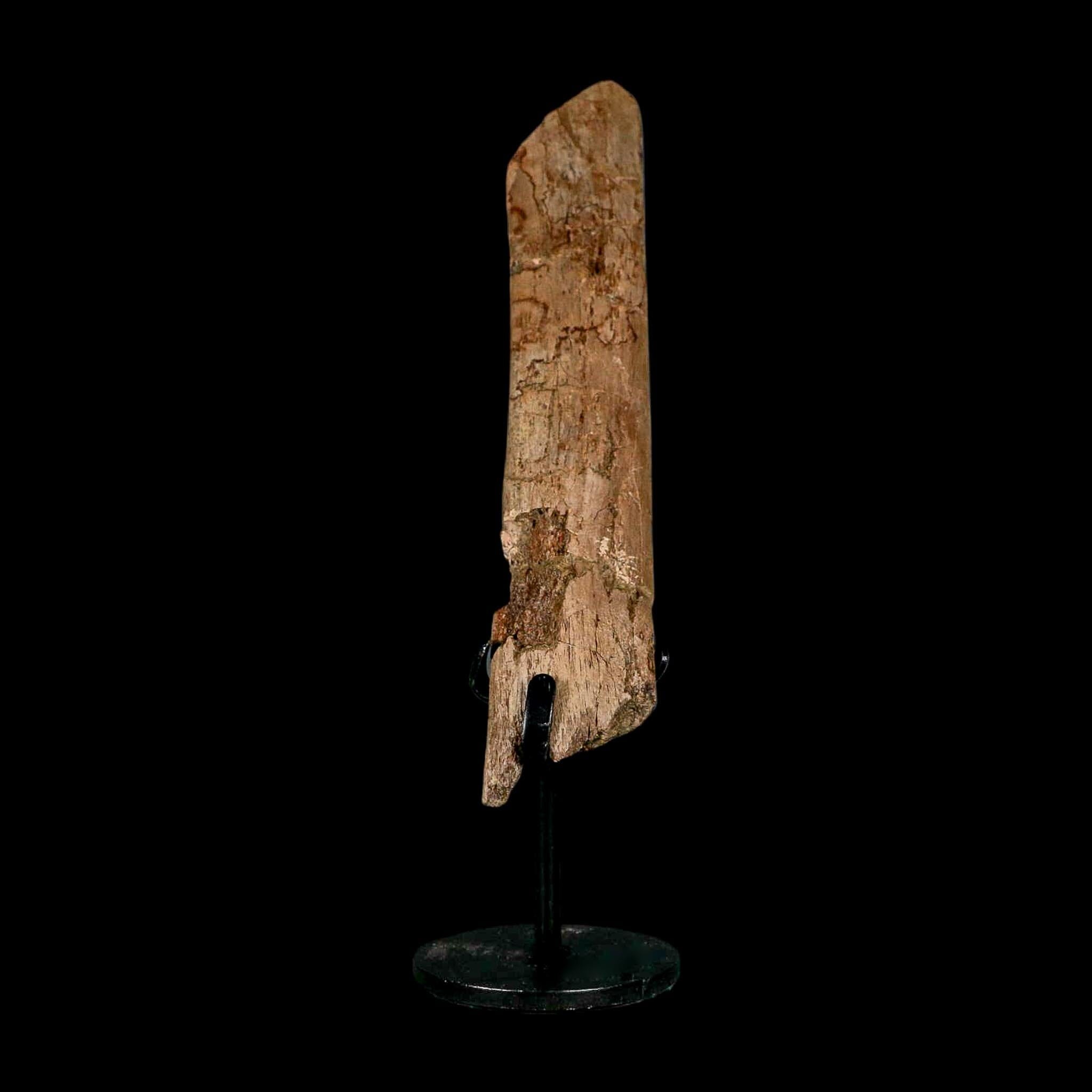
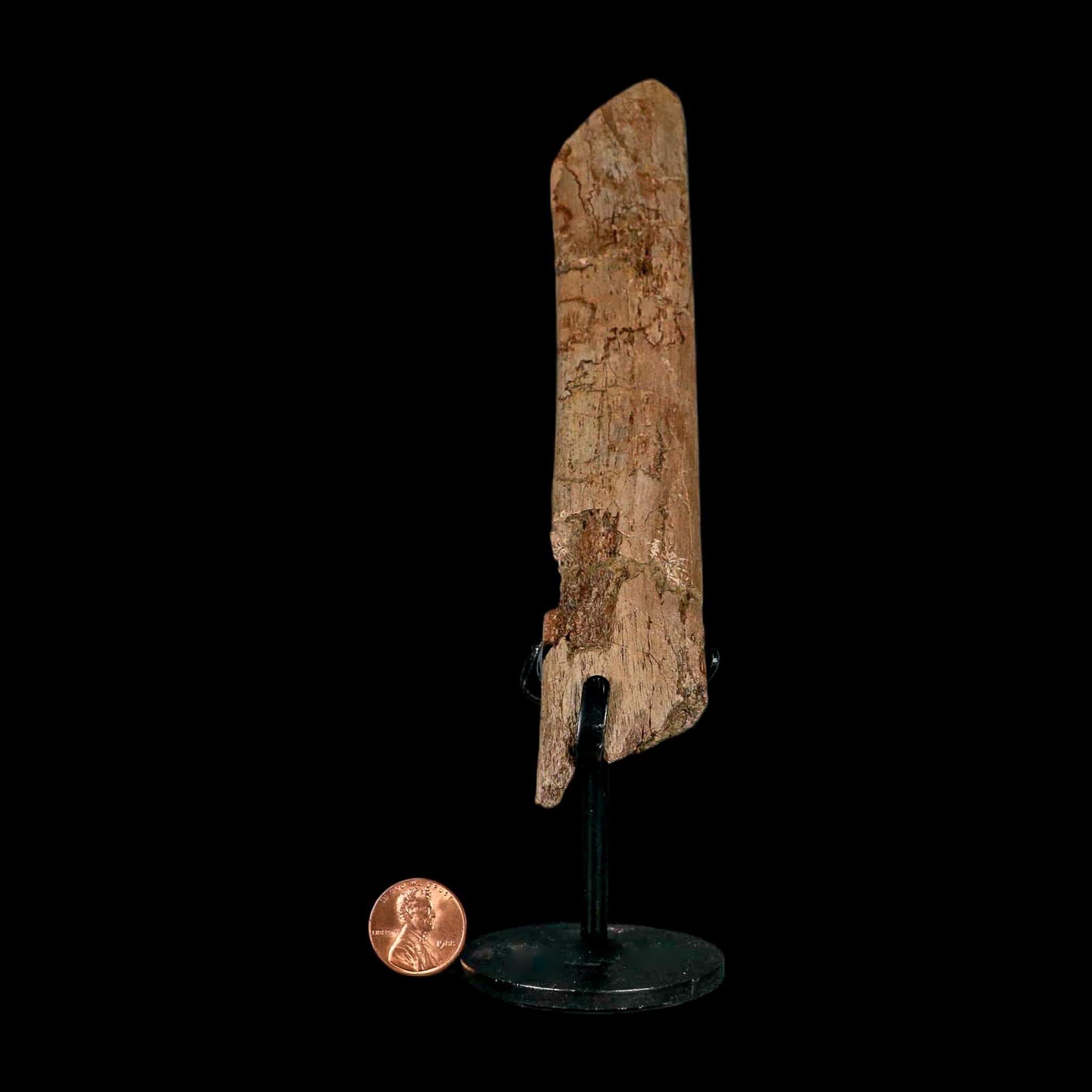
Dimensions: 7.5 Inches Long, 4.5 Inches Wide, 2 Inches Thick (With Metal Stand)
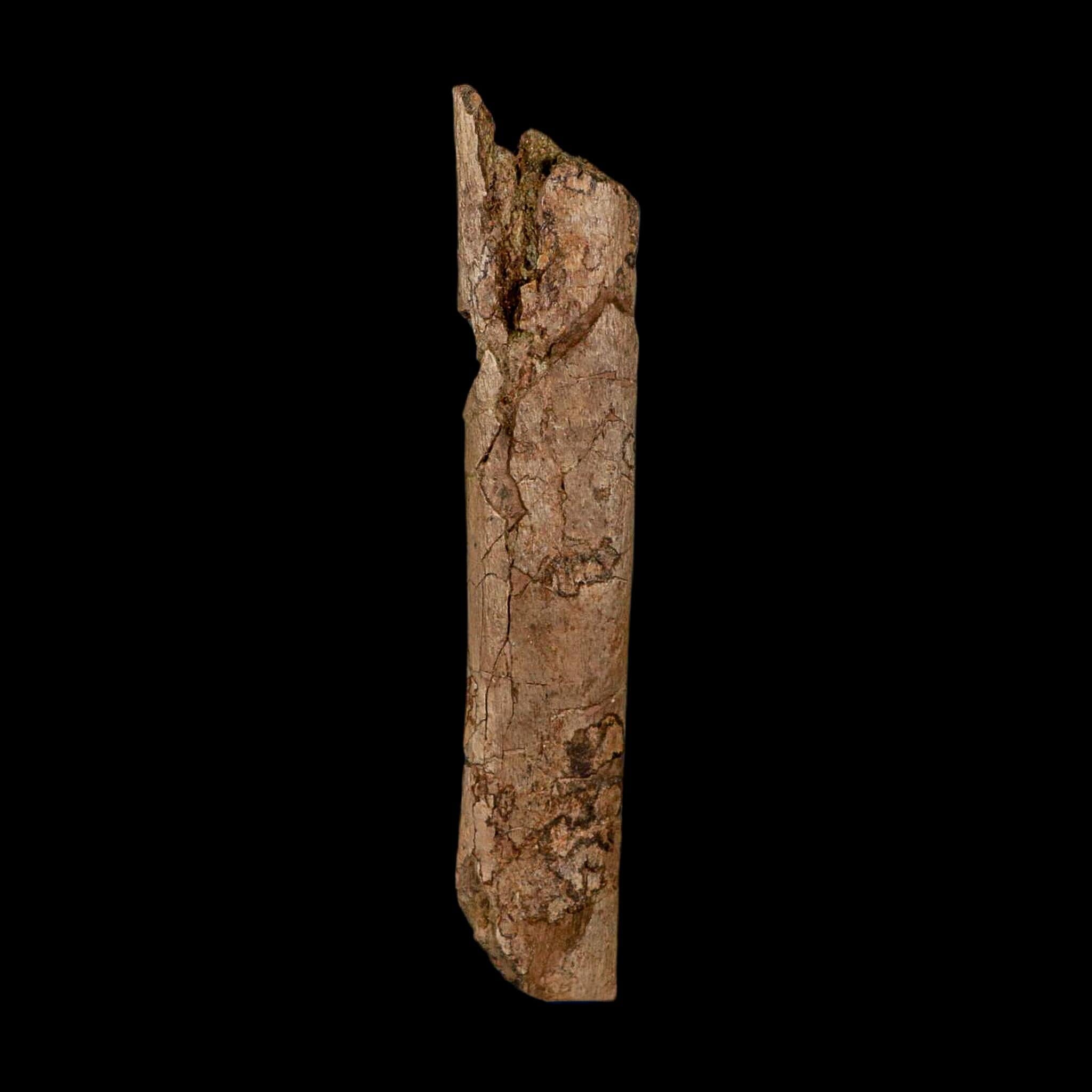
Dimensions: 6.3 Inches Long, 1.1 Inches Wide, 0.5 Inches Thick
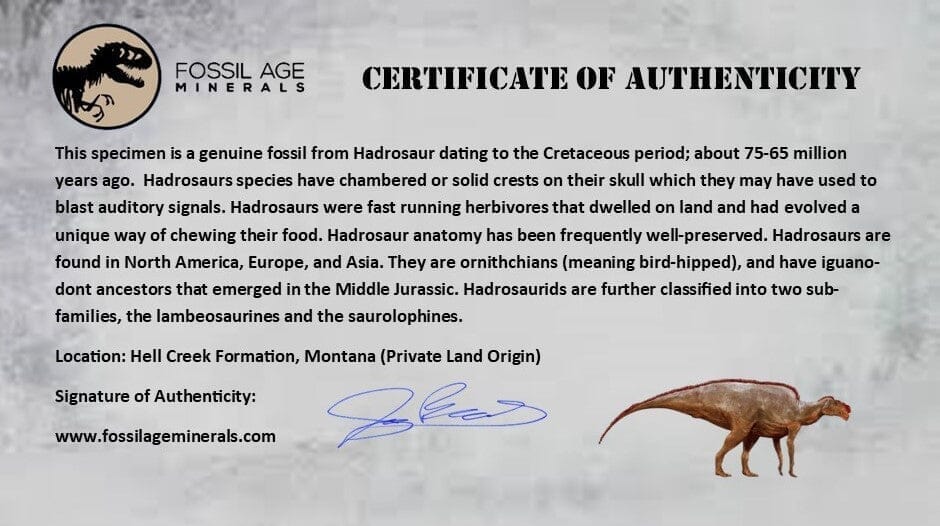
Comes with a Certificate of Authenticity.
Comes with a Custom Metal Stand.
The item pictured is the one you will receive.
Cretaceous Age 83.6 - 70.6 million years old.
Most likely from a rib of Edmontosaurus
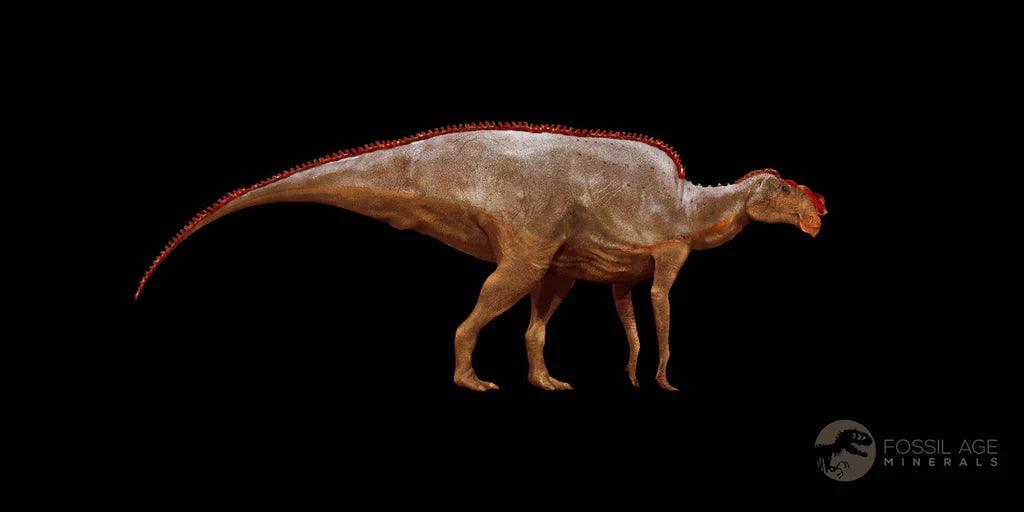
Name: Hadrosaurus
Type: Herbivore
Size: 7 to 8 meters in length
Hadrosaurus was a remarkable hadrosaurid ornithopod dinosaur that lived in North America during the Late Cretaceous period, roughly 80 to 78 million years ago. Known for its duck-billed snout and specialized feeding adaptations, this dinosaur weighed between 2 and 4 tons and primarily moved on all four limbs, though it could rise onto its hind legs to reach taller plants or sprint from predators.
A defining feature of Hadrosaurus was its complex dental battery, containing up to 1,400 teeth, perfectly suited for grinding tough vegetation—a sophisticated adaptation among herbivorous dinosaurs. Its forelimbs, while less powerful than the hind limbs, were sufficiently long to support standing and foraging behaviors. Comparisons with contemporaries like Kritosaurus and later hadrosaurids such as Edmontosaurus reveal an evolutionary trend in limb and dental specialization among herbivorous dinosaurs.
With its combination of agility, specialized teeth, and versatile feeding strategies, Hadrosaurus exemplifies the evolutionary innovation of Late Cretaceous hadrosaurid dinosaurs, making it one of the most fascinating and studied North American herbivorous dinosaurs.
