
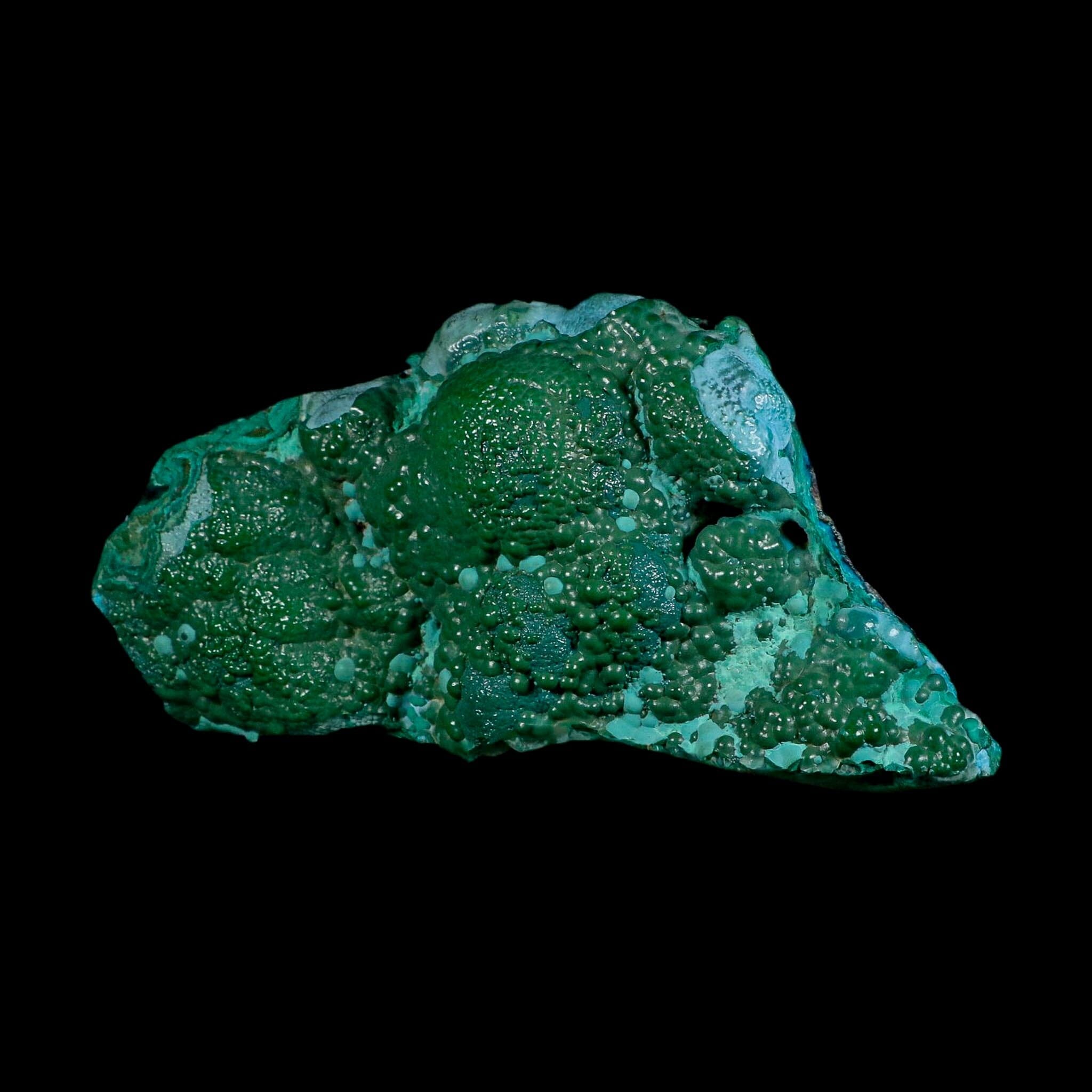
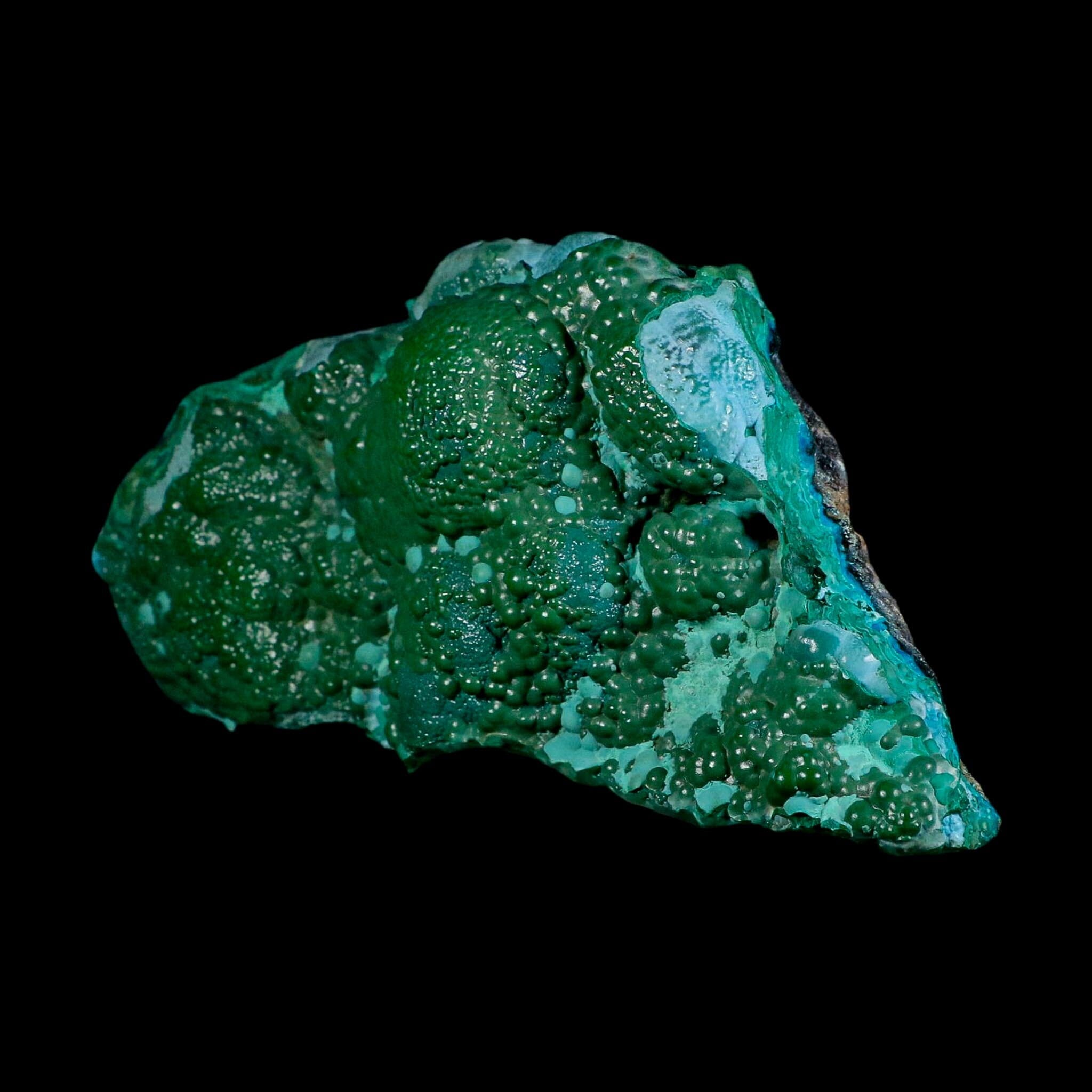
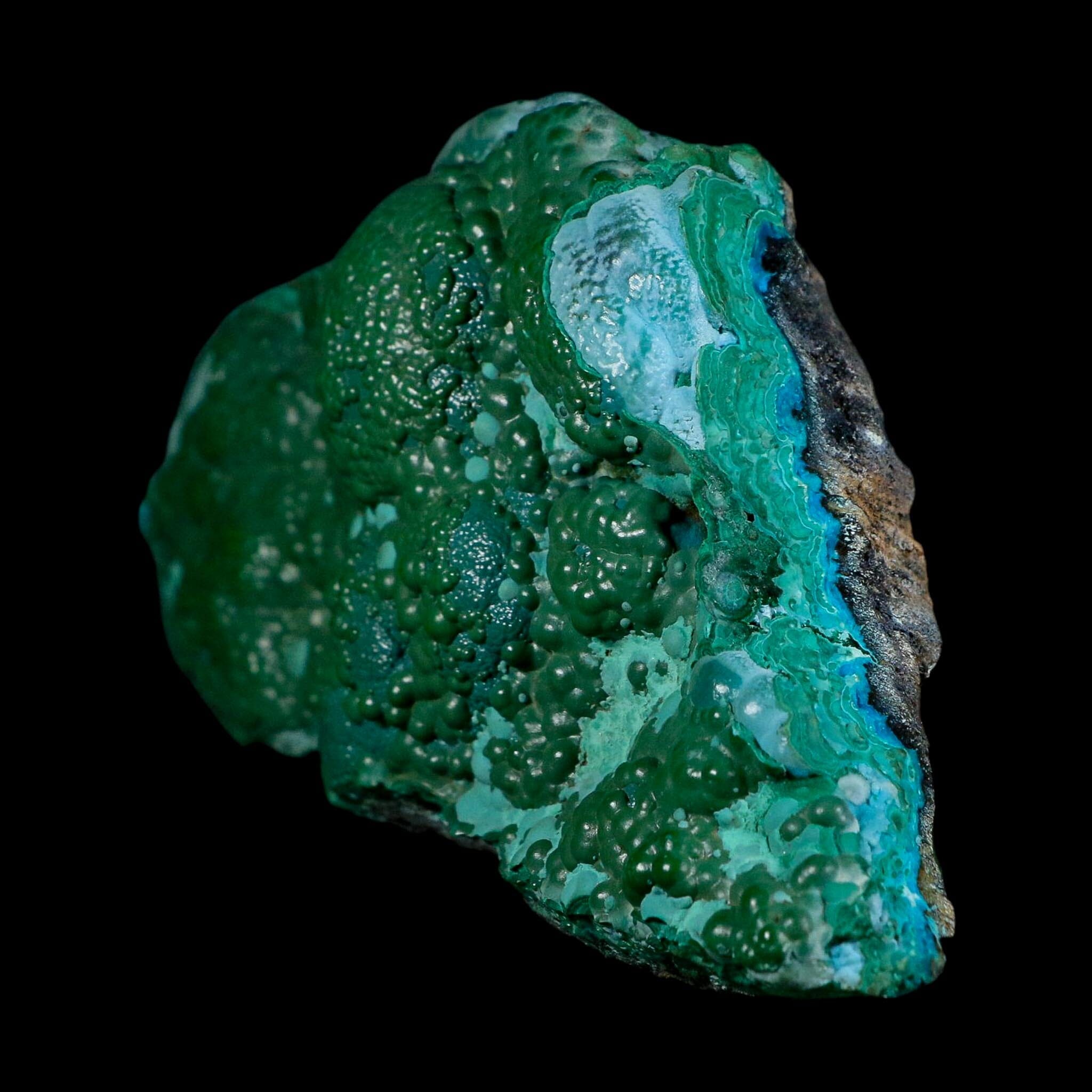
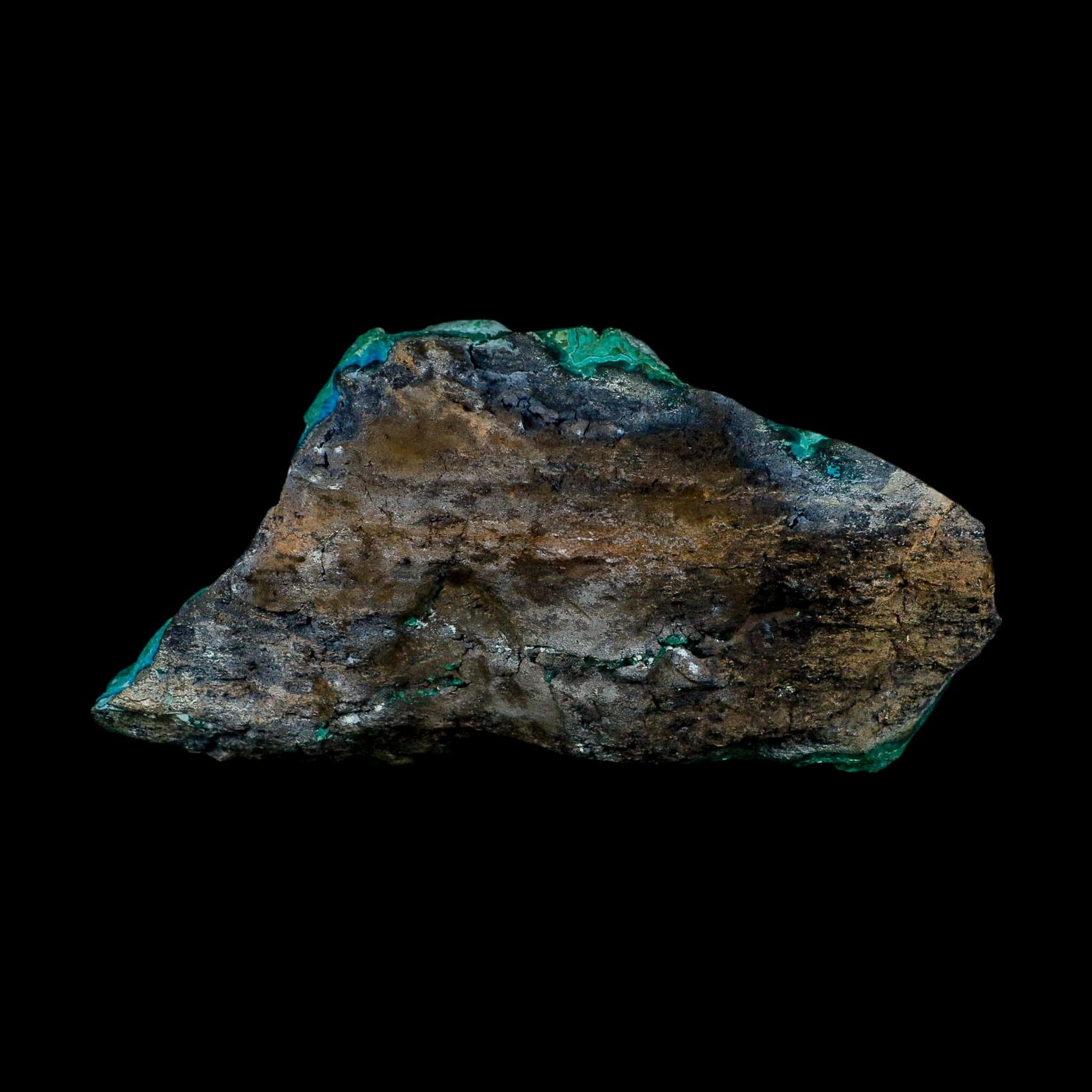


Description
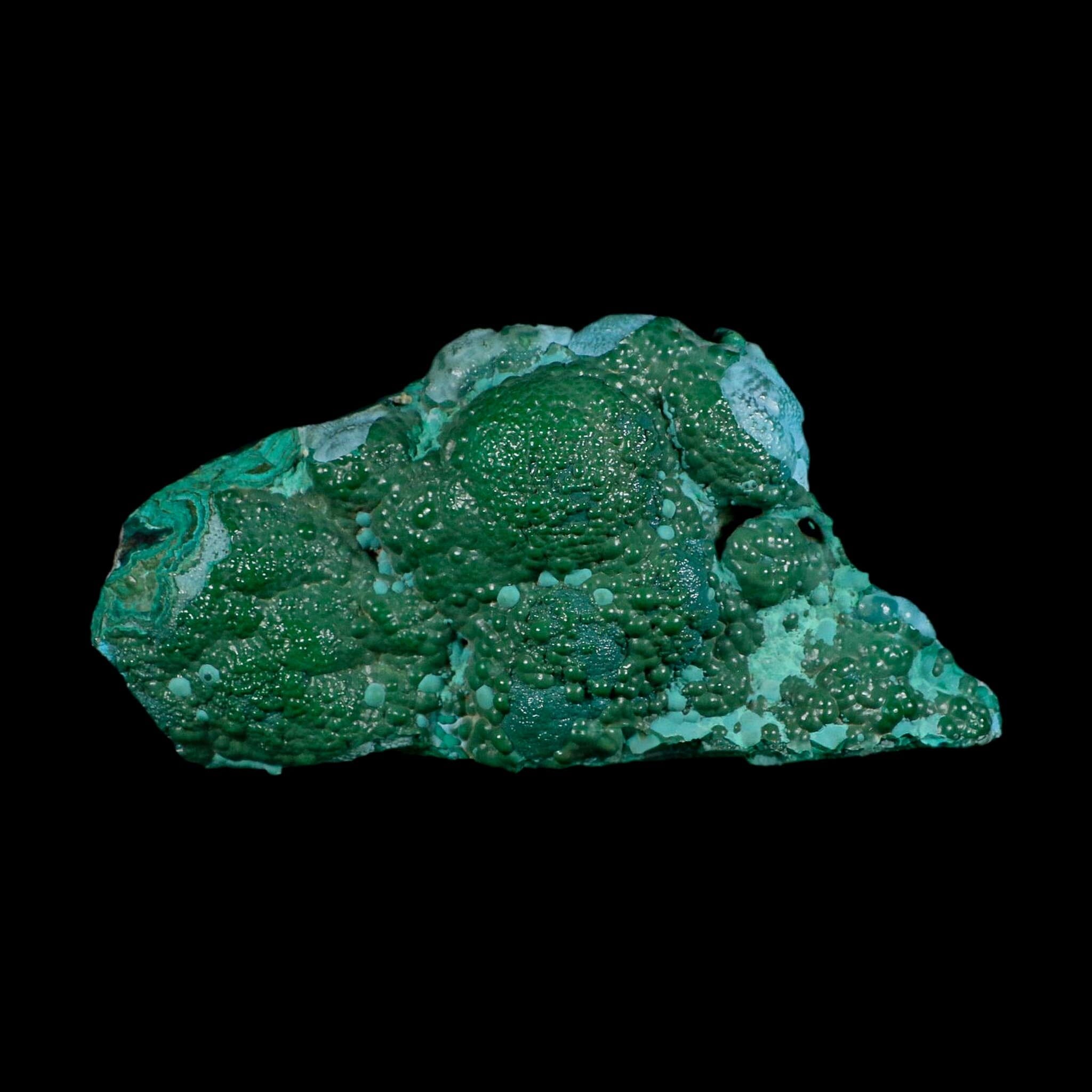
Location: Congo
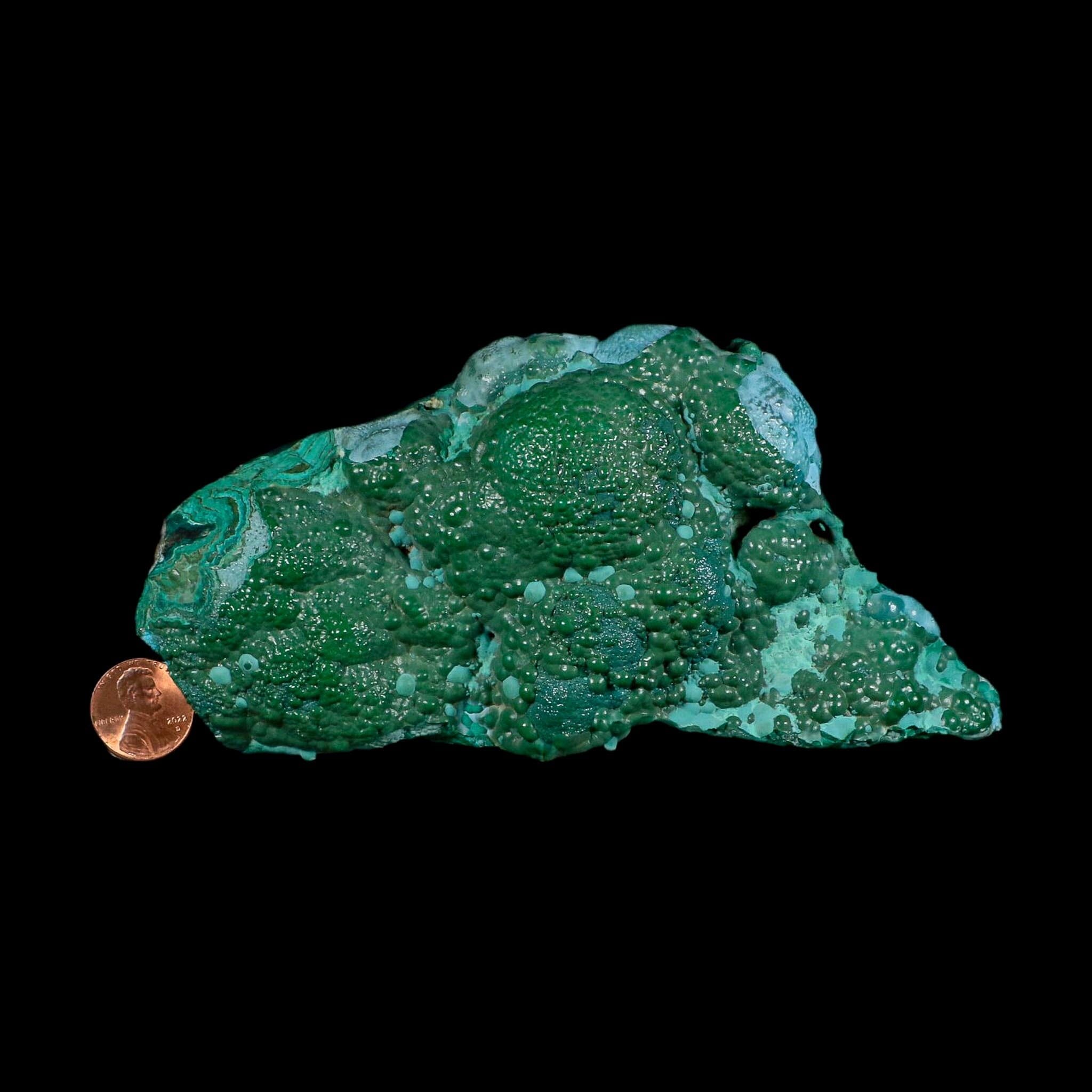
Weight: 1 Pound 0.1 Ounces
Dimensions: 6.2 Inches Long, 3.1 Inches Wide, 1.6 Inches Thick
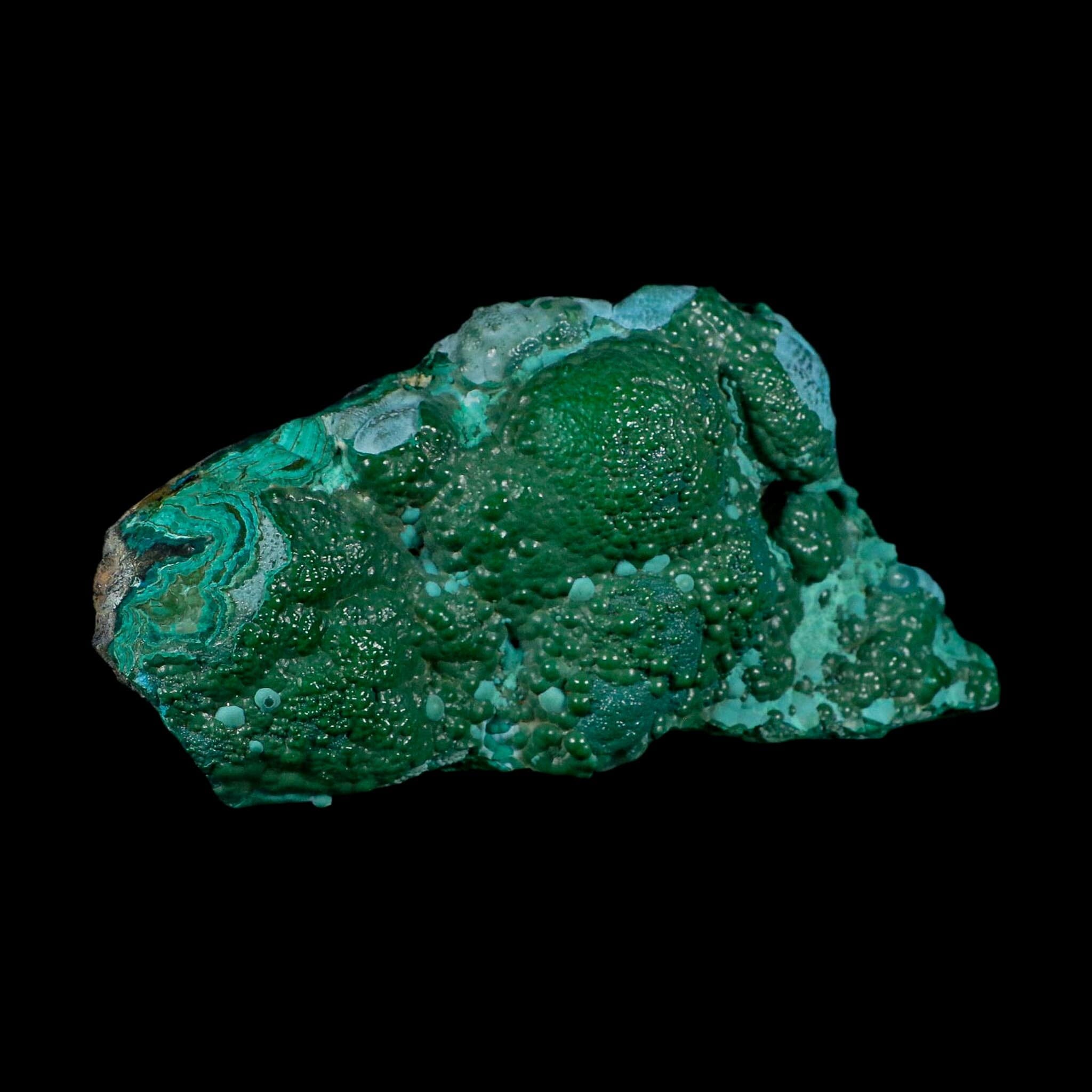
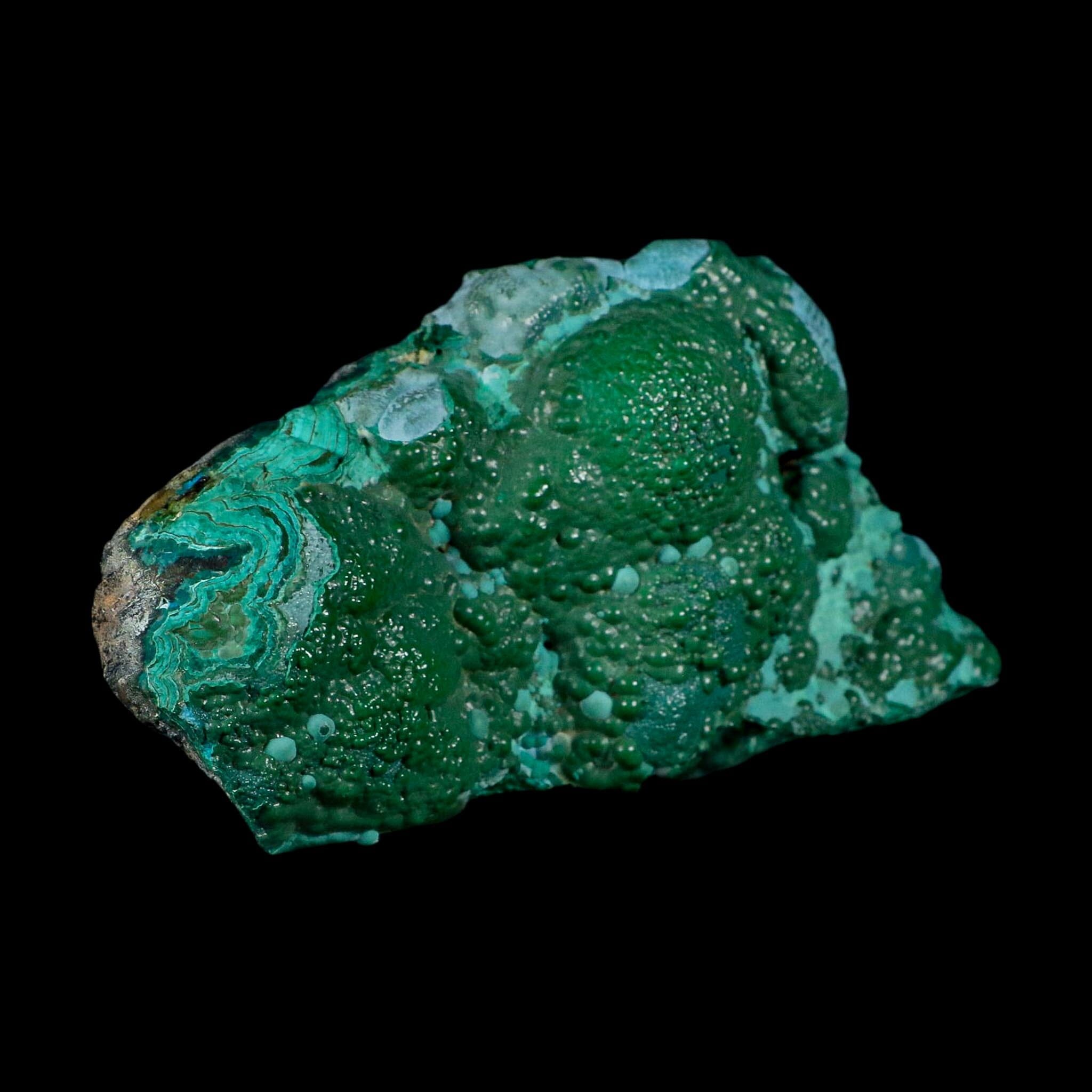
The item pictured is the one you will receive.
Malachite is a copper carbonate mineral that forms through the oxidation of copper sulfide minerals. It is often found alongside azurite and has historically been used as a source of copper, a pigment, and a decorative material. As a secondary copper carbonate hydroxide, its chemical formula reflects its formation in oxidized zones of copper deposits, where hydrothermal or meteoric waters interact with primary copper sulfides like chalcopyrite or bornite within carbonate-rich rocks, such as limestone or dolomite.
The Democratic Republic of the Congo (DRC), especially the Katanga copper belt, is famous worldwide for producing some of the finest and most abundant malachite specimens. The geological conditions in the Katanga Copperbelt—characterized by massive Neoproterozoic sedimentary copper deposits and intense supergene weathering—allow malachite to develop into spectacular forms like botryoidal, fibrous, stalactitic, and mammillary structures. When sliced and polished, these formations display concentric bands of light and dark forest-green hues, which are highly sought after by mineral collectors and lapidaries.
Malachite has been mined for over 4,000 years, initially for copper ore and as a vibrant green pigment in ancient Egyptian, Greek, and Roman art. Today, the DRC remains a major global supplier of both industrial copper and high-quality malachite. While most Congolese copper is used for industrial purposes, exceptional malachite blocks are handpicked by local miners. These specimens are either kept as raw, velvety fibrous crystals for collectors or carved into ornamental objects, polished spheres, cabochons, and jewelry.