
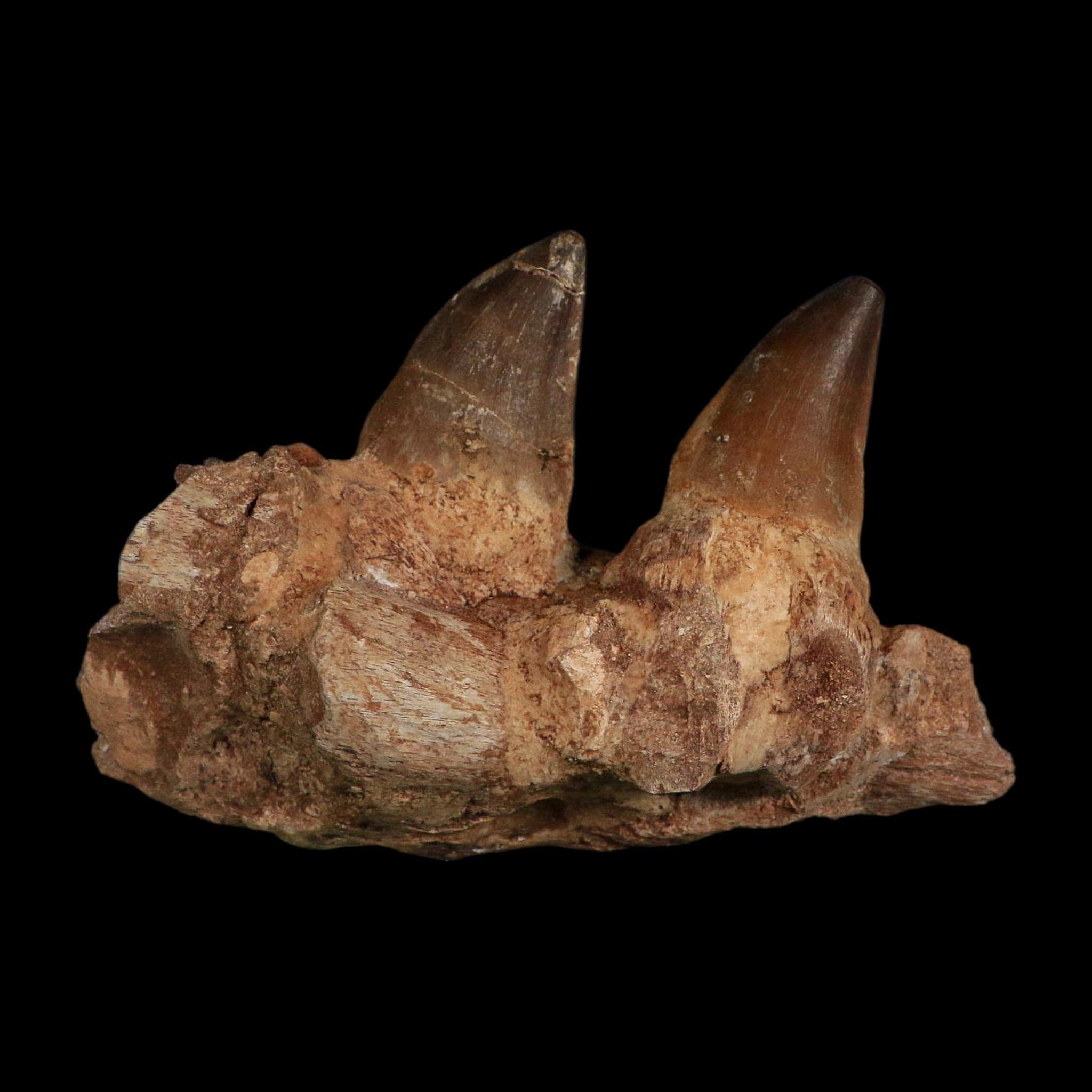
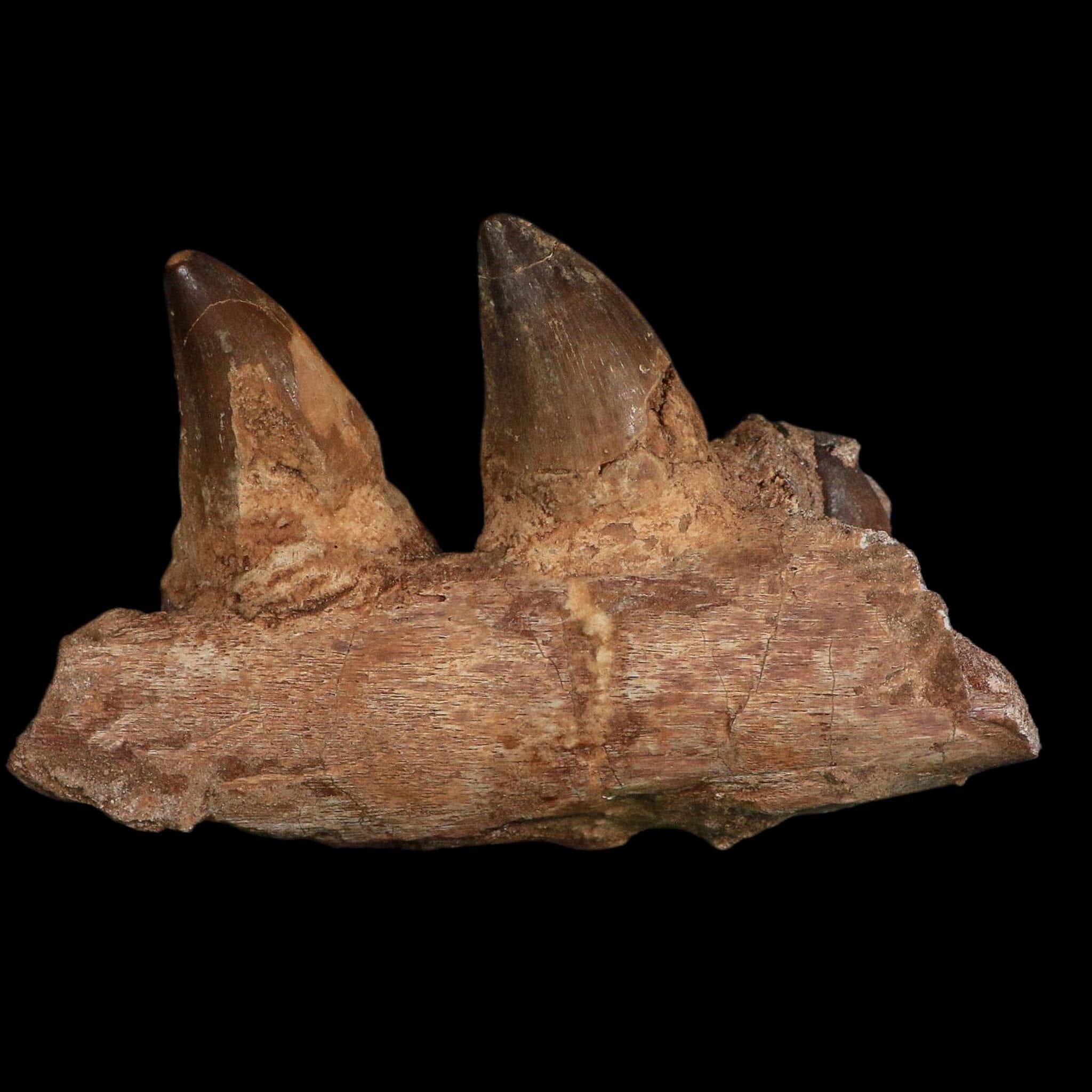
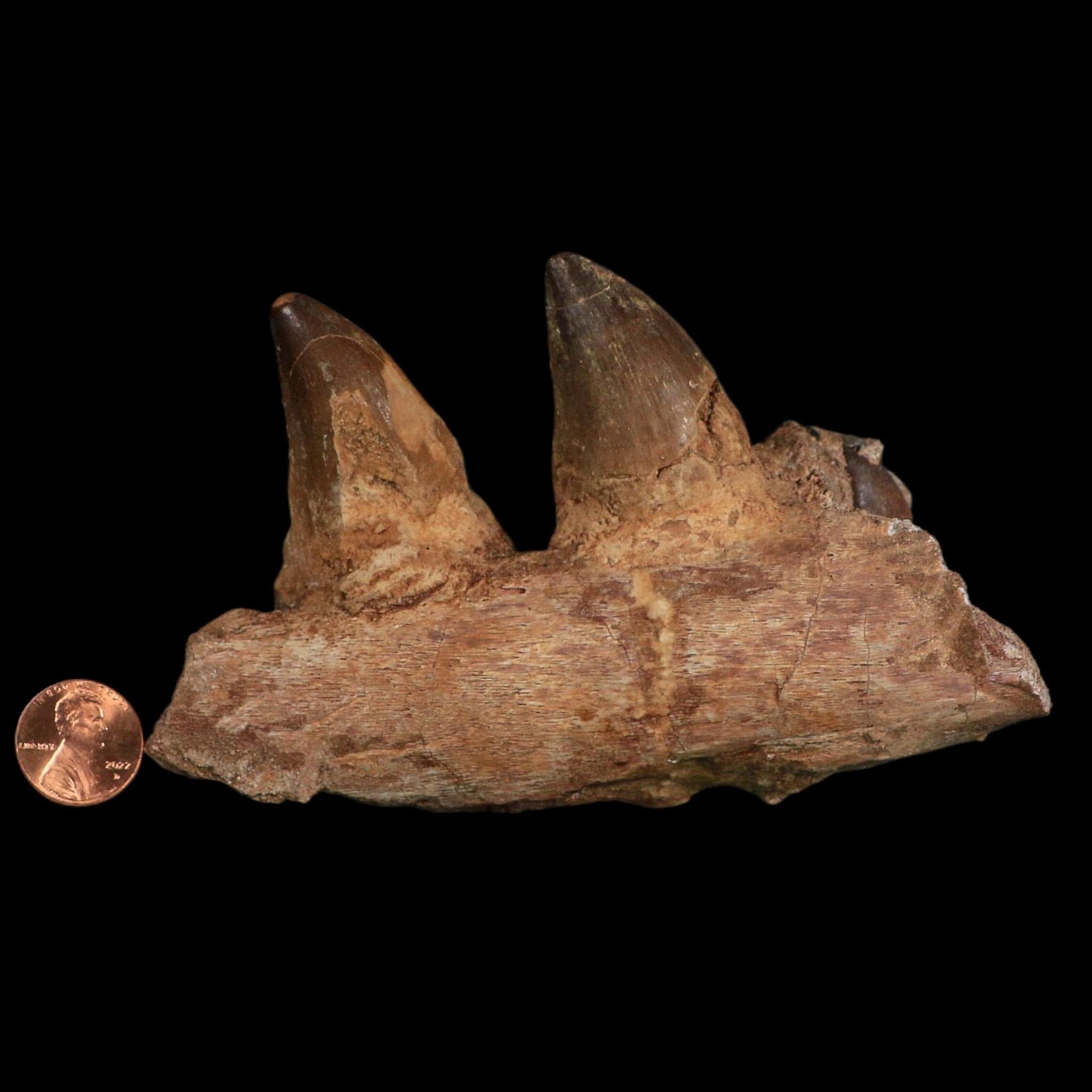
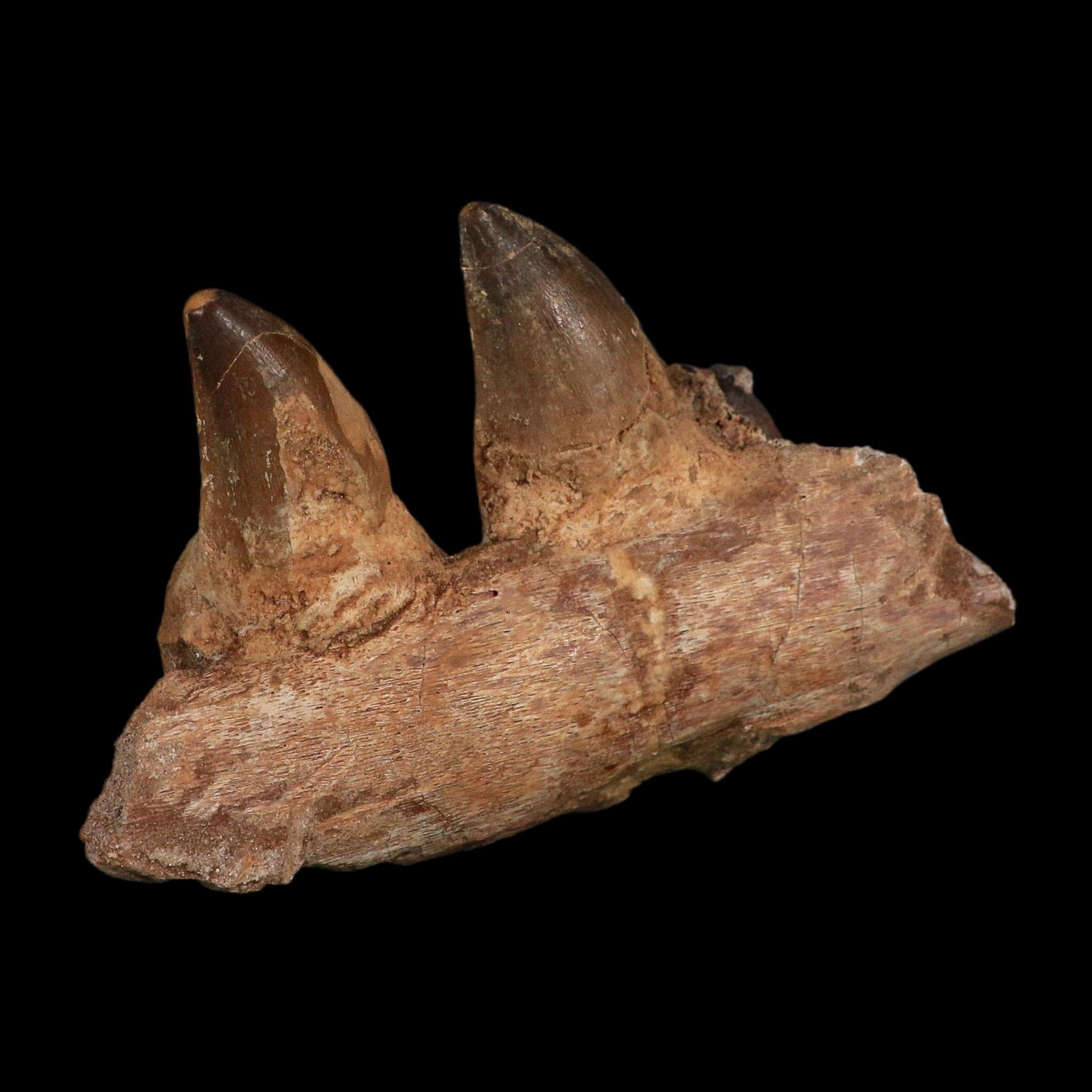
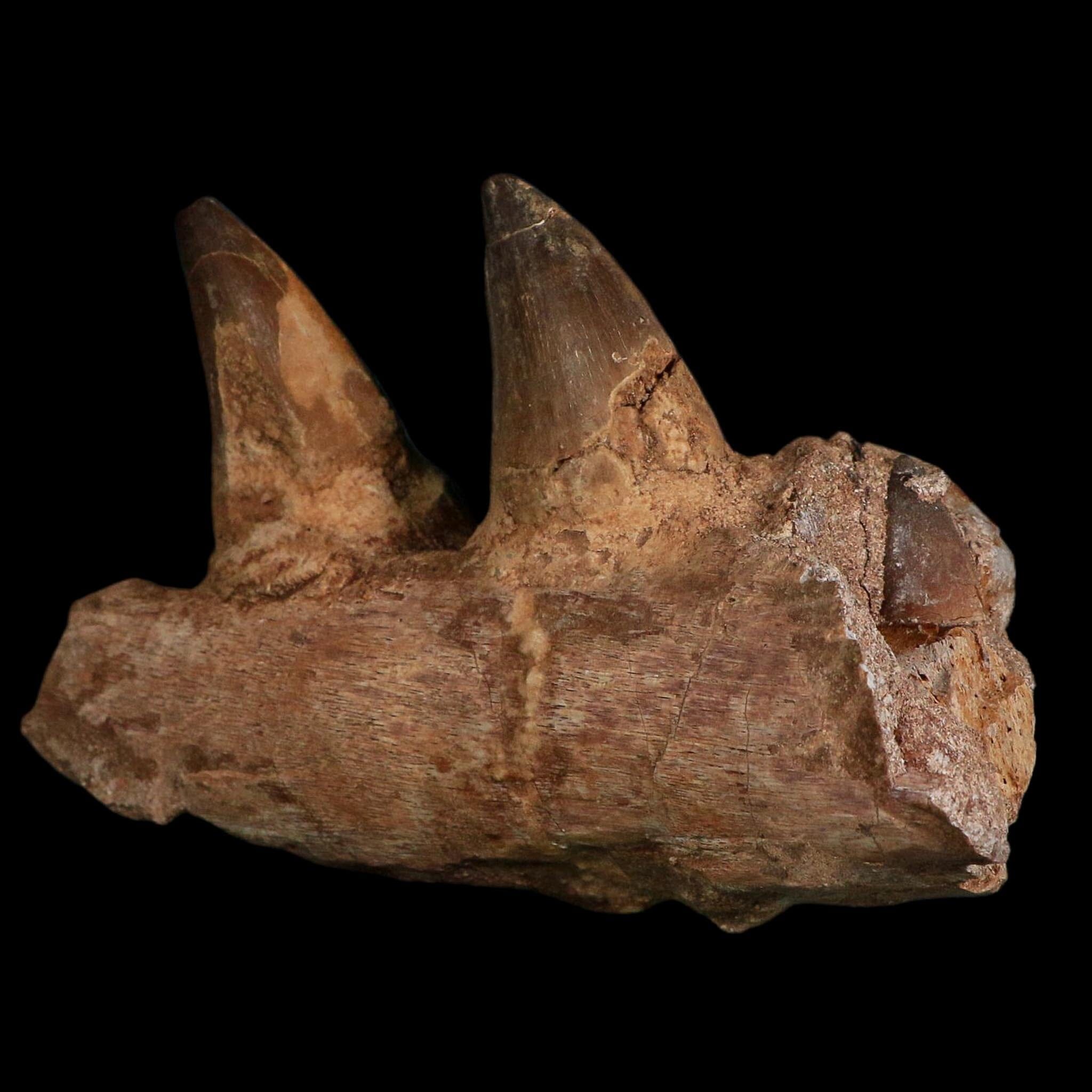
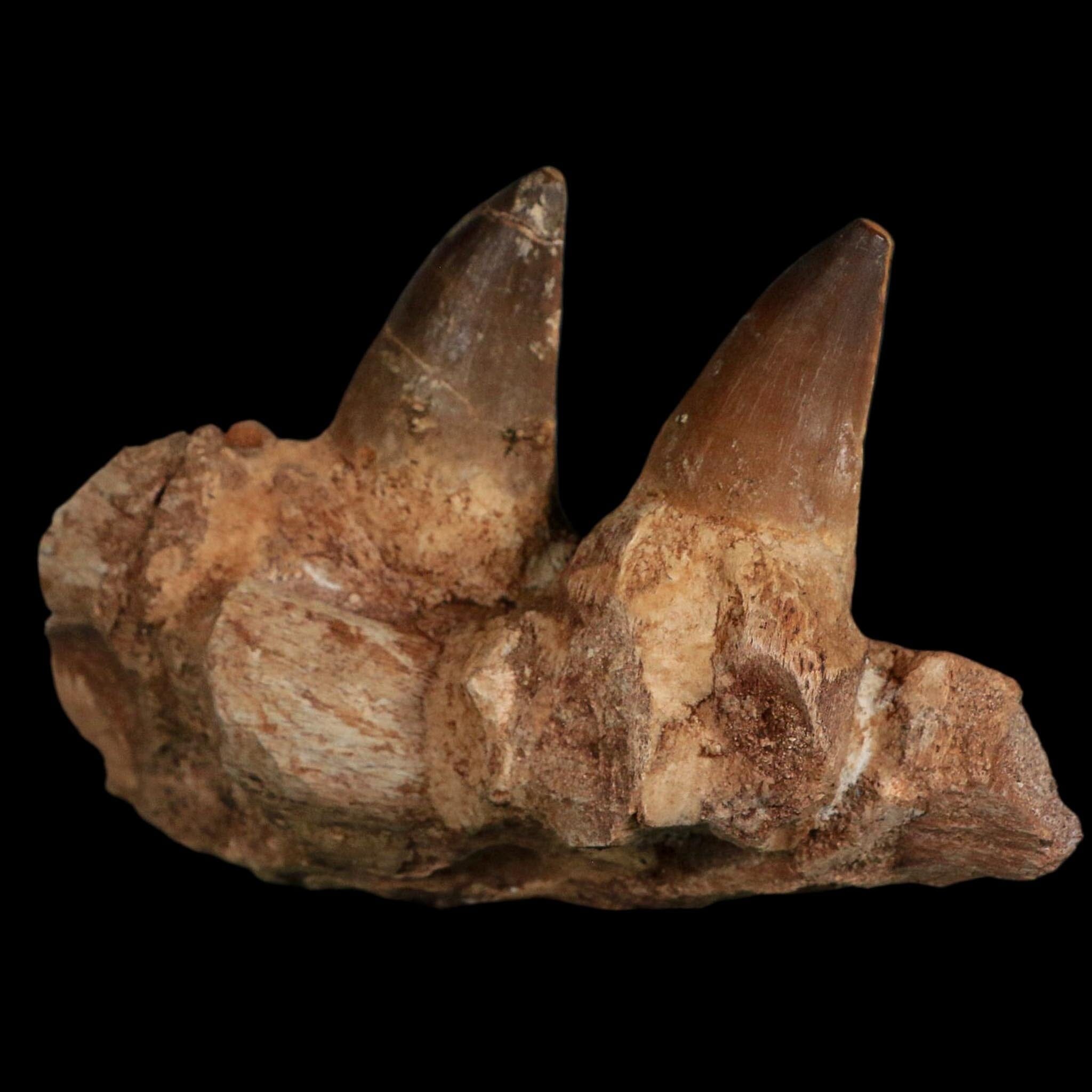
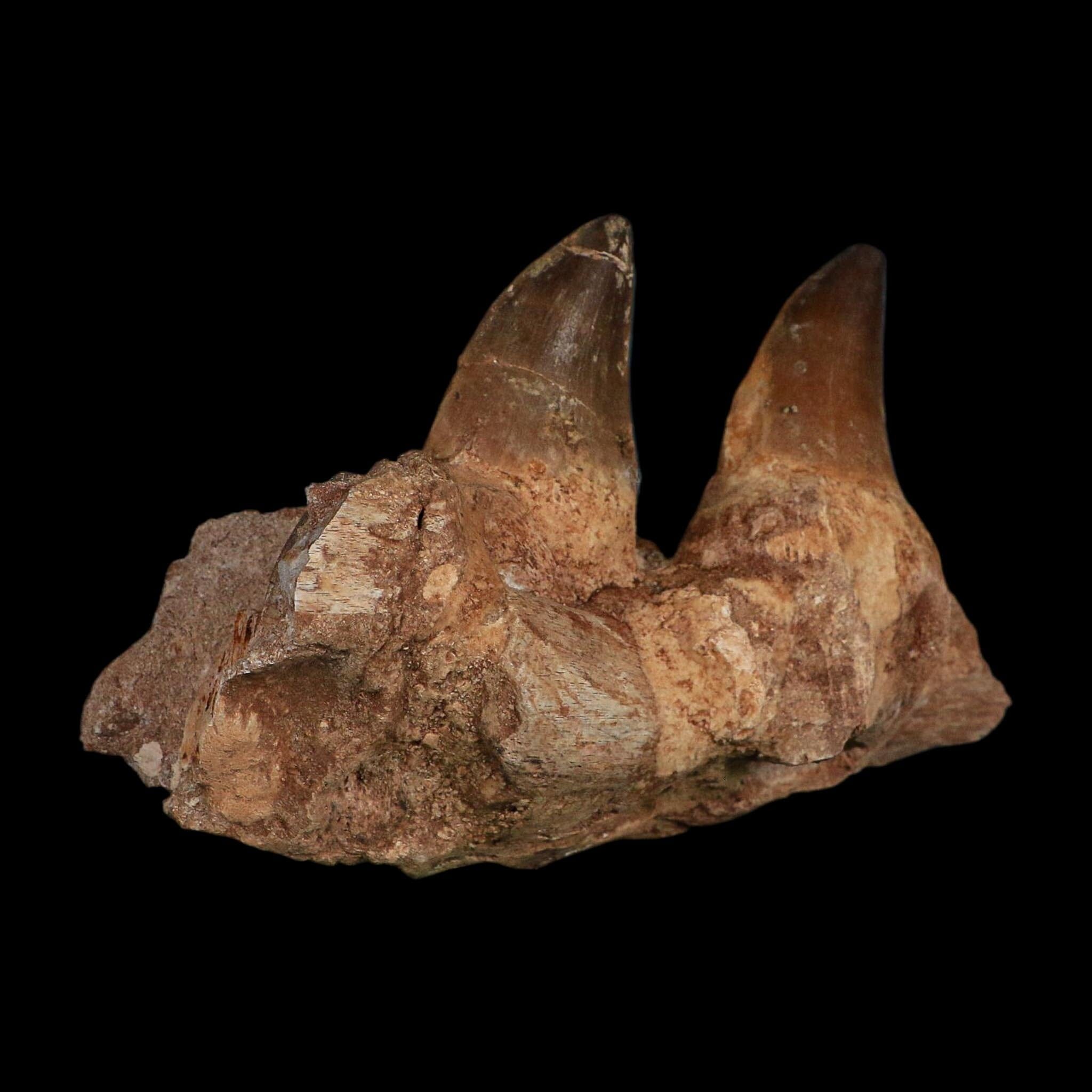
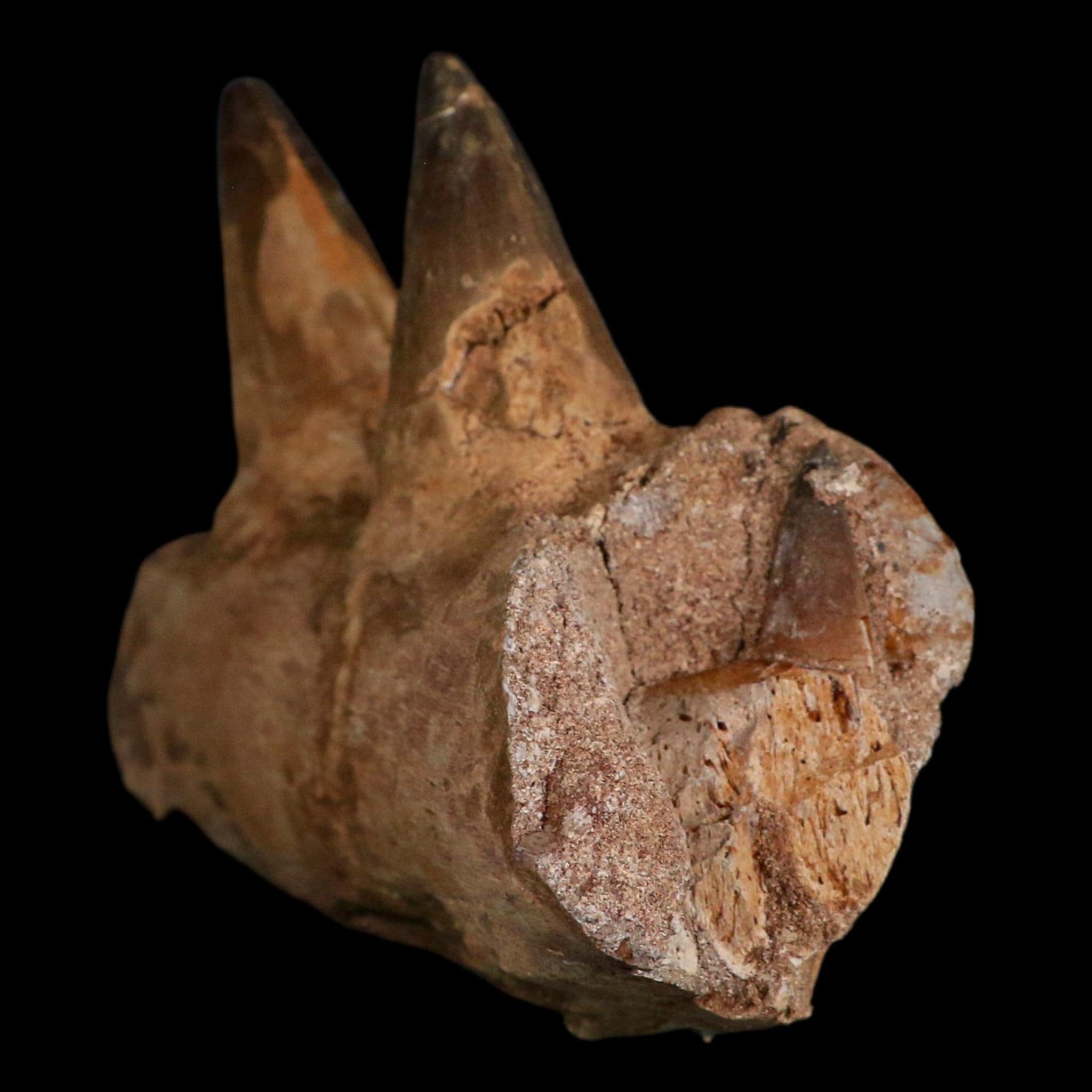


Description
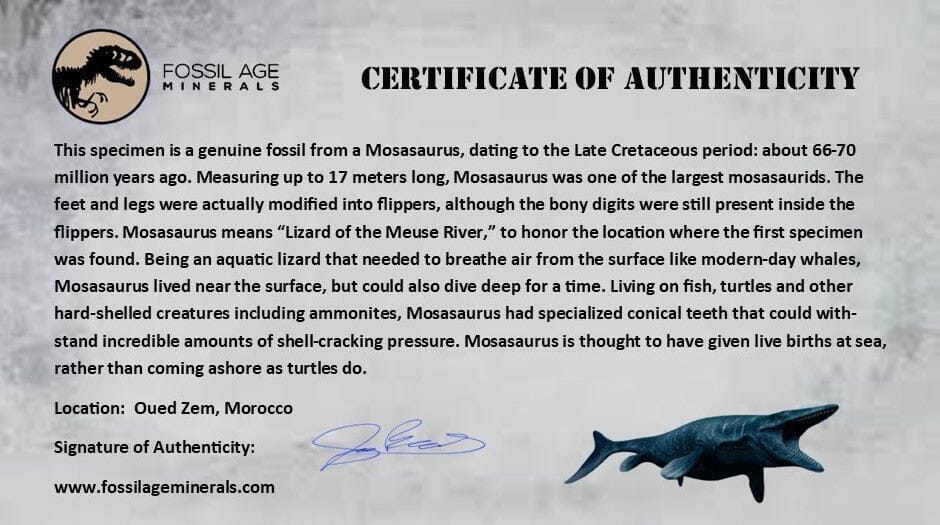
Location: Oued Zem, Morocco
Weight: 9.3 Ounces
Dimensions: 5.2 Inches Long, 3.5 Inches Wide, 1.8 Inches Thick
Comes with a Certificate of Authenticity.
Comes with a Free Stand.
The item pictured is the one you will receive.
100-66 Million Years old, Upper Cretaceous, Maastrichtian Epoch.
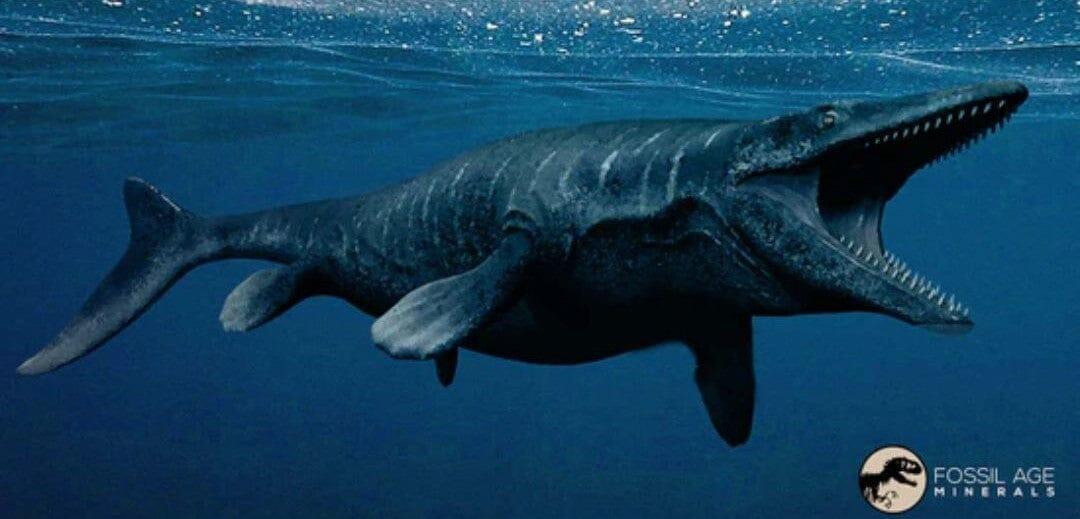
Name: Prognathodon (Forejaw tooth).
Named By: Dollo - 1889.
Diet: Carnivore.
Size: Depending on the species, Prognathodon could range from 6 to just under 14 meters in length.
Known locations: Fossil locations suggest a worldwide distribution, but are especially well known from Europe and North America.
Time period: Campanian to Maastrichtian of the Cretaceous.
Prognathodon was a late Mosasaur that evolved a predation style reminiscent of earlier Triassic reptiles like Placodus, focusing on tough-shelled prey such as shellfish, ammonites, and turtles. For many years, its diet was inferred mainly from teeth and jaw structure, but two Canadian discoveries in the early 2000s provided a complete view of its body and confirmed its dietary habits. One fossil included turtle and ammonite fossils in the stomach area, and, notably, a 160-centimeter fish was also found inside, indicating that while Prognathodon specialized in hard prey, it also engaged in opportunistic feeding. It had a robust, muscular jaw capable of generating strong bite forces and serrated teeth designed for crushing shells and slicing flesh. Bony rings around its eye sockets helped it withstand deep-water pressure, enabling it to hunt in the ocean depths. The fossil jaw illustrates the fierce nature of this ancient predator.
The reason for Prognathodon's dietary shift—away from the typical mosasaur dominance involving reptiles and fish—is uncertain. It may have been driven by intense competition for the apex-predator niche, prompting adaptation to a different food source to avoid conflict. Alternatively, a decline in large prey animals associated with mosasaurs might have necessitated dietary changes. It could also have been a strategy to exploit abundant food resources. Importantly, Prognathodon was not alone in this shift; another mosasaur, Globidens, also developed large, rounded crushing teeth suited for breaking hard prey.

Please be aware of the nature of fossils:
Being buried under the ground for millions of years under tons of pressure tends to be rough. No fossil comes out of the ground whole and perfect. Most fossils have undergone some restoration, while others are altered by man simply to enhance their presentation in different ways. The workers in Morocco do a very professional job of unearthing and preserving these natural treasures; however, natural cracks are commonly visible on the surface. These are part of the natural beauty of the fossil and are not considered defects.