




Description
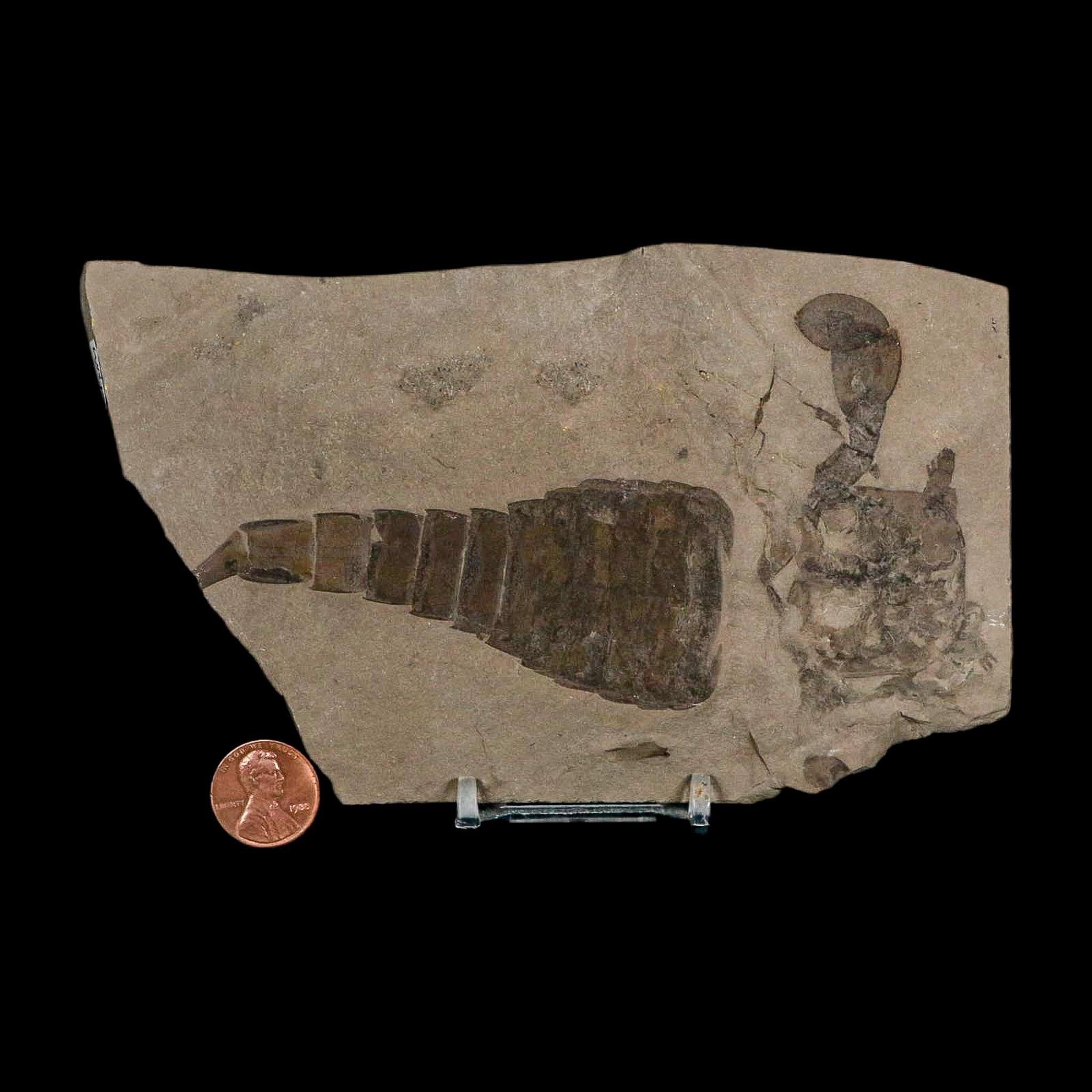
Location: Buffalo, New York, Bertie Green Formation
Weight: 1 Pound 8.3 Ounces
Dimensions: 6.2 Inches Long, 3.7 Inches Wide, 1.2 Inches Thick (Plate)
Sea Scorpion Dimensions: 5.1 Inches Long, 3.1 Inches Wide
Comes with a Free Stand.
Comes with a Certificate of Authenticity.
The item pictured is the one you will receive.
Upper Silurian, 420 Million Years old
The Eurypterid, commonly referred to as a sea scorpion, represents one of the most fascinating extinct arthropod groups of the Paleozoic era. Living between roughly 485 and 250 million years ago, these creatures belonged to the Merostomata and were more closely related to horseshoe crabs than modern scorpions.
Eurypterids are recognized for their elongated bodies, segmented exoskeletons, and broad swimming limbs. The Greek origin of their name—meaning “wide fin”—highlights their specialized appendages, which allowed efficient movement through prehistoric waters. Some species were agile predators, while others adapted to bottom-dwelling lifestyles.
Sea scorpion fossils are important paleontological discoveries that reveal how early arthropods adapted to diverse marine and freshwater ecosystems during the Ordovician, Silurian, and Devonian periods.
Morphology and Anatomy
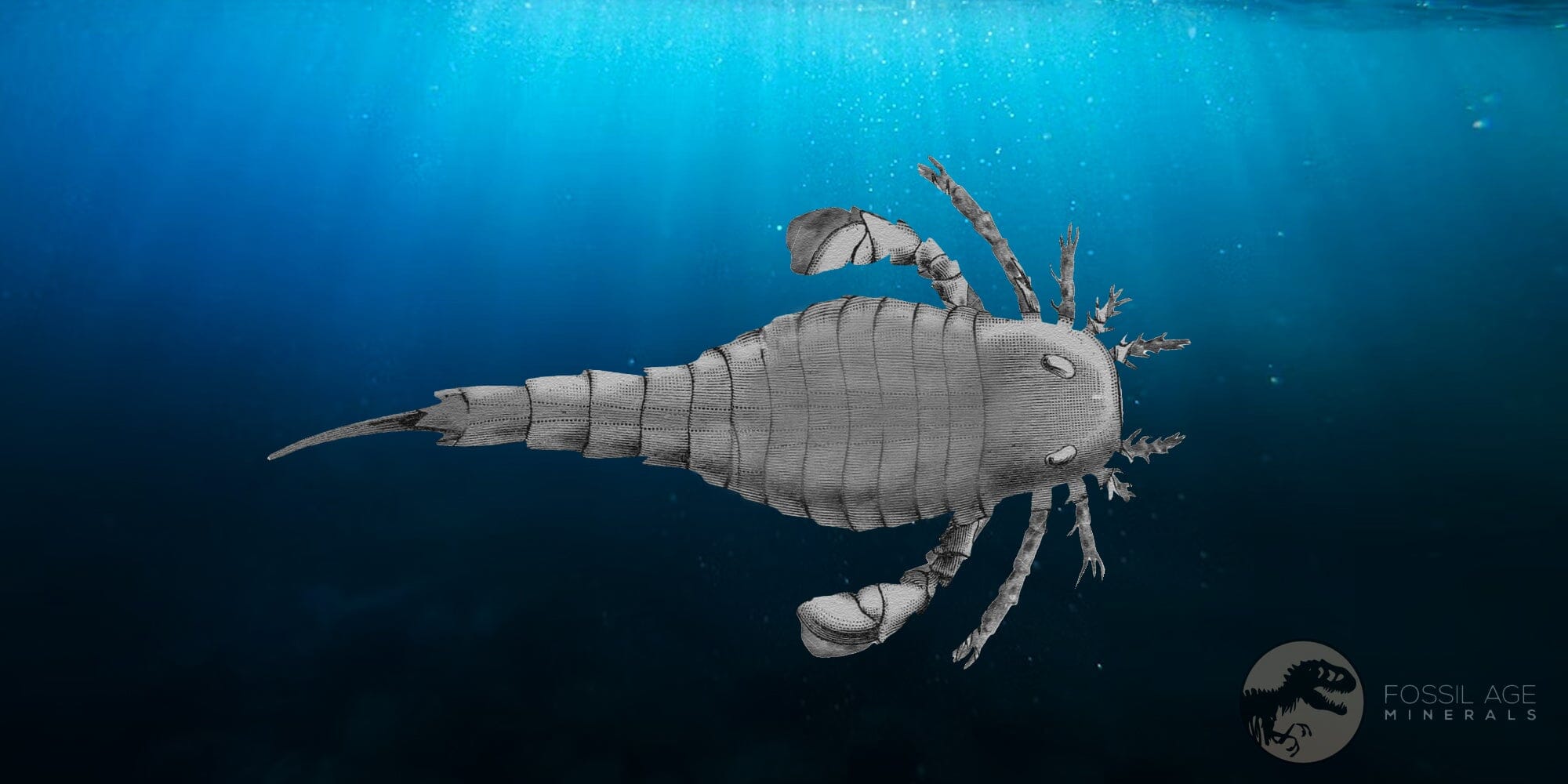
Eurypterids exhibited a diverse range of sizes, with some species measuring just a few centimeters in length while others could grow over two meters long. Their body structure typically consisted of a segmented body divided into three main parts: the prosoma (head), mesosome (thorax), and metasoma (abdomen). The prosoma was equipped with compound eyes and various appendages, including chelicerae (mouthparts) used for grasping prey. The mesosome contained several pairs of walking legs, while the metasoma often ended in a long, pointed tail spine known as a telson.
The exoskeleton of eurypterids was composed of chitin and protected predators. Some species also possessed specialized adaptations such as gills for respiration, allowing them to inhabit both marine environments and freshwater ecosystems.
Ecology and Behavior
Eurypterids were primarily carnivorous predators, feeding on smaller marine organisms such as fish, mollusks, and other invertebrates. Their predatory lifestyle is evidenced by fossilized stomach contents found in some specimens. They likely employed ambush tactics or actively hunted their prey using their swift movements, facilitated by their numerous legs.
Fossil evidence suggests that eurypterids occupied various ecological niches within their habitats. Some species were adapted for life in shallow coastal waters, while others may have ventured into deeper marine environments or even freshwater systems. Their adaptability contributed to their success during the Paleozoic era.
Extinction
The decline of eurypterids began towards the end of the Paleozoic era, culminating in their extinction during the Permian-Triassic mass extinction event approximately 252 million years ago. This event is considered one of the most significant biodiversity crises in Earth’s history, leading to the loss of around 90% of marine species at that time. While several factors contributed to this extinction, including climate change, volcanic activity, and changes in sea levels, eurypterids were unable to survive these drastic environmental shifts.
