
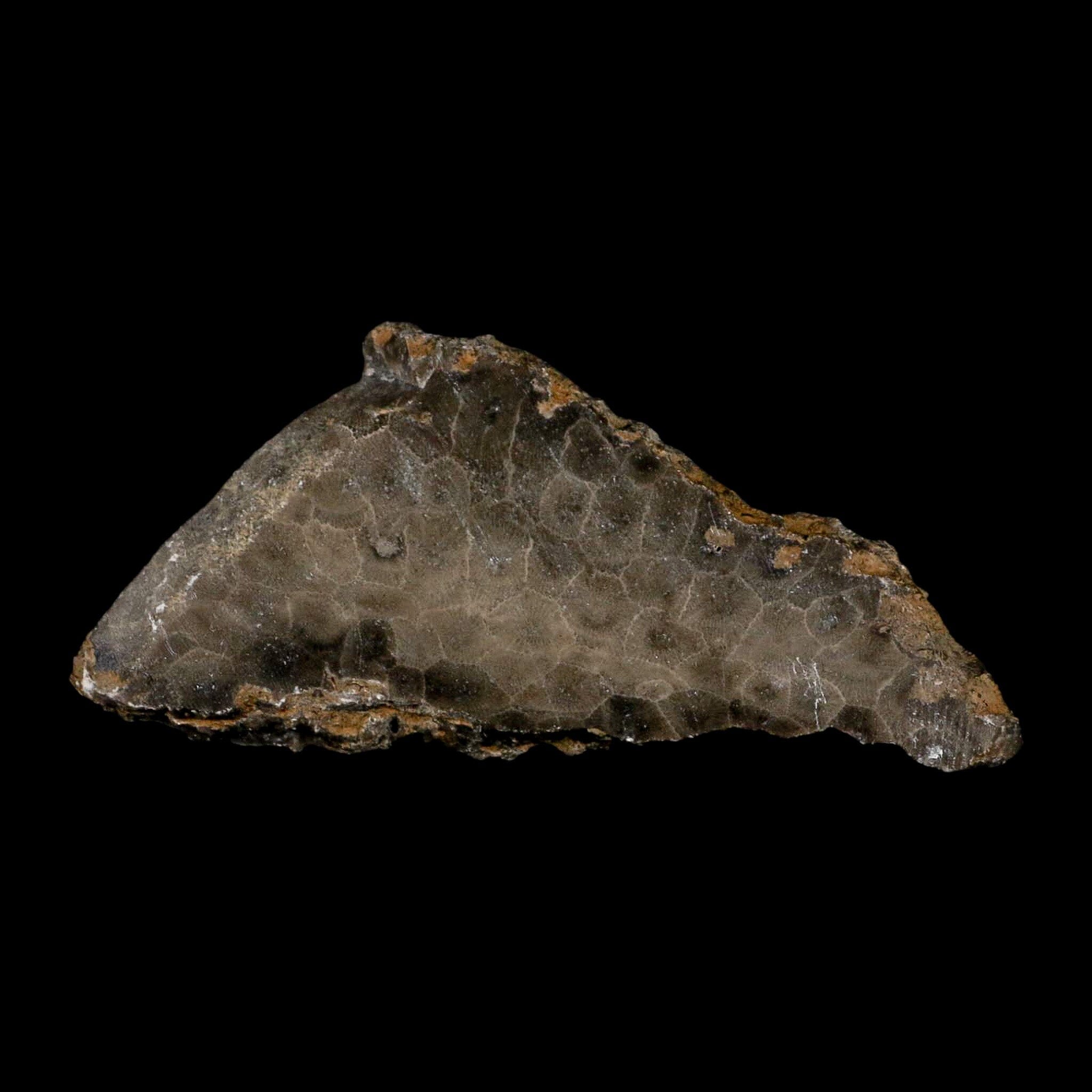


Description
Location: Michigan, United States
Weight: 3.3 Ounces
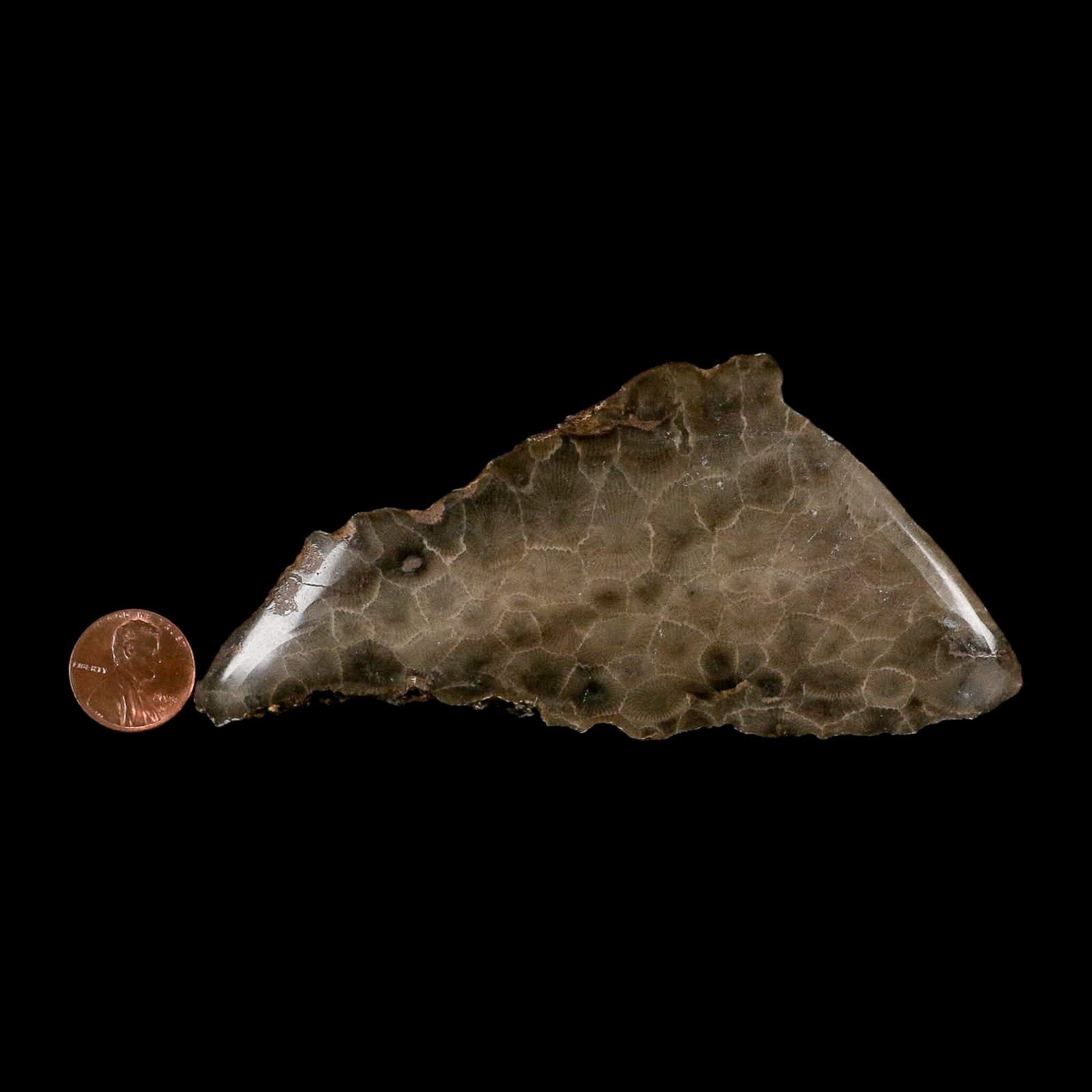
Dimensions: 4.8 Inches Long, 2.3 Inches Wide, 0.4 Inches Thick
The item pictured is the one you will receive.
Devonian Age, 350 million years old
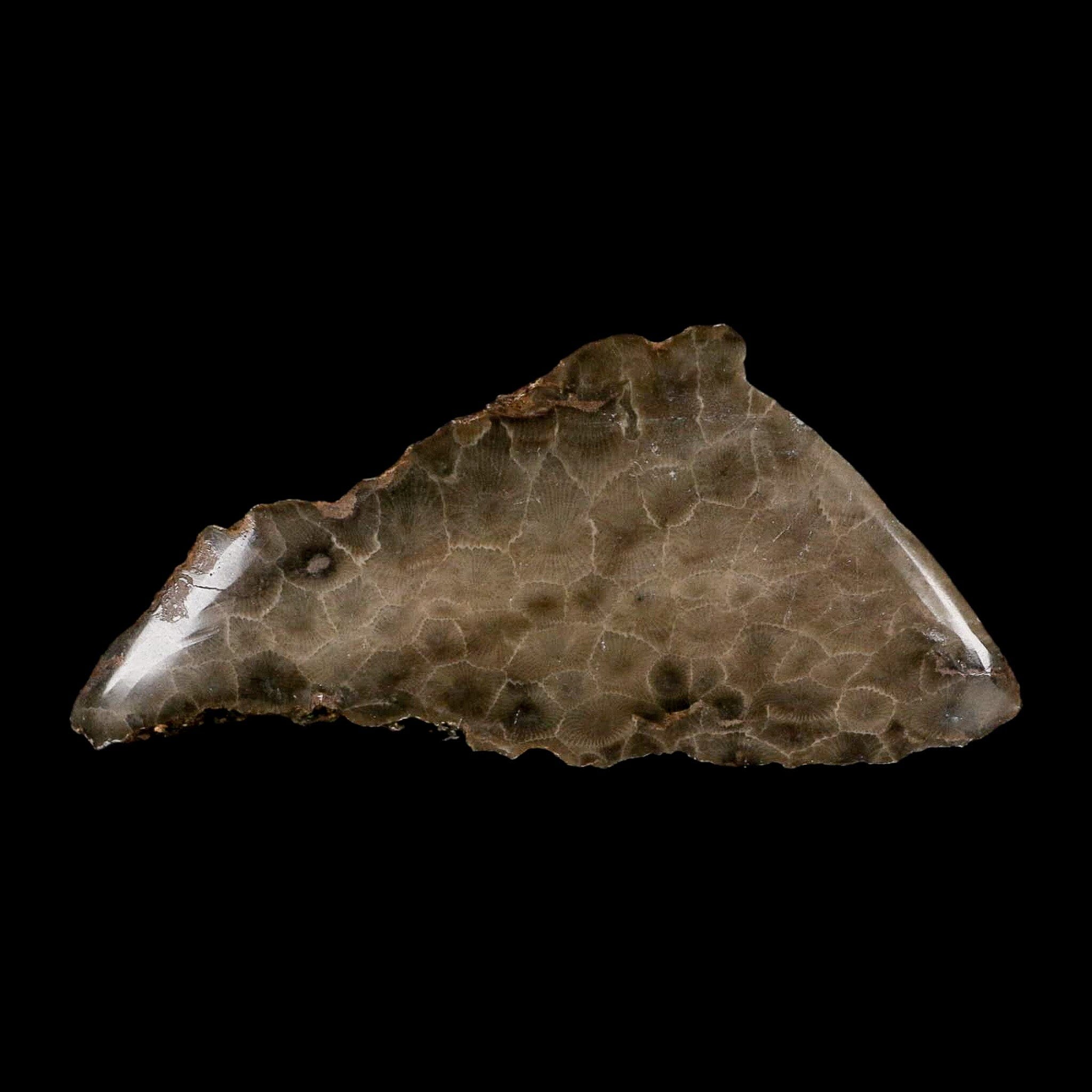
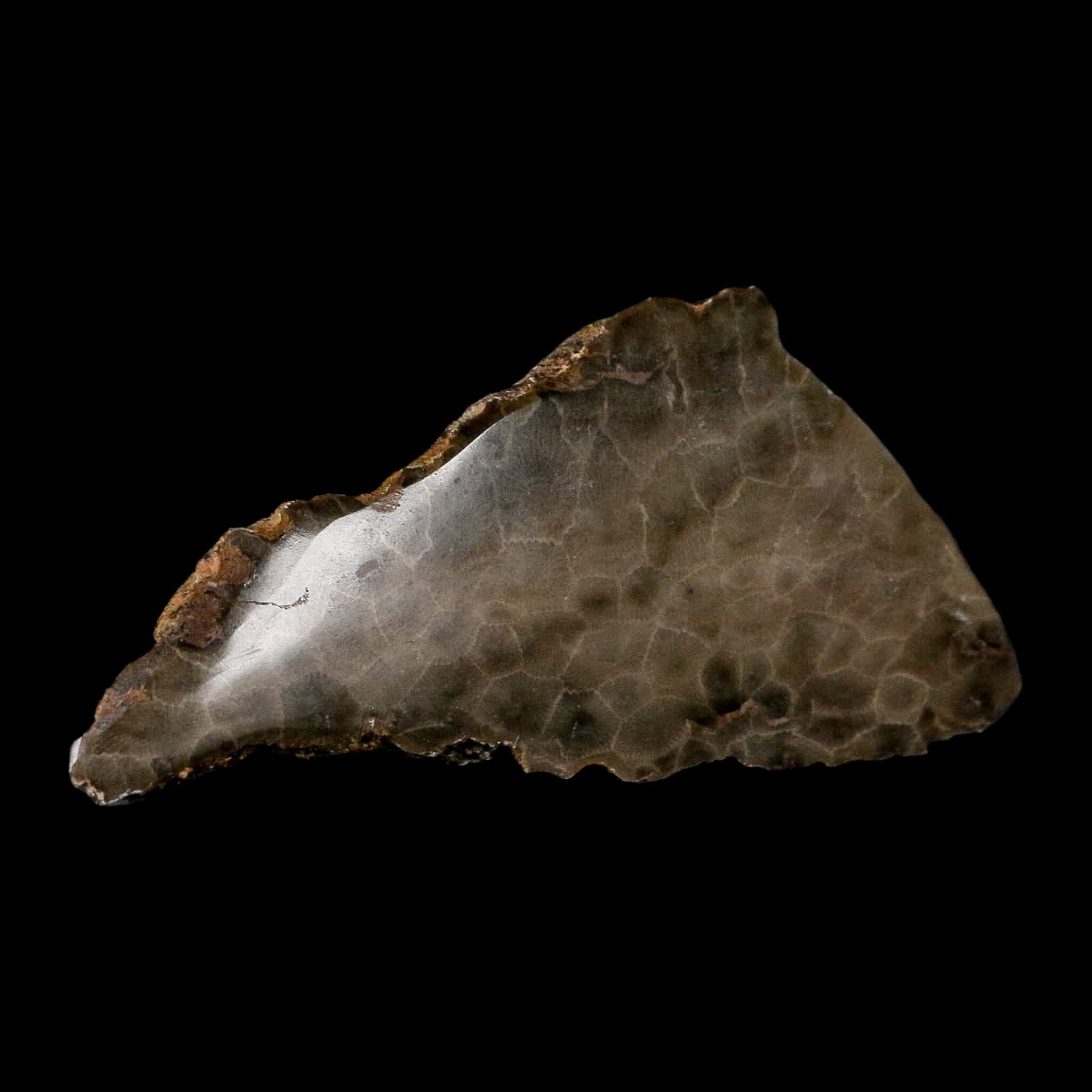
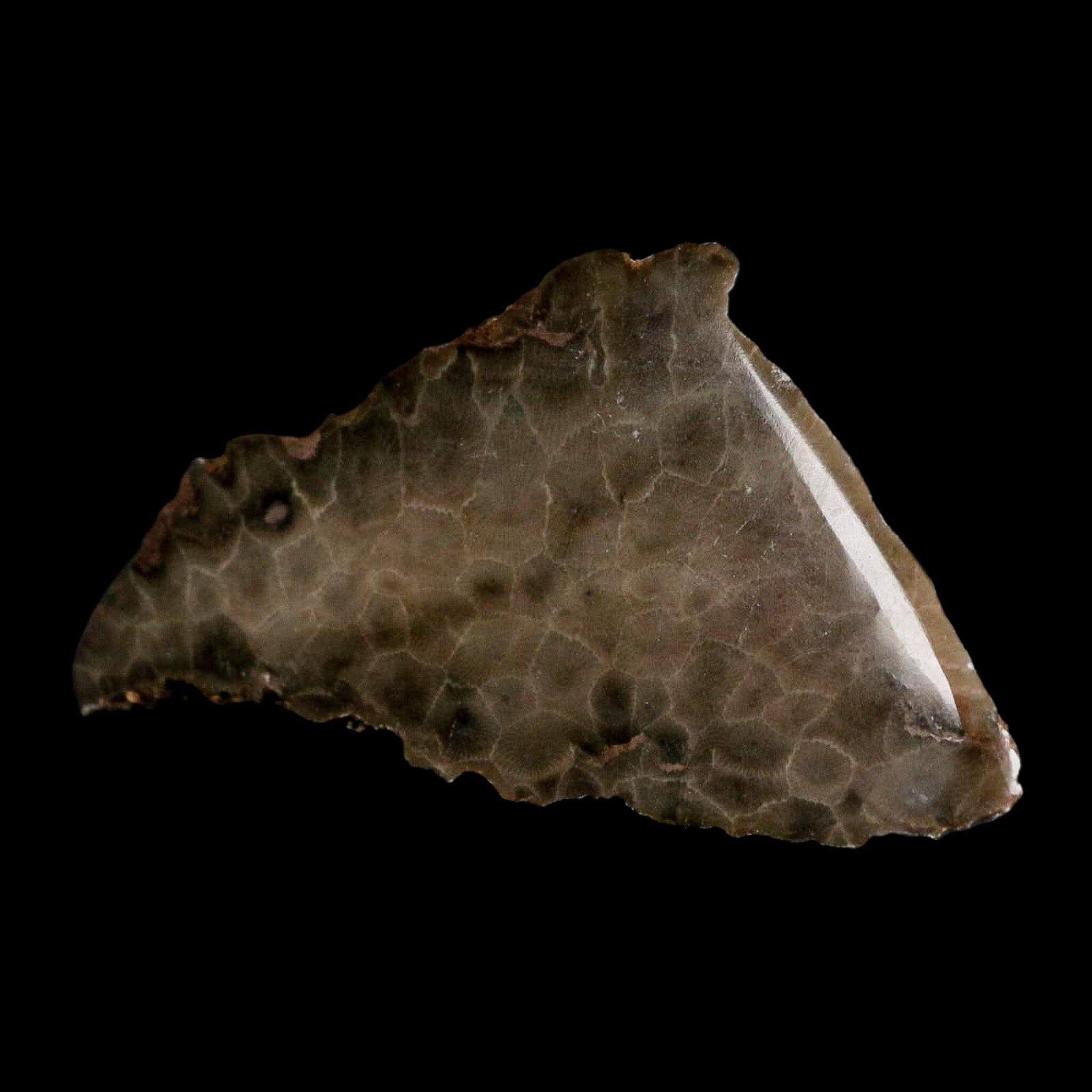
Petoskey Stone is a unique rock and fossil, specifically a fossilized rugose coral known as Hexagonaria percarinata. These stones are typically pebble-shaped and are found primarily in the northwestern and northeastern regions of Michigan's Lower Peninsula. They are fragments of a coral reef that existed during the Devonian period, approximately 350 million years ago.
Glacial forces sculpted these remarkable specimens over millennia, as massive ice sheets tore them from ancient bedrock and relentlessly polished their surfaces into smooth, exhibition-ready forms. Deceptively plain when dry, these stones transform dramatically upon contact with water or professional finishing—revealing an intricate mosaic of hexagonal coral chambers that once housed living polyps hunting for sustenance in Devonian seas. Each six-sided cell represents a skeletal vault, its geometric precision interrupted by a dark central "eye" surrounded by radiating lines—the unmistakable signature of Hexagonaria percarinata. This architectural perfection, preserved for 375 million years, captures a frozen moment when countless coral polyps thrived in Michigan's ancient tropical waters, their geometric legacy now exposed to modern eyes through nature's most powerful tool: ice.
These ancient coral fossils emerge across Michigan's diverse landscape—from the windswept Lake Michigan beaches stretching between Traverse City and Petoskey to hidden inland excavations. Winter's relentless freeze-thaw cycle acts as nature's prospector, dislodging specimens and revealing fresh treasures as spring arrives. Seasoned hunters converge on established sites like Petoskey State Park, Magnus City Park Beach, and Solanus Mission Beach, but the real finds await those willing to venture into less-traveled territory: abandoned road cuts, active gravel mines, and sprawling agricultural fields. Spring represents peak season when the ice's grip loosens and exposes these 375-million-year-old prizes. Success demands timing, persistence, and the courage to explore where few collectors dare to tread.
