
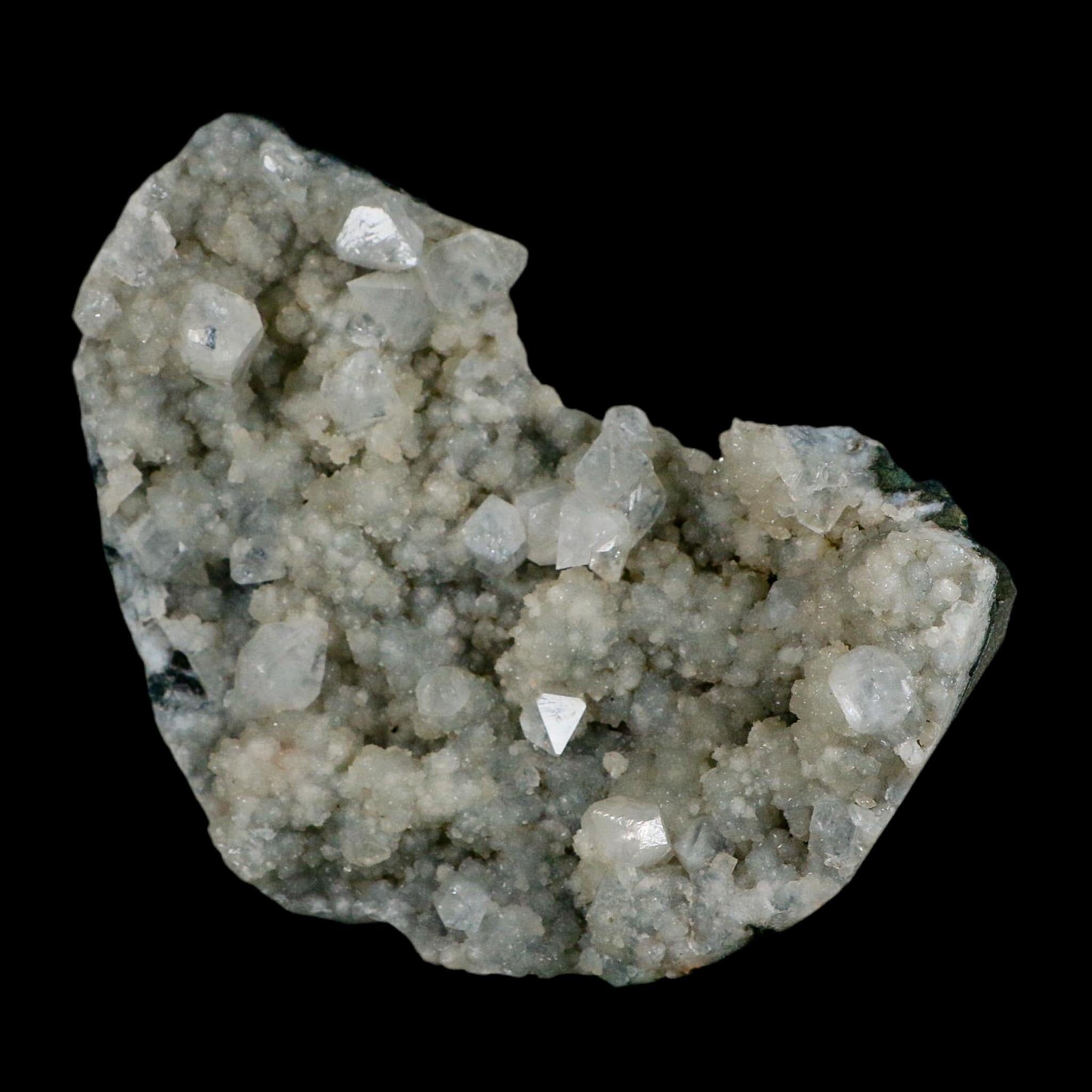
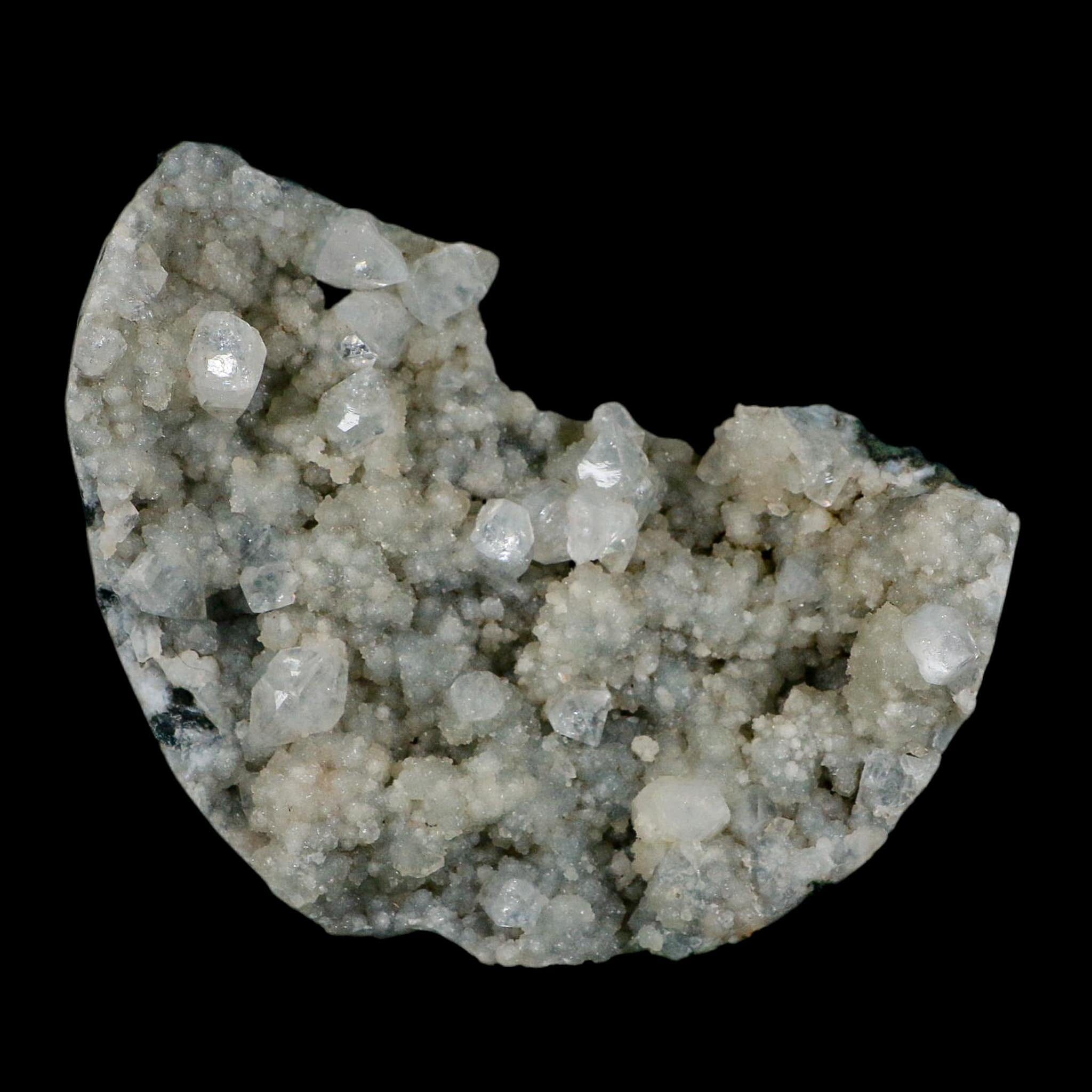
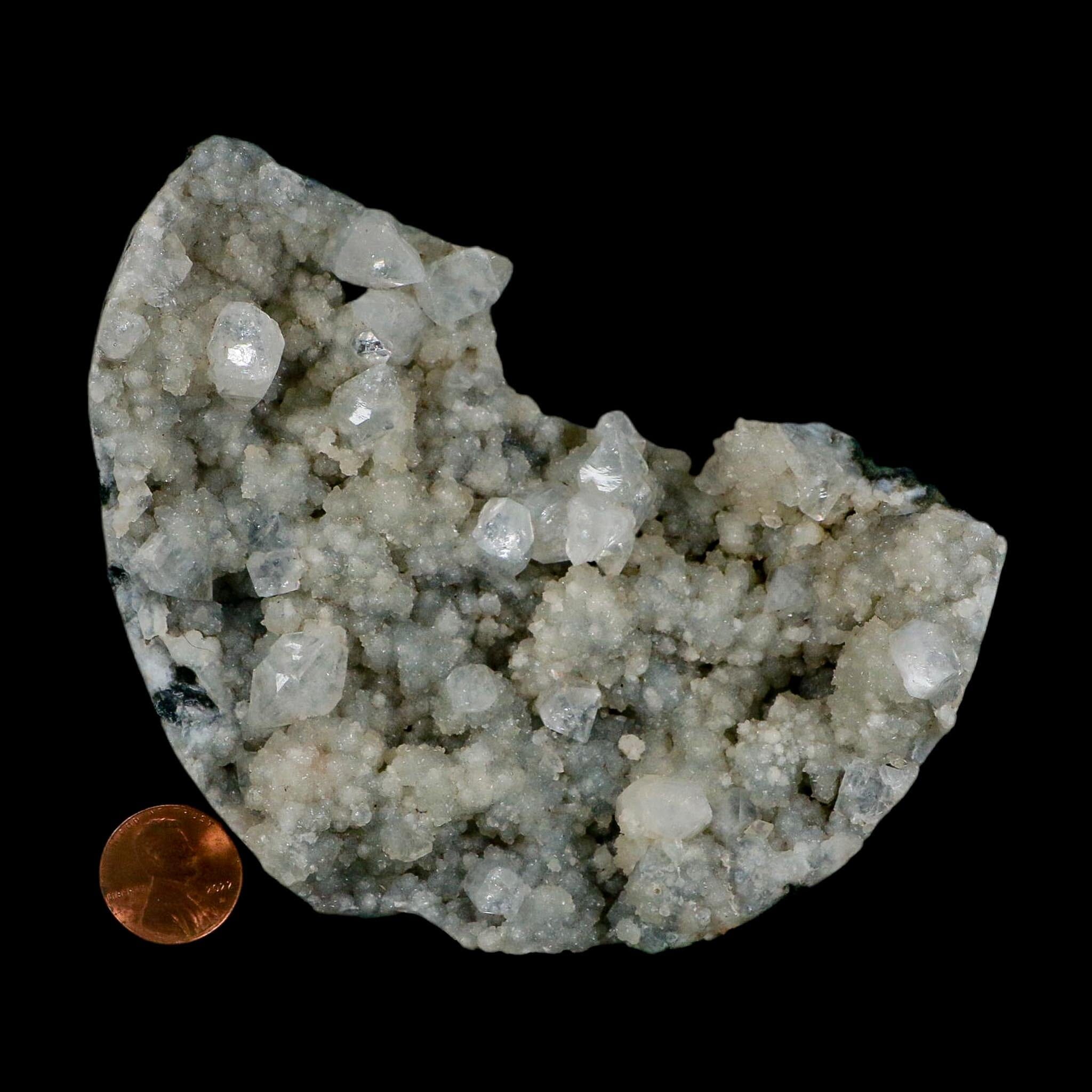
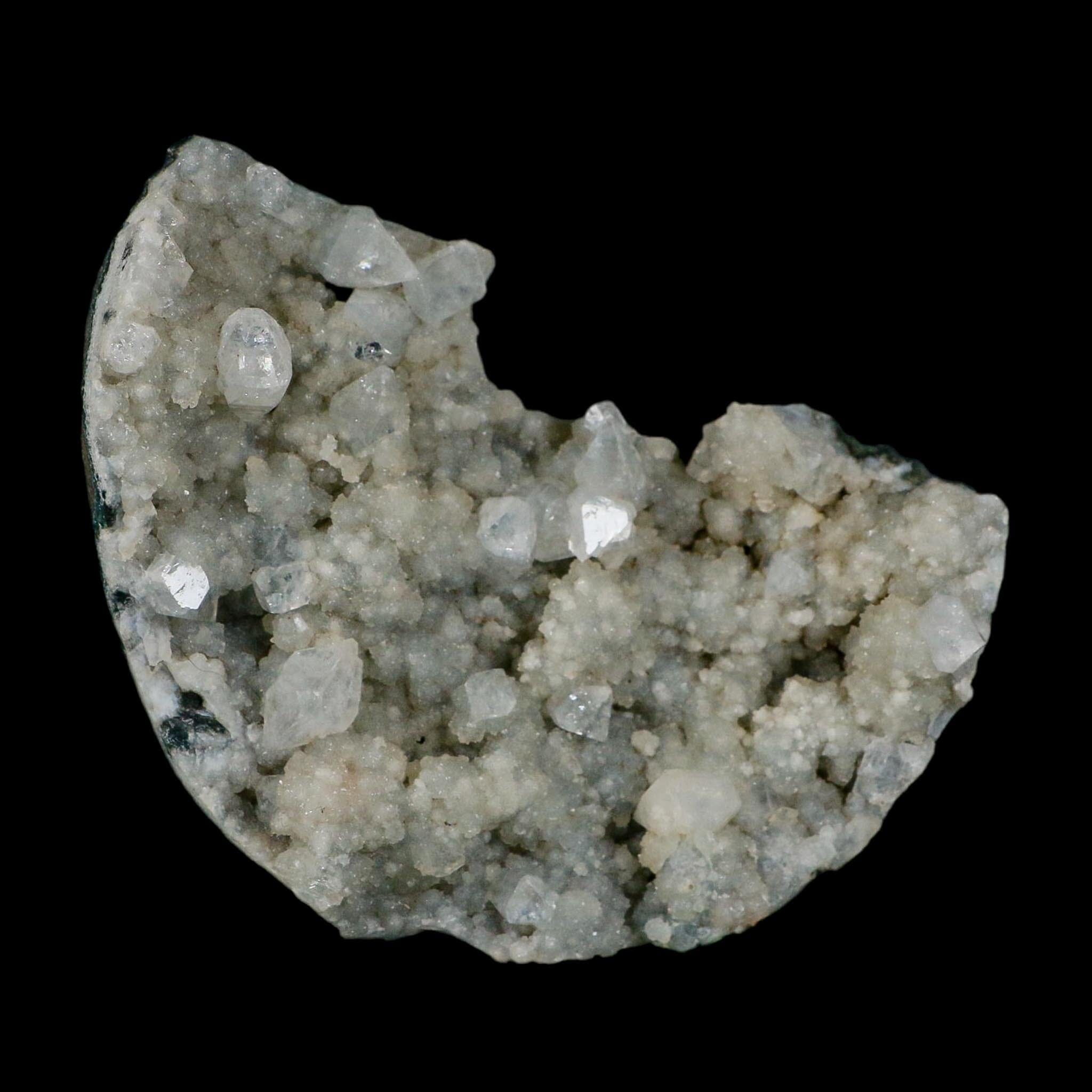
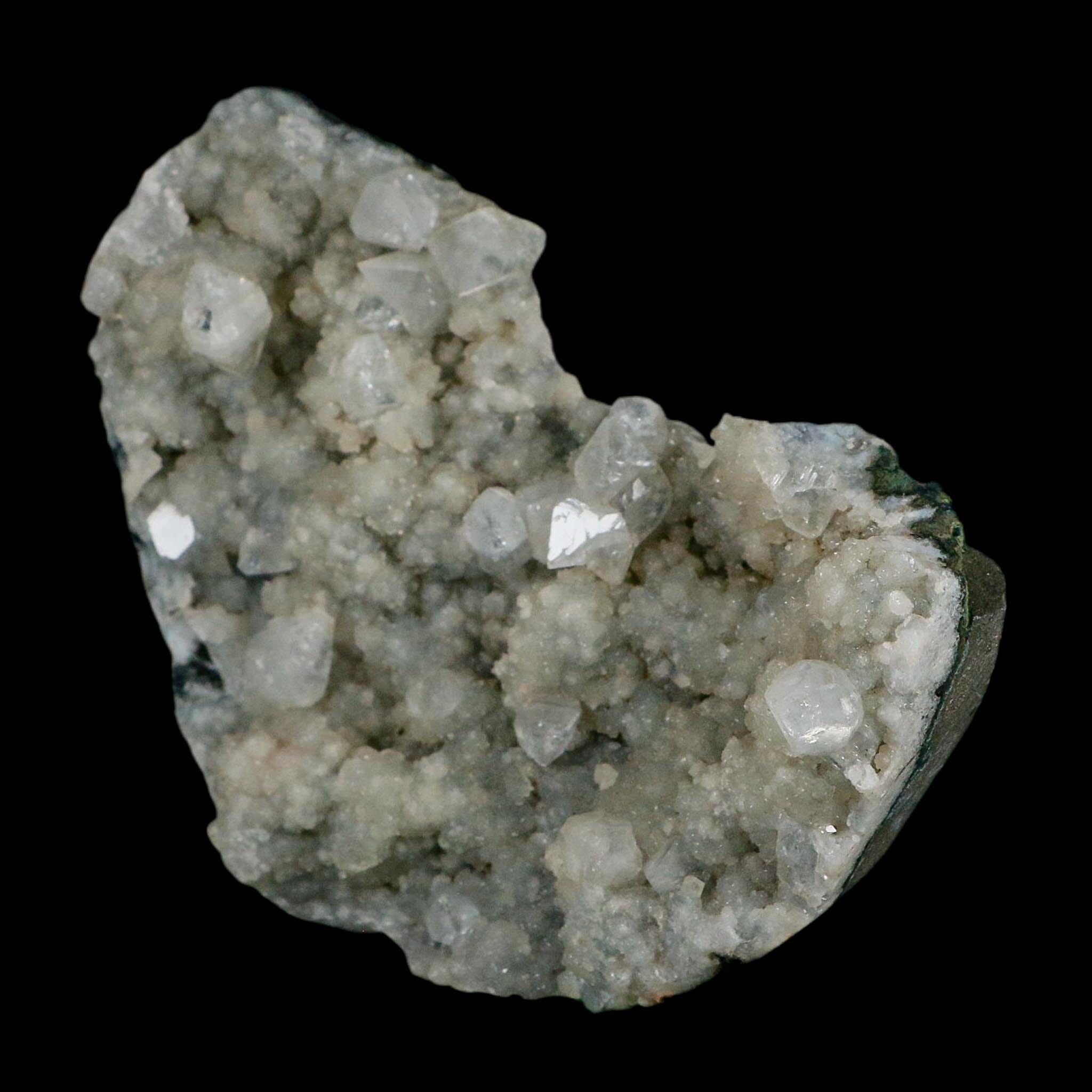
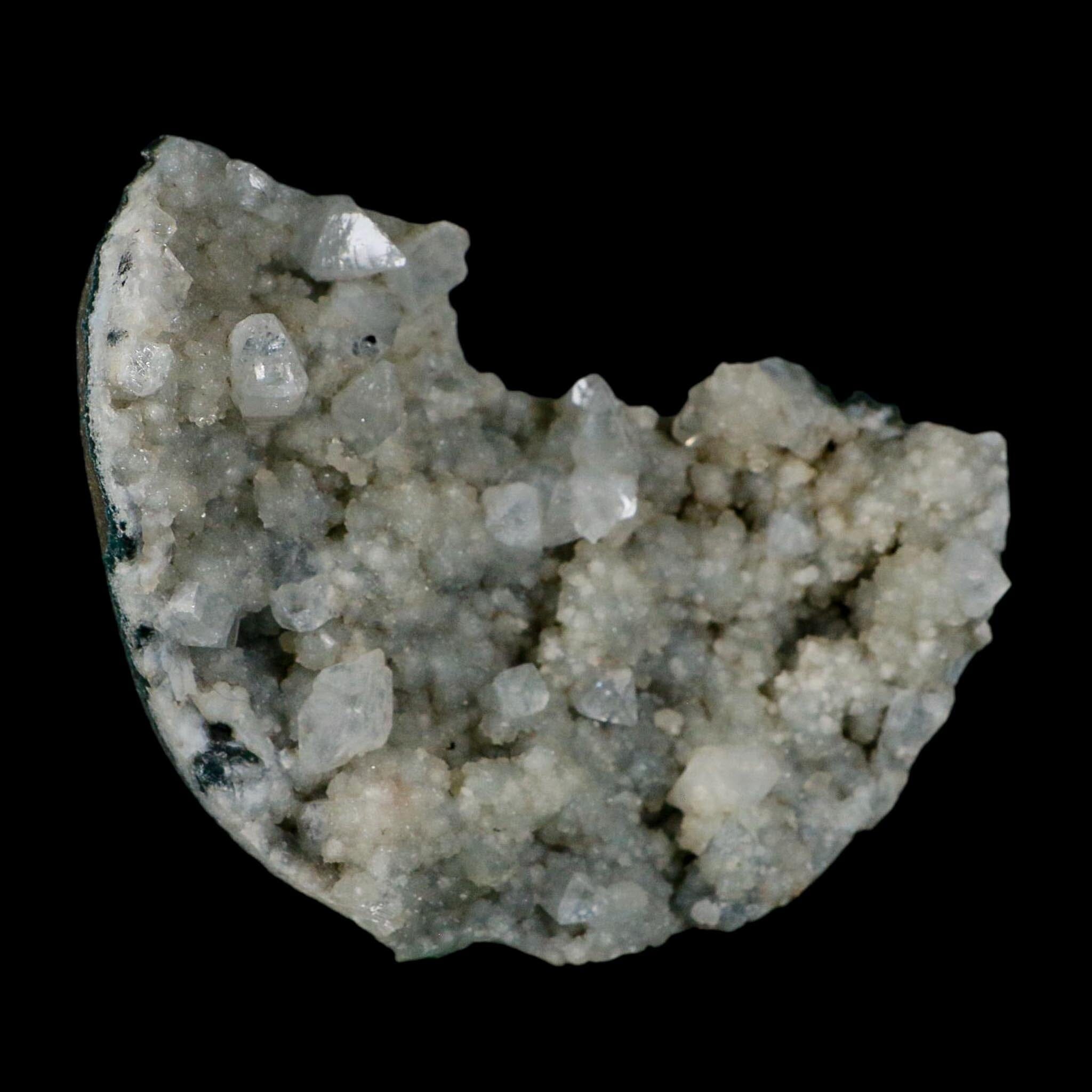
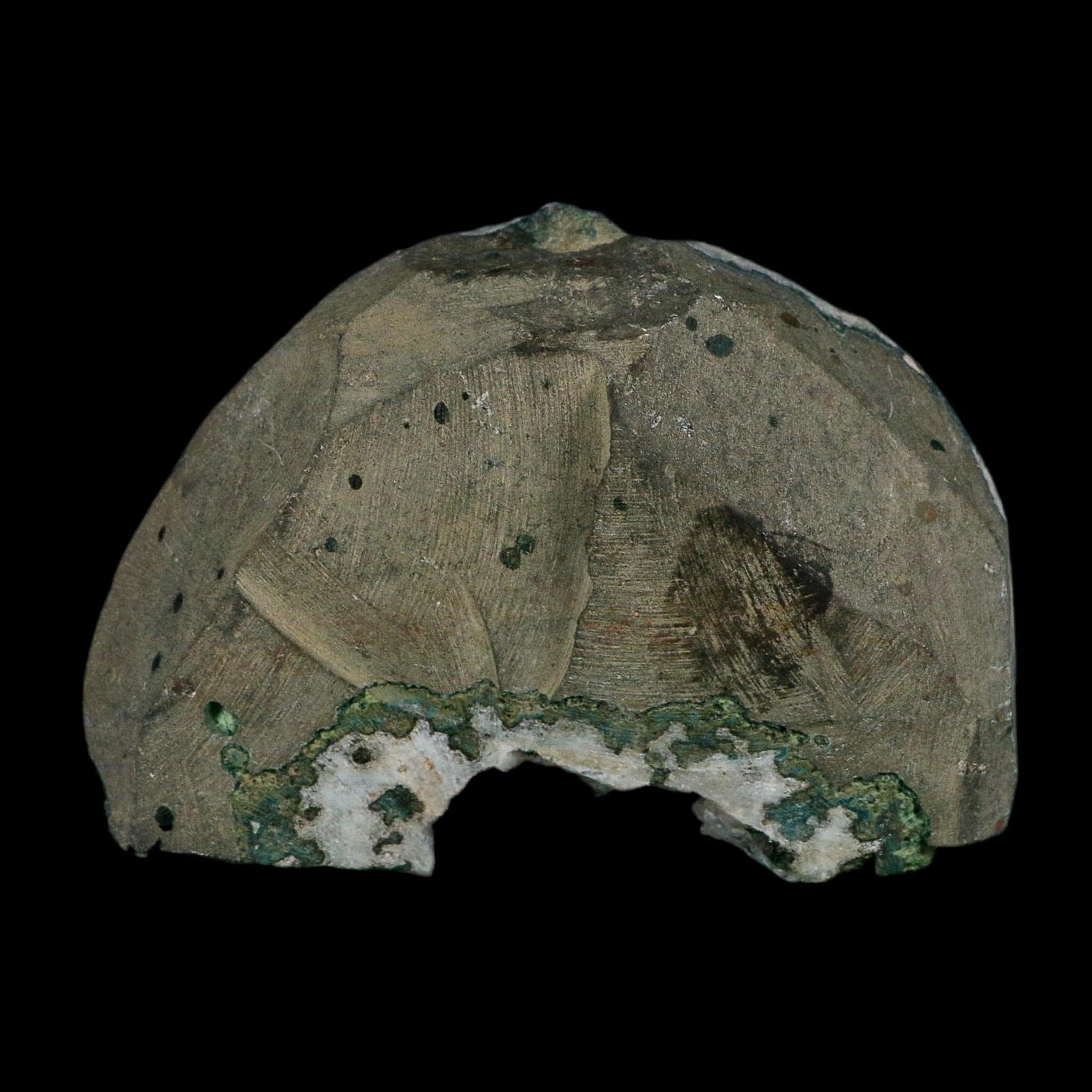


Description
Location: India
Weight: 14.3 Ounces
Dimensions: 4.7 Inches Long, 3.4 Inches Wide, 1.8 Inches Thick
The item pictured is the one you will receive.
Apophyllite from India is world-renowned among mineral collectors for its exceptional clarity, sharp pyramidal terminations, and brilliant luster. While found globally, Indian specimens—specifically those mined from the active basalt quarries around Pune, Jalgaon, and Nashik in Maharashtra—represent the undisputed gold standard for the species. Depending on trace chemical impurities, natural Indian Apophyllite ranges from ice-clear and white to striking pastel green and delicate peachy-pink hues.
Geological Formation in the Deccan Traps
The formation of Indian Apophyllite is directly linked to one of the most monumental volcanic events in Earth's history: the eruption of the Deccan Traps roughly 66 million years ago—coinciding with the exact end-Cretaceous era when Ankylosaurus roamed North America. As massive basaltic flood lavas cooled across the Indian subcontinent, trapped volcanic gases formed hollow bubbles and cavities known as vesicles.
Over millions of years, ancient hydrothermal fluids enriched with silica, potassium, calcium, and fluorine permeated these subterranean pockets. As temperatures cooled and conditions stabilized, these mineral-rich solutions slowly precipitated, growing magnificent Apophyllite crystals along the walls of the basalt cavities, frequently accompanied by peach Stilbite, sparkling Heulandite, and Chalcedony.
Physical Properties & Diagnostic Features
-
Cleavage and Luster: The name Apophyllite derives from the Greek words apo ("off") and phyllos ("leaf"), referencing its tendency to flake or peel apart along its perfect basal cleavage when subjected to heat. Because of this layered silicate structure, the crystal faces display a blinding, pearly luster on cleavage surfaces and a glassy, vitreous luster on crystal terminations.
-
Hardness: Apophyllite has a Mohs hardness ranging between 4.5 and 5. This makes it softer than Quartz (which sits at 7 on the scale), meaning it must be handled with care to prevent scratches or chipping along its cleavage planes.
-
Crystal Habit: Unlike many zeolites it forms alongside, Apophyllite typically crystallizes in the tetragonal system, forming classic four-sided prisms topped by steep, pyramid-like terminations that resemble tiny obelisks or cubes with modified corners.
Collector Value & Care
High-quality Indian Apophyllite clusters are prized for their aesthetic architecture, high transparency, and the dramatic color contrast when intergrown with peach Stilbite or orange Mordenite matrices. Because it is a hydrous mineral containing water molecules in its crystal lattice, specimens should be kept away from harsh acids and prolonged exposure to intense heat to preserve their structural integrity and brilliant luster.