
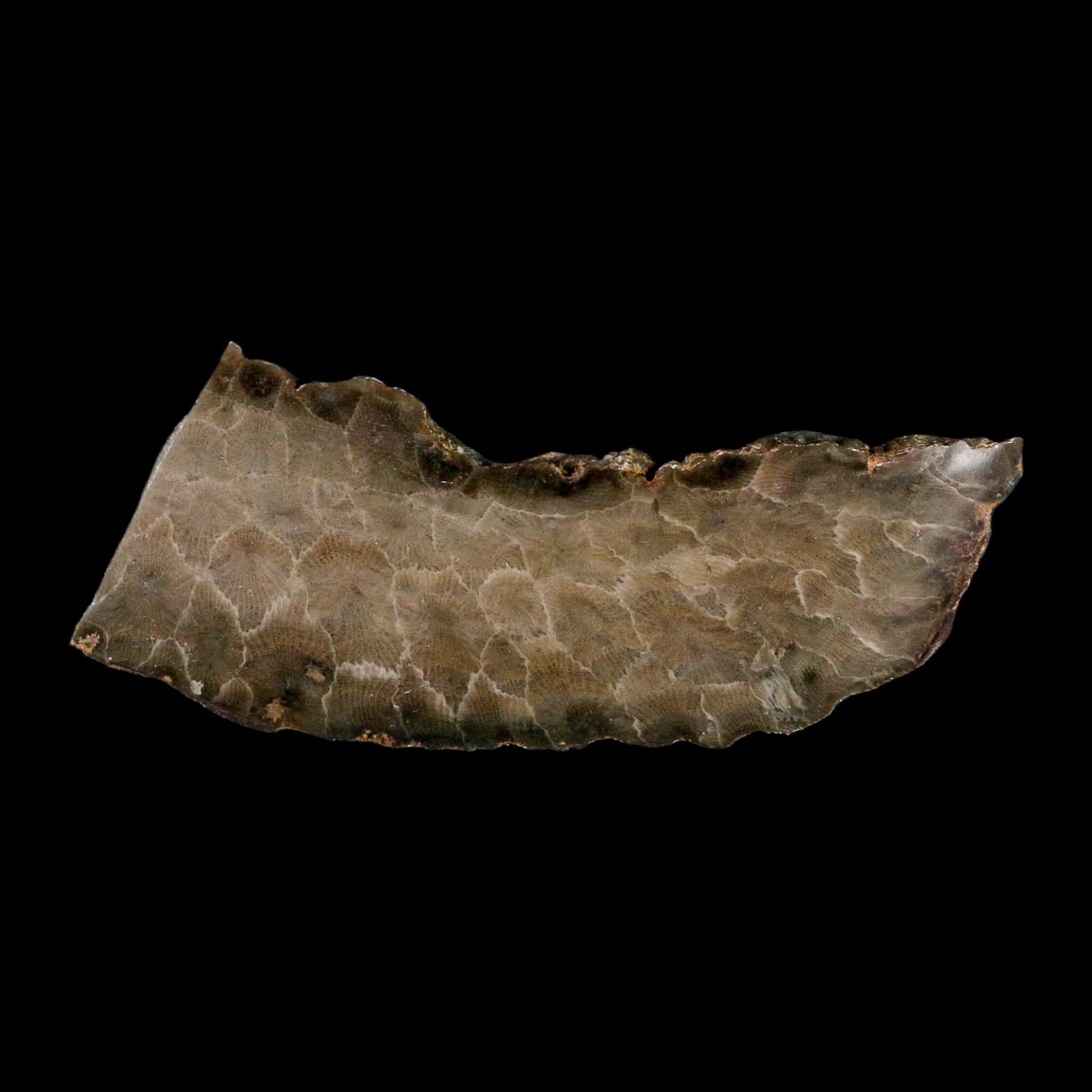
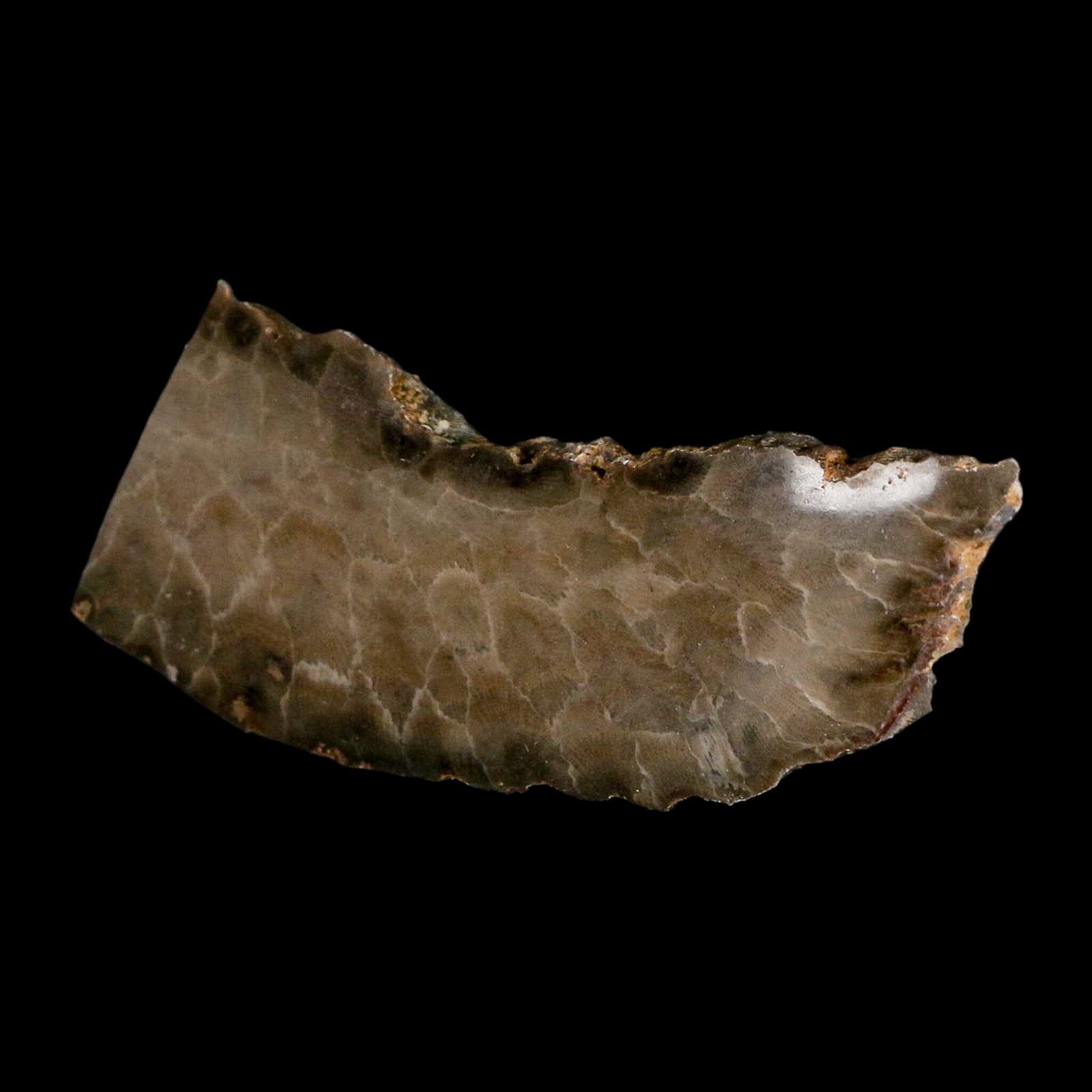
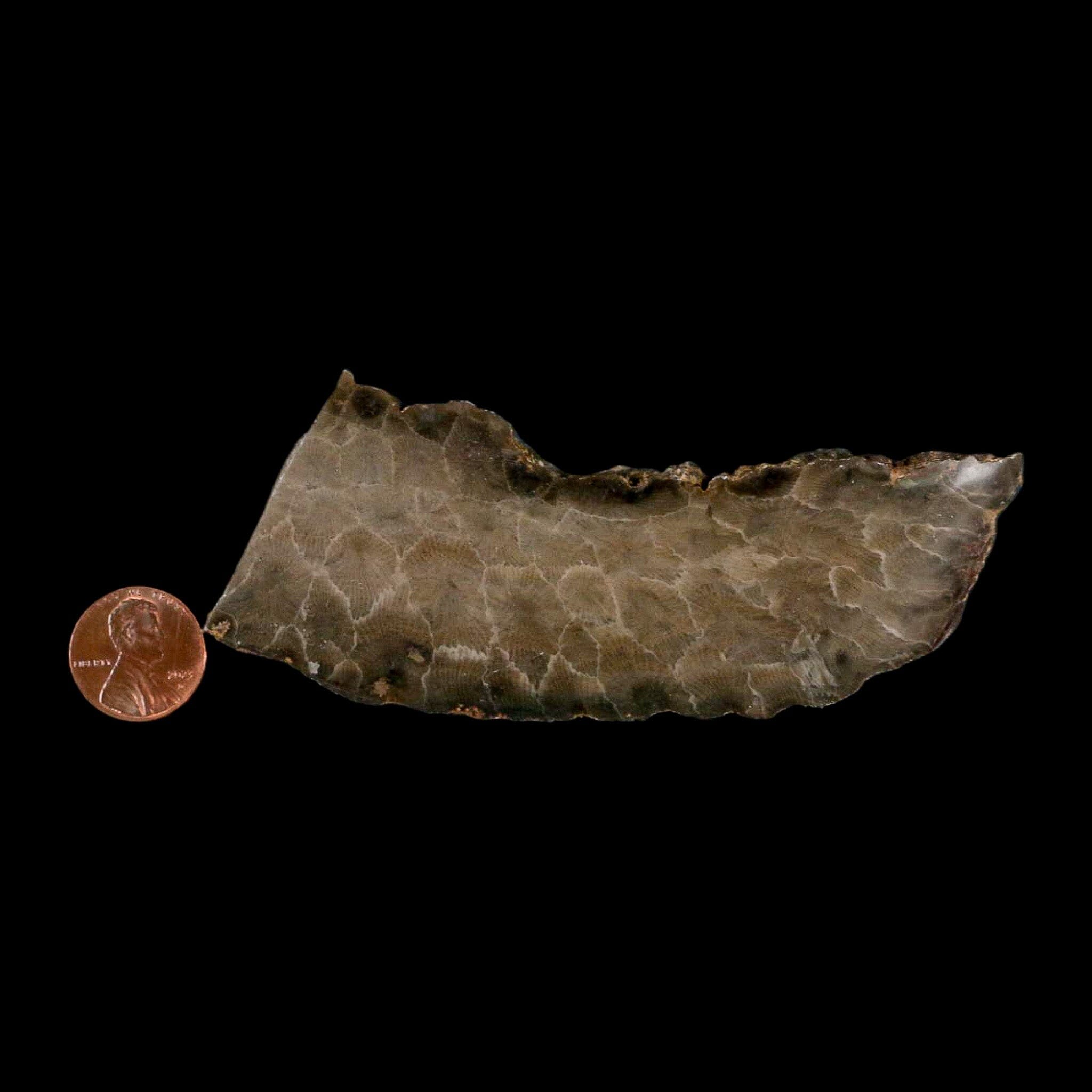
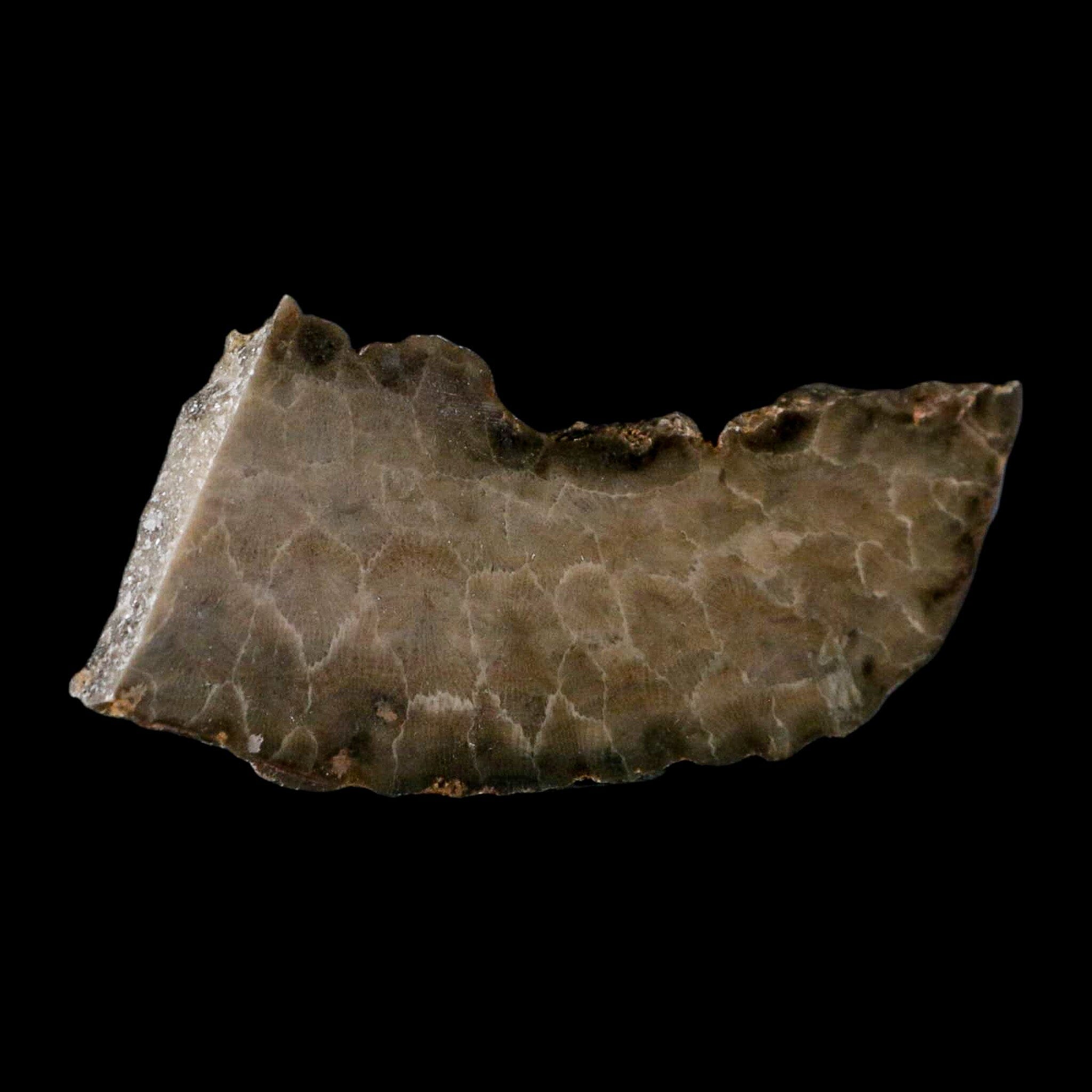
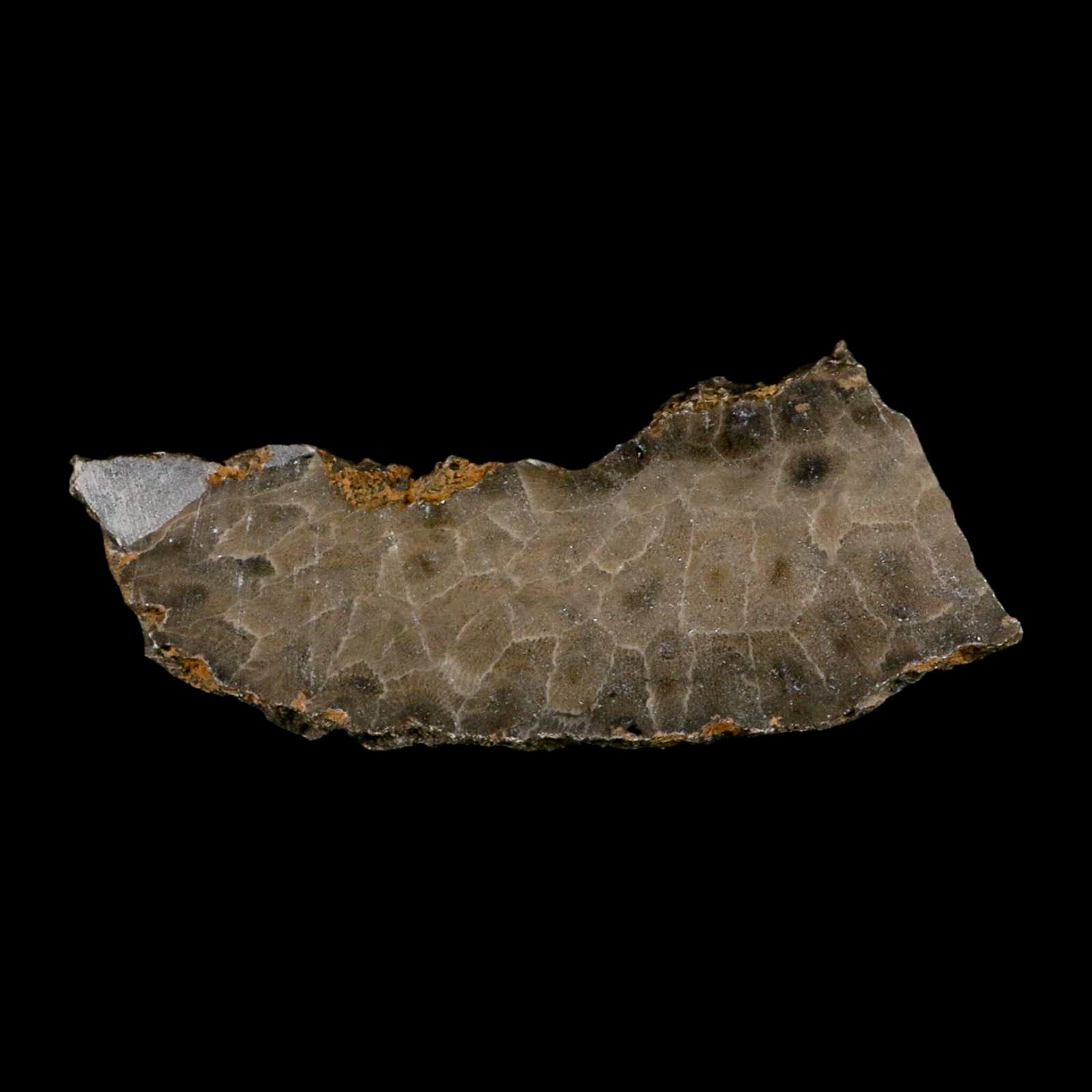


Description
Location: Michigan, United States
Weight: 2.4 Ounces
Dimensions: 4.2 Inches Long, 1.7 Inches Wide, 0.3 Inches Thick
The item pictured is the one you will receive.
Devonian Age, 350 million years old
Petoskey Stones are unique rocks and fossils, specifically fossilized rugose coral known as Hexagonaria percarinata. Typically pebble-shaped, these stones are found primarily in the northwestern and northeastern regions of Michigan's Lower Peninsula. They are fragments of an ancient coral reef that thrived during the Devonian period, approximately 350 million years ago.
Petoskey stones were shaped through glacial activity, when ice sheets plucked stones from the bedrock, smoothing rough edges and depositing them in new locations. When dry, these stones may look like ordinary limestone, but when wet or polished, they reveal a distinctive mottled pattern of six-sided coral fossils. Each fossil consists of tightly packed, six-sided corallites, the skeletal remains of once-living coral polyps. The center of each polyp housed the mouth, with tentacles extending outward to capture food. The hexagonal shape and thin radial lines radiating from the dark central “eye” are distinguishing features unique to these fossils.
Petoskey stones can be found on numerous beaches and inland locations throughout Michigan. Many of the most popular beaches stretch from Traverse City to Petoskey along Lake Michigan, where the movement of frozen lake ice during winter often exposes new stones in the spring. Well-known collection sites include Petoskey State Park, Magnus City Park Beach, and Solanus Mission Beach. Rockhounds also search cut roadbeds, gravel pits, and farmers’ fields. The best time to find Petoskey stones is typically in spring, after ice and seasonal changes have shifted the shoreline and revealed fresh specimens.
