
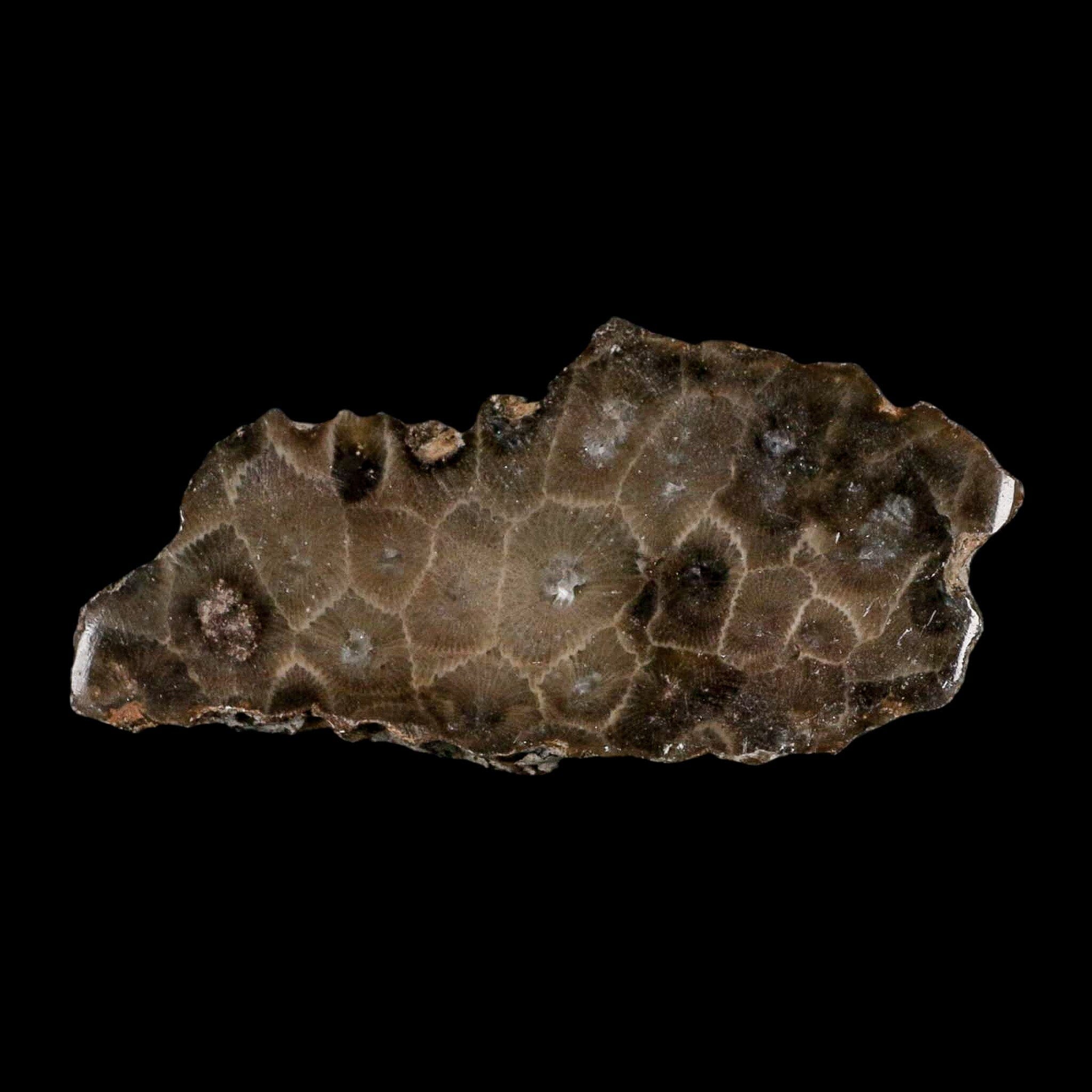
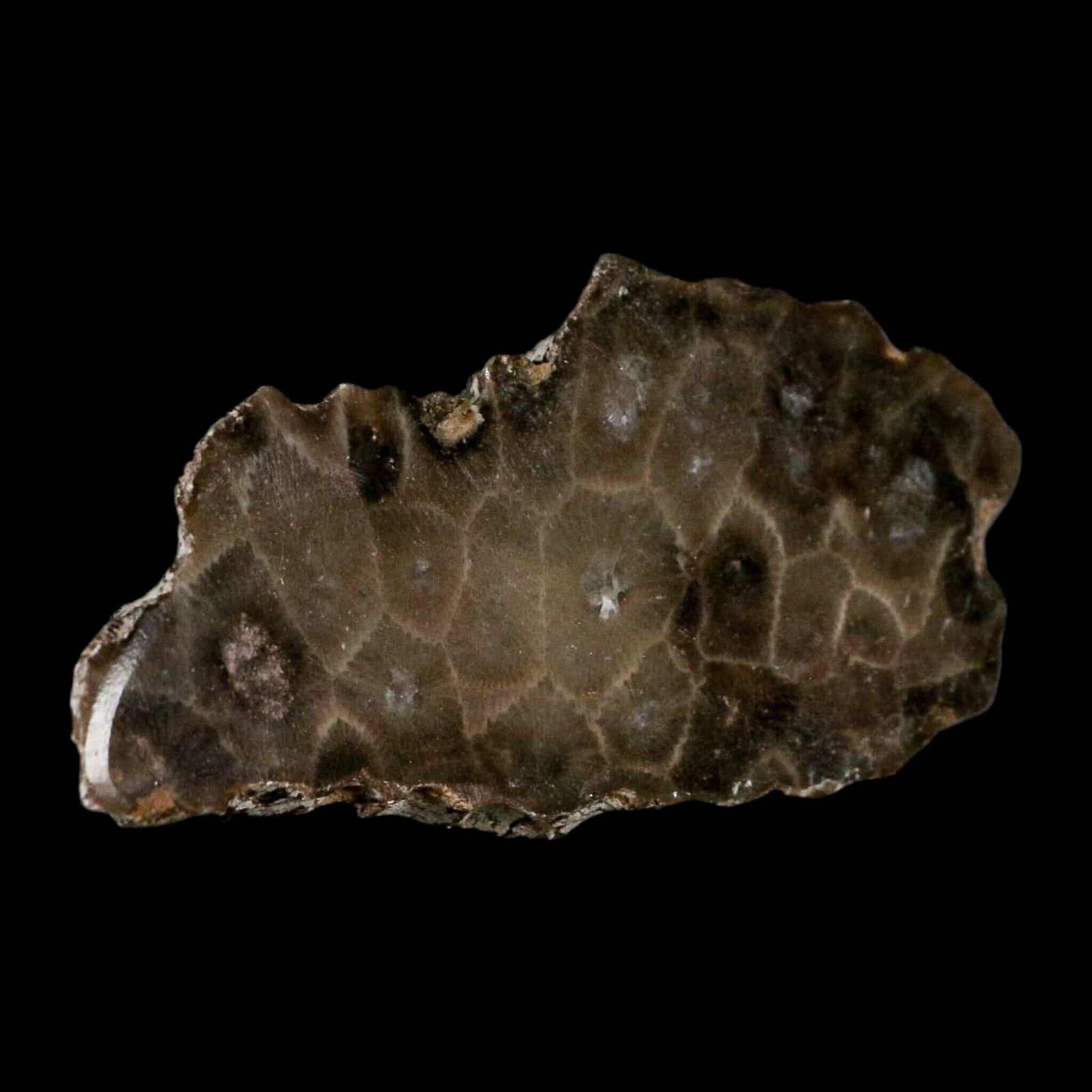
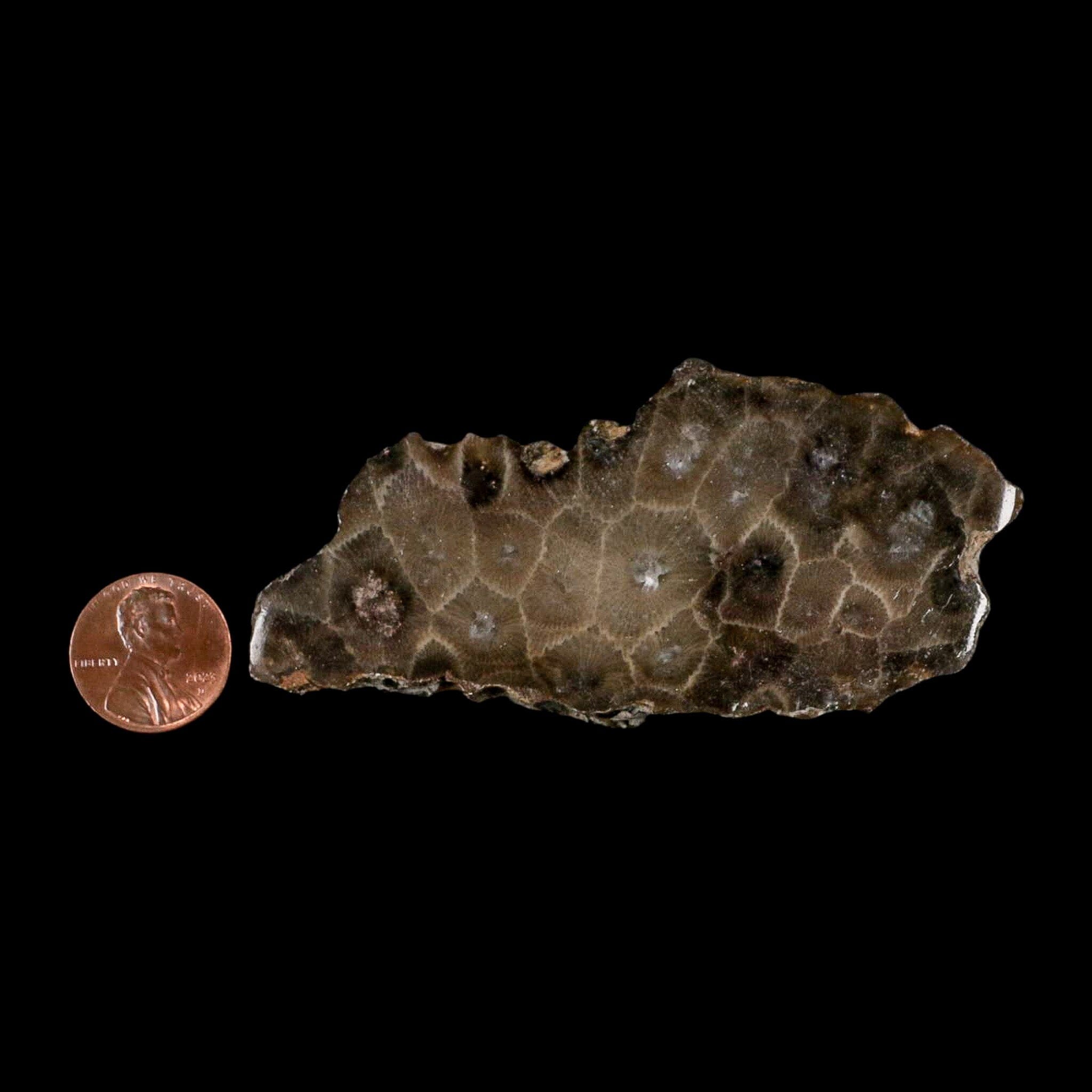
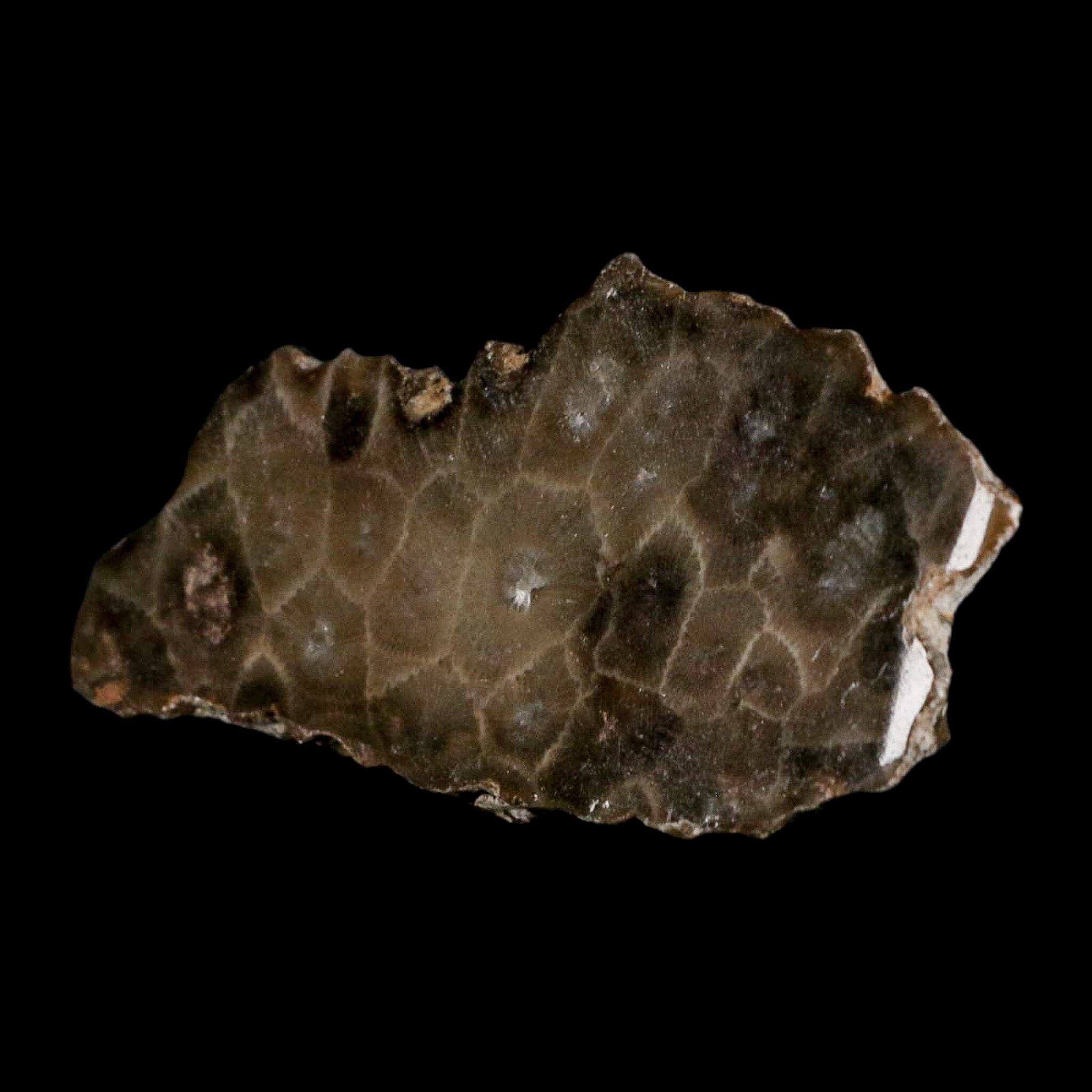


Description
Location: Michigan, United States
Weight: 1.4 Ounces
Dimensions: 3.5 Inches Long, 1.6 Inches Wide, 0.3 Inches Thick
The item pictured is the one you will receive.
Devonian Age, 350 million years old
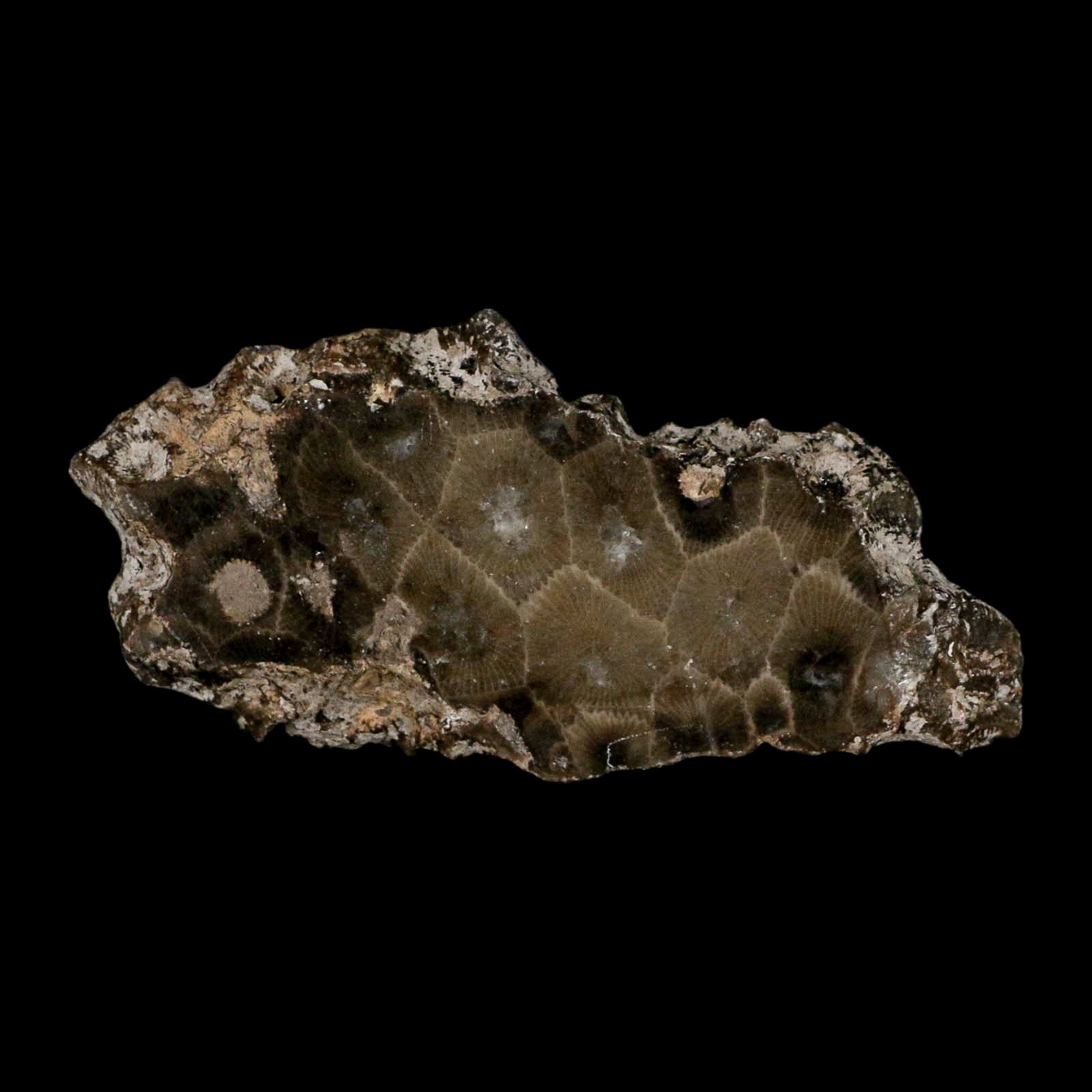
Petoskey Stone is a unique rock and fossil, specifically a fossilized rugose coral known as Hexagonaria percarinata. These stones are typically pebble-shaped and are found primarily in the northwestern and northeastern regions of Michigan's Lower Peninsula. They are fragments of a coral reef that existed during the Devonian period, approximately 350 million years ago.
Glacial processes shaped these remarkable specimens, as ancient ice sheets extracted stones from bedrock, naturally polishing their surfaces and concentrating them in Michigan's distinctive deposits. In their dry state, Petoskey stones appear as unremarkable limestone, yet moisture or deliberate polishing unveils their extraordinary character—an intricate mosaic of hexagonal coral fossils. Each geometric cell represents the skeletal remains of Hexagonaria percarinata polyps, colonial organisms that once extended tentacles from their central mouths to capture sustenance. The defining aesthetic of this fossil lies in its precise hexagonal architecture and the delicate radiating lines converging toward the dark central "eye" of each corallite, characteristics that distinguish this Devonian treasure from all other fossilized coral forms.
Michigan's shorelines and inland regions harbor these remarkable Devonian-era fossils, particularly along the Lake Michigan coast between Traverse City and Petoskey. Seasonal ice movement throughout winter naturally exposes fresh specimens each spring, making this the optimal collecting season. Petoskey stones emerge from diverse environments—pristine beaches, state parks, gravel operations, and agricultural lands—with notable recovery sites including Petoskey State Park, Magnus City Park Beach, and Solanus Mission Beach. The dynamic geological processes that continually redistribute these ancient coral remnants ensure that dedicated collectors discover new examples year after year, especially following winter's transformative ice shifts.
