


Description
Location: Llewellyn Formation, St Clair, Pennsylvania
Weight: 2.4 Ounces
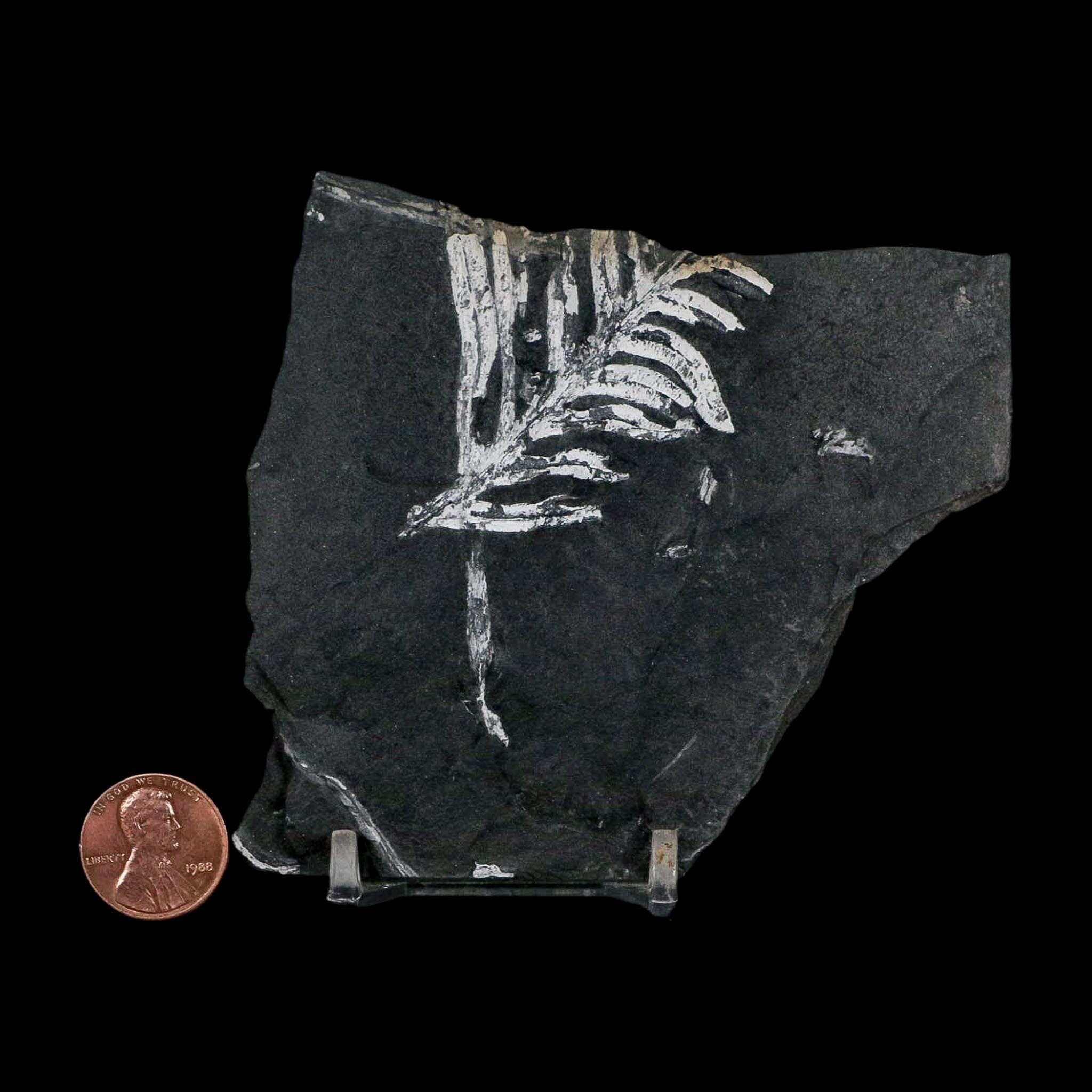
Dimensions: 3.7 Inches Long, 3.5 Inches Wide, 0.3 Inches Thick (Plate)
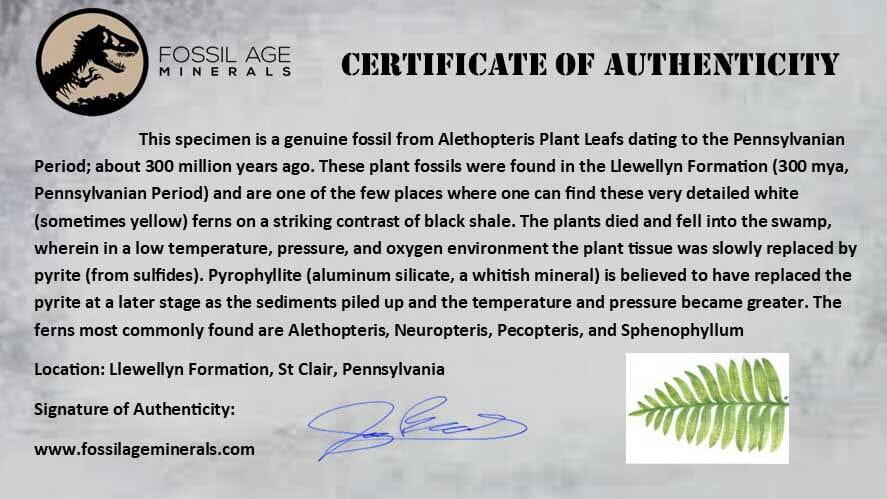
Comes with a Certificate of Authenticity.
Comes with a Free Stand.
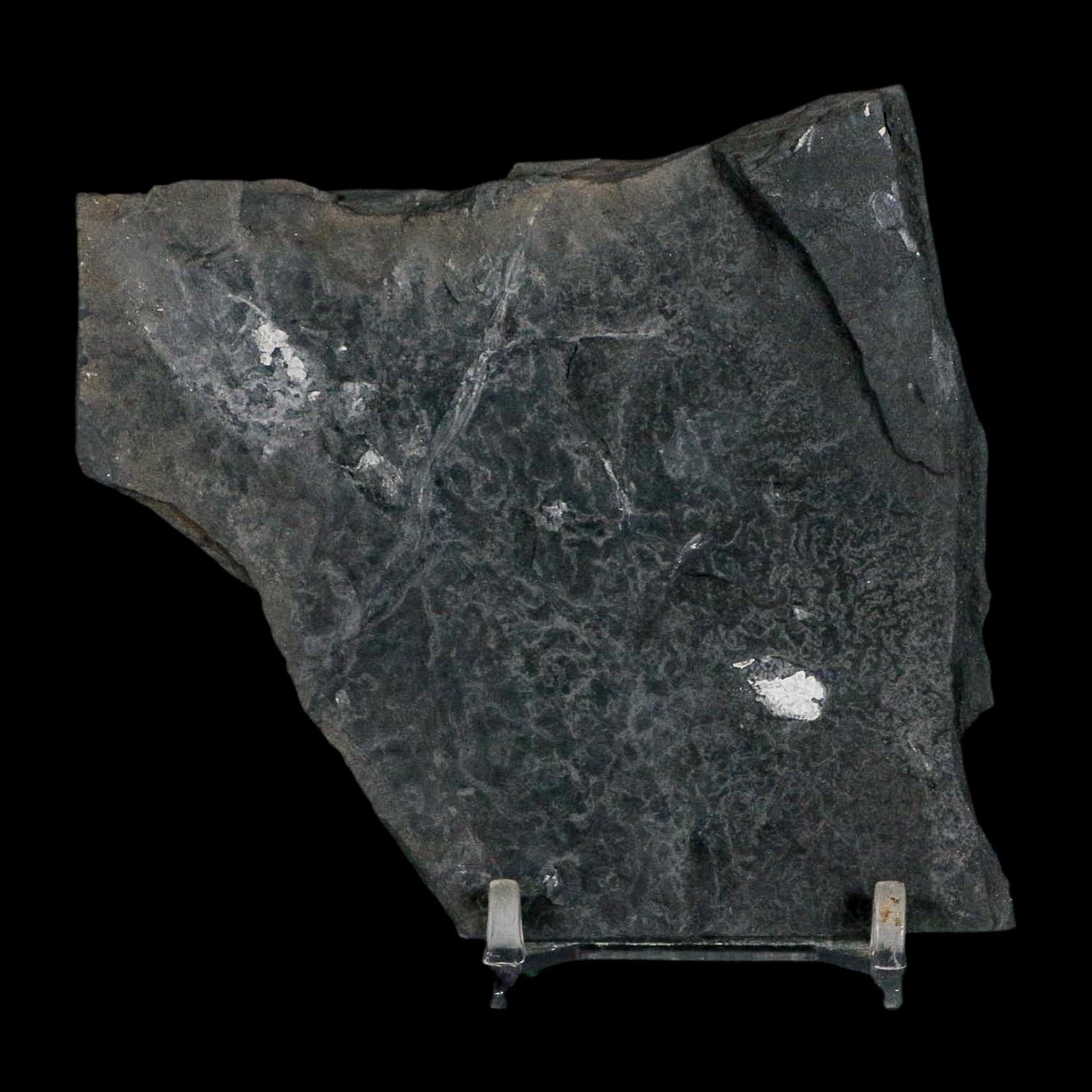
The item pictured is the one you will receive.
Pennsylvanian Age, 300 million years old.
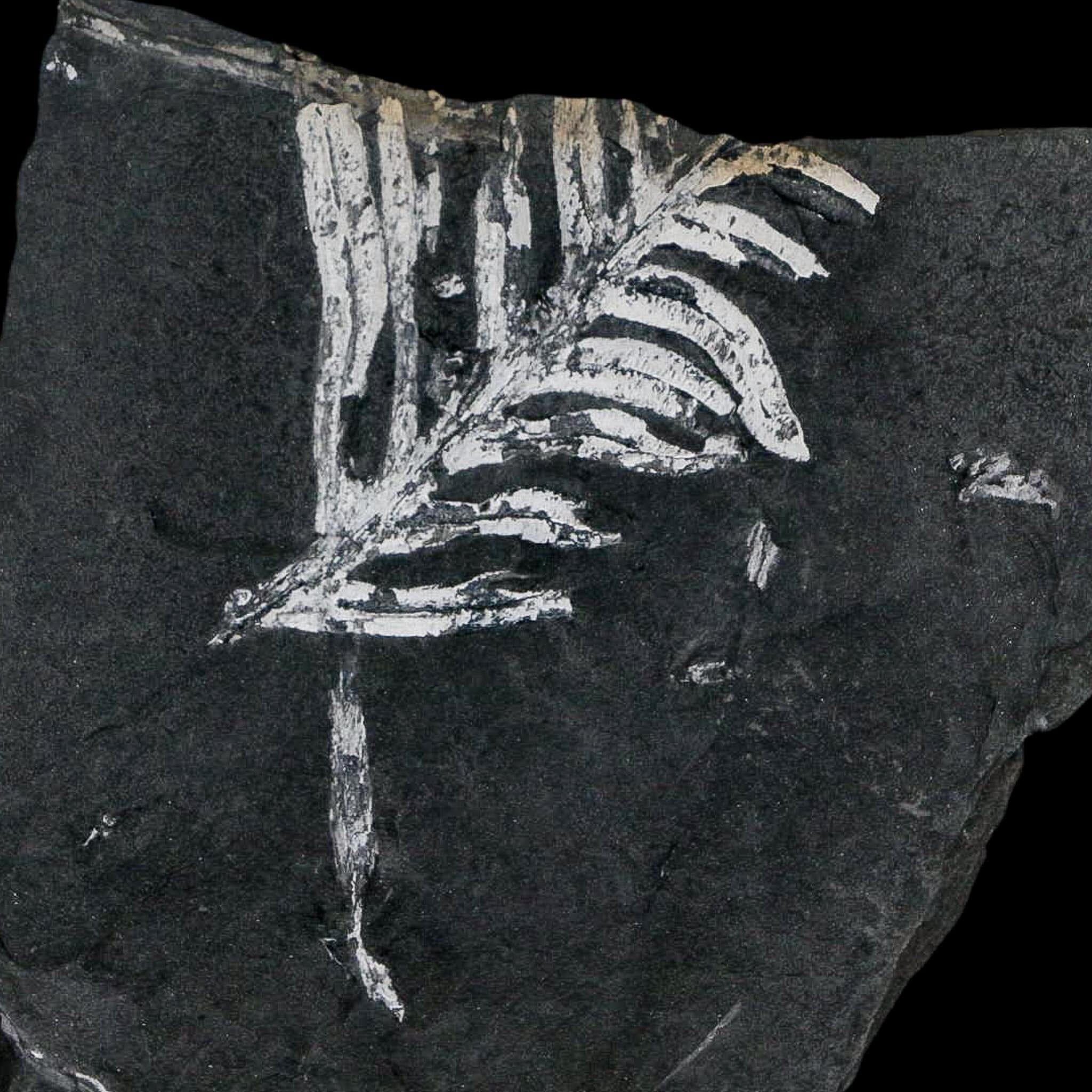
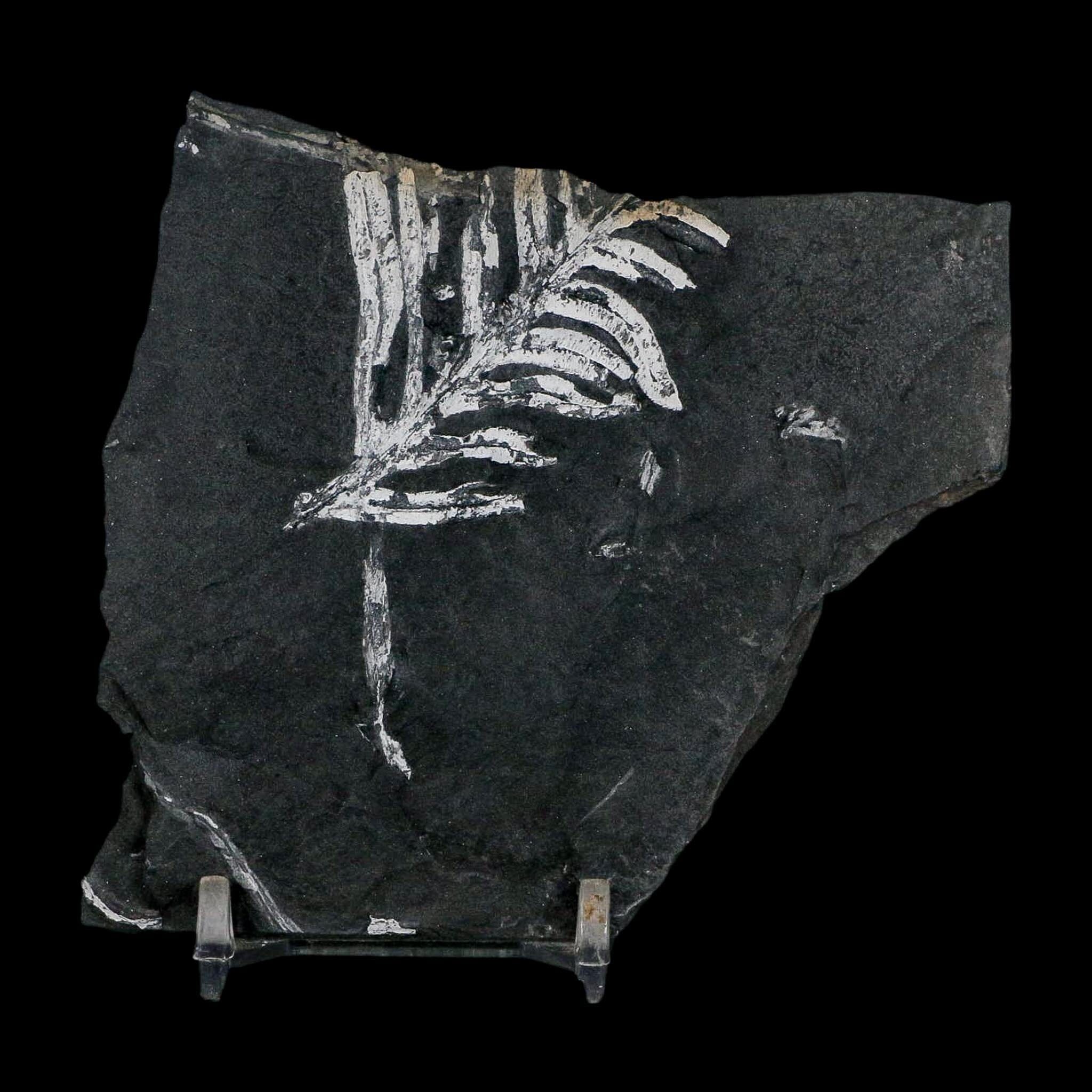
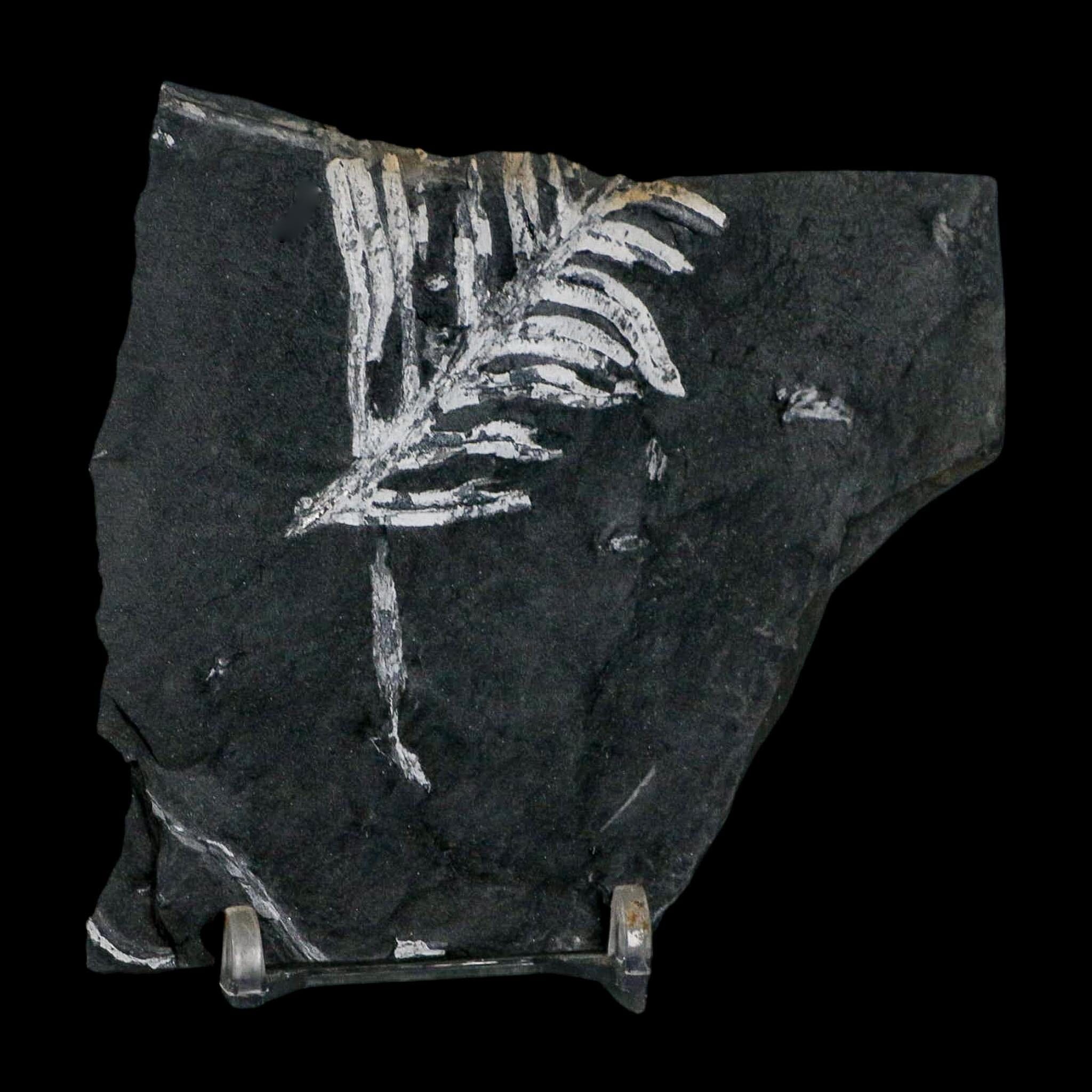
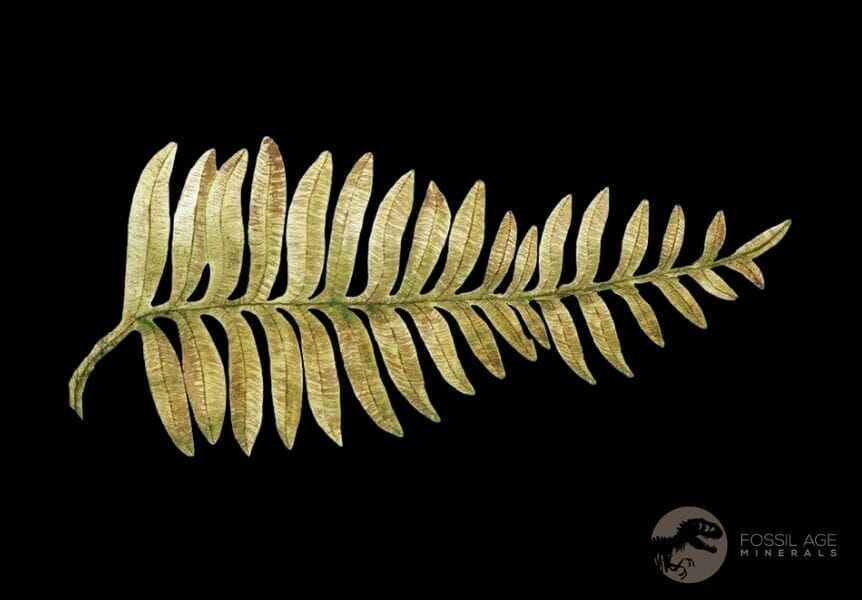
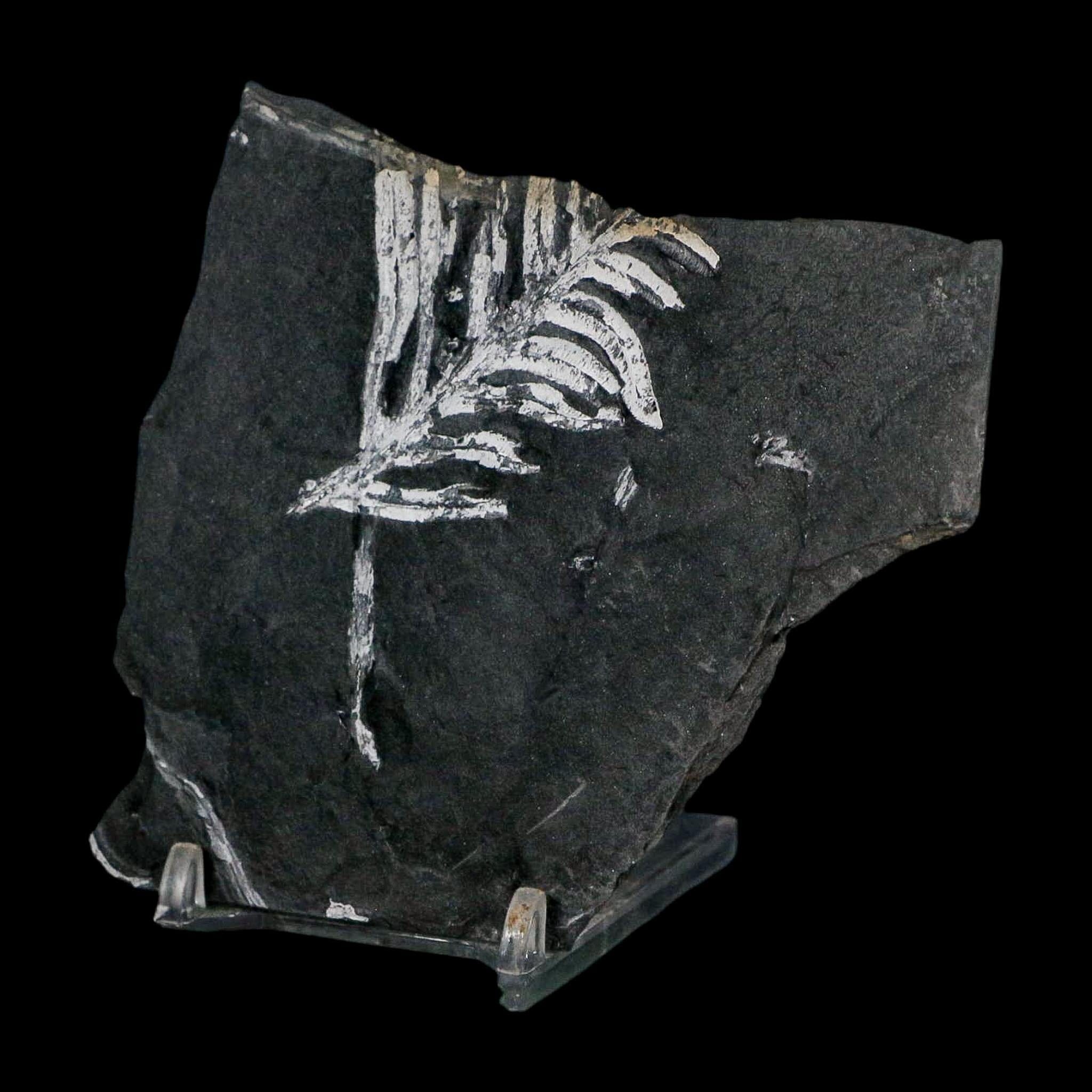
Alethopteris Sp Fern Fossil
The fossil plants found in the Llewellyn Formation are among the most visually striking examples of Carboniferous plant preservation. Dating back roughly 300 million years to the Pennsylvanian Period, these fossils are notable for their detailed white or yellow fern impressions set against dramatic black shale backgrounds. The preservation process began when plants fell into ancient swamp environments where low oxygen levels, high pressure, and relatively low temperatures prevented rapid decay. Over time, the original plant tissue was replaced by pyrite formed from sulfur-rich compounds, creating exceptionally detailed fossil outlines.
As geological conditions changed and sediments accumulated, pyrophyllite — a whitish aluminum silicate mineral — is believed to have replaced the earlier pyrite, producing the pale fossil coloration seen today. Common plant genera discovered include Alethopteris, Neuropteris, Pecopteris, and Sphenophyllum, all characteristic of lush Carboniferous coal-swamp ecosystems. These fossils provide important evidence of ancient forested wetlands that contributed to the formation of coal deposits.
Fossil plants are most often Carboniferous in age or younger, with ferns, horsetails, and club mosses among the most frequently preserved groups. The decline of tree-sized club mosses and horsetails toward the end of the Carboniferous reflects major environmental shifts, including cooling climates and the gradual disappearance of extensive swamp habitats. The Llewellyn Formation remains a significant site for understanding prehistoric plant evolution and coal-forming environments.
