





Description
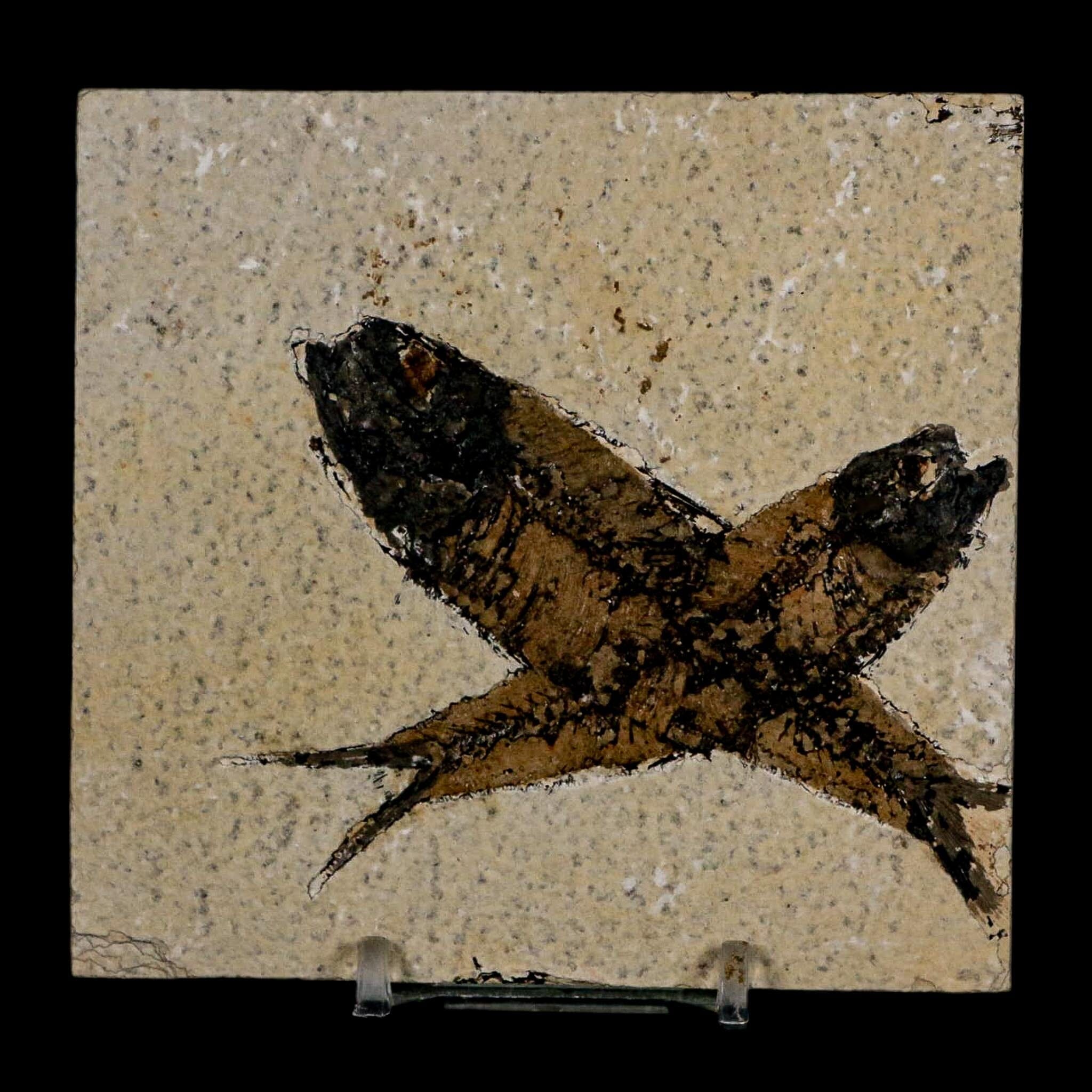
Location: Kemmerer, Wyoming
Weight: 9.6 Ounces
Dimensions: 4.4 Inches Long, 3.9 Inches Wide, 0.5 Inches Thick (Plate)
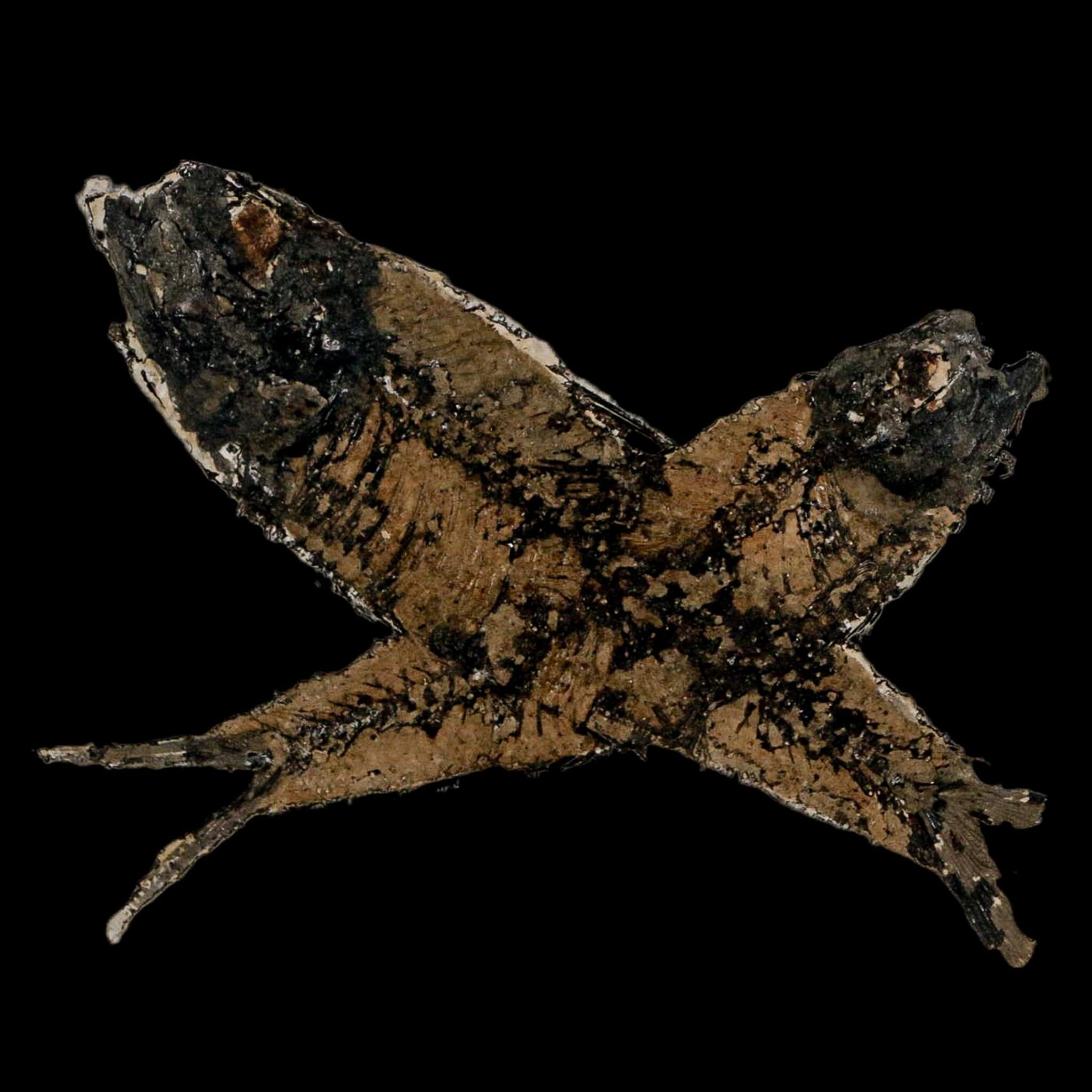
Fish One Dimensions: 3.8 Inches Long, 1 Inch Wide
Fish Two Dimensions: 3.6 Inches Long, 0.9 Inches Wide
Comes with a Certificate of Authenticity.
Comes with a Free Stand.
The item pictured is the one you will receive.
50 million years old, Eocene age
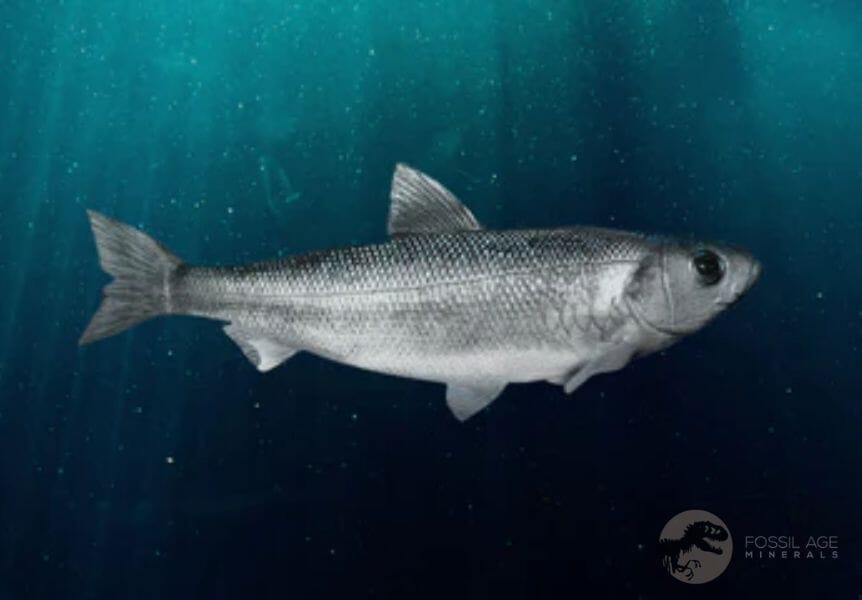
Among the fossil fish of the Green River Formation, Knightia eocaena stands out as the most widespread species from Fossil Lake. It is often cited as the most frequently articulated vertebrate fossil in the world and has been officially recognized as Wyoming’s State Fossil. These fish typically reached lengths of up to 25 centimeters (10 inches) and played a major role in the ancient lake’s food web.
Fossil Lake formed approximately 50 million years ago and once extended across nearly 930 square miles of what is now southwestern Wyoming. Although only part of this ancient lake remains exposed today, roughly 500 square miles of sedimentary deposits continue to yield important fossils. The most productive area is the 230 square miles of central lake-bed limestone, which contains some of the richest fossil layers on Earth. These deposits are associated with preserved deltas, beaches, and spring systems that record constantly changing lake margins and water conditions.
The lake’s extraordinary fossil record is the result of unusual chemical conditions that slowed decay and limited scavenging. Over long periods, alternating layers of limestone accumulated in extremely thin sheets, producing finely laminated rock. This unique sedimentary process created the world’s highest concentration of fossil fish and made Fossil Lake the most detailed Paleogene freshwater lake record available to science.
Since fossil collecting began in the 1870s, countless well-preserved specimens have revealed the full scope of Fossil Lake’s ecosystem. The laminated limestones capture not only fish but also cyanobacteria, aquatic plants, insects, and crustaceans, including shrimp, crawfish, and ostracods. The lake supported frogs, early salamanders, turtles, alligators, birds, and mammals, including the earliest known pantolestid, an otter-like mammal adapted to semi-aquatic life. On land, the surrounding subtropical environment is documented by rare fossils of early horses, snakes, lizards, bats, birds, apatemyid insectivores, miacoid carnivores, and a diverse plant record of more than 325 species of leaves, seeds, and flowers.
