





Description
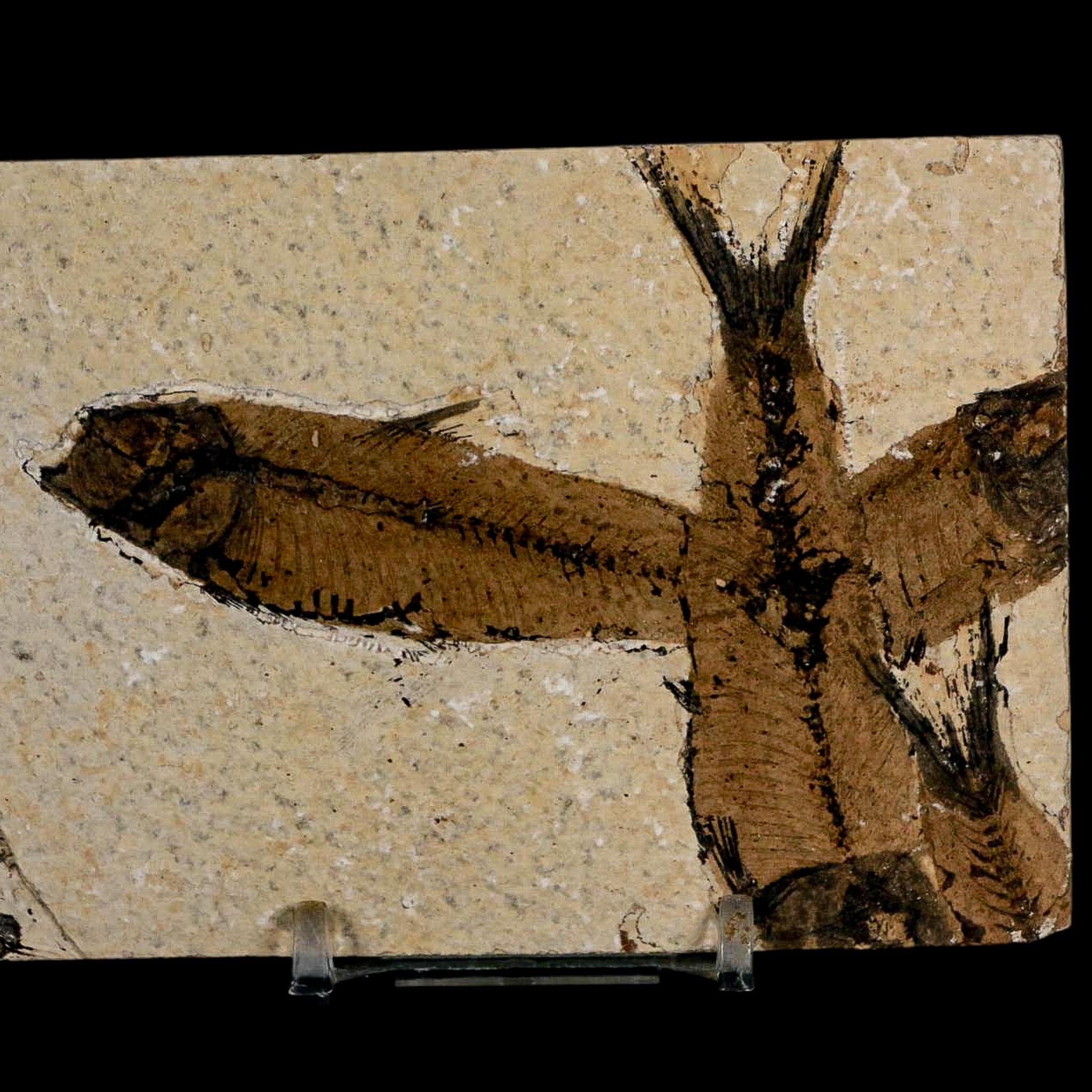
Location: Kemmerer, Wyoming
Weight: 7.9 Ounces
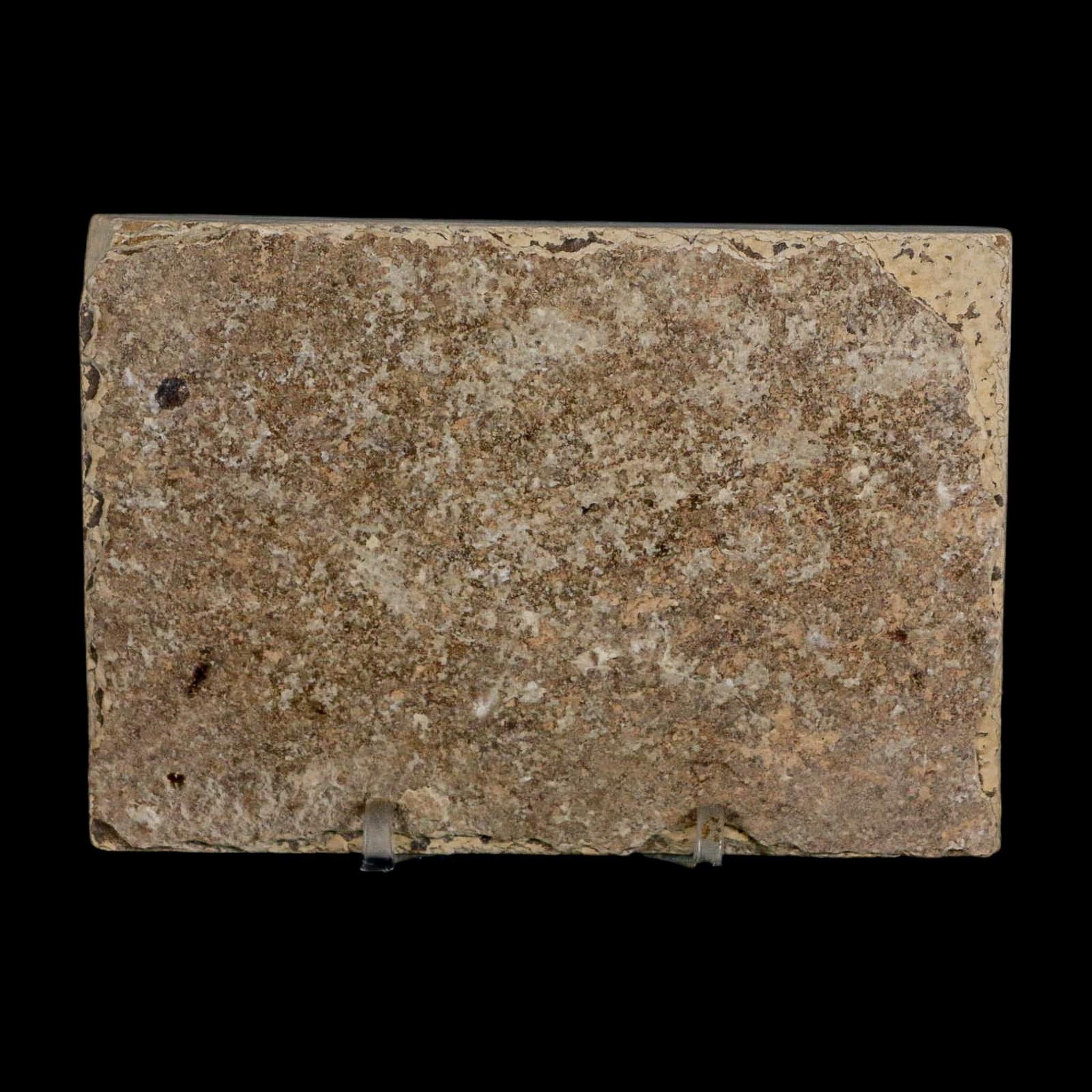
Dimensions: 4.4 Inches Long, 3 Inches Wide, 0.5 Inches Thick (Plate)
Fish One Dimensions: 2.9 Inches Long, 0.9 Inches Wide
Fish Two Dimensions: 3.1 Inches Long, 0.9 Inches Wide
Comes with a Certificate of Authenticity.
Comes with a Free Stand.
The item pictured is the one you will receive.
50 million years old, Eocene age
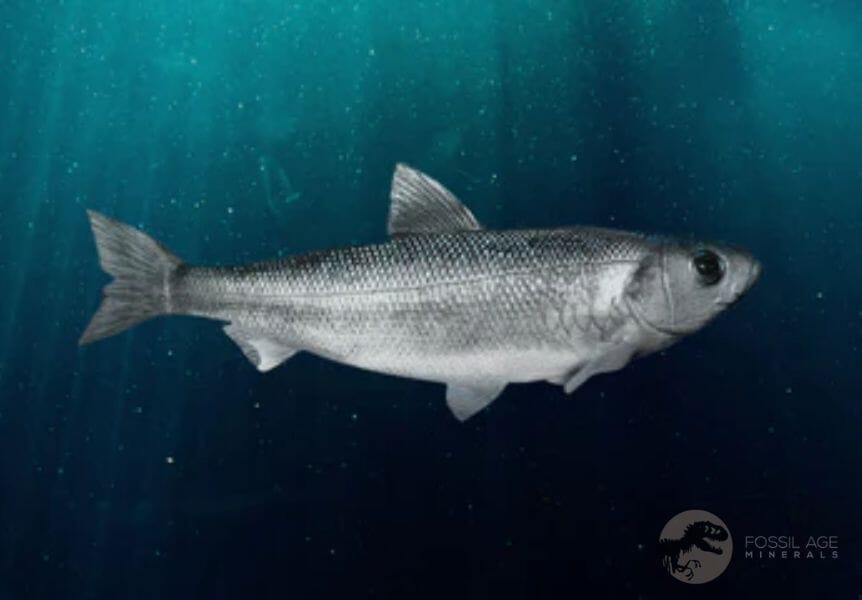
The fossil fish Knightia eocaena is the most frequently encountered vertebrate species from Fossil Lake and is widely recognized as the most commonly preserved articulated vertebrate fossil known. Its overwhelming abundance within the Green River Formation reflects its success in the ancient lake ecosystem and led to its designation as Wyoming’s official State Fossil. Individuals typically reached sizes of up to 25 centimeters (10 inches), making them one of the dominant mid-sized fish in the lake.
During the early Eocene Epoch, approximately 50 million years ago, Fossil Lake occupied a broad basin in what is now southwestern Wyoming. At its peak, the lake covered an estimated 930 square miles, forming a vast freshwater system. Although erosion and burial have reduced the area accessible today, about 500 square miles of fossil-bearing sediments remain. The most productive fossil layers are concentrated within the 230 square miles of central lake-bed limestone, where exceptional preservation and high fossil density have made the region world-famous. These deposits are associated with ancient shorelines, delta systems, and spring-fed environments that provide insight into shifting water levels and ecological zones.
The extraordinary state of preservation at Fossil Lake resulted from unique chemical and environmental conditions within the water column. Low oxygen levels and mineral-rich waters inhibited decay and discouraged scavengers, allowing organisms to settle intact onto the lake floor. Over time, extremely thin layers of limestone accumulated, forming finely laminated rock that sealed organisms in place. This process produced the highest known concentration of fossil fish on Earth and established Fossil Lake as the most complete Paleogene freshwater lake ecosystem preserved in the fossil record.
Systematic fossil collecting began in the 1870s, and since then, tens of thousands of beautifully detailed specimens have been recovered. The laminated limestones preserve a complex aquatic community that included cyanobacteria, aquatic vegetation, insects, and crustaceans such as shrimp, crawfish, and ostracods. Amphibians like frogs and early salamanders shared the waters with turtles, alligators, birds, and mammals, including the earliest pantolestid—an otter-like, semi-aquatic mammal. Beyond the lake margins, the surrounding subtropical landscape is documented by rare fossils of early horses, snakes, lizards, bats, birds, an arboreal insectivore known as an apatemyid, early carnivorous mammals called miacoids, and an exceptionally diverse plant assemblage representing more than 325 species of leaves, seeds, and flowers.
