
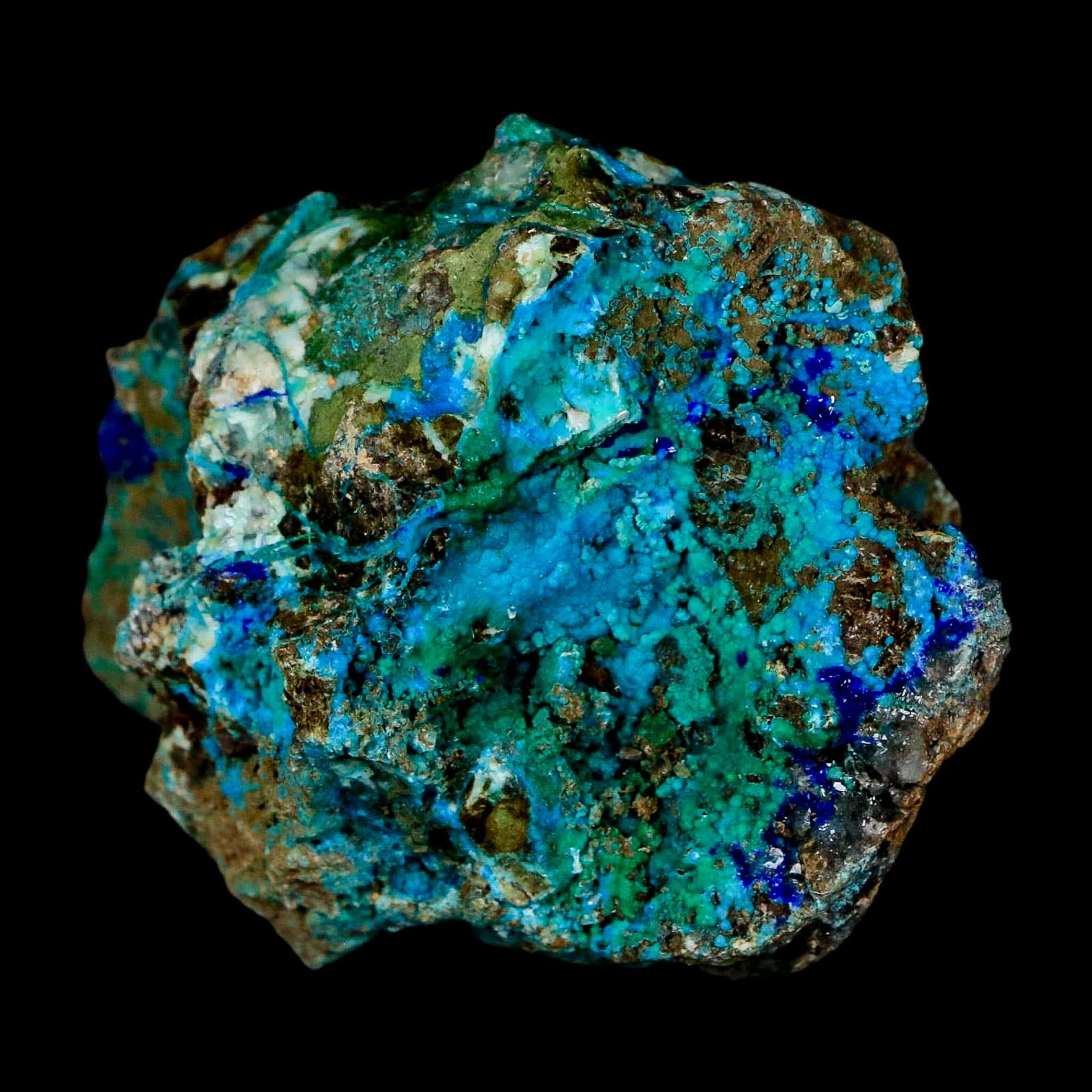
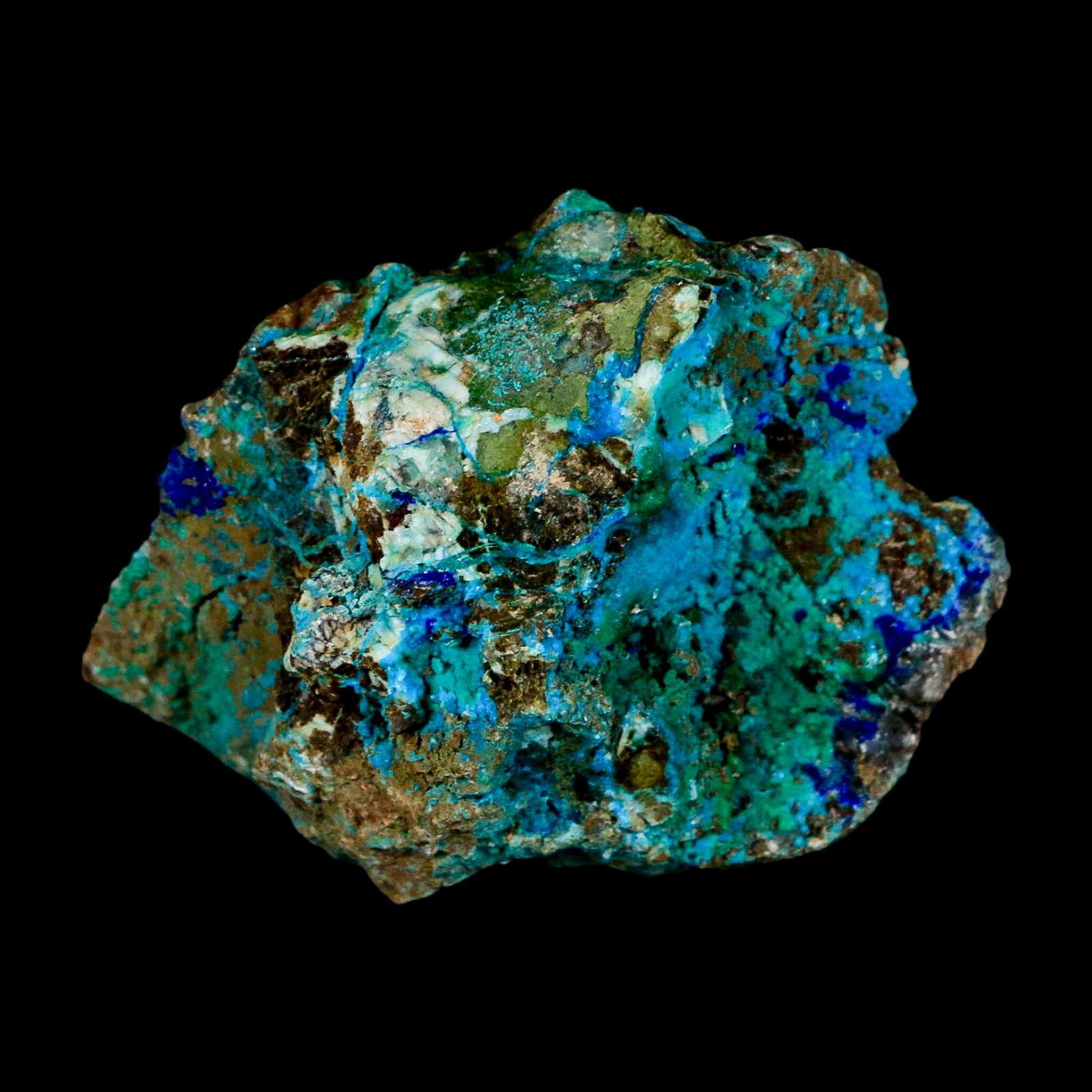
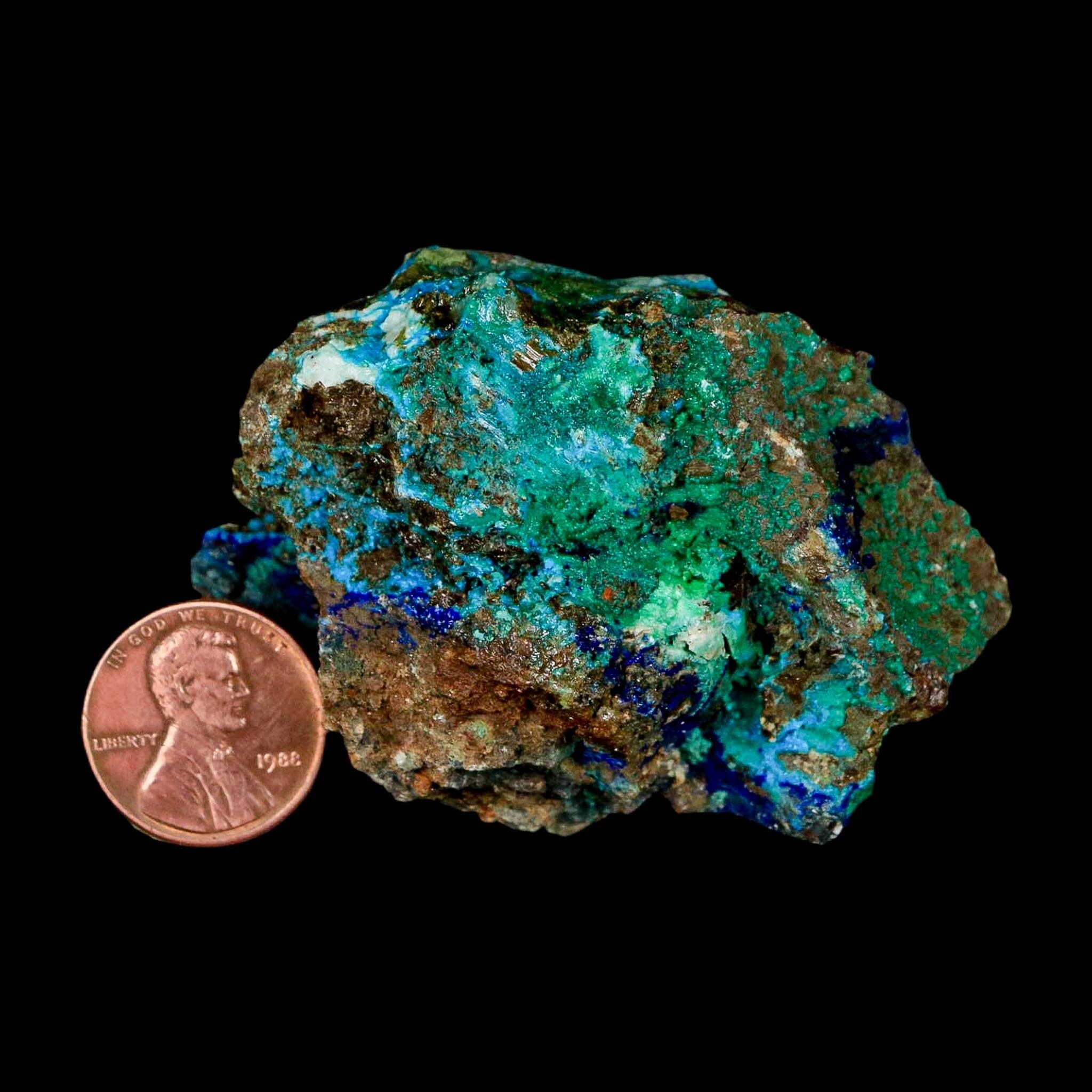
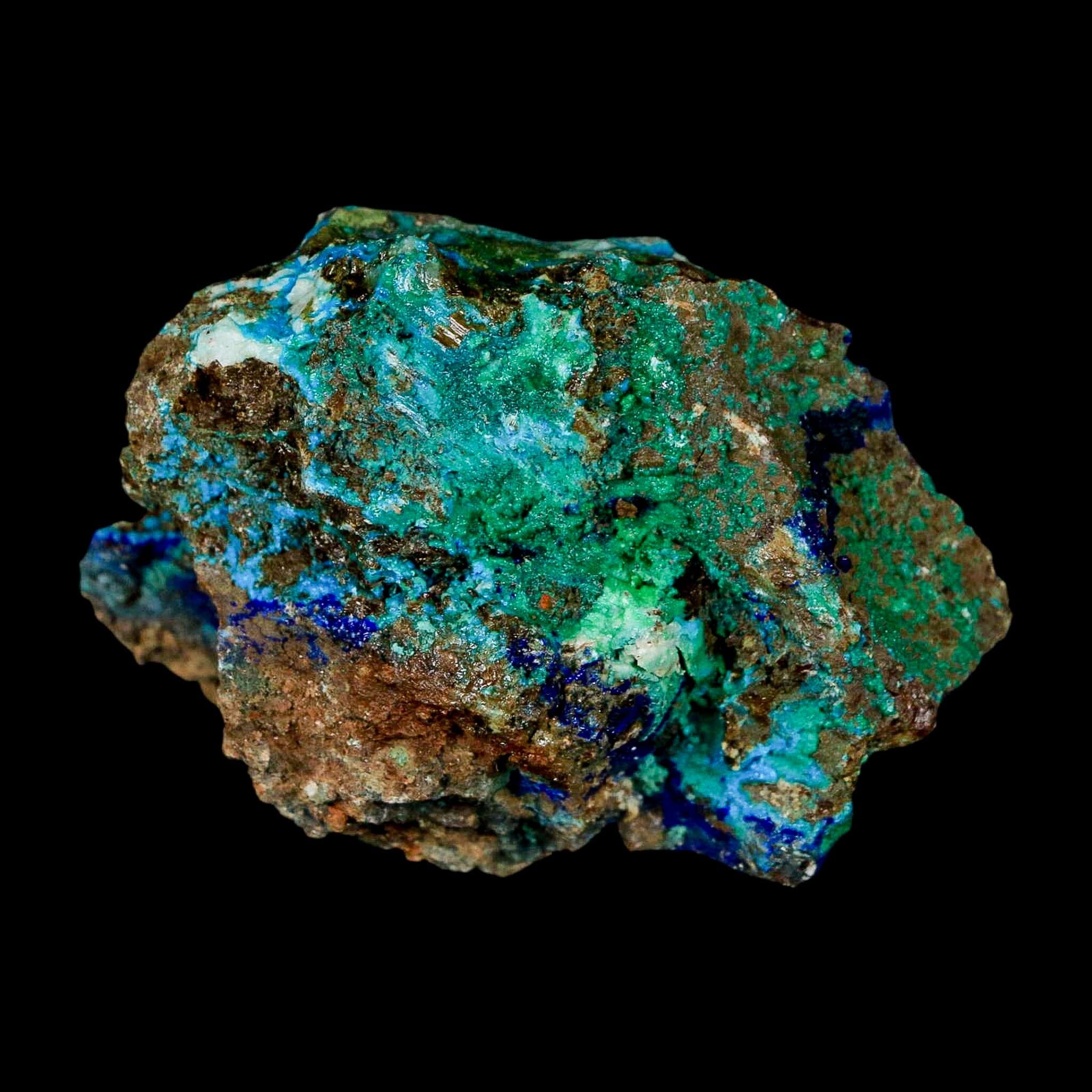


Description
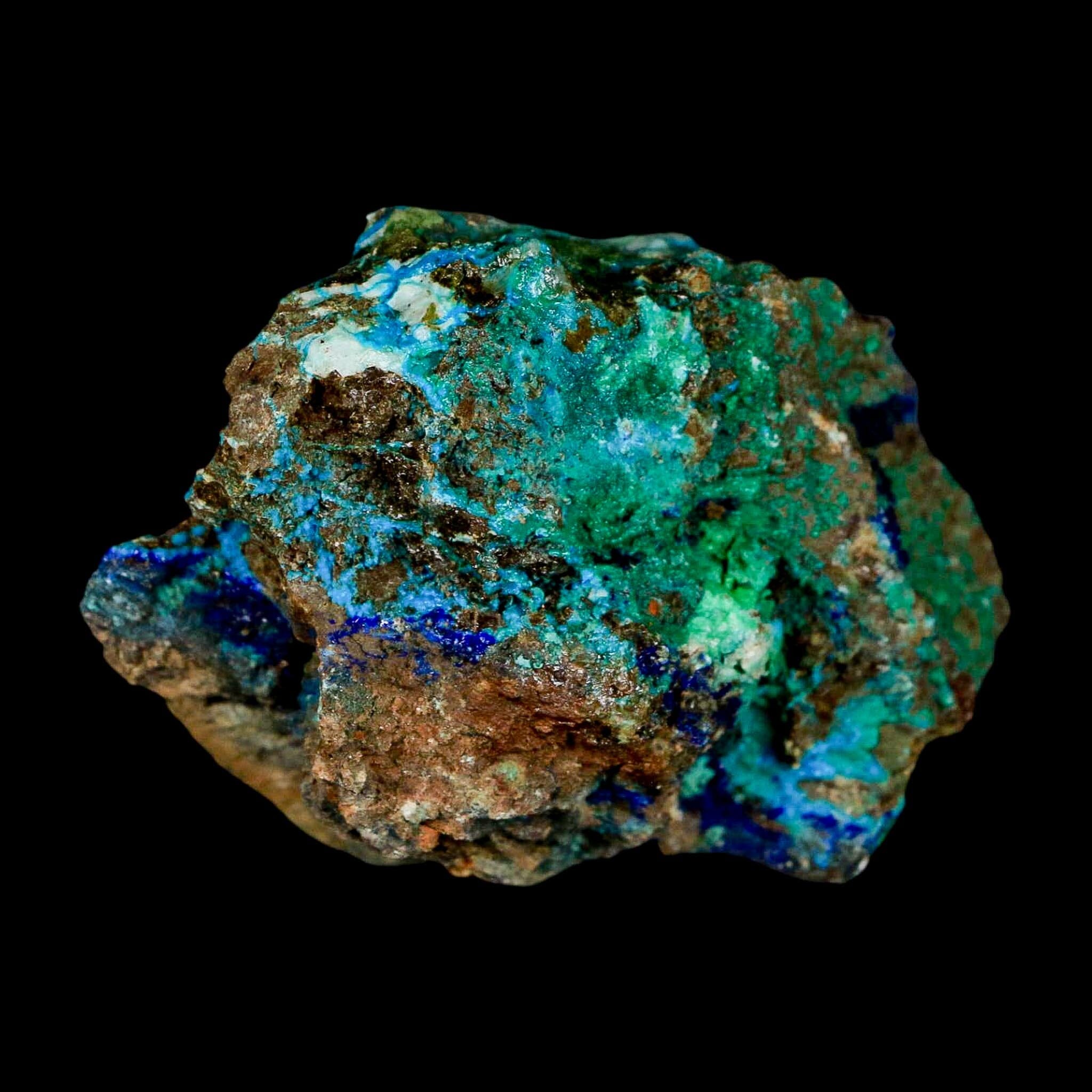
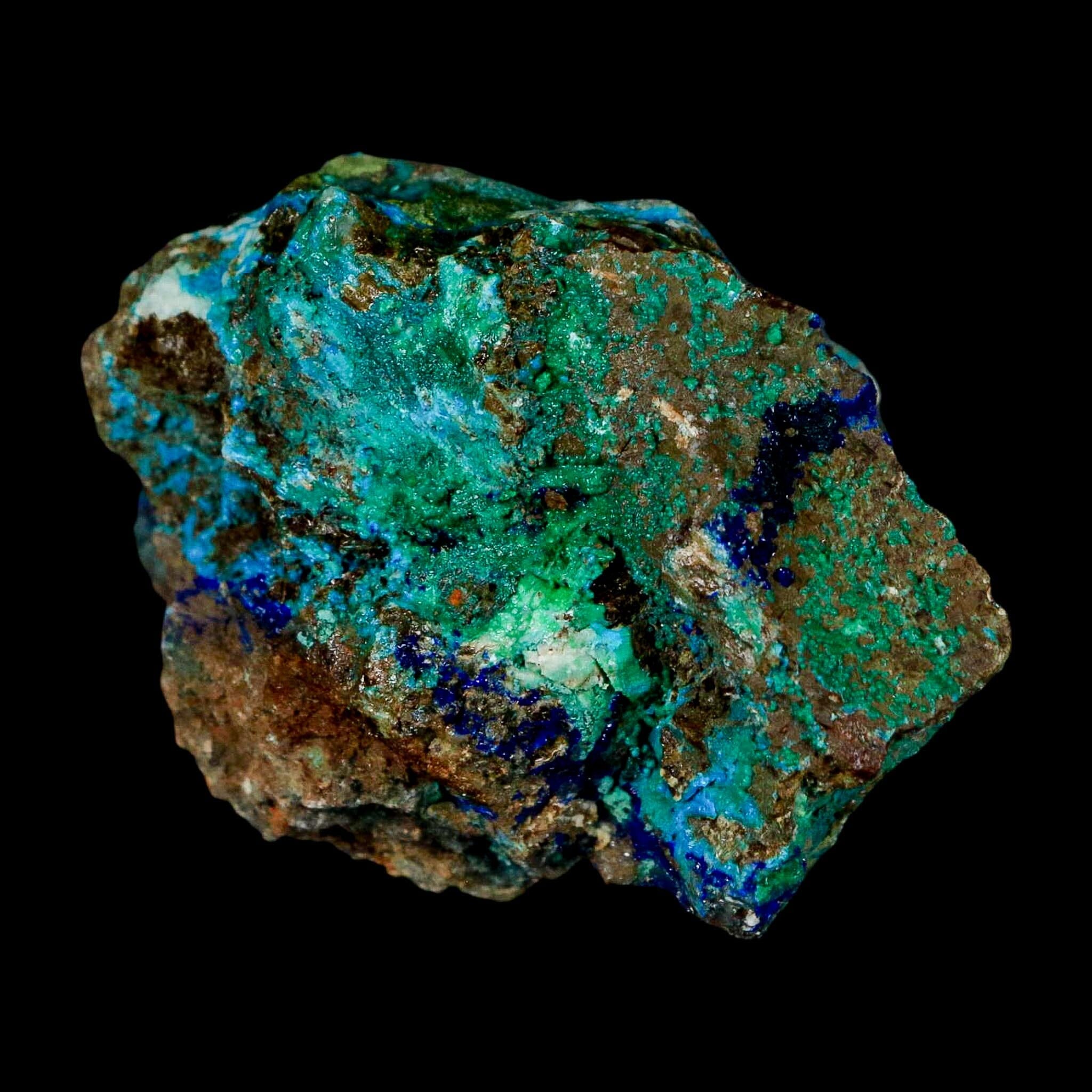
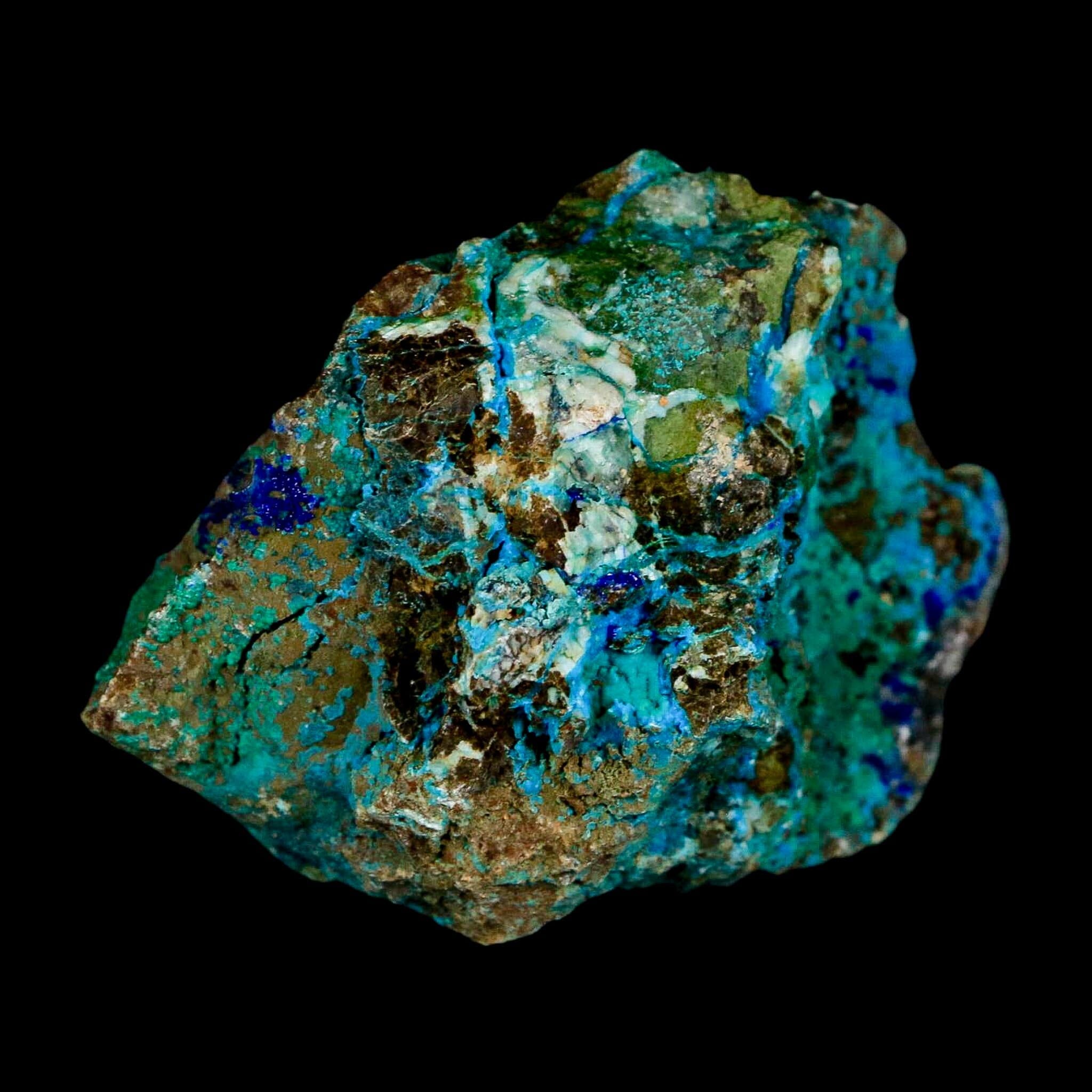
Location: Peru
Weight: 3.3 Ounces
Dimensions: 2.5 Inches Long, 1.9 Inches Wide, 1.5 Inches Thick
The item pictured is the one you will receive.
This outstanding Chrysocolla–Azurite–Malachite specimen is a natural example of secondary copper mineral formation created through the weathering and oxidation of copper ore deposits. The result is a vivid display of turquoise blue, deep indigo, and rich emerald-green mineralization, making this combination highly prized among mineral collectors and crystal enthusiasts.
Chrysocolla is a copper-bearing mineral that ranges in color from light green to deep blue. Widely recognized as the Stone of Communication, it is associated with expression, empowerment, and learning. Its peaceful turquoise-blue shades are believed to help release negative energy, soothe the mind, and support the emergence of truth and inner wisdom. Often favored as a stone of prosperity and business astuteness, Chrysocolla symbolically enhances analytical thinking while encouraging intuitive awareness. Like a balance scale, it stimulates the mind while calming emotional intensity, fostering compassion and personal development.
Azurite is a soft copper mineral renowned for its striking deep blue color. Formed through the weathering of copper deposits, it commonly appears in tabular to prismatic crystal forms with bright, glassy surfaces. Historically referred to as Chessylite after the famous deposits near Chessy-les-Mines in Lyon, France, Azurite derives its name from the Arabic word for “blue.” More than 45 distinct crystal forms are recognized, with over 100 documented types. Often called the “Stone of Heaven,” Azurite’s vivid coloration and crystalline brilliance make it especially valued by collectors. It frequently occurs alongside Malachite, sometimes displaying green speckling where the two minerals intergrow.
Malachite is a bright green copper carbonate mineral formed through the oxidation of copper sulfide minerals. It typically develops in striking concentric banded patterns or botryoidal (rounded) clusters, producing strong visual contrast against deep blue Azurite crystals. Historically significant, Malachite has served as a copper source and as a natural pigment used in art and decoration. Its rich green hues have adorned jewelry, sculptures, carvings, and ornamental objects for centuries, reflecting its importance in both cultural and industrial contexts.