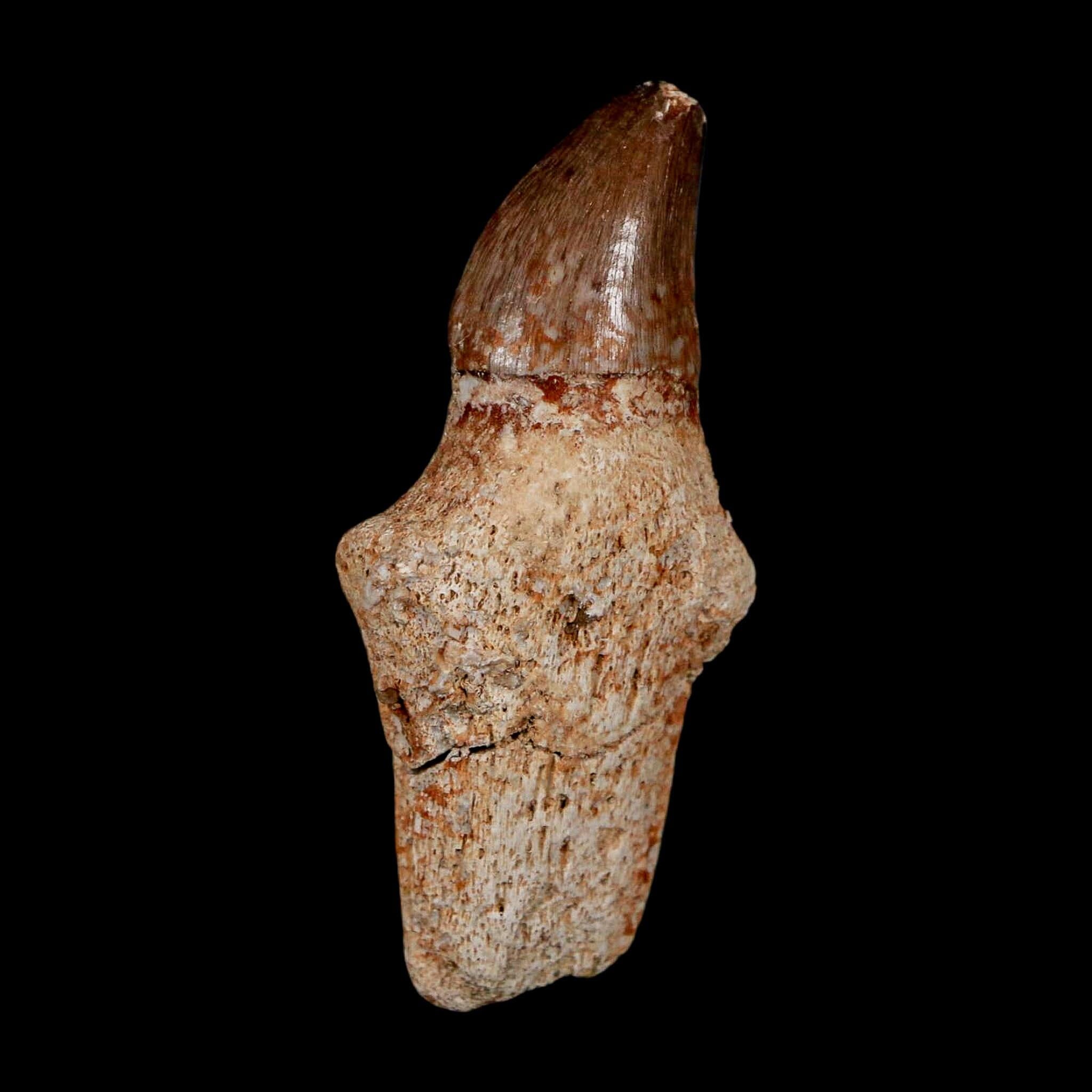
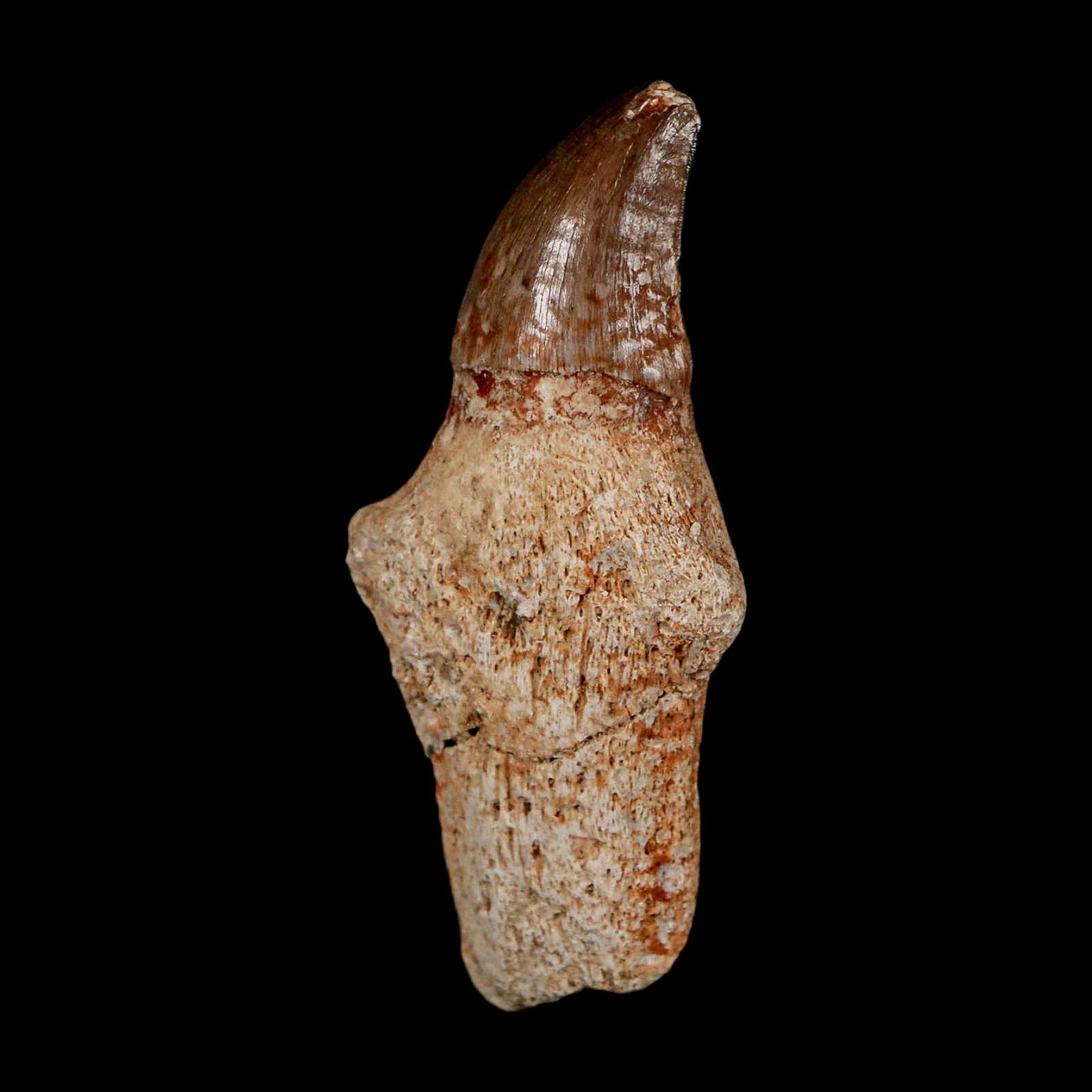
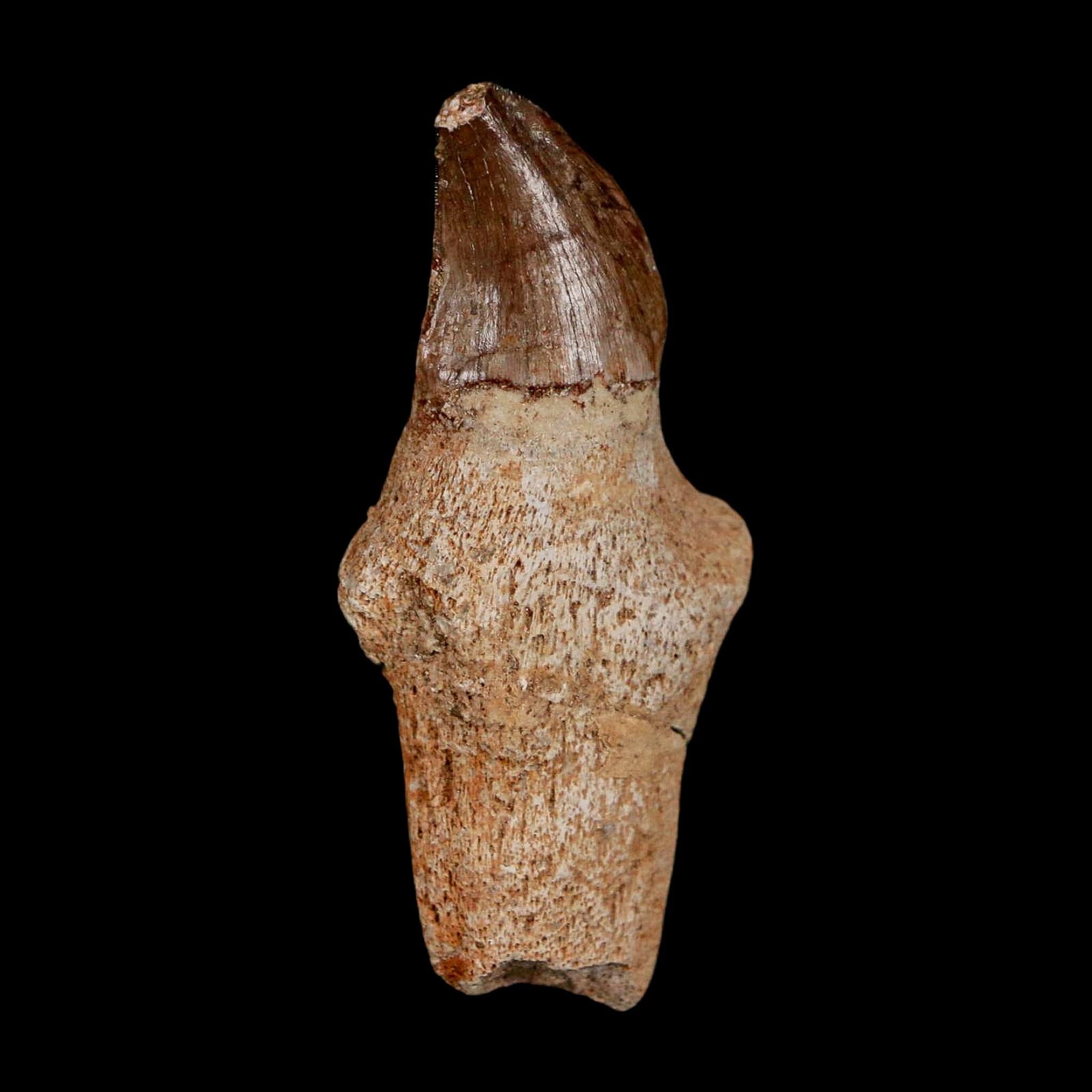
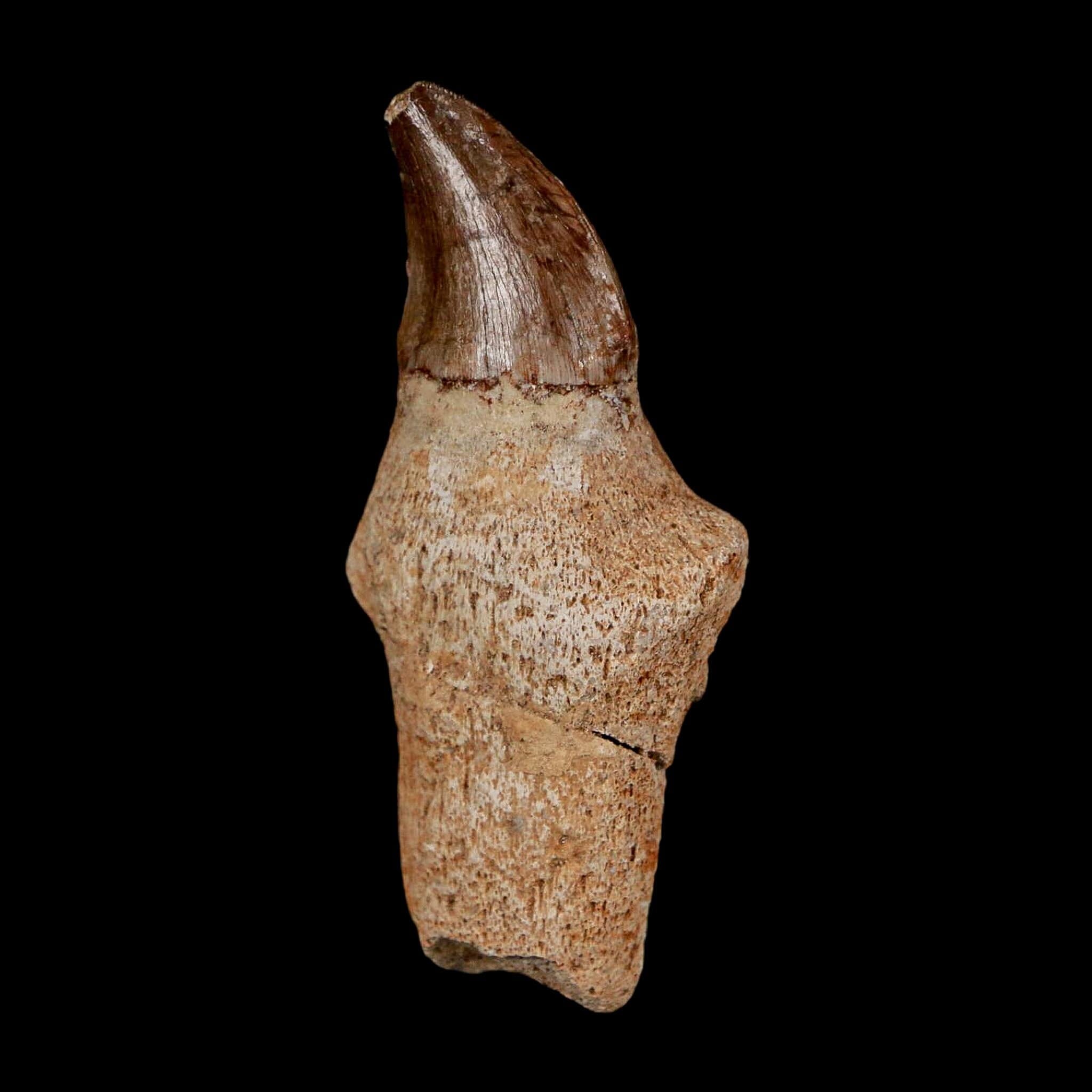


Description
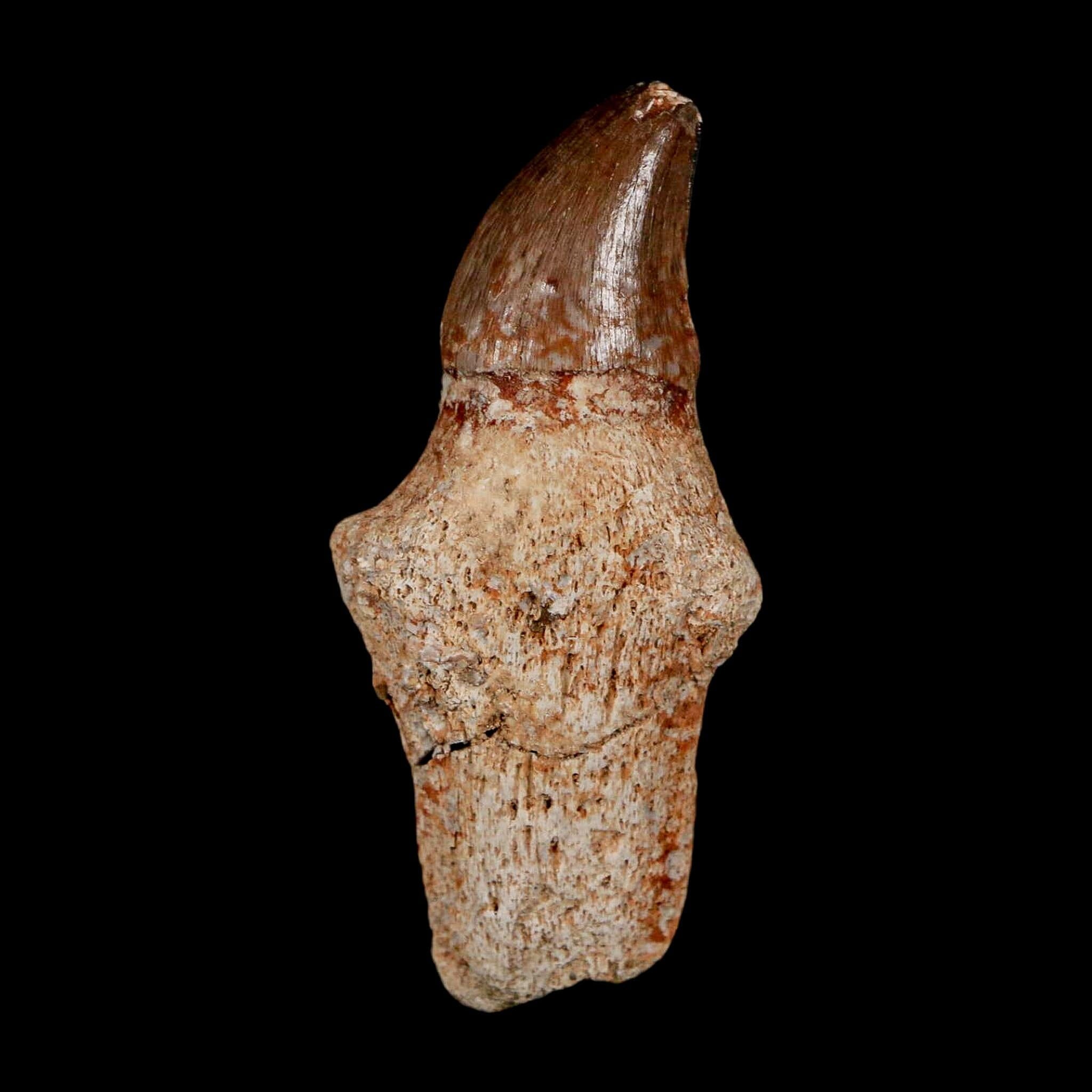
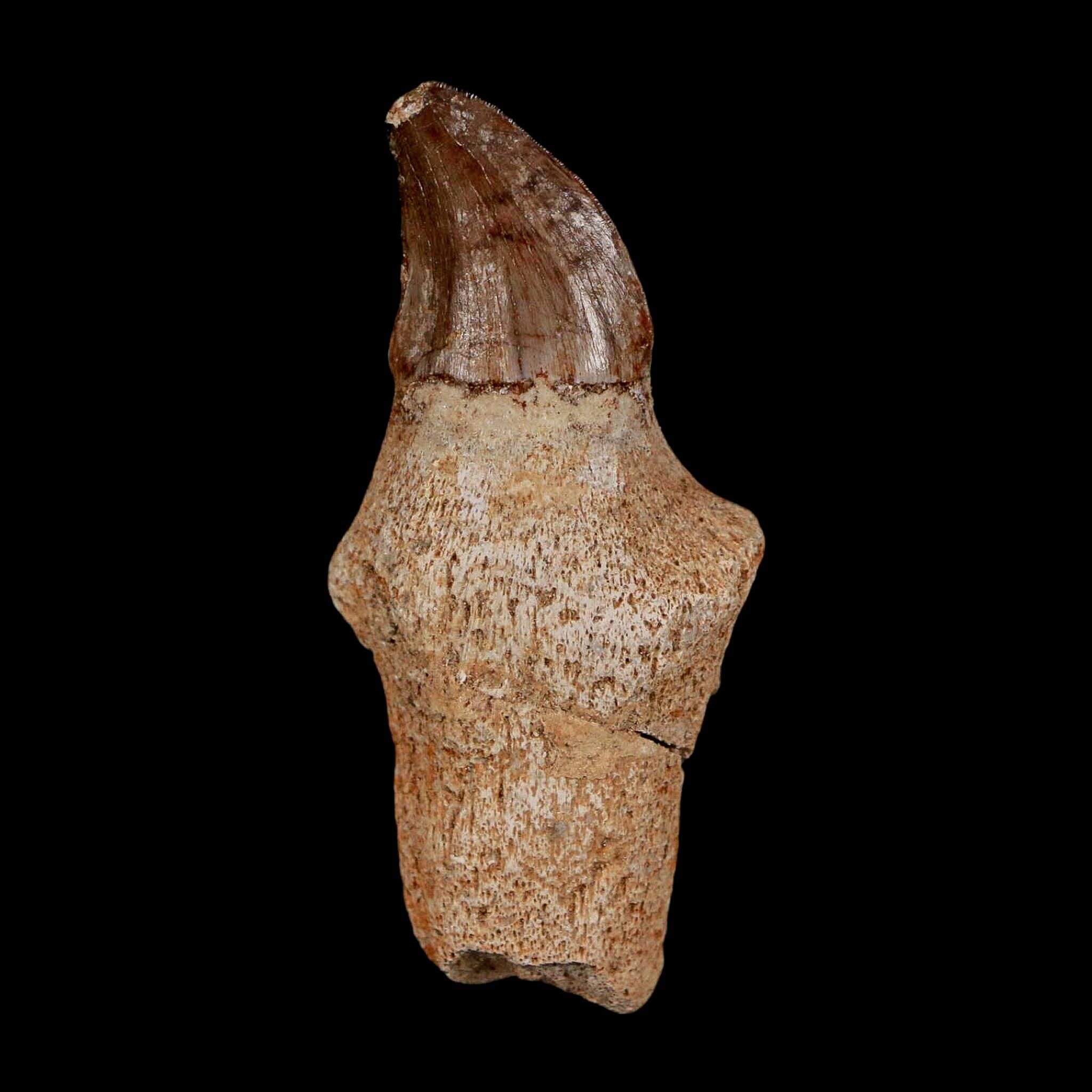
Location: Oued Zem, Morocco
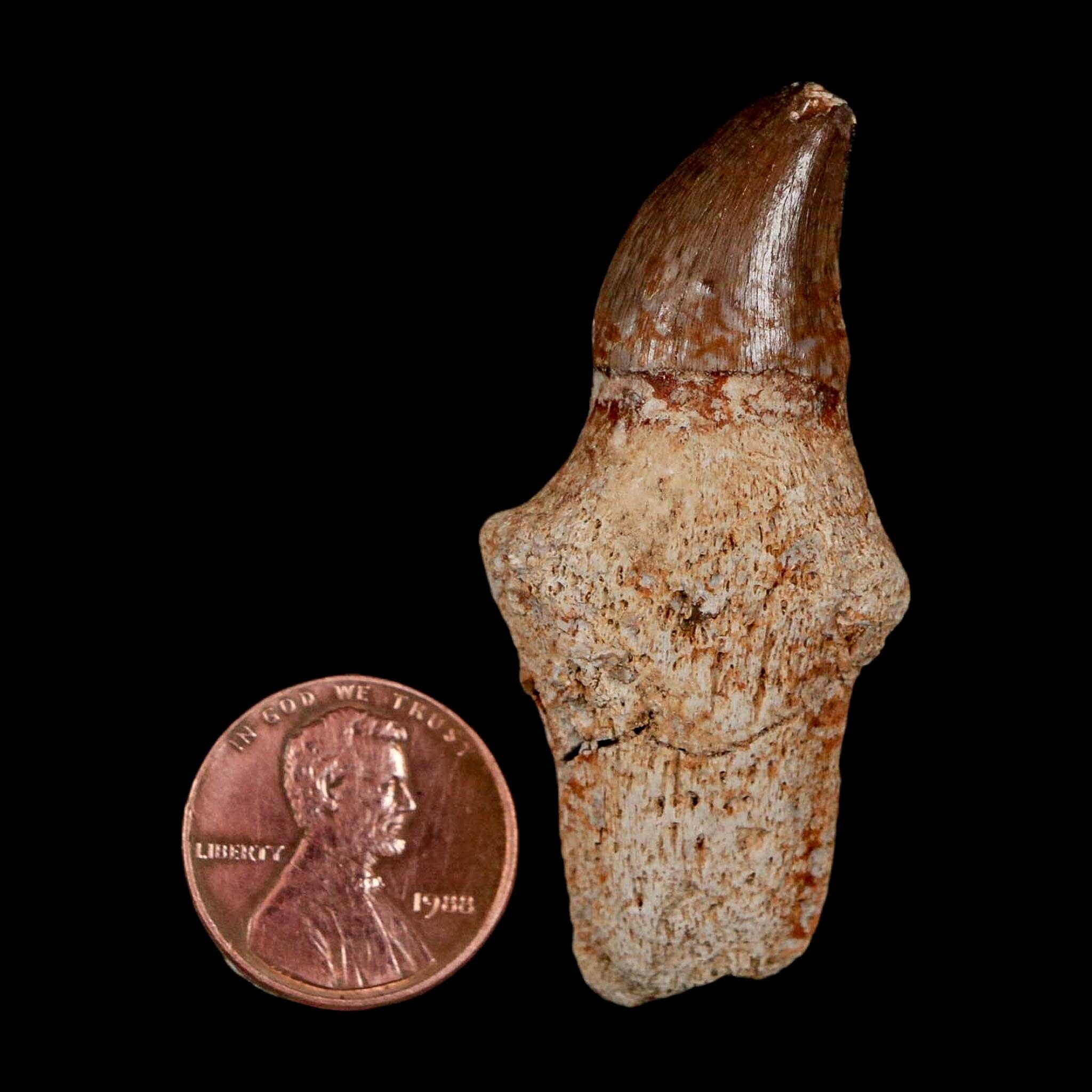
Weight: 0.4 Ounces
Dimensions: 2.1 Inches Long, 0.9 Inches Wide, 0.5 Inches Thick
Comes with a Certificate of Authenticity.
Comes with a Free Stand And Mineral Tack.
The item pictured is the one you will receive.
85 - 66 Million Years old, Early Campanian, Maastrichtian Epoch.
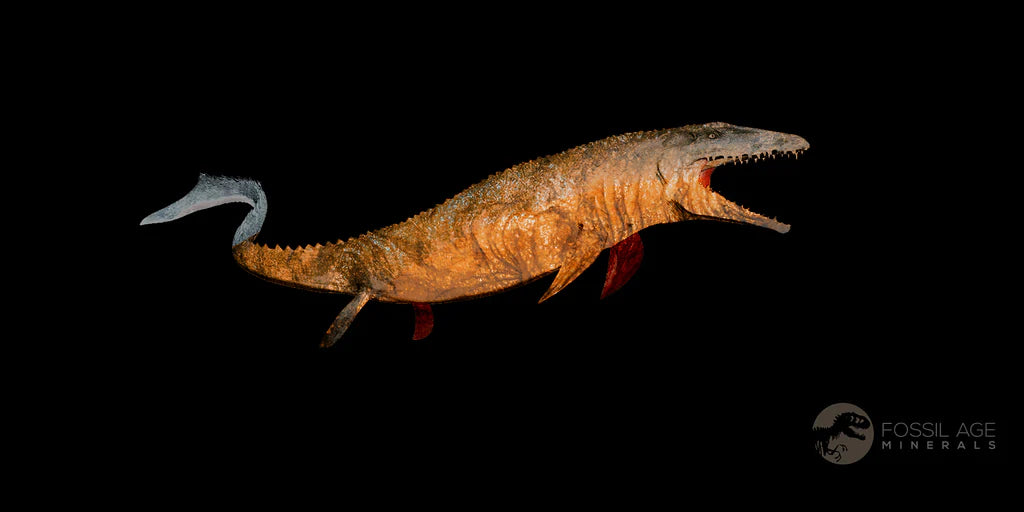
Name: Halisaurus
Type: Carnivore / Piscivore
Size: 3 to 4 meters in length.
During the final million years of the dinosaur age, Halisaurus moved through warm marine environments as a capable mid-tier predator. Living in the Maastrichtian age, this mosasaur weighed roughly 200–350 kilograms, placing it well below the immense giants that also ruled the seas.
Its body design indicates a hunter that favored maneuverability over brute force. Rather than chasing down massive prey, Halisaurus likely targeted smaller marine animals that required precision and timing. Fish and squid would have been common food sources within their range.
A defining feature of Halisaurus was its flexible skull construction. The ability to open its jaws widely gave it an advantage when capturing slippery prey. Additional teeth positioned along the palate provided extra grip, ensuring prey could not easily escape once caught.
Unlike predators with cutting or serrated teeth, Halisaurus relied on slender, conical teeth ideal for puncturing. It did not chew its food; instead, prey was swallowed intact. This method suggests a streamlined feeding process well suited to active marine environments.
In a sea filled with formidable hunters, Halisaurus survived through specialization. Its fossils highlight the diverse adaptations that allowed multiple predatory reptiles to coexist in Late Cretaceous ecosystems.

Please be aware of the nature of fossils:
Being buried underground for millions of years under immense pressure can be quite harsh. Rarely does a fossil emerge fully intact and perfect. Most fossils have been restored to some extent, and some are even modified by humans to improve their appearance. In Morocco, workers perform their jobs professionally when uncovering and conserving these natural treasures. However, natural cracks are often visible on the surface, which are part of the fossil's natural beauty and are not seen as flaws.