
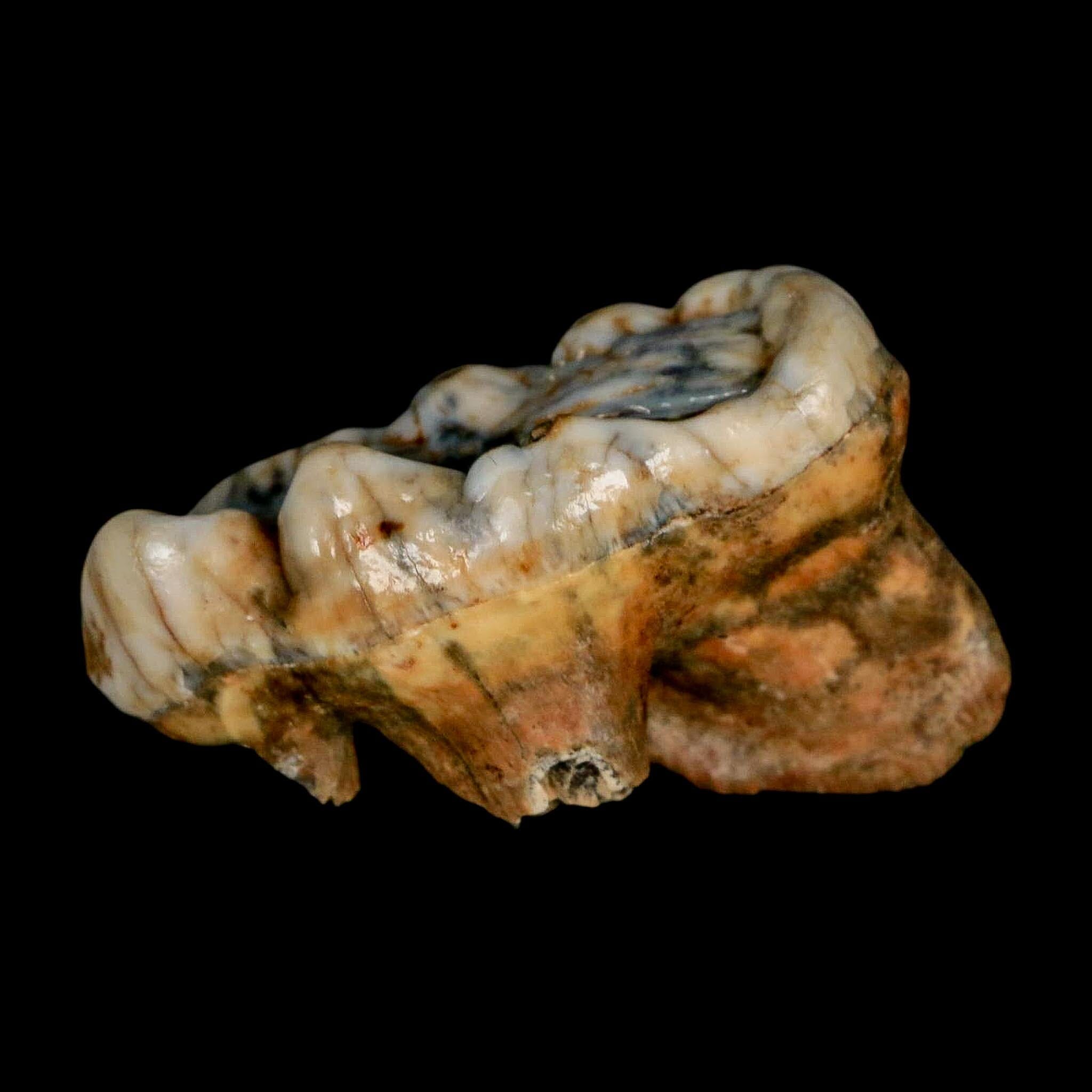
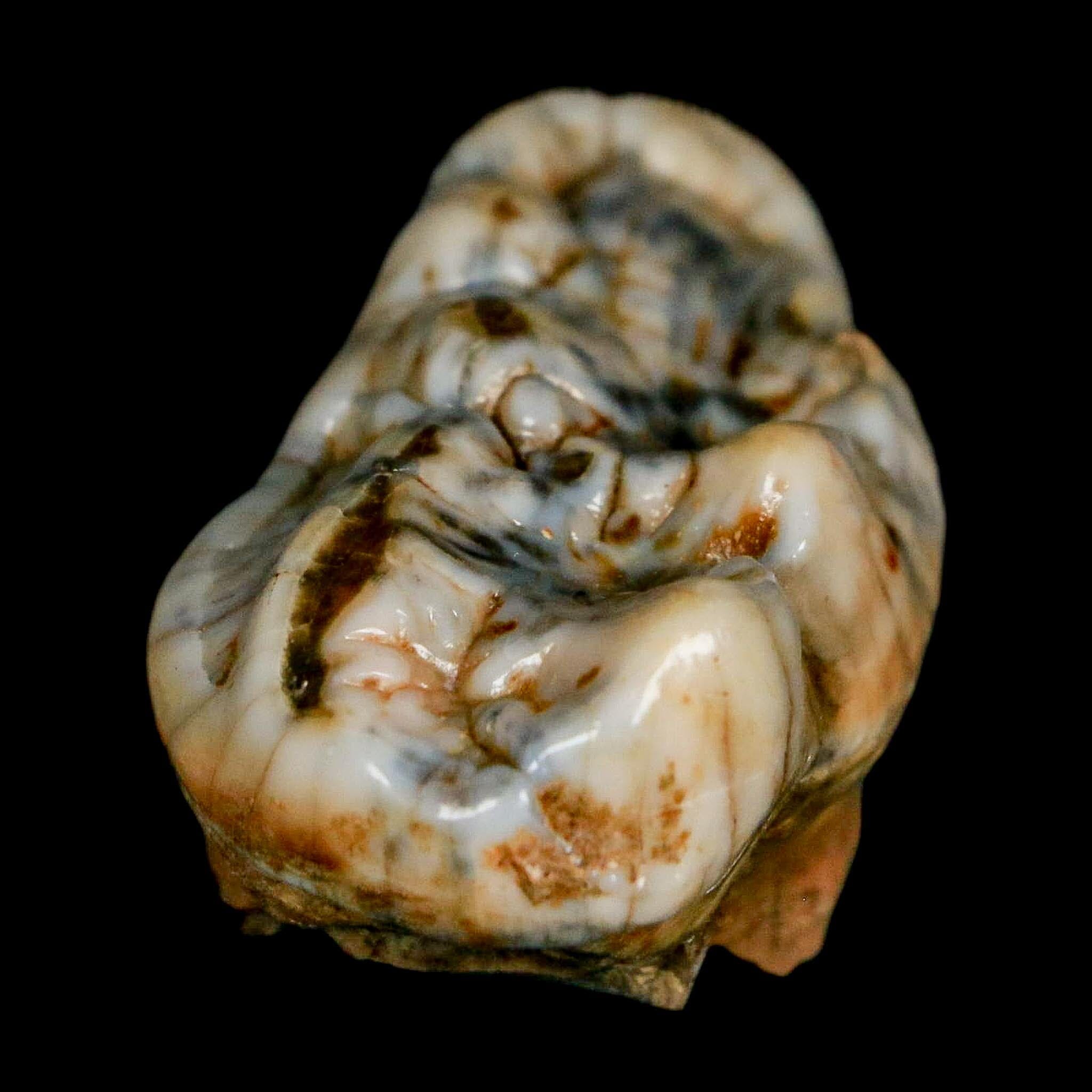
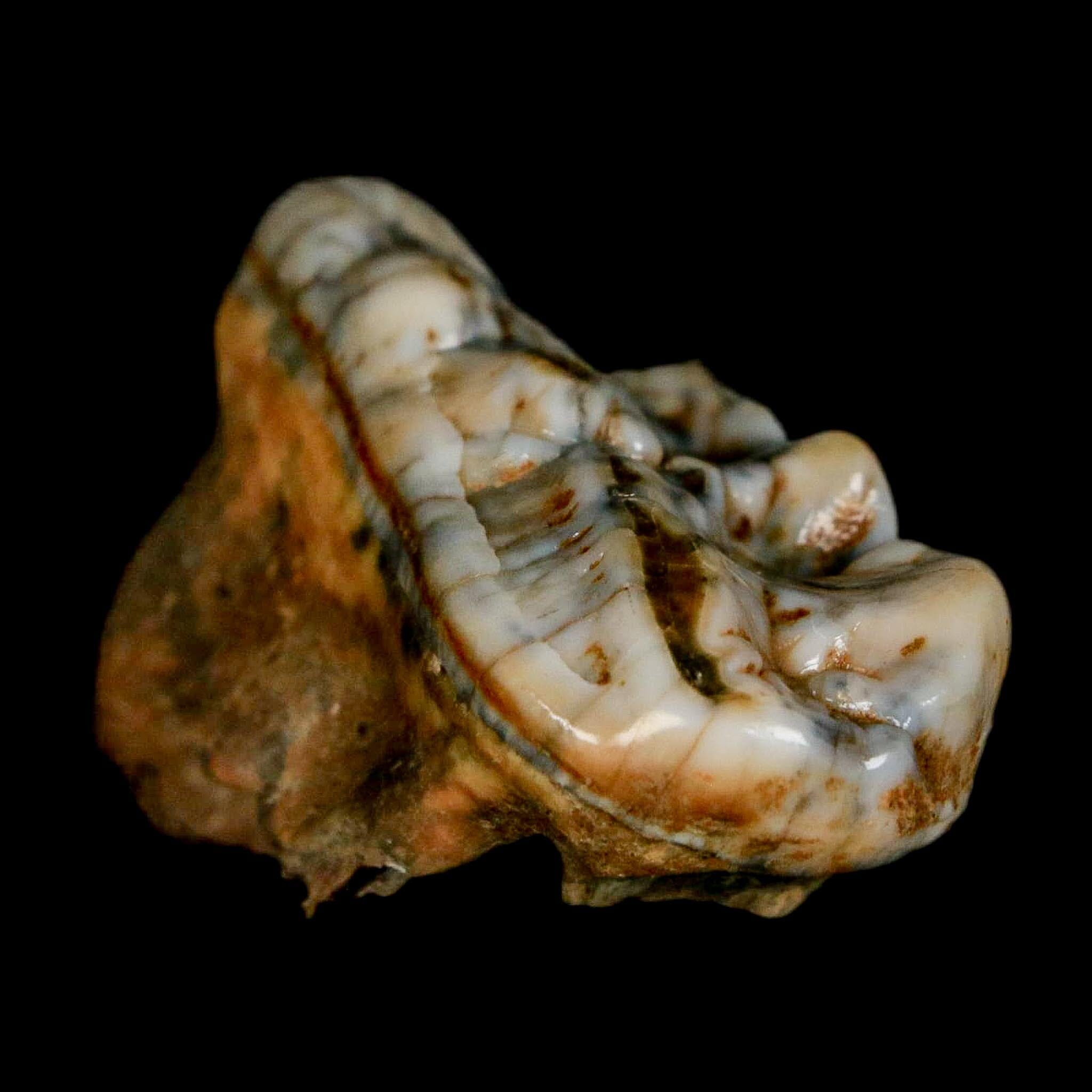
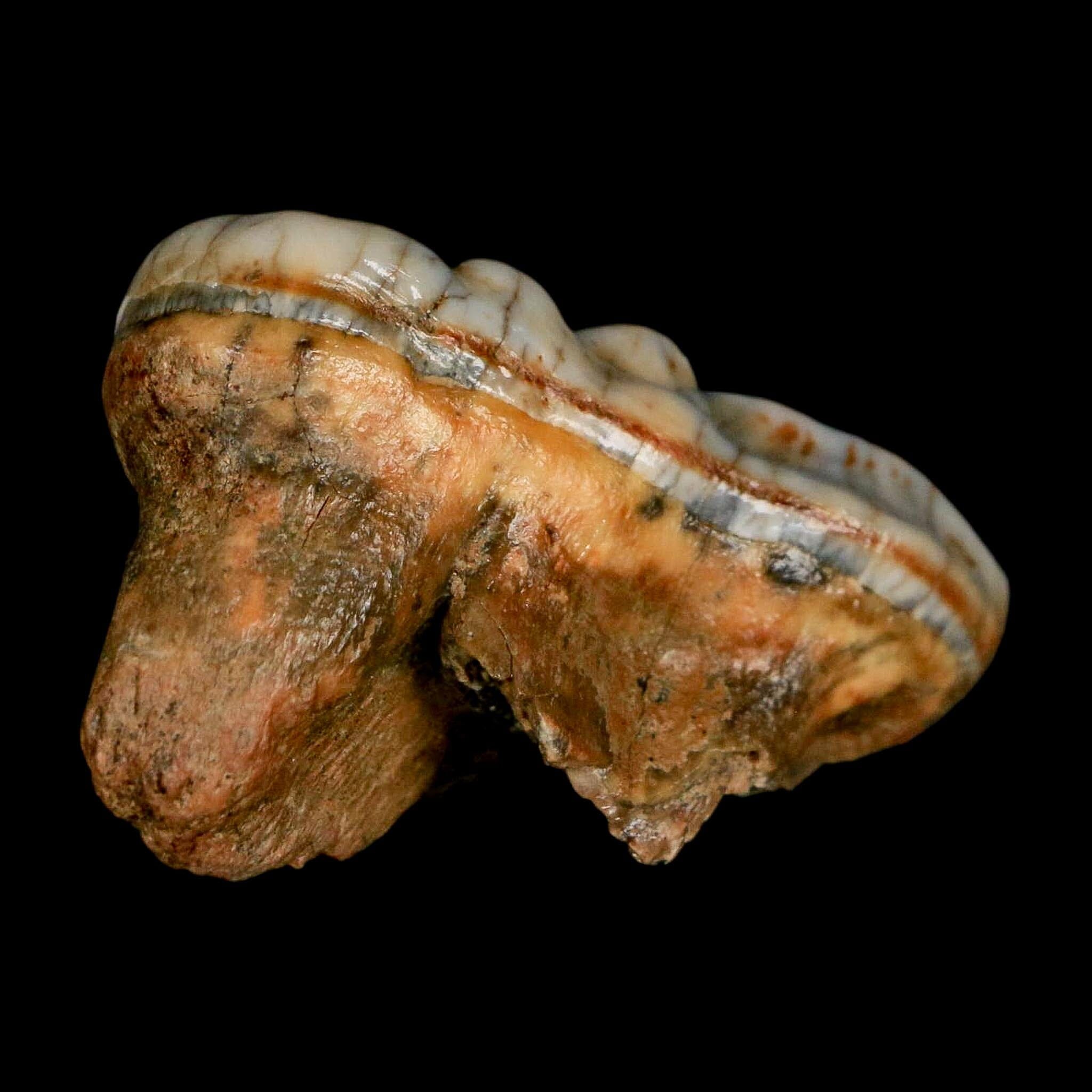
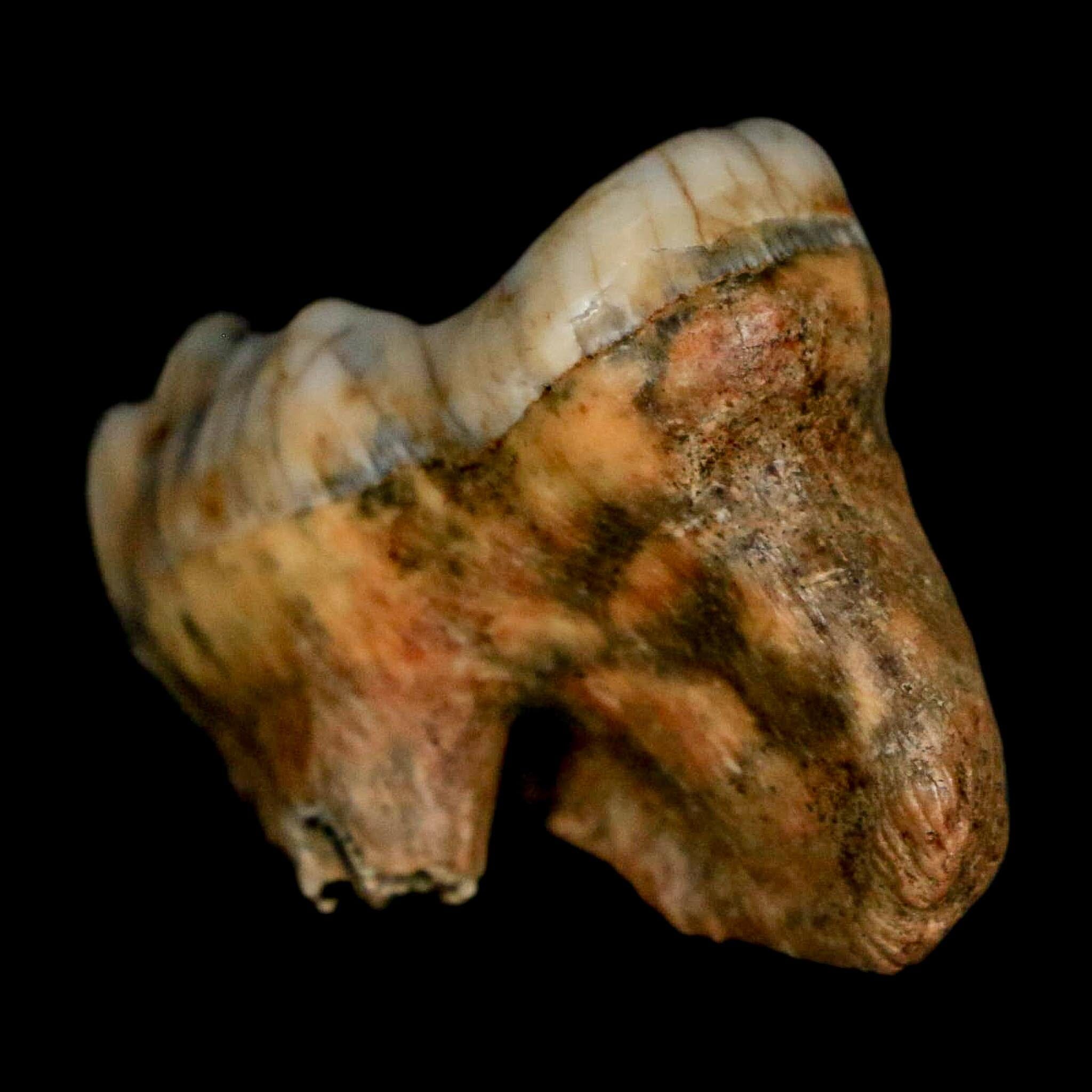


Description
Location: Romania
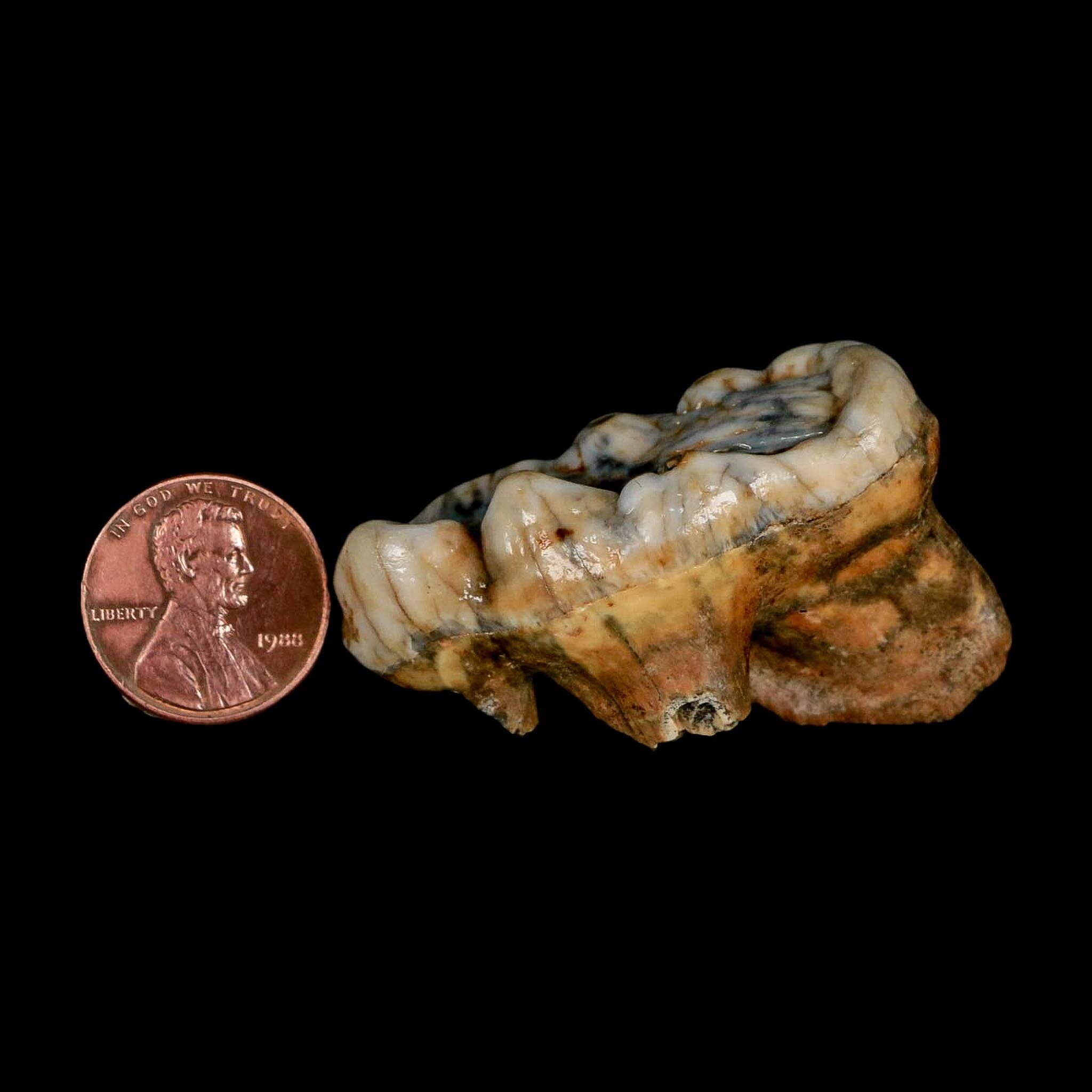
Weight: 0.9 Ounces
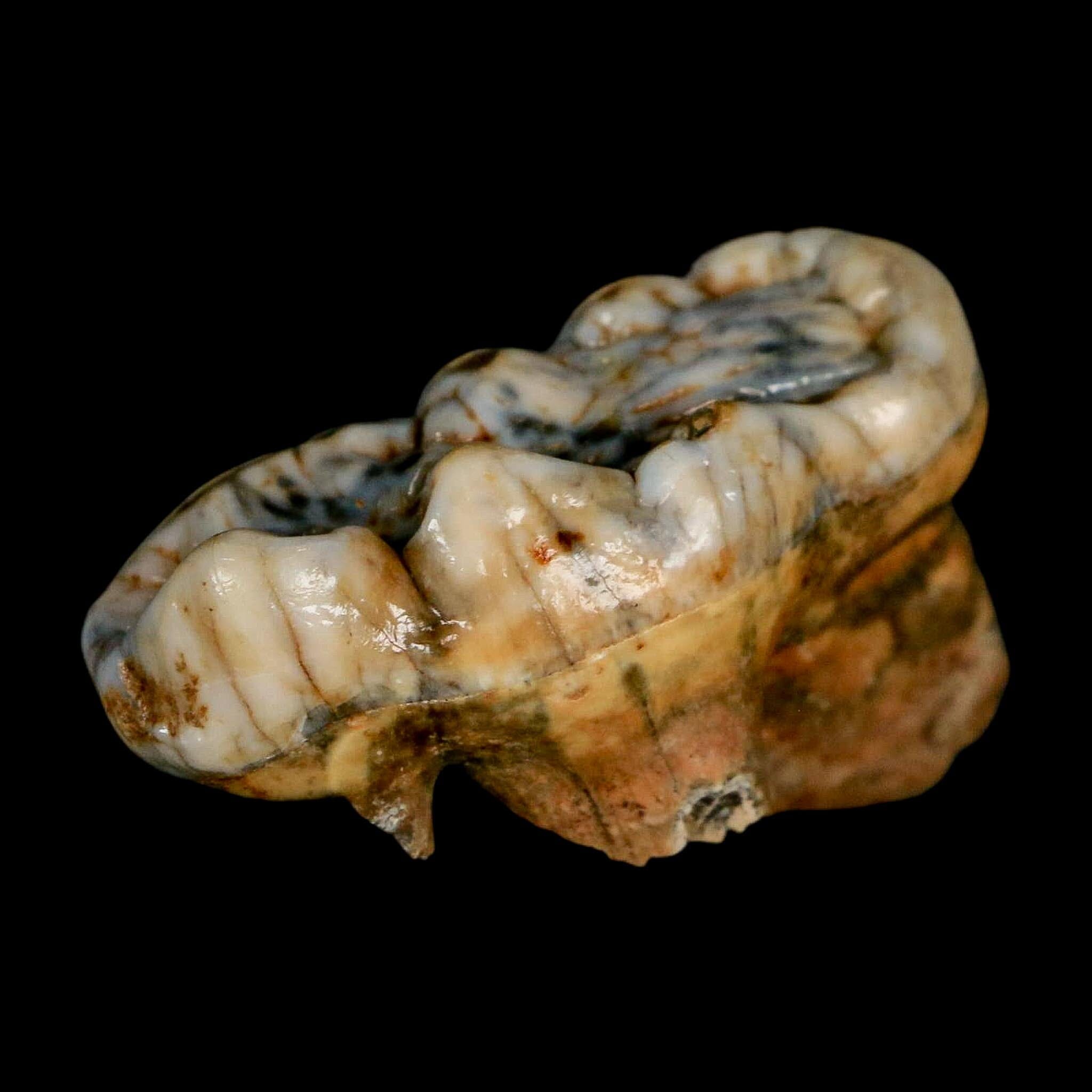
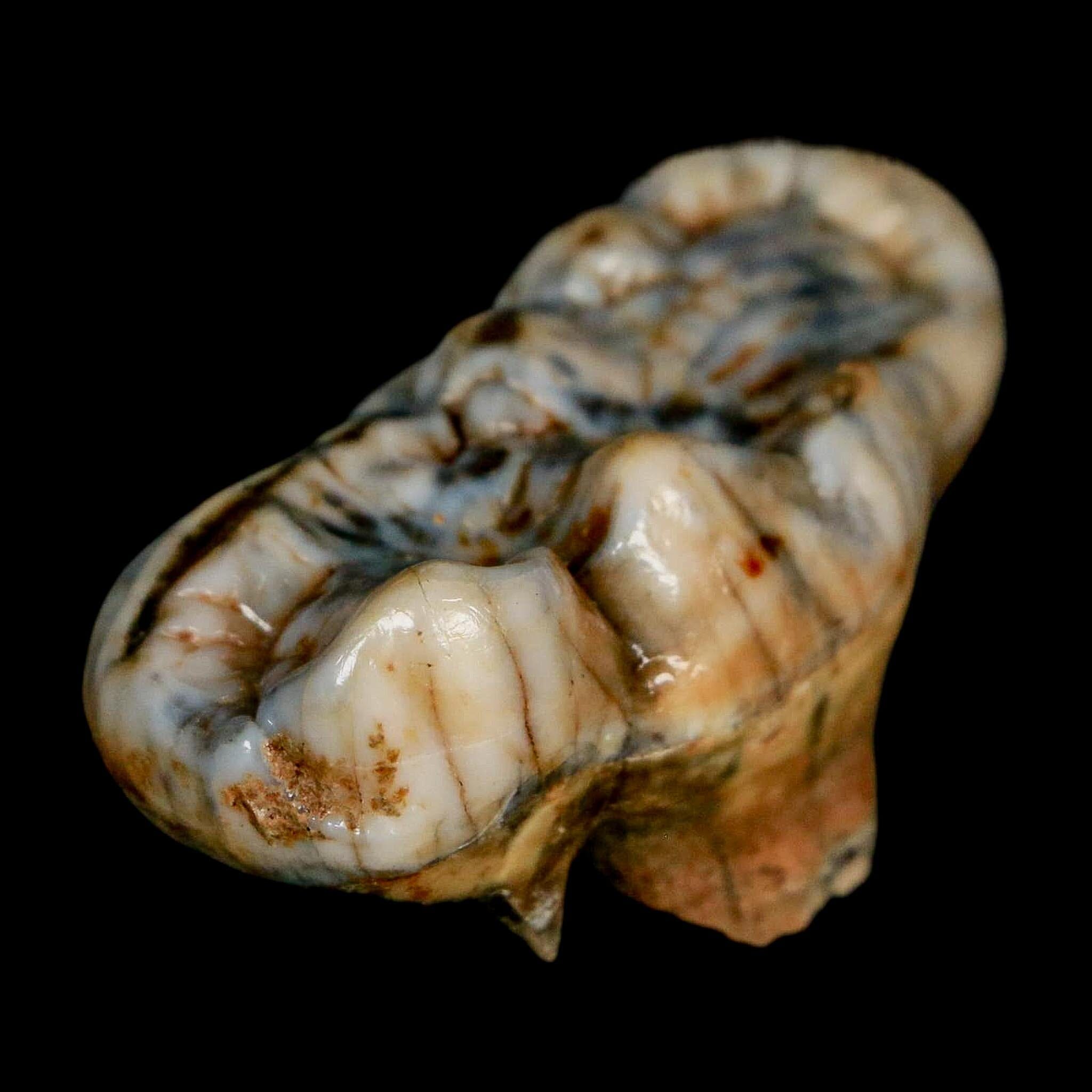
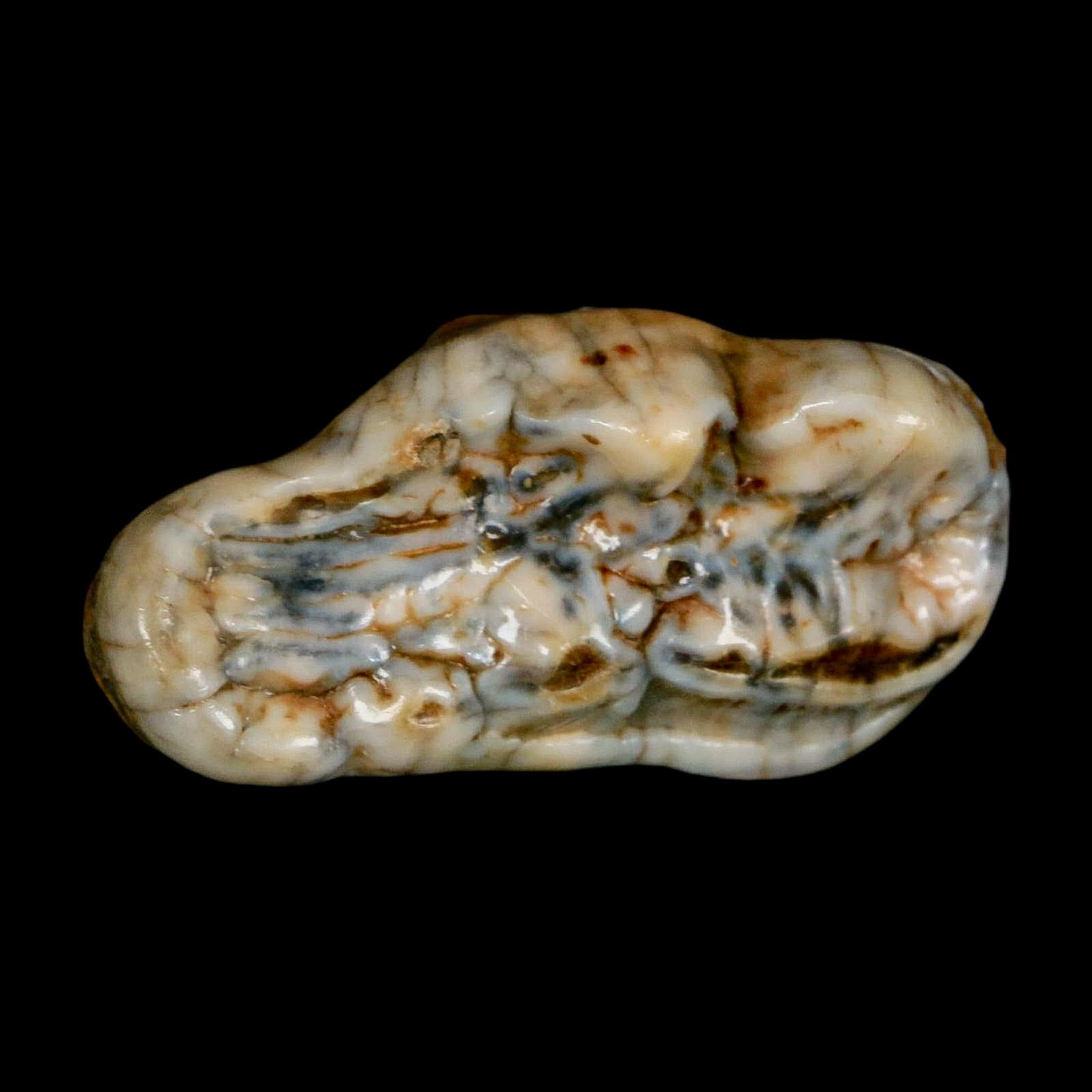
Dimensions: 1.9 Inches Long, 1.3 Inches Wide, 1 Inch Thick
Comes with a free Acrylic Base (Stand) & Mineral Tack.
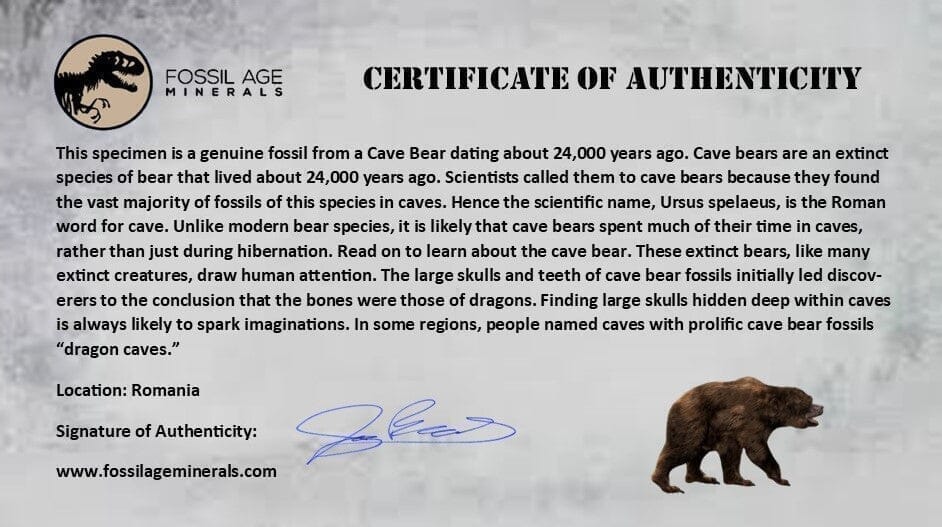
Comes with a Certificate of Authenticity.
The item pictured is the one you will receive.
Ursus spelaeus, commonly known as the Cave Bear, was one of the largest bear species of the Pleistocene, roaming across Europe until its extinction around 24,000 years ago. Fossil evidence is most often found deep within caves, suggesting that these subterranean environments were central to their lifestyle rather than simply seasonal shelters. This behavior makes Ursus spelaeus unique among bears and highlights its adaptation to Ice Age ecosystems.
Cave Bears were massive creatures, with robust skulls and powerful teeth that left an enduring impression on early cave explorers. Before the development of paleontology, many of these fossils were misinterpreted as the remains of dragons or other legendary beasts, inspiring folklore and naming some European caves after mythical creatures.
Despite their fearsome size, Ursus spelaeus was primarily herbivorous. Their teeth and jaws were adapted to processing tough, fibrous vegetation such as roots, grasses, and leaves. This dietary specialization distinguishes them from many modern bear species and provides insight into Pleistocene plant communities and megafaunal interactions.
Today, Cave Bear fossils remain a key resource for studying Ice Age climates, ecosystems, and extinction dynamics. They offer paleontologists, educators, and collectors a tangible connection to Europe’s prehistoric megafauna and continue to fascinate researchers interested in the biology, behavior, and environmental impact of one of the continent’s most iconic Ice Age species.
