
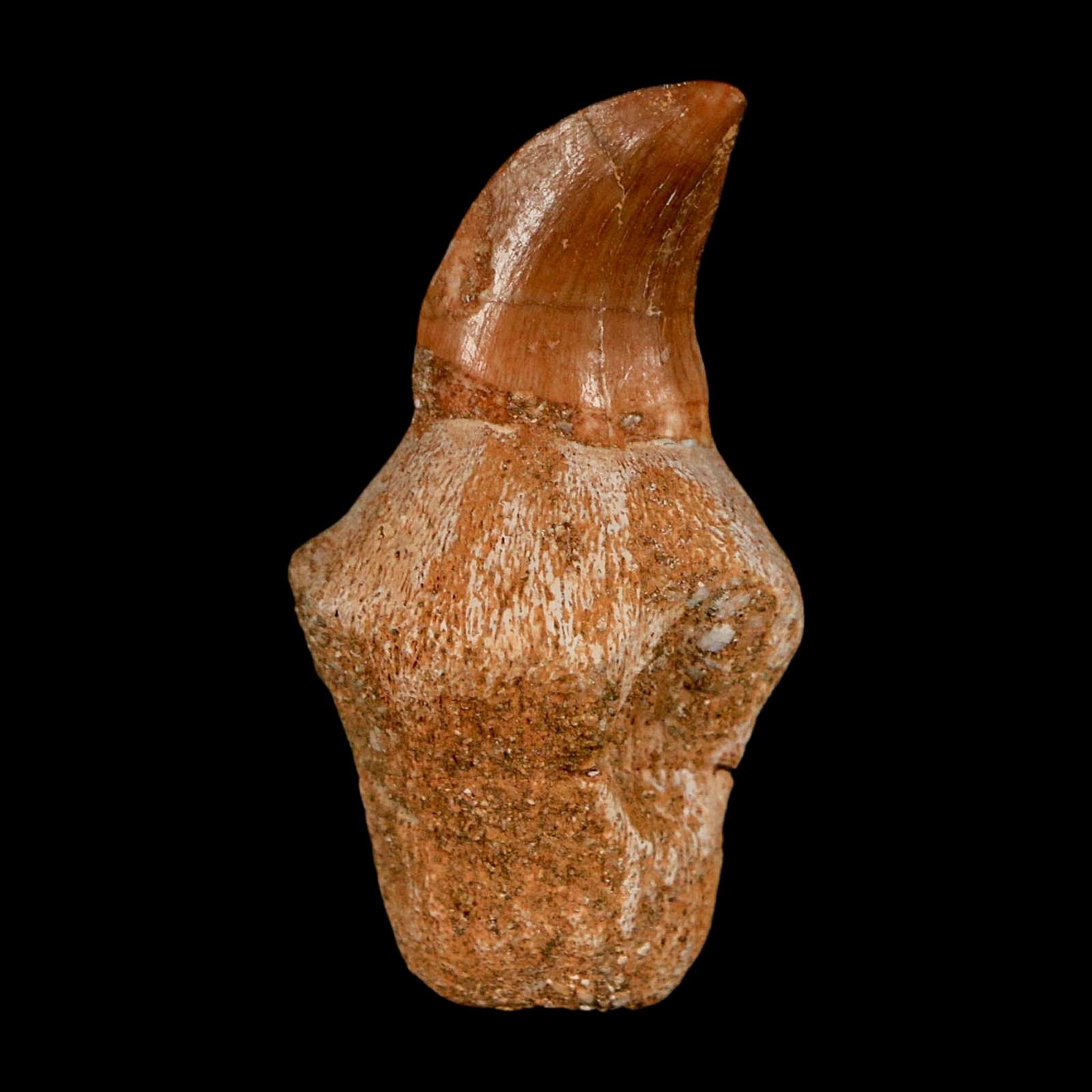
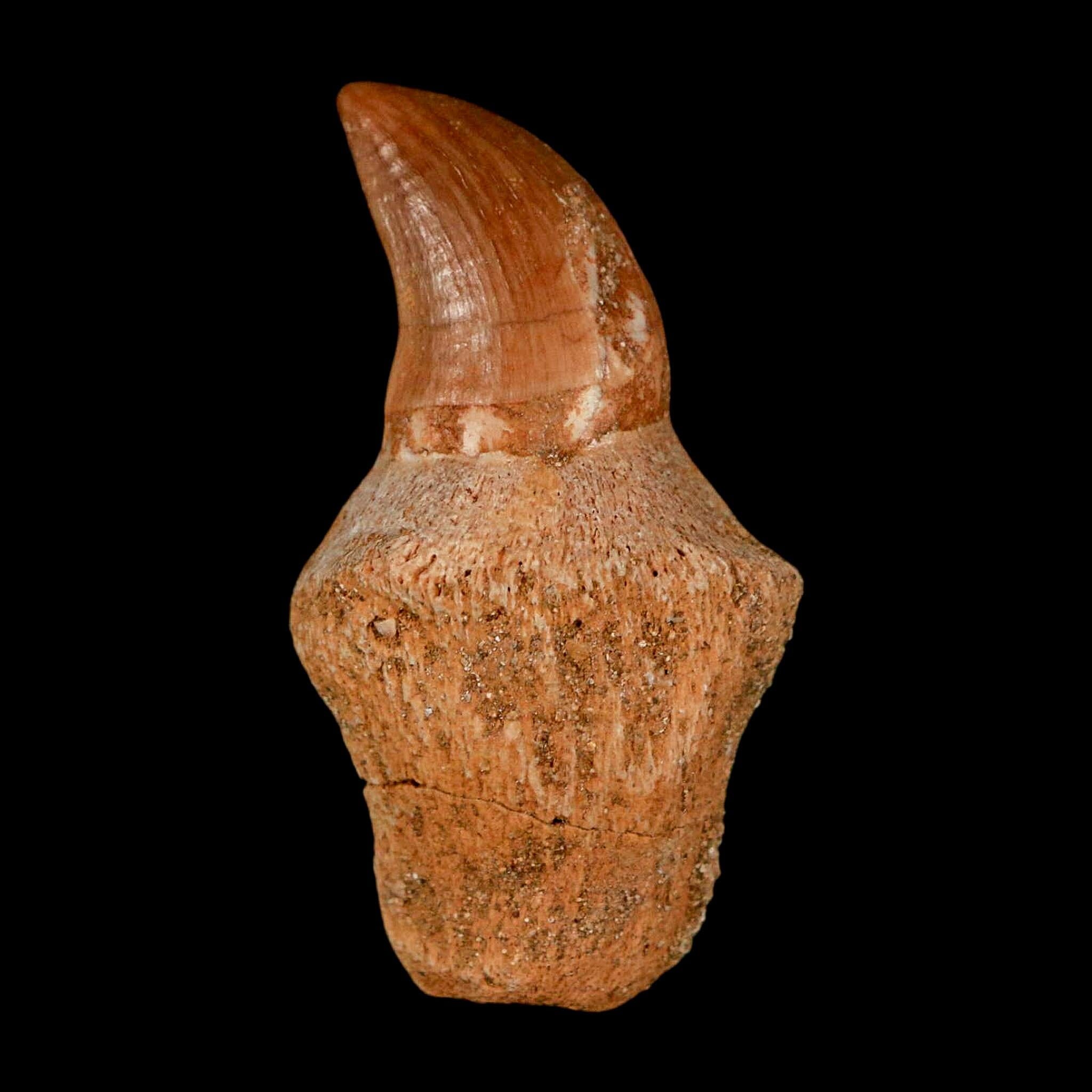
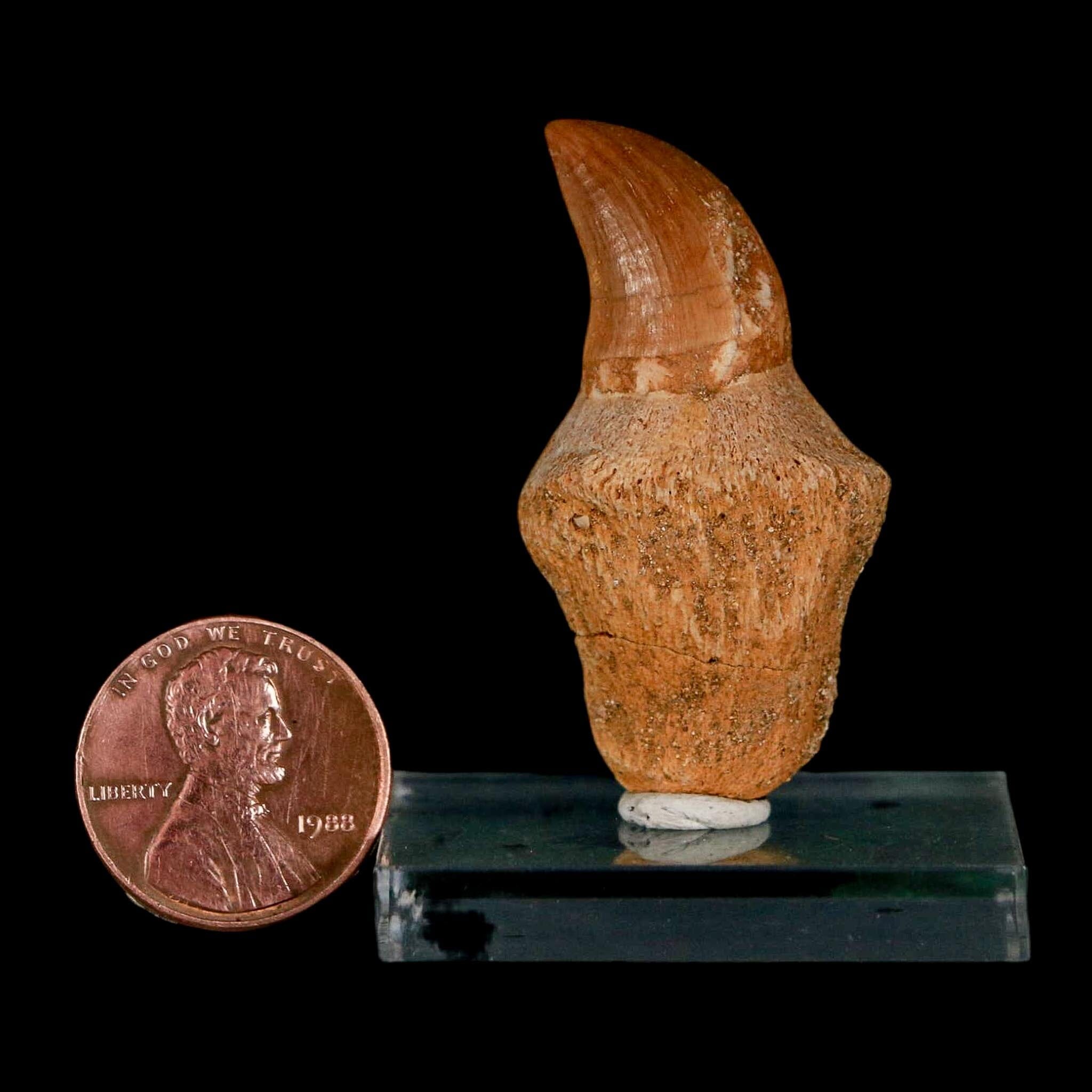
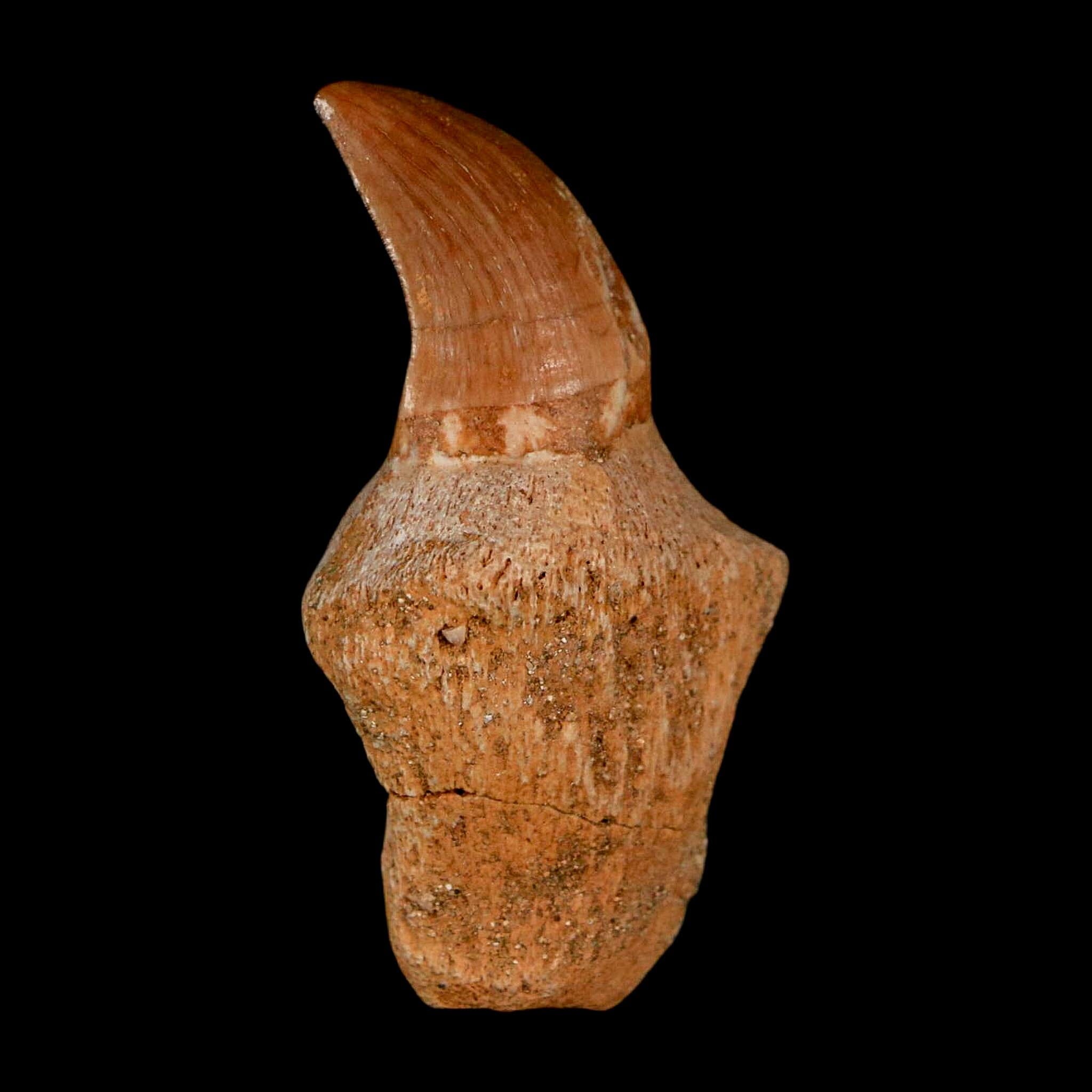
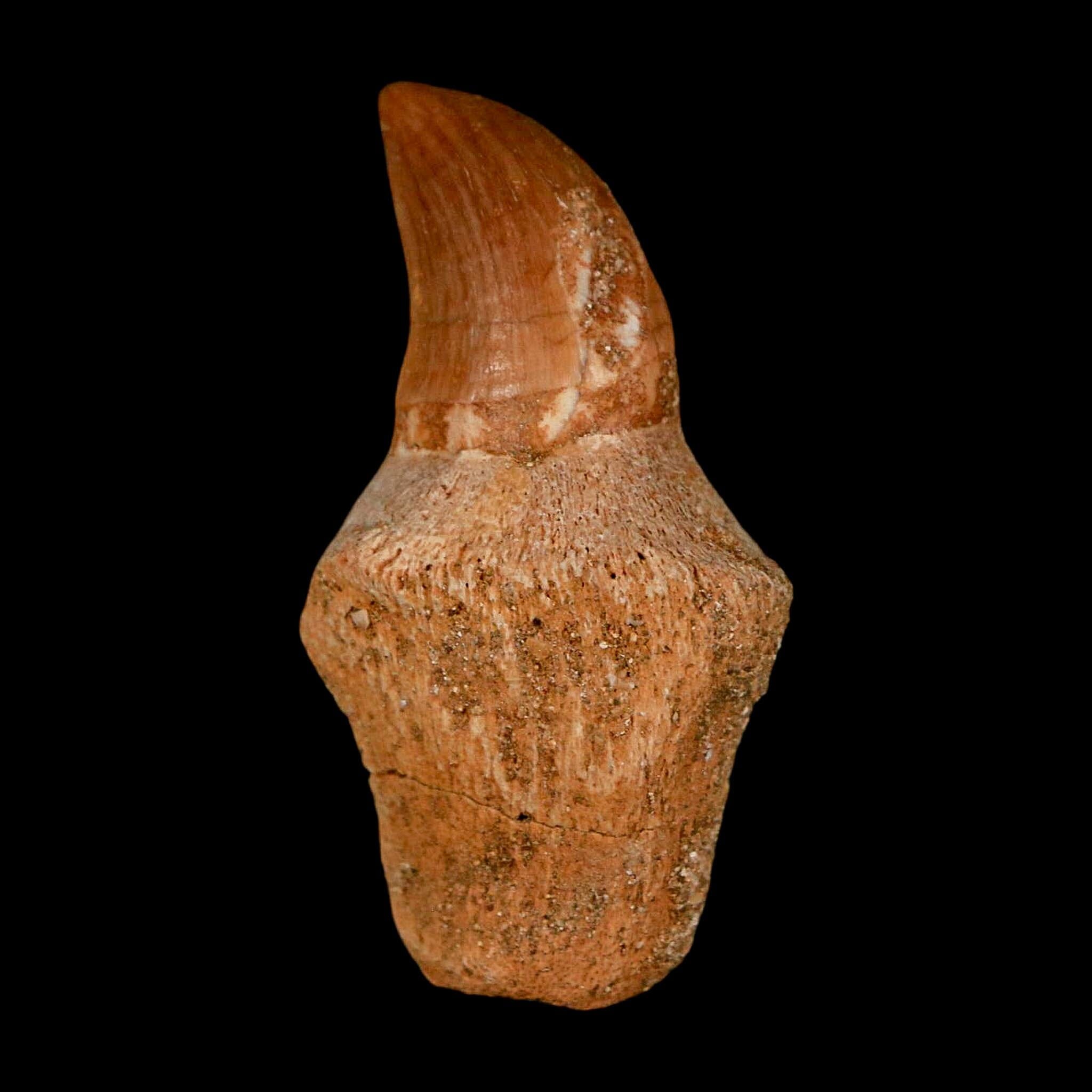
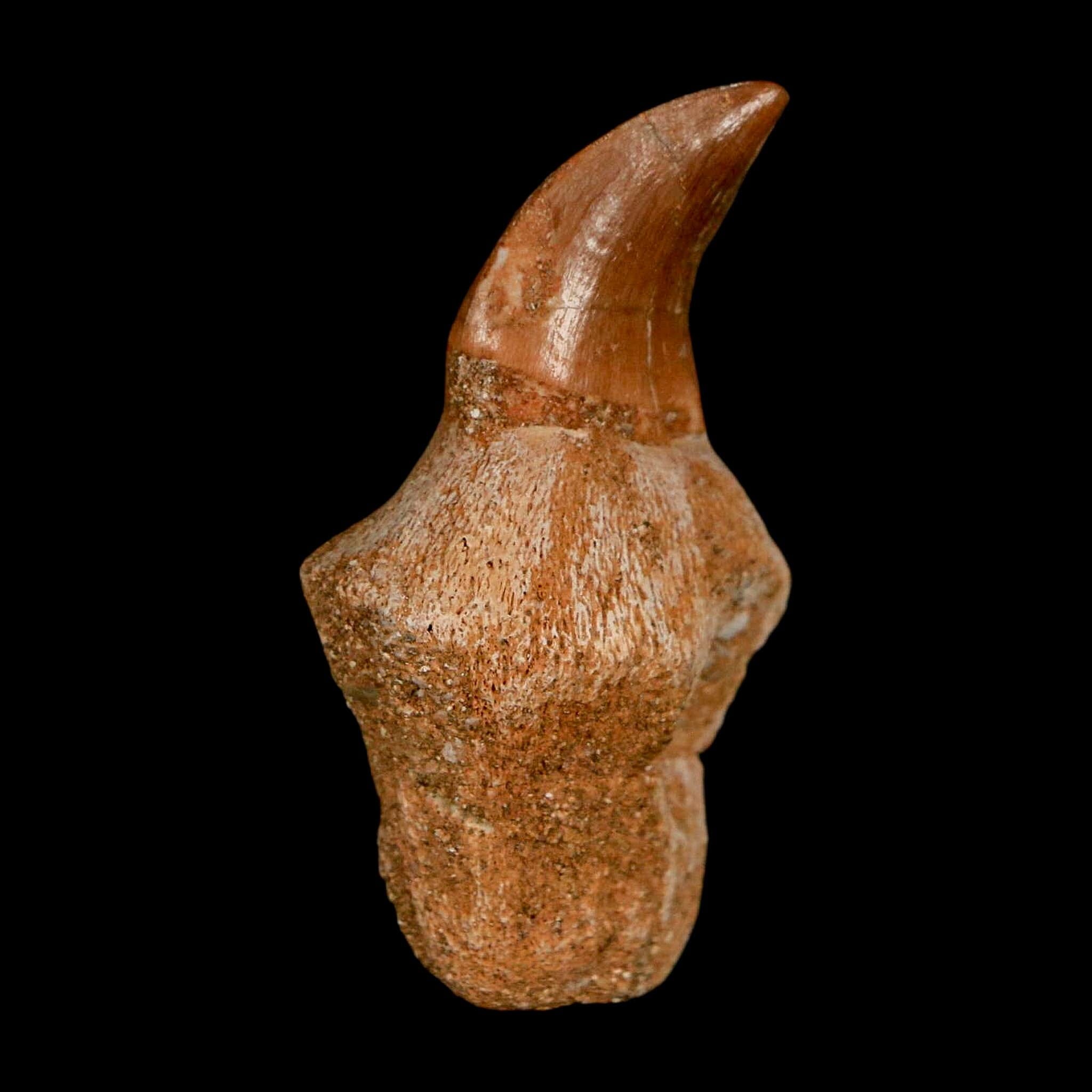
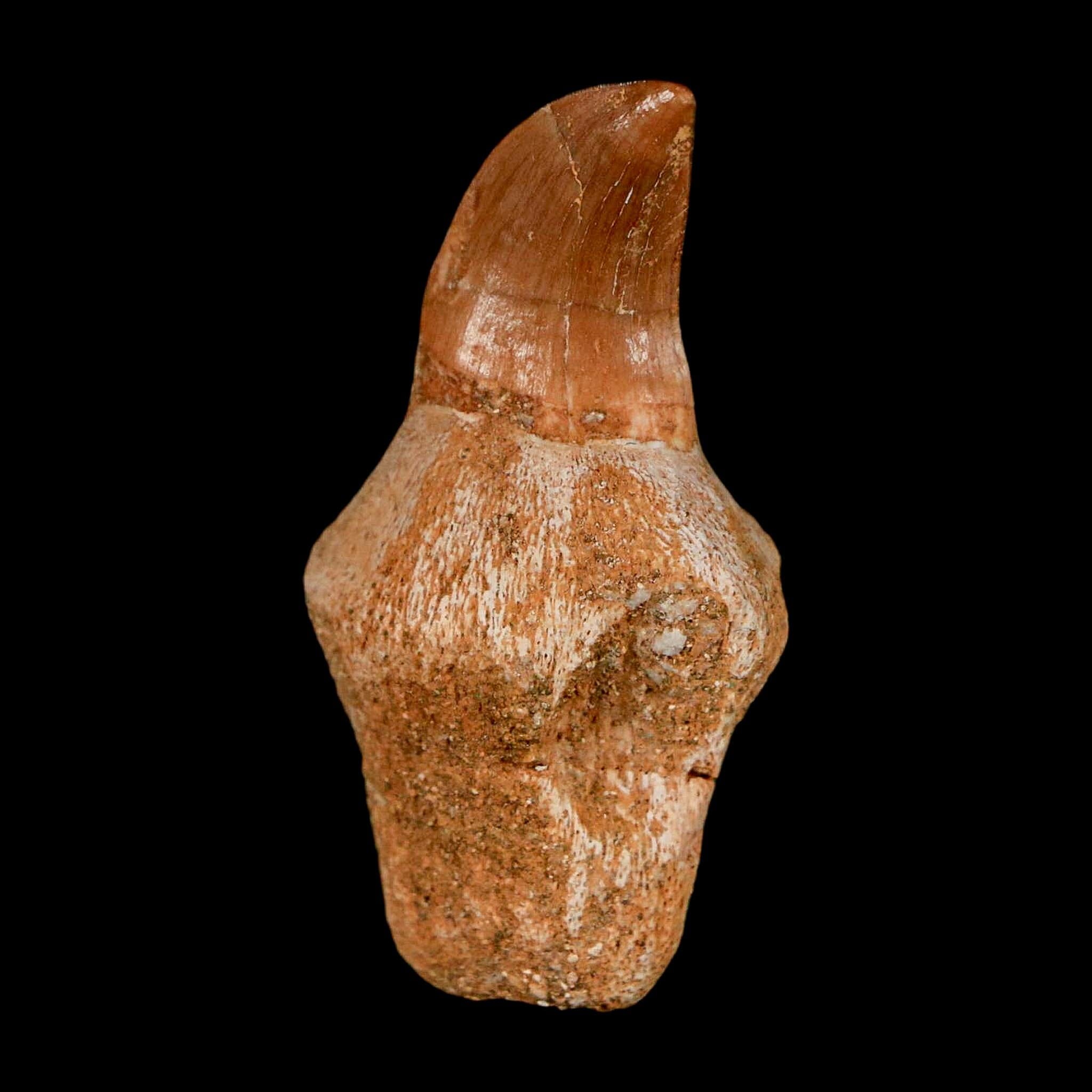


Description
Location: Oued Zem, Morocco
Weight: 0.3 Ounces
Dimensions: 1.6 Inches Long, 0.8 Inches Wide, 0.5 Inches Thick
Comes with a Certificate of Authenticity.
Comes with a Free Stand And Mineral Tack.
The item pictured is the one you will receive.
85 - 66 Million Years old, Early Campanian, Maastrichtian Epoch.
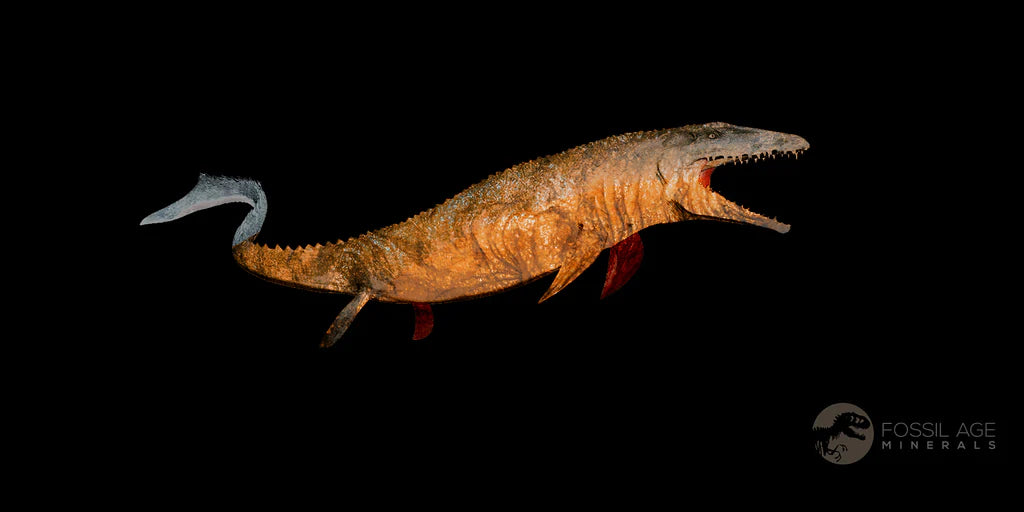
Name: Halisaurus
Type: Carnivore / Piscivore
Size: 3 to 4 meters in length.
Halisaurus inhabited warm marine environments during the Maastrichtian stage of the Late Cretaceous, sharing its waters with formidable marine reptiles. Weighing between 200 and 350 kilograms, it was neither the largest nor the most powerful mosasaur, yet it held a stable position within the oceanic food web.
Its body proportions suggest steady swimming ability rather than explosive pursuit. This aligns with a hunting strategy focused on capturing moderately sized prey, particularly fish and squid. The design of its skull offers valuable insight into its feeding mechanics. A flexible jaw structure allowed for a wide gape, while secondary teeth located on the palate prevented prey from slipping free.
Unlike slicing predators equipped with serrated teeth, Halisaurus possessed narrow, conical teeth designed for penetration and retention. Once prey was seized, it was maneuvered toward the throat and swallowed whole. This method minimized energy expenditure and reduced the risk of injury.
In ecological terms, Halisaurus functioned as a mid-level predator, balancing populations of smaller marine animals while remaining vulnerable to larger mosasaurs. Its existence highlights the complexity of Late Cretaceous marine ecosystems, where multiple predator sizes coexisted through specialization rather than direct competition.

Please be aware of the nature of fossils:
Being buried underground for millions of years under immense pressure can be quite harsh. Rarely does a fossil emerge fully intact and perfect. Most fossils have been restored to some extent, and some are even modified by humans to improve their appearance. In Morocco, workers perform their jobs professionally when uncovering and conserving these natural treasures. However, natural cracks are often visible on the surface, which are part of the fossil's natural beauty and are not seen as flaws.