

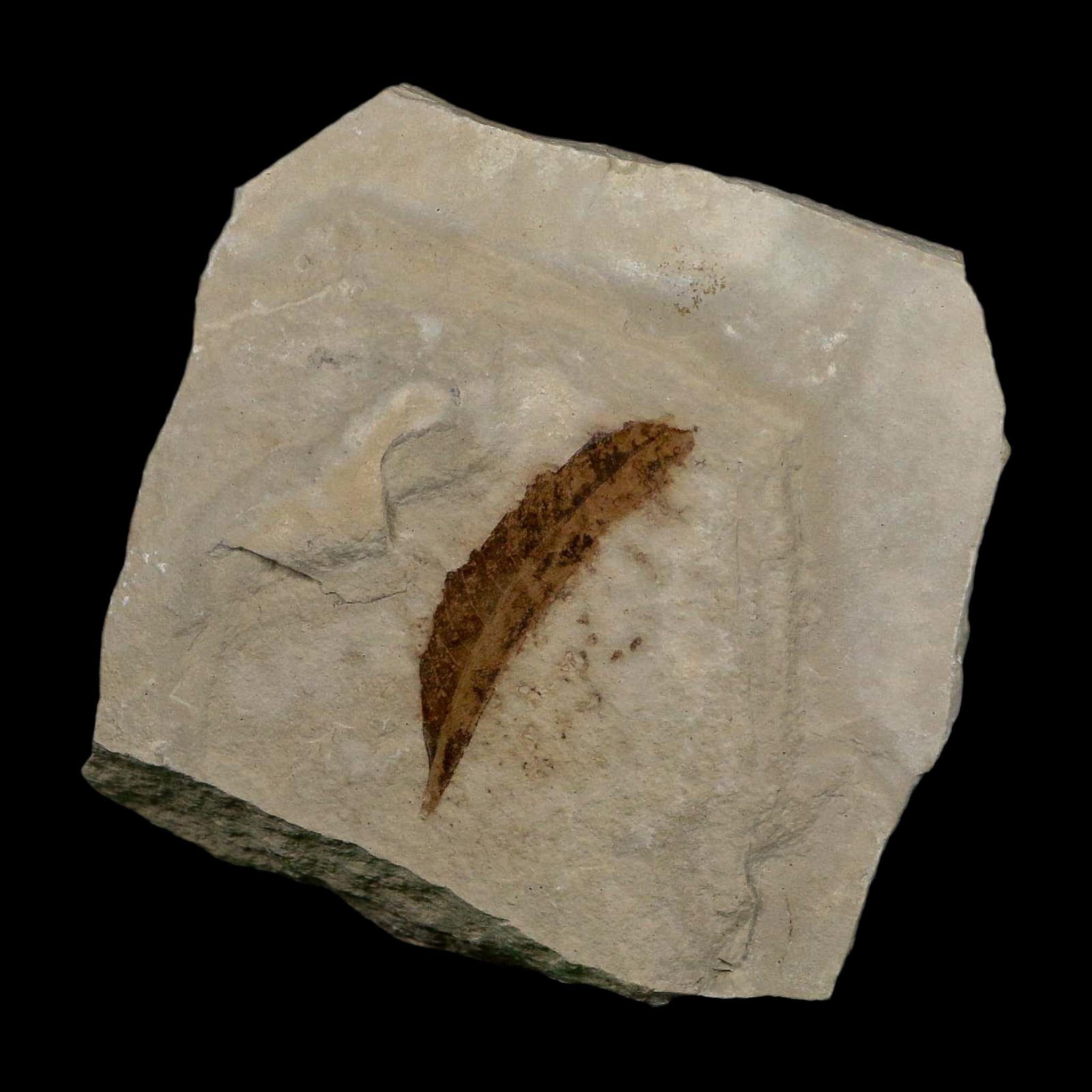


Description
Location: Green River Formation, Uintah County, Utah
Weight: 2.7 Ounces
Dimensions: 2.5 Inches Long, 2.4 Inches Wide, 0.5 Inches Thick (Plate)
Leaf Dimensions: 1.3 Inches Long, 0.3 Inches Wide
The item pictured is the one you will receive.
Rhus Nigricans Leaf
Rhus nigricans represents an extinct sumac species preserved within the early Middle Eocene deposits of the Green River Formation, dating approximately 53–48 million years ago. Recovered from fossil-rich shales spanning Utah, Colorado, and Wyoming, this specimen reflects the exceptional preservation conditions of ancient lake environments.
Sumacs are shrubs and small trees that today grow between roughly 3 and 33 feet tall. Their leaves are typically arranged in a spiral pattern and are most often pinnately compound, though some related species may display trifoliate or simple leaves. In living relatives, flowers form dense panicles or upright spikes, composed of numerous small blossoms that may be greenish, creamy white, or reddish in color, each bearing five petals.
Fossil evidence from the Green River Formation demonstrates that members of the sumac family (Anacardiaceae) were a significant component of the vegetation surrounding expansive Eocene freshwater lakes. Although the formation is widely celebrated for its iconic fish fossils, it also preserves a diverse array of plants, invertebrates, reptiles, mammals, and even stromatolitic structures. Plant fossils are especially abundant in these finely laminated shales, offering valuable insight into Paleogene forest composition and climate.