
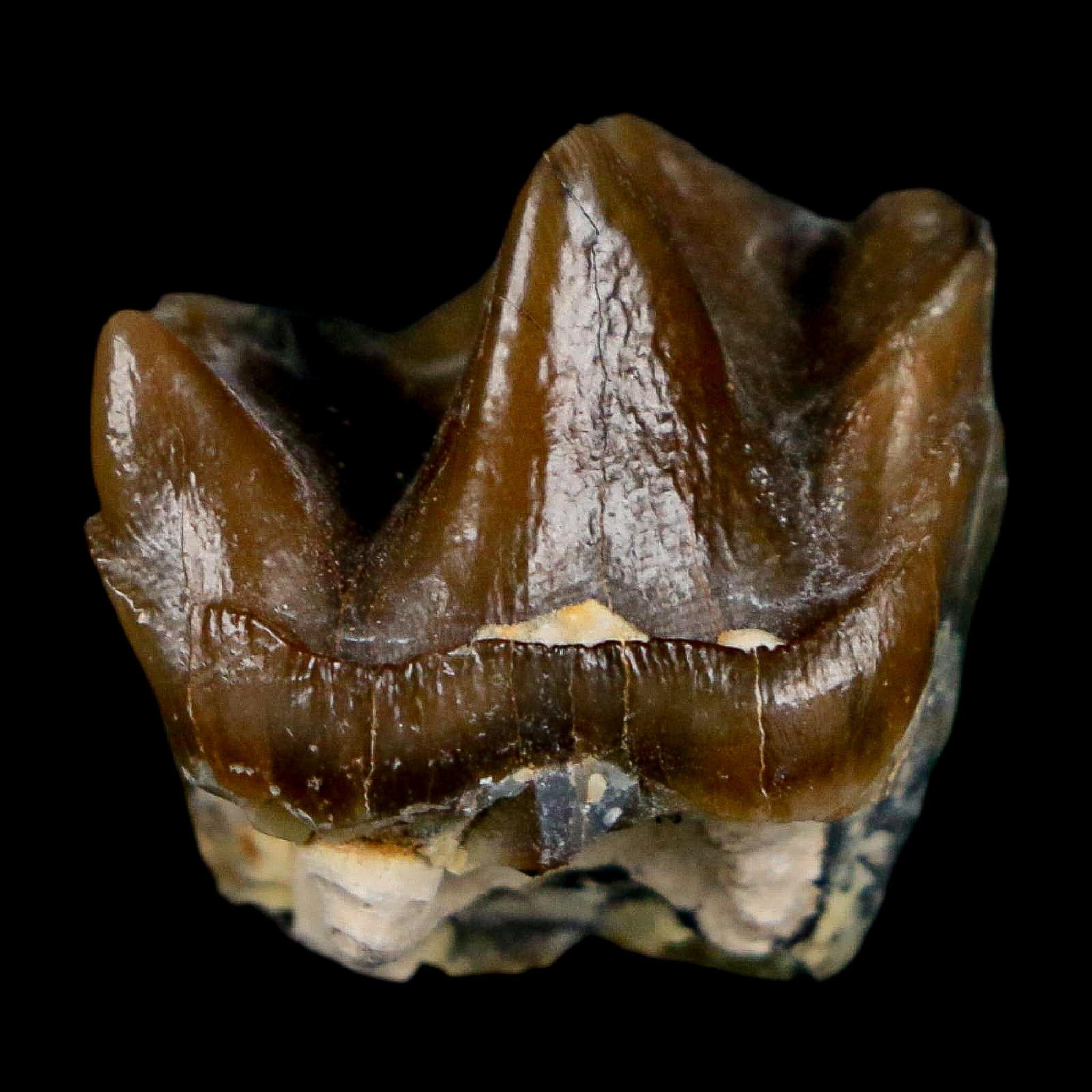
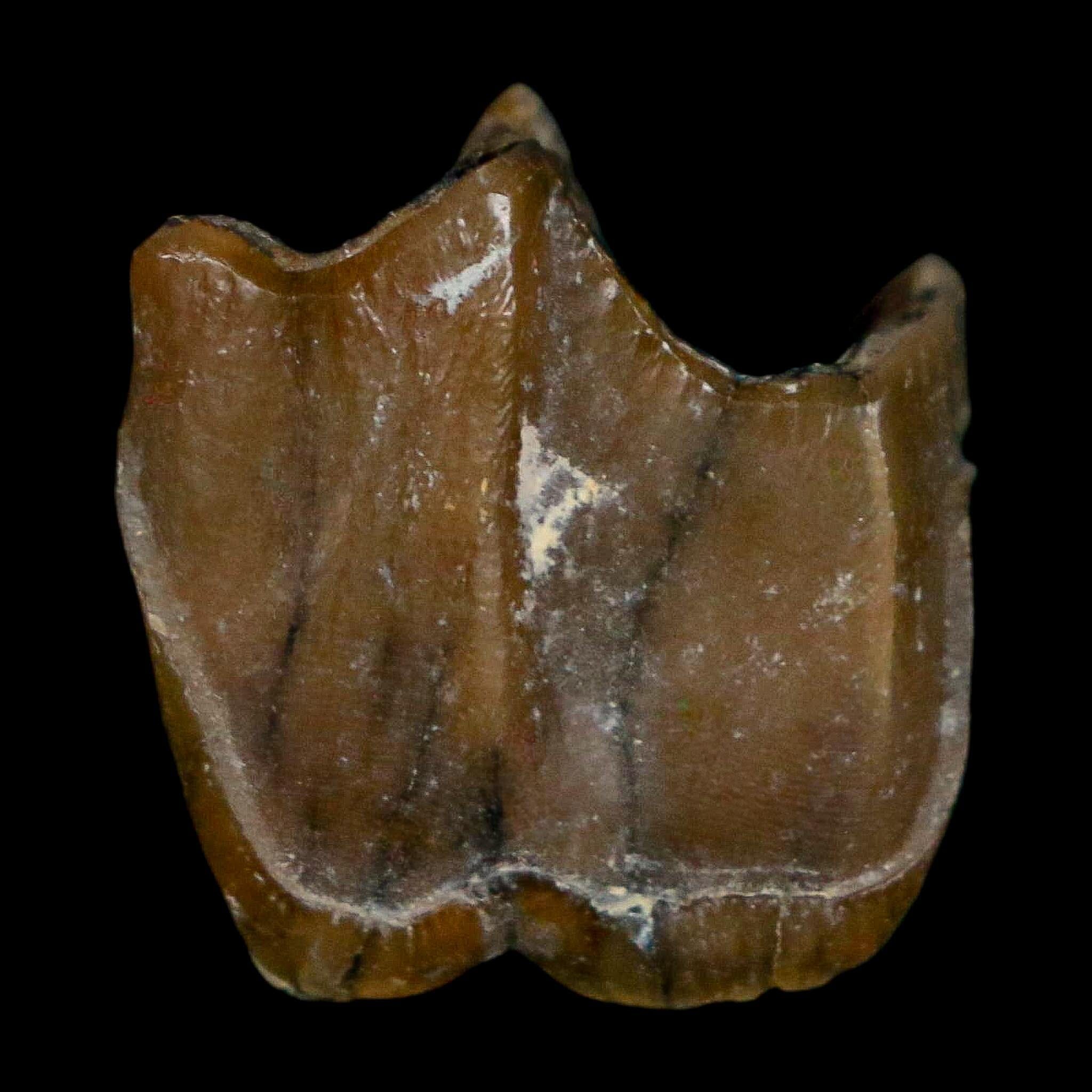
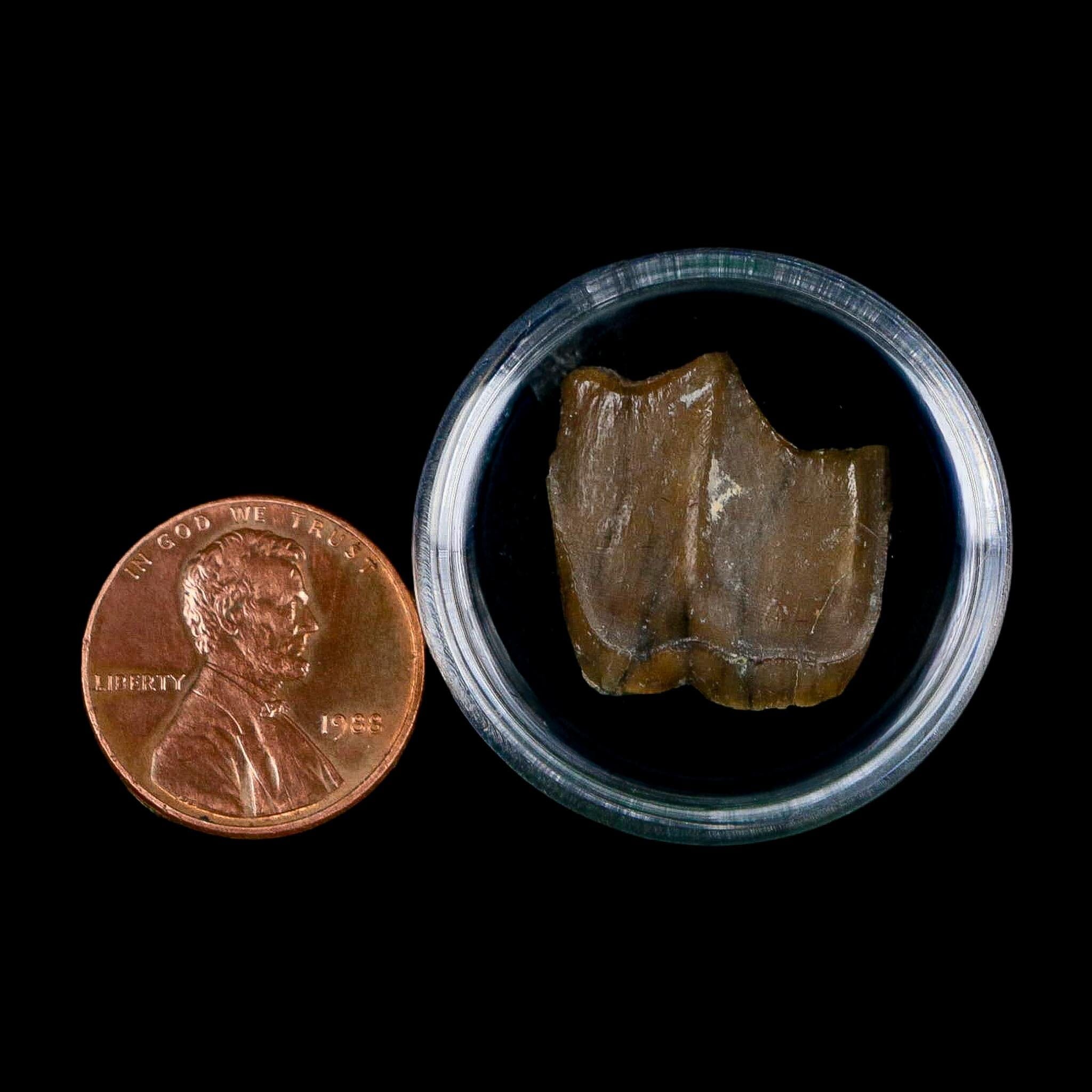
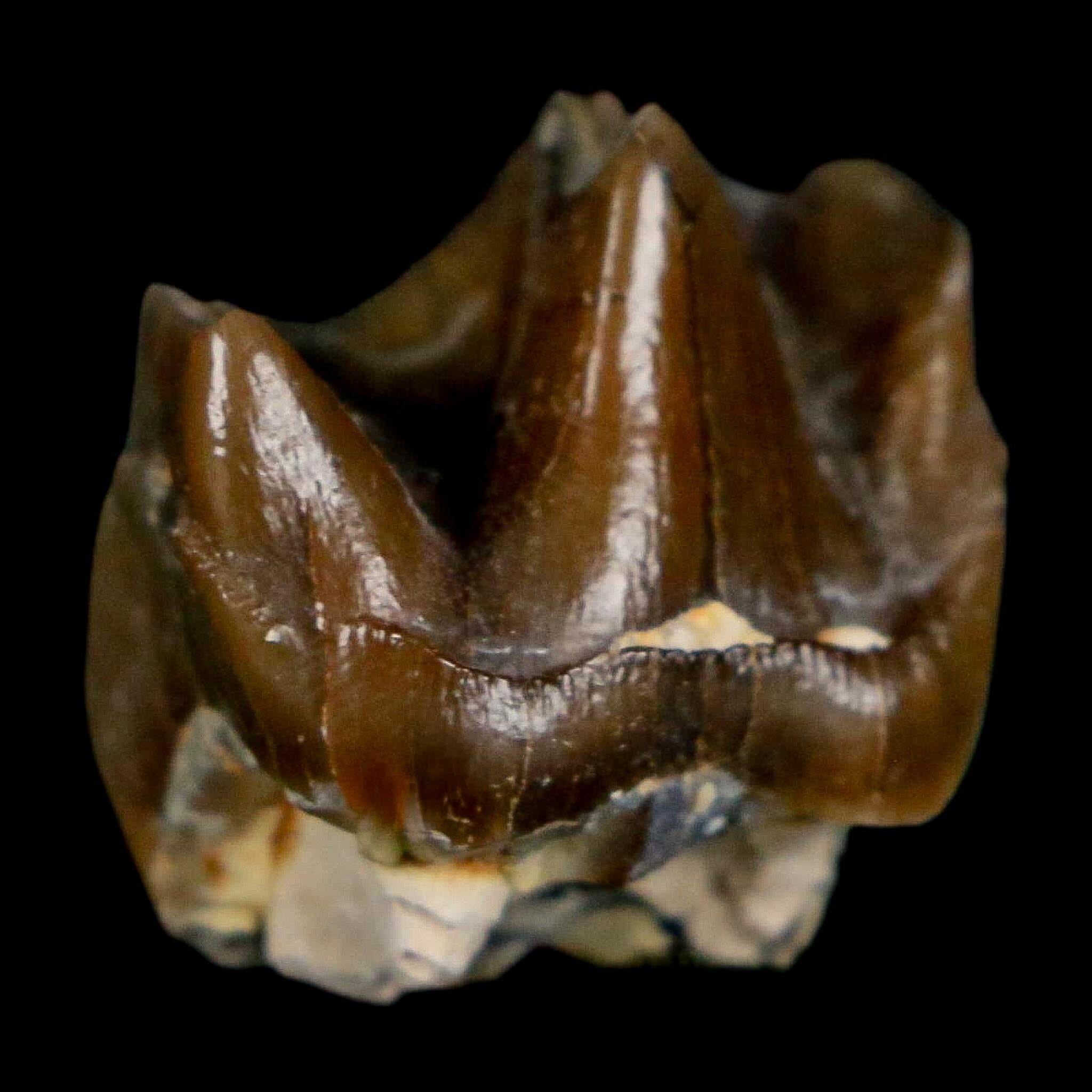
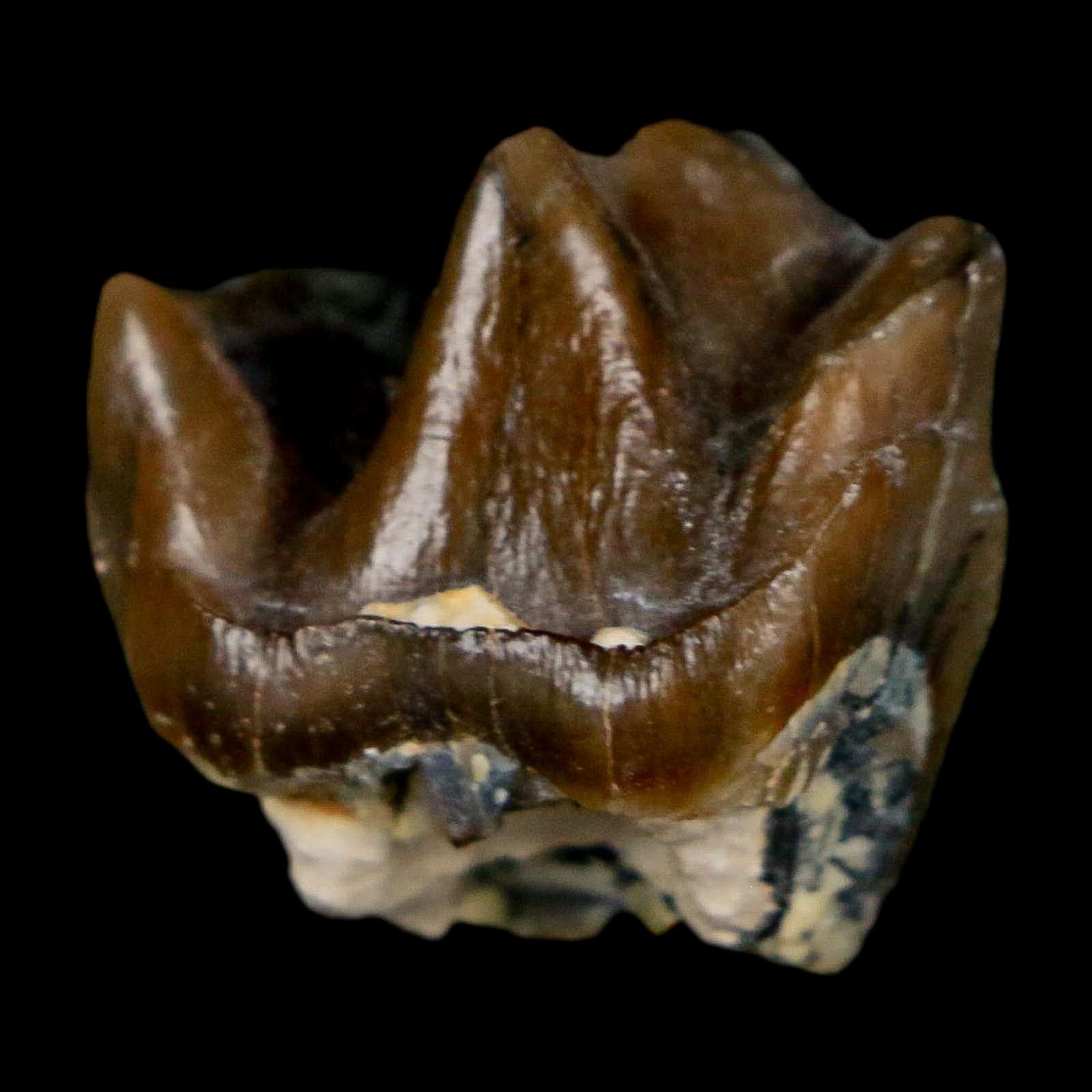
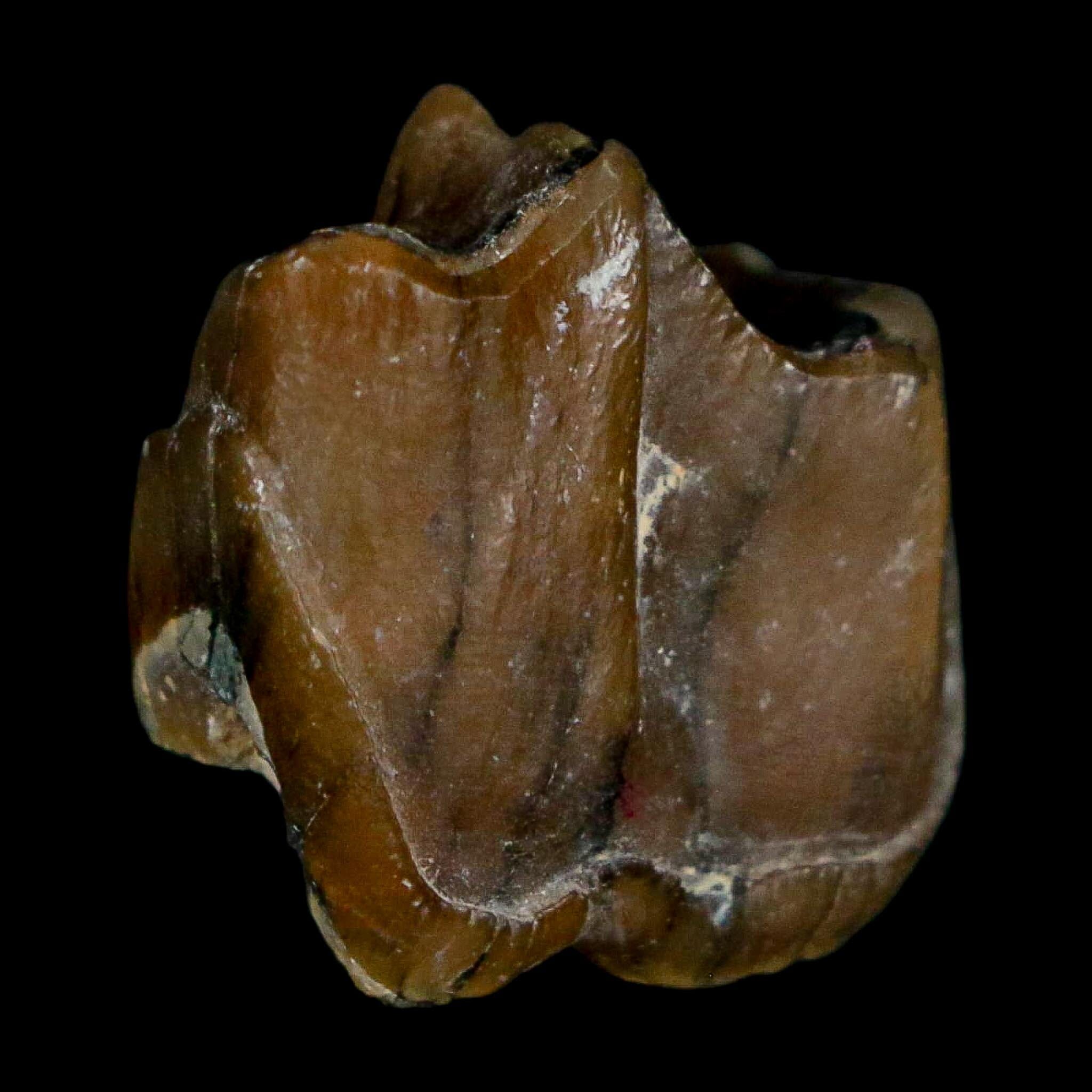
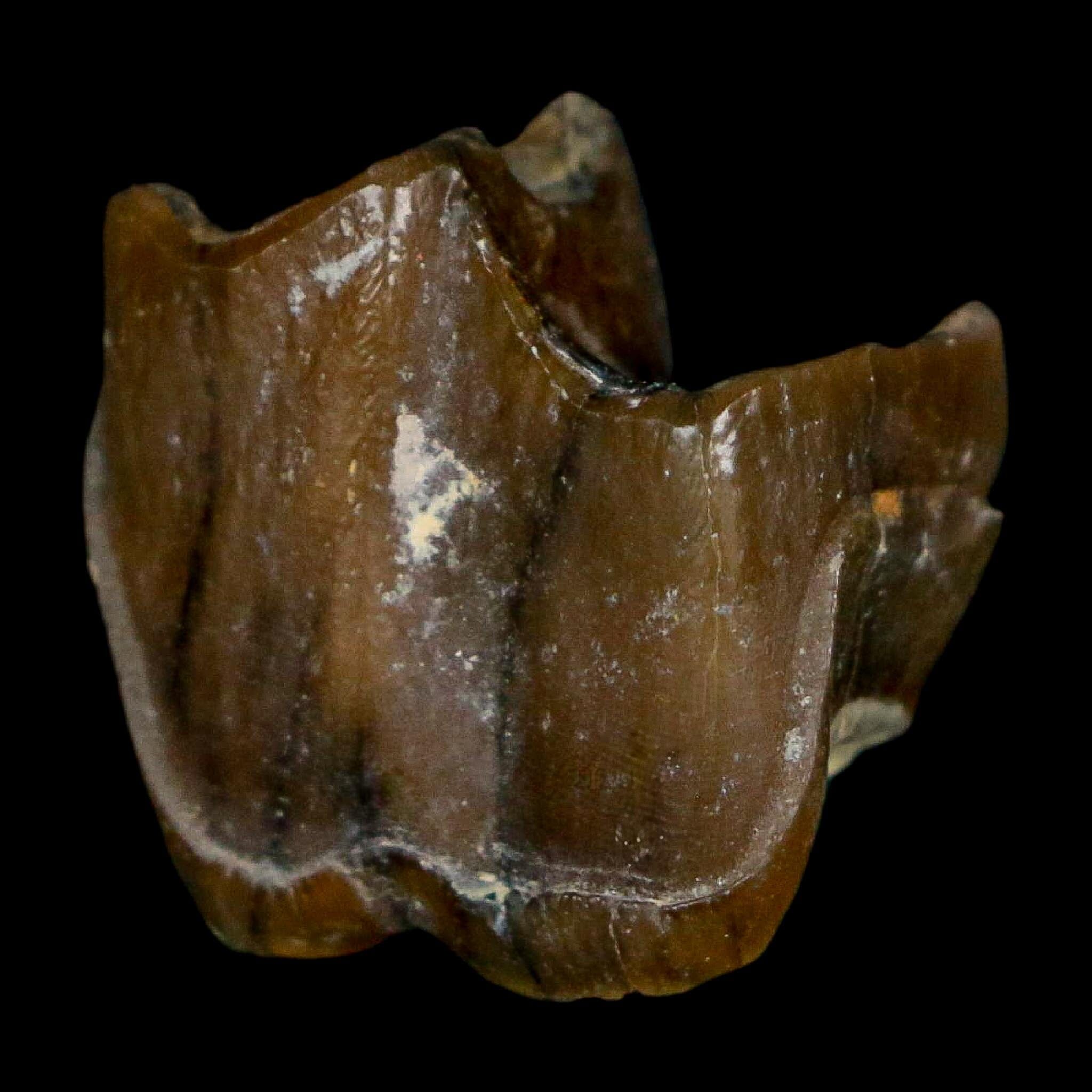


Description
Location: South Dakota, White River Formation, Pennington County
Weight: 0.4 Ounces
Dimensions: 0.7 Inches Long, 0.7 Inches Wide, 0.5 Inches Thick
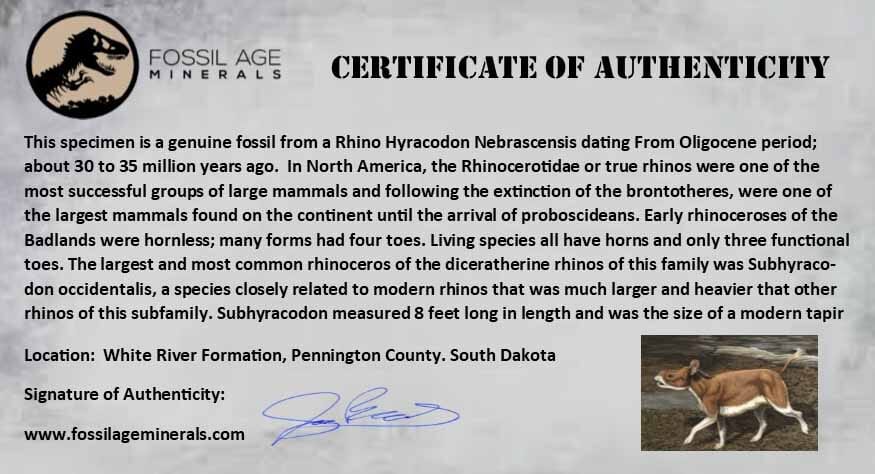
Comes with a Certificate of Authenticity.
Comes with a Display.
The item pictured is the one you will receive.
30-35 Million Years Old Oligocene Period
The discovery of Rhinoceros fossils in the Badlands of the American West was very exciting, as most people never suspected that such primitive rhinoceros forms could have existed in North America. Today, four genera of living rhinoceroses encompass five species; two are native to Africa, and three are found in Asia. Most are browsers, but the largest species, the white rhinoceros of Africa, is a grazer. All living species have horns made of keratinized hair, which decomposes after death and is rarely preserved in fossils. Although most New World rhinoceroses lacked horns, males of the pig-sized Menoceros from the early Miocene had a lateral pair of horns. During the Middle Eocene, three similar lineages of rhinoceroses appeared in North America from Asia: the hippo-like Amynodontidae, the fast-running Hyracodontidae, and true rhinoceroses, Rhinocerotidae. Only true rhinoceroses evolved enough to survive into the early Pliocene.
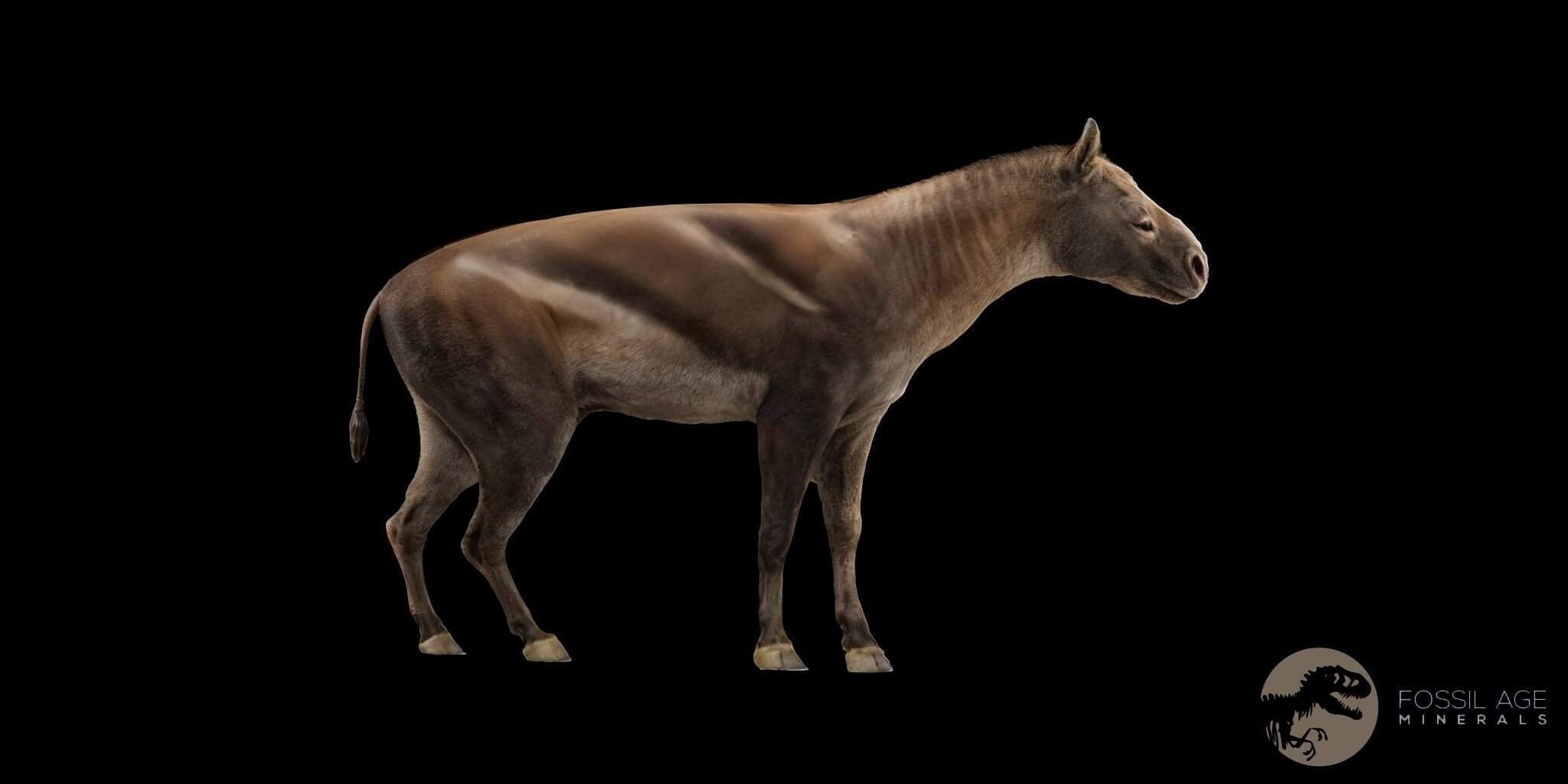
In North America, Rhinocerotidae, or true rhinos, were among the most successful large mammals. After the extinction of the brontotheres, they were the largest land mammals on the continent until proboscideans arrived. Early North American rhinoceroses lacked horns and often had four toes. Modern species have horns and only three functional toes. The largest and most common member of this family was Subhyracodon occidentalis, a species closely related to modern rhinos. It was much larger and heavier than other members of its subfamily, measuring about 8 feet long and resembling a large tapir.
