


News
The T rex Tooth: One of the Most Iconic Dinosaur Fossils Explained
Team Fossil Age Minerals

T rex tooth, likely the most famous fossil, gives rise to amazement and admiration. These enormous and sharp teeth have revealed the mammoth predator's existence. T rex teeth not only offer the viewer an idea of the monster's dimensions and form but also provide insights into the prehistoric living conditions and the food habits of the giant carnivore by revealing its hunting methods. To study a single tooth is equal to holding in your palm a tiny part of a very ancient story that has been kept alive for millennia. Why Were T rex Teeth So Formidable? T. rex teeth...
Why Fossil Collectors Trust Fossil Age Minerals for Authentic Finds
Team Fossil Age Minerals

Fossils have a special allure. They are not only the remains of life from another bygone age, but are also pieces of time—nature’s bookkeeping. A single impression or preserved bone is a view into a world that no longer exists, one that existed millions of years ago. Collectors appreciate the fact that fossils are tangible remnants of prehistoric life. Unfortunately, as the fossil market becomes more popular, the likelihood of imitation or information deception also increases. Authentic fossils can often be scarce, and acquiring one sometimes involves sourcing a dealer who prioritizes authenticity over appearance. This is precisely why Fossil...
The Hidden World of Trilobites: Nature’s Ancient Artworks
Team Fossil Age Minerals

Trilobites are some of the oldest types of arthropods. They showed up more than 521 million years ago in the Cambrian period. They lived in the oceans for about 270 million years. In the end, they all died out at the close of the Permian. Evolutionary importance: Trilobites were some of the first animals that had hard exoskeletons and bodies with several segments. Range: Scientists have found over 20,000 kinds of trilobites. These creatures could be very small, less than 1 cm, or big, over 70 cm long. Body breakthrough: A trilobite’s body was split into three main sections—the head...
Triceratops Teeth & Fossils: The Three-Horned Herbivore’s Legacy
Team Fossil Age Minerals

Triceratops is one of the most famous dinosaurs from the dinosaur age. In fact, its large head frill and three huge horns made it easy to recognize. This plant-eating dinosaur lived in the present-day North American continental area. It was a dinosaur coming to an end before the great extinction of the Cretaceous–Paleogene period wiped out a major part of Earth’s ancient life. Fossils reveal a great deal about the past and help paleontologists take us back in time, allowing us to view the Cretaceous period from a different perspective. By obtaining a triceratops dinosaur tooth sold by Fossil Age...
Gorgosaurus and Daspletosaurus – Predatory Dinosaurs of the Cretaceous
Team Fossil Age Minerals
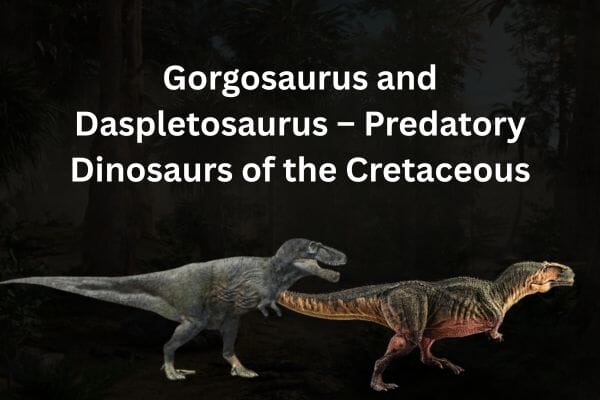
The forests and plains of the Late Cretaceous period were home to some of the most formidable hunters anyone could have encountered on Earth. One of them was the Gorgosaurus. It was known as a deadly hunter. Its bones continue to receive attention from scientists and fans worldwide. Learning more about the Gorgosaurus helps us understand how predators and prey lived and acted many years ago. Anatomy That Made Gorgosaurus a Fearsome Hunter Gorgosaurus is closely related to Tyrannosaurus rex. It could grow to be about 30 feet long. This dinosaur weighed about 2 tons. Looking at its bones, we...