






Description
Location: Kemmerer, Wyoming
Weight: 1 Pound 9.5 Ounces
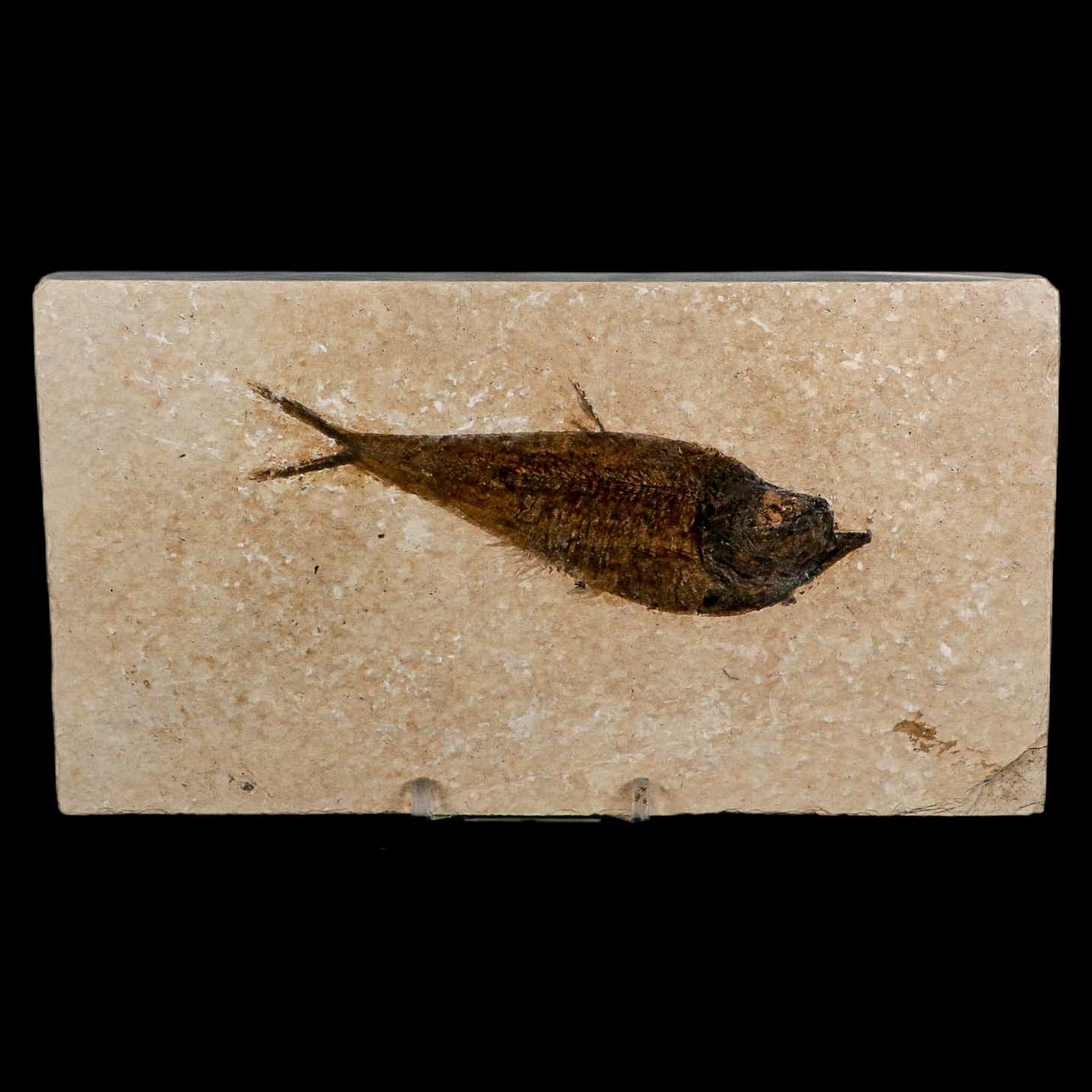
Dimensions: 7.1 Inches Long, 3.8 Inches Wide, 0.7 Inches Thick (Plate)
Fish Dimensions: 4.5 Inches Long, 1.7 Inches Wide
Comes with a Free Stand.
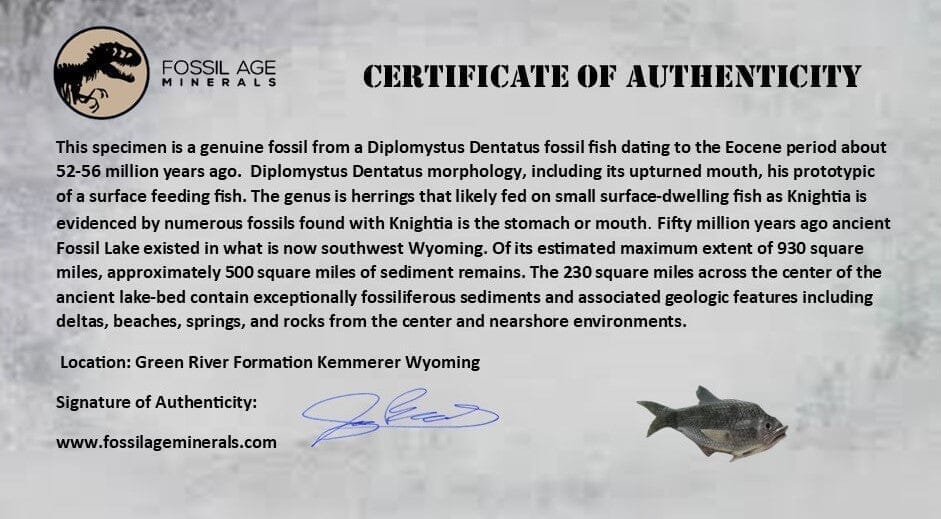
Comes with a Certificate of Authenticity.
The item pictured is the one you will receive.
56 million years old, Eocene age.
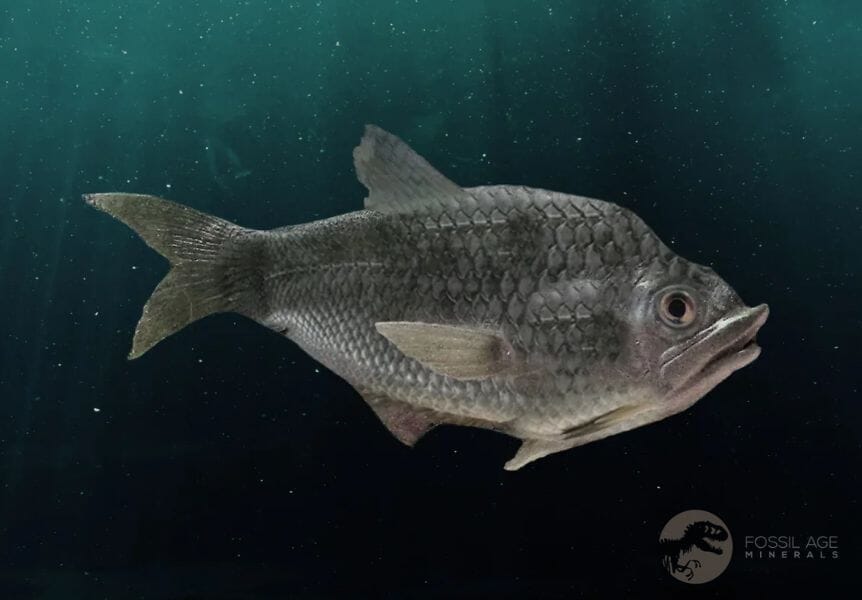
This remarkable Diplomystus dentatus specimen exemplifies the specialized anatomy of a Paleogene predator, with its characteristic upturned mouth perfectly adapted for capturing prey at the water's surface. A close relative of herrings, this ancient fish inhabited the depths of Fossil Lake approximately 50 million years ago, where paleontological evidence—including fossilized Knightia within stomach cavities—documents its dietary preferences. The specimen originates from southwestern Wyoming's legendary Fossil Lake, an ancient freshwater basin that once encompassed nearly 930 square miles during the Eocene epoch. The lake's distinctive geochemical composition created extraordinary conditions for fossilization, with minimal bacterial activity and scavenging enabling the accumulation of finely laminated limestone strata. These deposits, representing the world's most prolific source of Paleogene ichthyofauna, preserve an invaluable record of a vanished aquatic ecosystem spanning from nearshore deltas to deep-water zones. Includes certificate of authenticity and custom stand.
Since its discovery in the 1870s, many well-preserved fossil fish have been recovered. These fossils include a complete aquatic ecosystem preserved within the laminated limestone: cyanobacteria, plants, insects, crustaceans (shrimp, crawfish, and ostracods), amphibians (frog and primitive salamander), alligators, turtles, birds, and mammals, including the oldest pantolestid (otter-like animal). The surrounding subtropical terrestrial environment is also represented by rare fossils, such as a horse, two snakes, lizards, two bat species, birds, an apatemyid (an arboreal insectivore), a minced (primitive carnivore), insects, and over 325 types of leaves, seeds, and flowers.

Please be aware of the nature of fossils:
Being buried underground for millions of years under immense pressure is a tough process. Rarely does a fossil emerge intact and perfect. Most fossils require some restoration, and some are modified by humans to improve their appearance. These features are part of the fossil's natural charm and should not be seen as flaws.