



Description
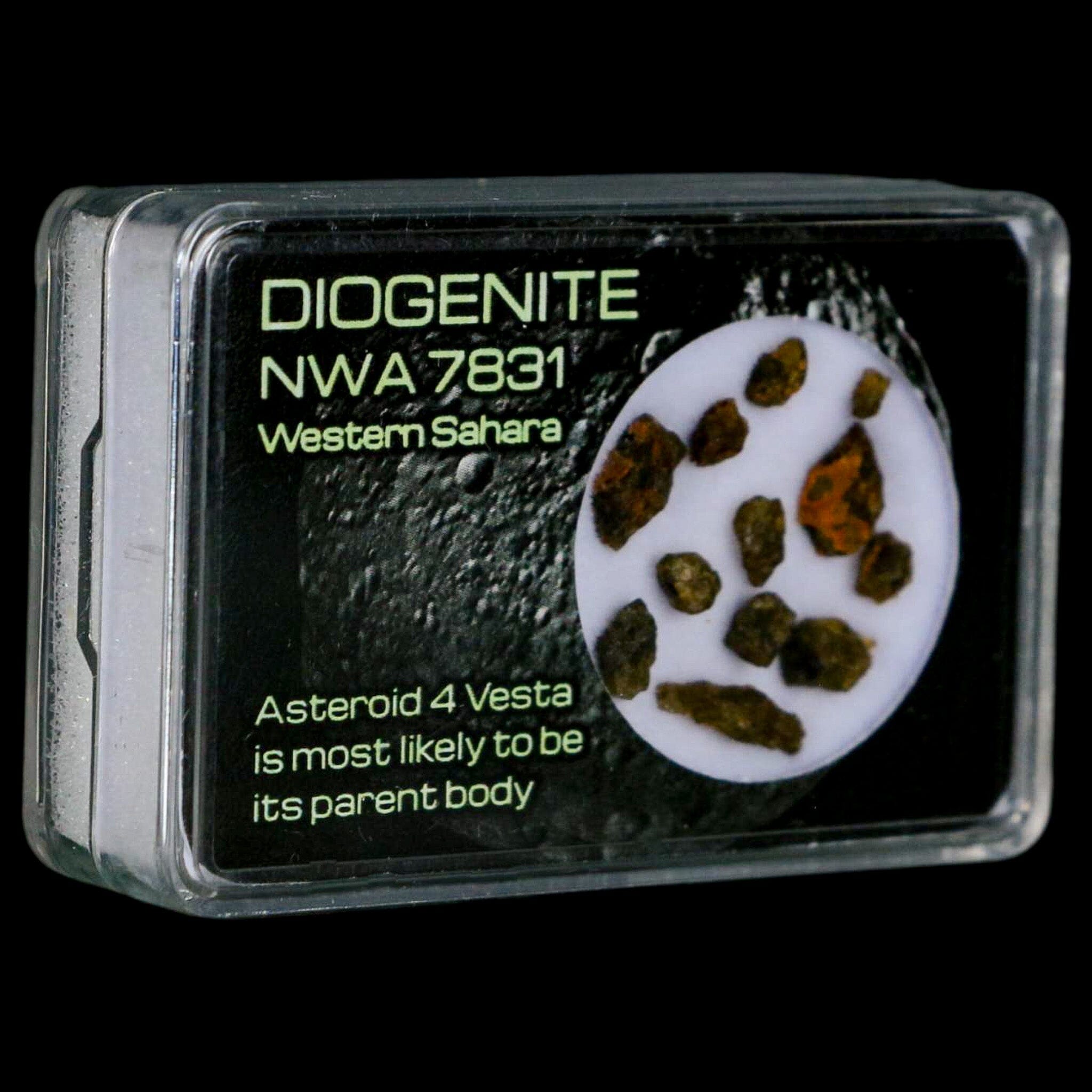
Location: Western Sahara
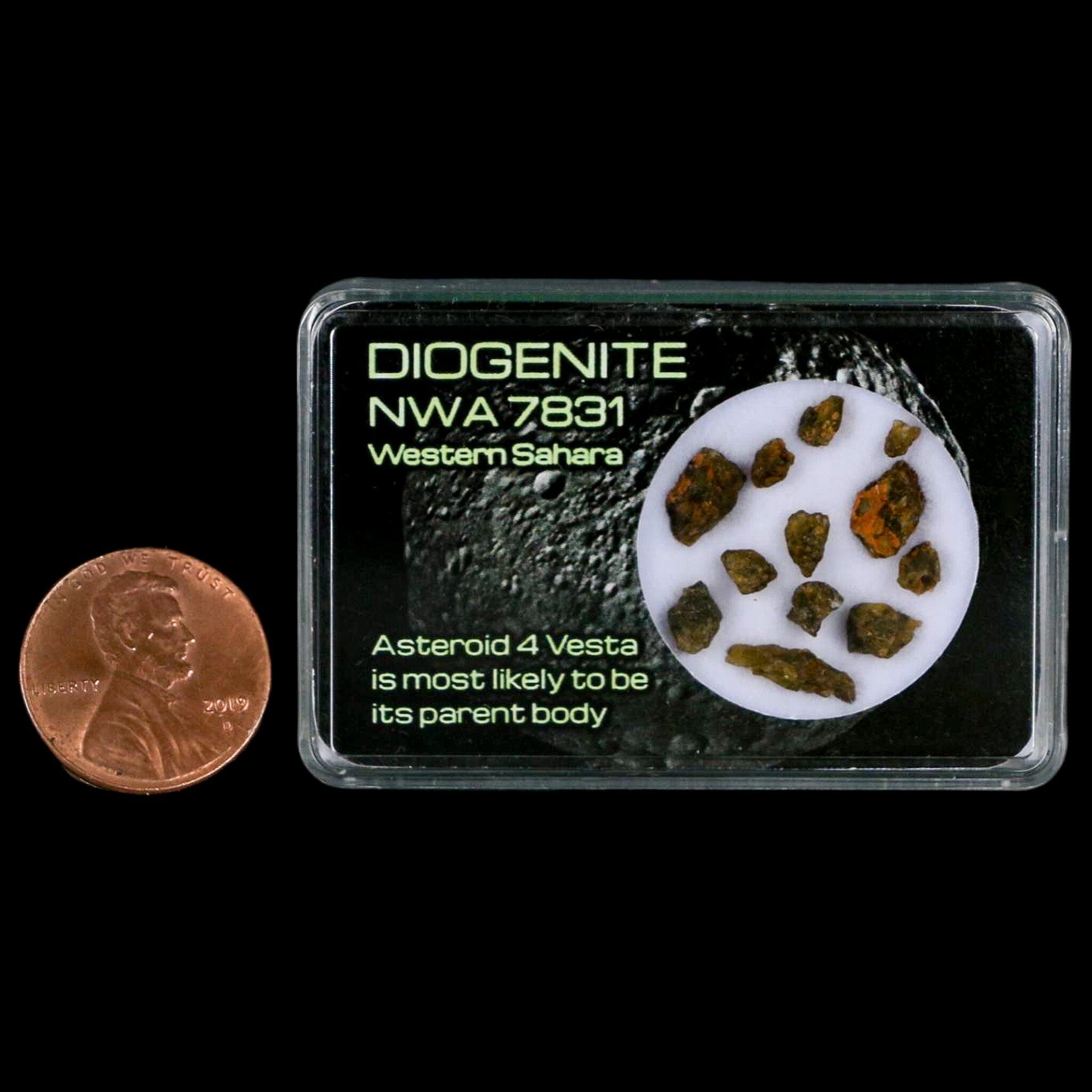
Weight: 0.4 Ounces (Display)
Dimensions: 2.3 Inches Long, 1.5 Inches Wide, 0.6 Inches Thick (Display)
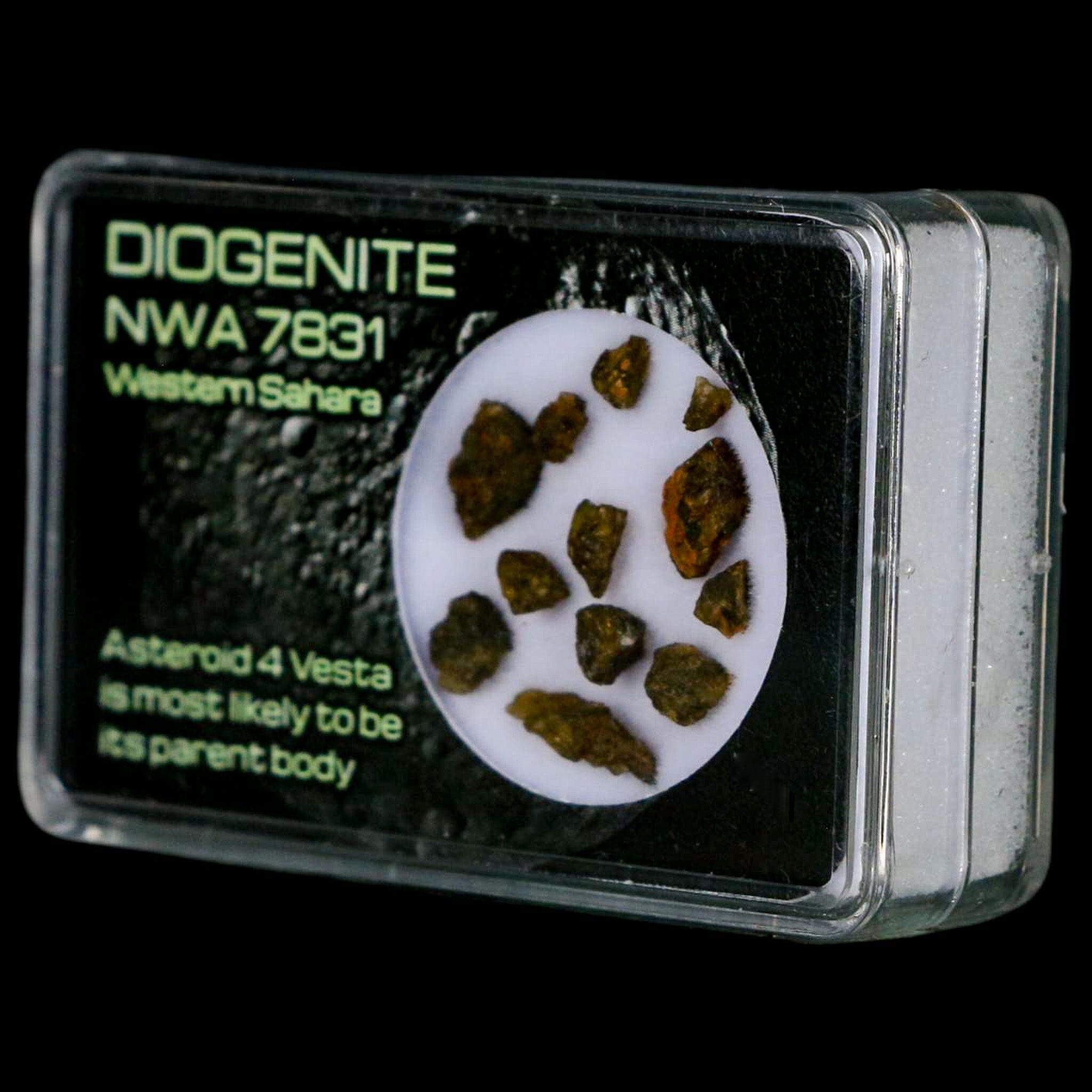
Comes with a Free Display Case.
The item pictured is the one you will receive.
Diogenite is a type of meteorite classified within the group of achondrites, which are stony meteorites that have undergone differentiation and crystallization processes similar to those that occur in planetary bodies. Specifically, diogenites are believed to originate from the asteroid 4 Vesta, one of the largest bodies in the asteroid belt. This classification is part of a broader understanding of meteorites and their origins, which provides insights into the early solar system's formation and evolution.
Diogenites are igneous meteorites dominated by orthopyroxene, an iron- and magnesium-rich silicate that gives these rocks their dark appearance and substantial density. Accessory minerals such as olivine, plagioclase feldspar, and minor metallic components are commonly present, though their relative abundances vary between specimens. These mineralogical differences reflect diverse cooling environments and internal processes within the parent body.
A defining characteristic of diogenites is their coarse crystalline texture, produced by prolonged cooling at depth rather than rapid surface solidification. This extended cooling allowed large mineral crystals to develop, distinguishing diogenites from finer-grained volcanic meteorites. Many samples display cumulate structures, formed when early-crystallizing minerals settled under gravity within magma chambers during differentiation.
Diogenites are thought to have formed deep within the crust of asteroid 4 Vesta, where basaltic magmas underwent separation and crystallization. As the magma cooled, dense orthopyroxene crystals accumulated at lower levels of these chambers. Subsequent large impacts excavated this deep material and launched it into space, ultimately delivering these meteorites to Earth.
Because of their origin and composition, diogenites offer important insight into planetary differentiation, illustrating how early solar system bodies developed layered interiors. Their study helps reconstruct the thermal and geological evolution of small planetary bodies during the formative stages of the solar system.
Diogenites are categorized within a broader classification scheme for meteorites based on their mineralogy and chemical composition. They fall under the HED (Howardite-Eucrite-Diogenite) group, which includes two other types: howardites and eucrites. Howardites are mixtures of eucrite and diogenite material; eucrites are basaltic rocks that also originate from Vesta but have different mineral compositions compared to diogenites.
This classification aids researchers in tracing back the origins and evolutionary history of these celestial materials while providing context for understanding similar bodies throughout our solar system.