
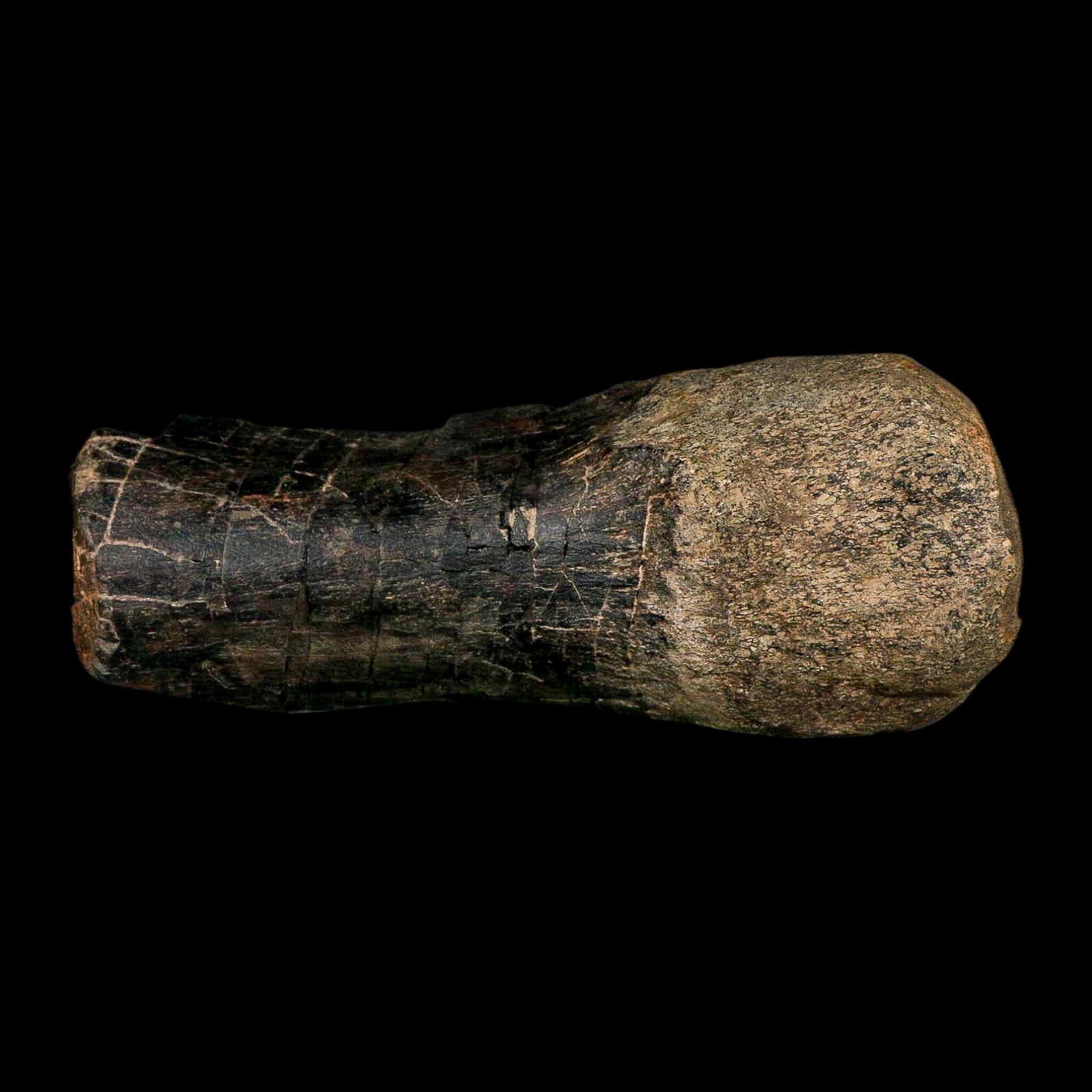
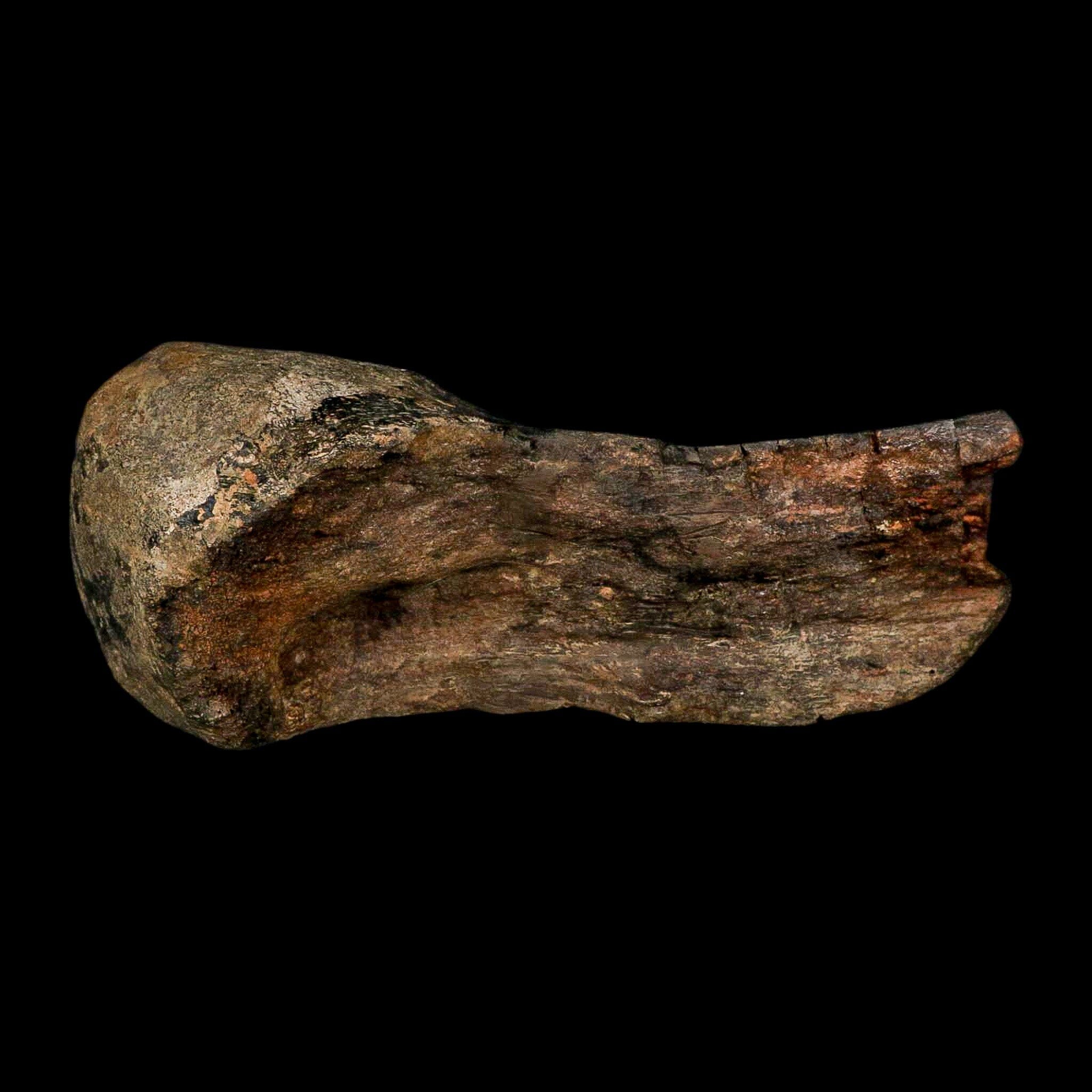
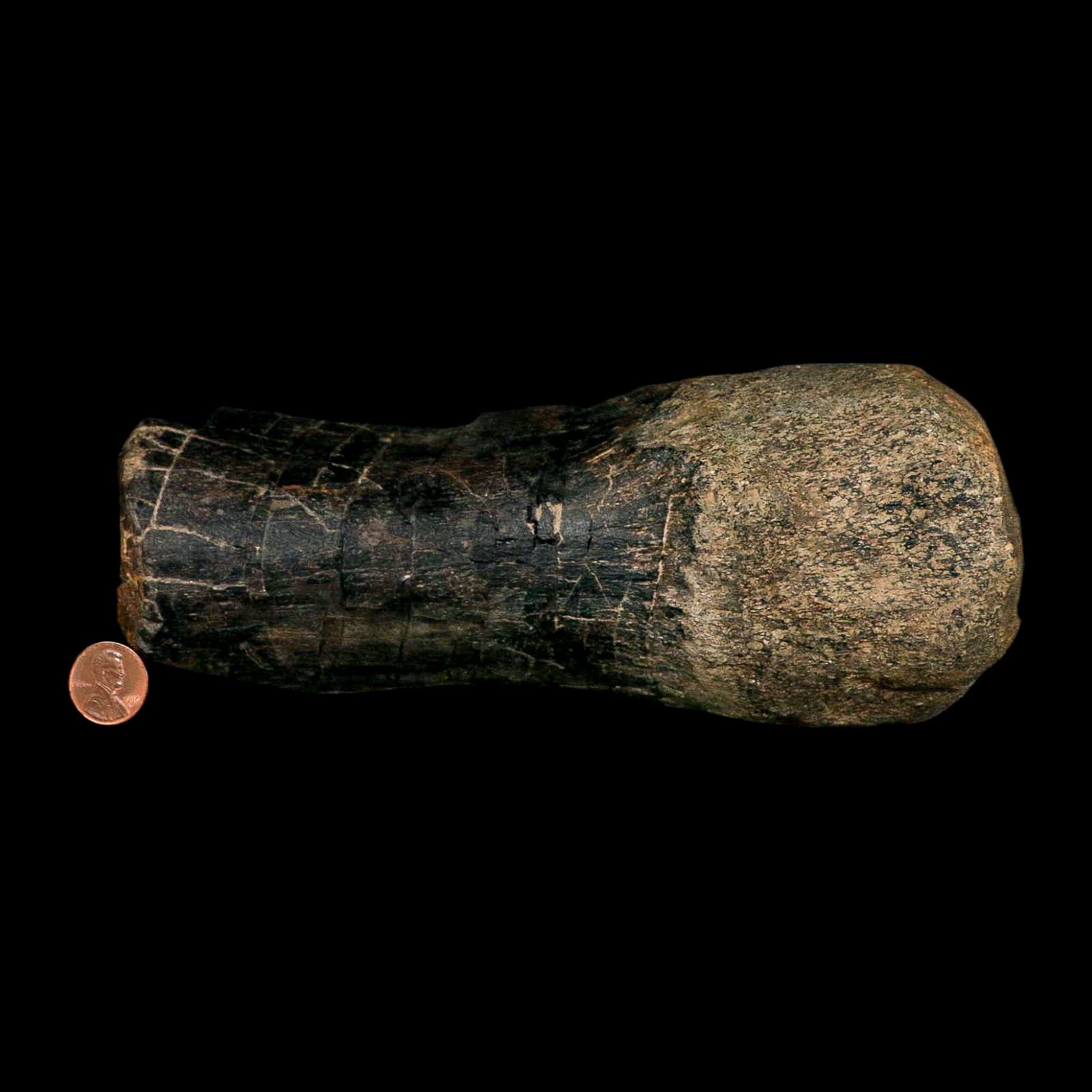
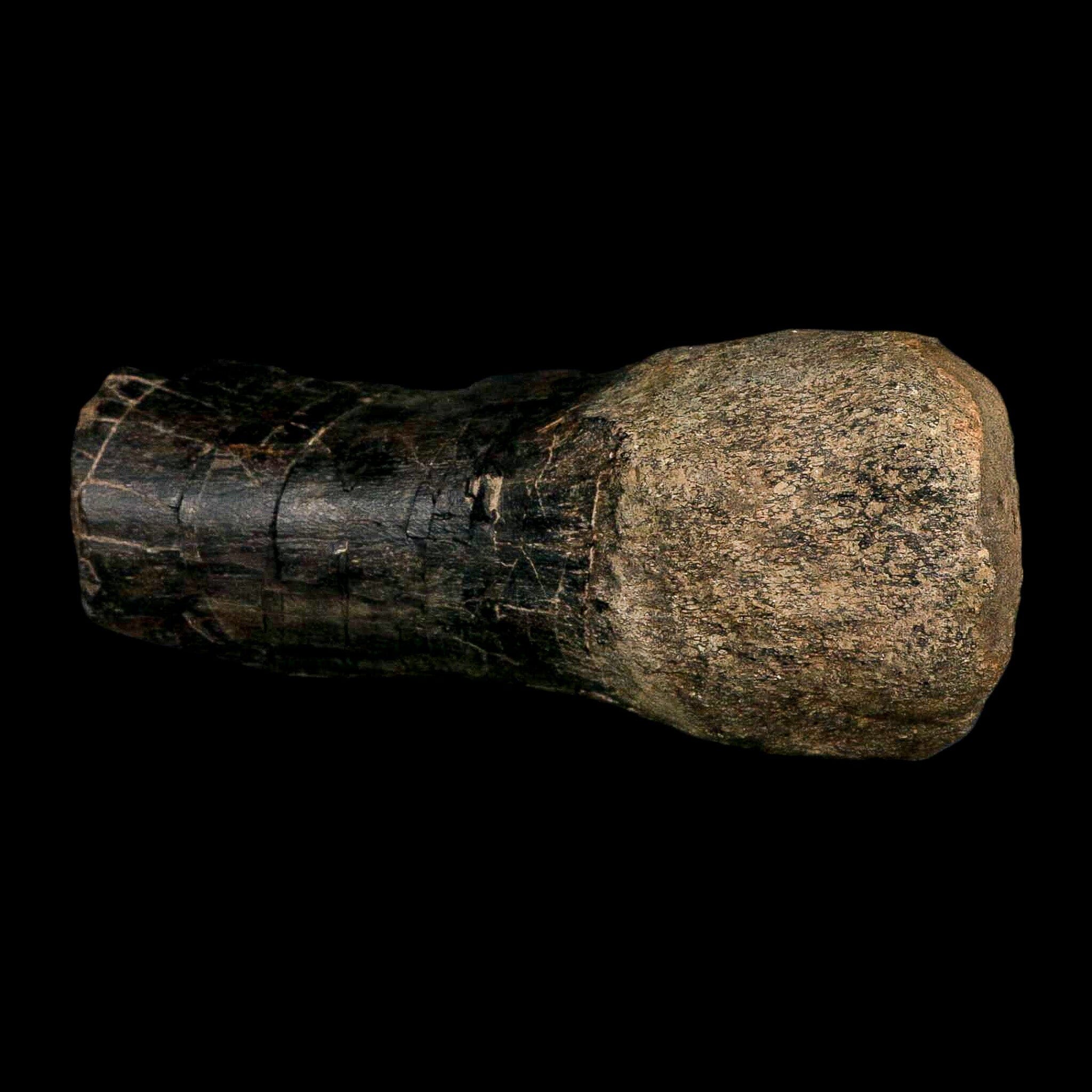
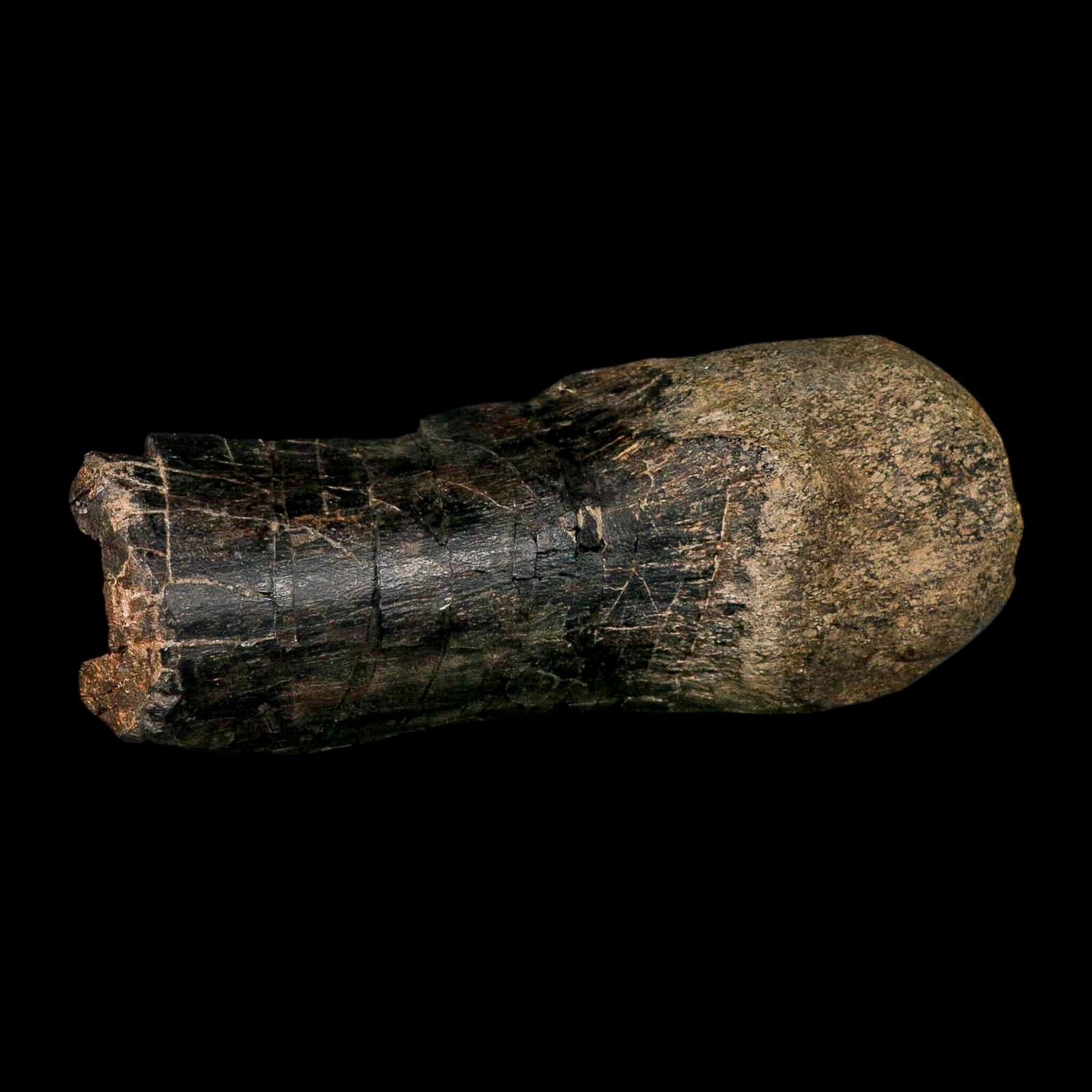
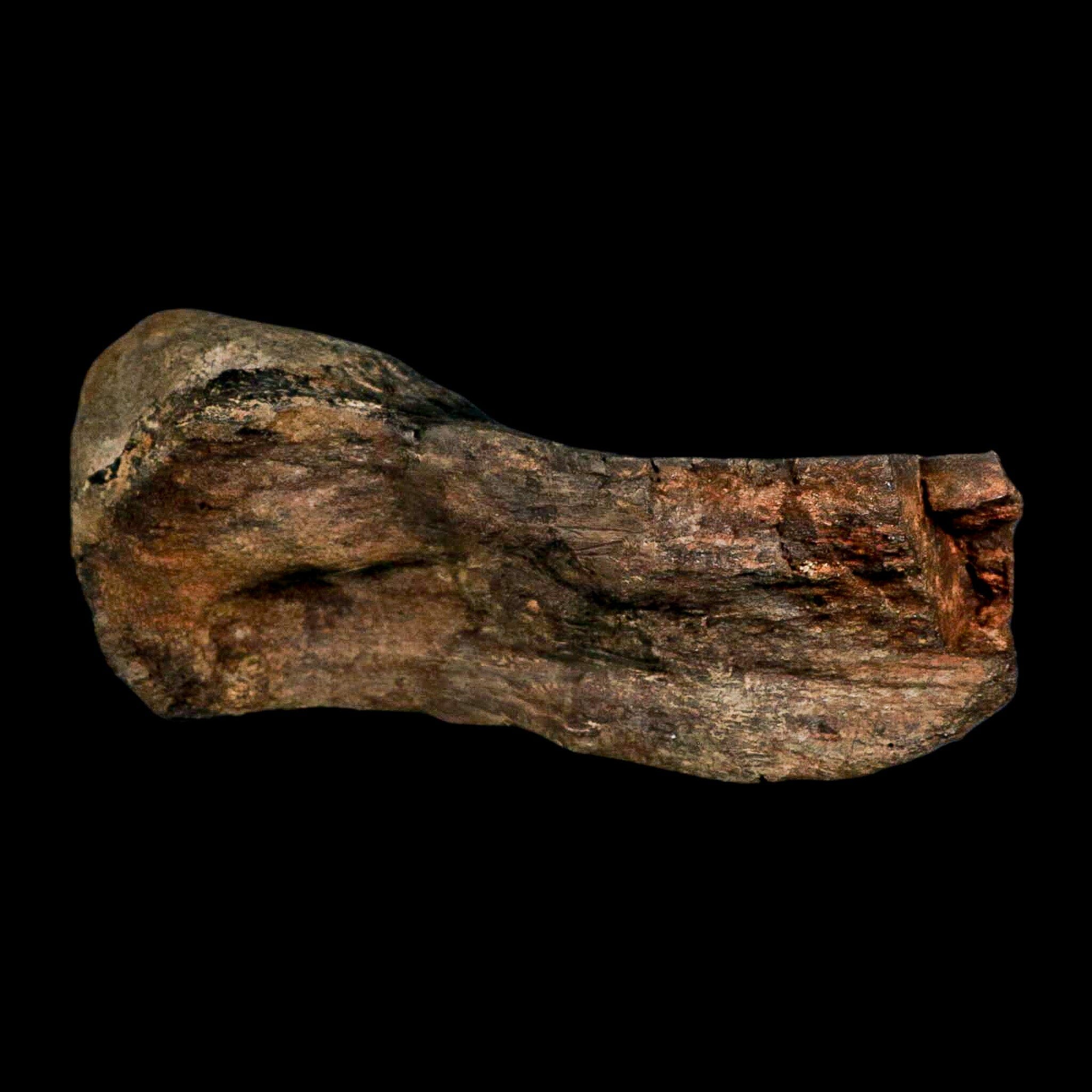
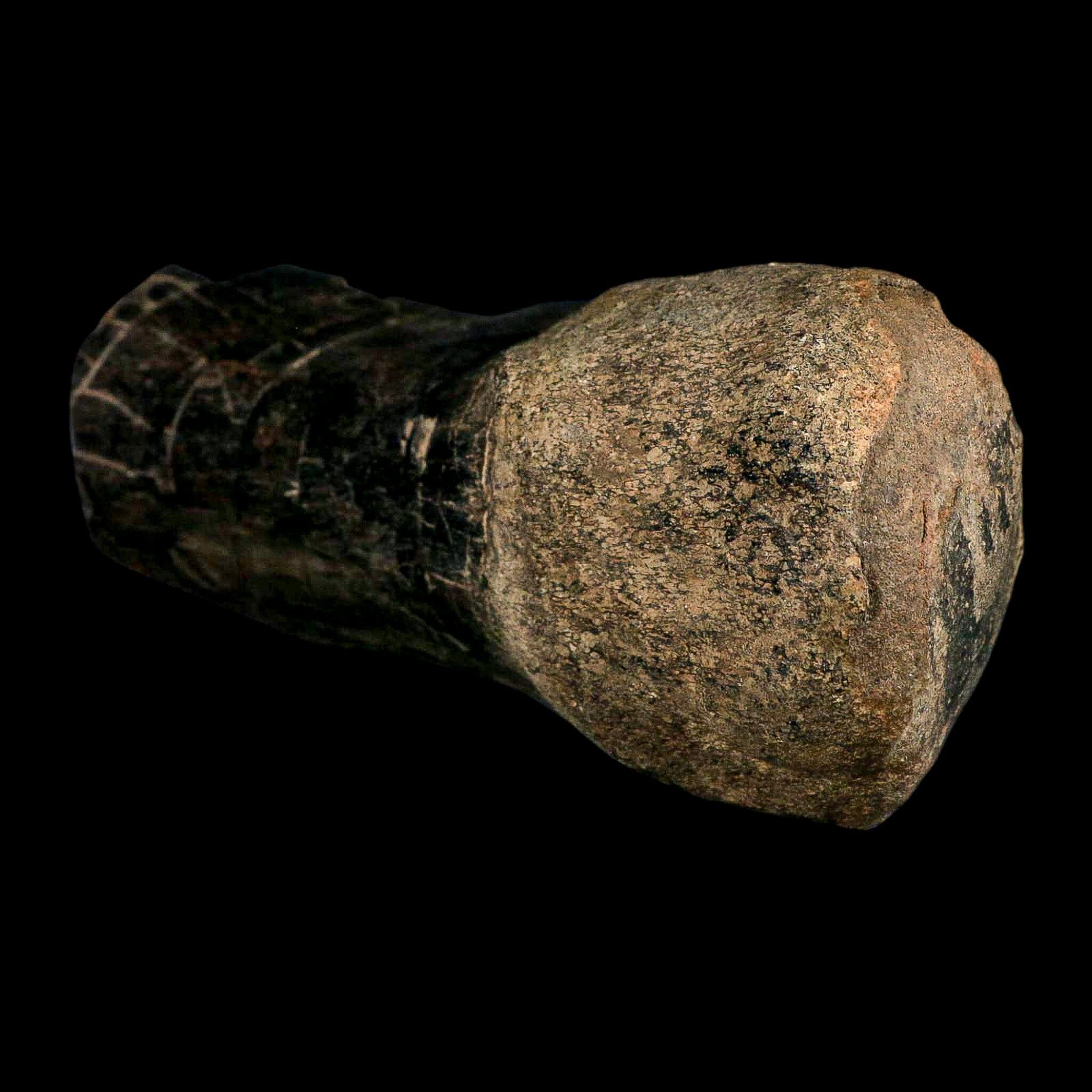


Description
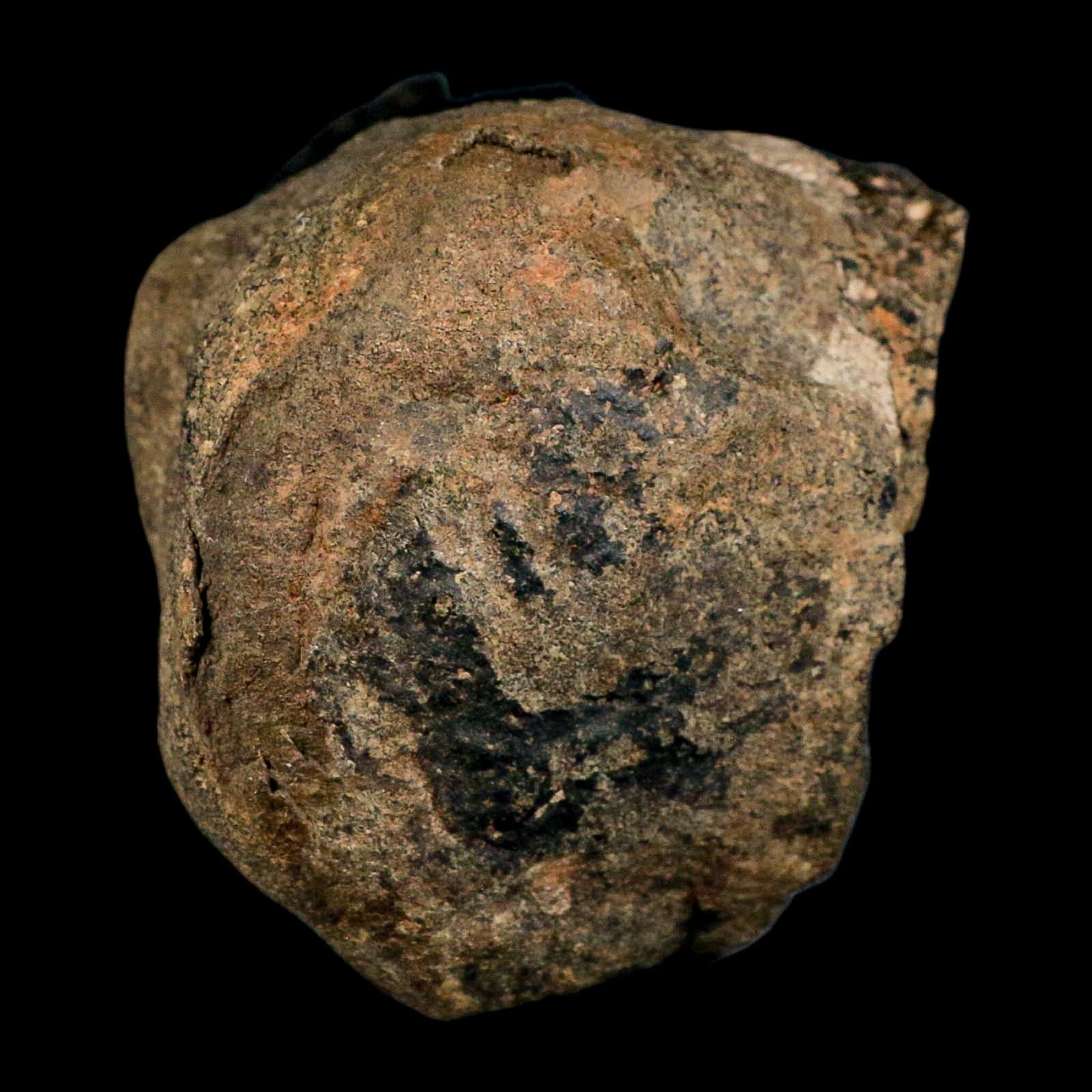
Location: Two Medicine Formation, Pondera County, Montana (Private Land Origin)
Weight: 2 Pounds 9.2 Ounces
Dimensions: 7.8 Inches Long, 3.2 Inches Wide, 2.7 Inches Thick
Comes with a Certificate of Authenticity.
The item pictured is the one you will receive.
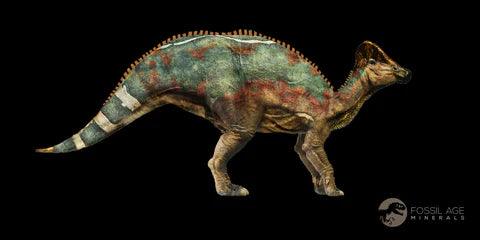
Hypacrosaurus Dinosaur
Hypacrosaurus, meaning “near the highest lizard,” was a large lambeosaurine hadrosaurid that lived in late Cretaceous North America. Despite its impressive size of up to nine meters, it was only slightly smaller than the apex predator Tyrannosaurus, which could reach twelve meters. Fossil evidence suggests that Hypacrosaurus and similar dinosaurs may have been prey to tyrannosaurs as well as related predators like Albertosaurus. One striking example comes from a healed bite wound on an Edmontosaurus, showing that attacks by tyrannosaurs occurred on living animals rather than scavenged carcasses.
Hypacrosaurus likely reproduced prolifically to offset high mortality rates. Each nest contained roughly twenty eggs, indicating a reproductive strategy that ensured enough juveniles survived despite predation pressures. Smaller predators such as Troodon would have posed a particular threat to hatchlings and young individuals, further reducing the number that reached adulthood. These pressures shaped the population structure and survival dynamics of the species.
One of the most distinctive features of Hypacrosaurus is its hollow cranial crest, broader and lower than that of its relative Corythosaurus. As a member of the lambeosaurine hadrosaurs, this crest likely functioned as a visual display, allowing individuals to recognize members of their own species. This is comparable to how ceratopsian dinosaurs used differences in horns and frills to distinguish between genera.
With its combination of size, reproductive strategy, and striking crest, Hypacrosaurus provides a fascinating glimpse into the ecosystems of the Late Cretaceous, illustrating the delicate balance of predator-prey relationships and species communication in prehistoric environments.
