
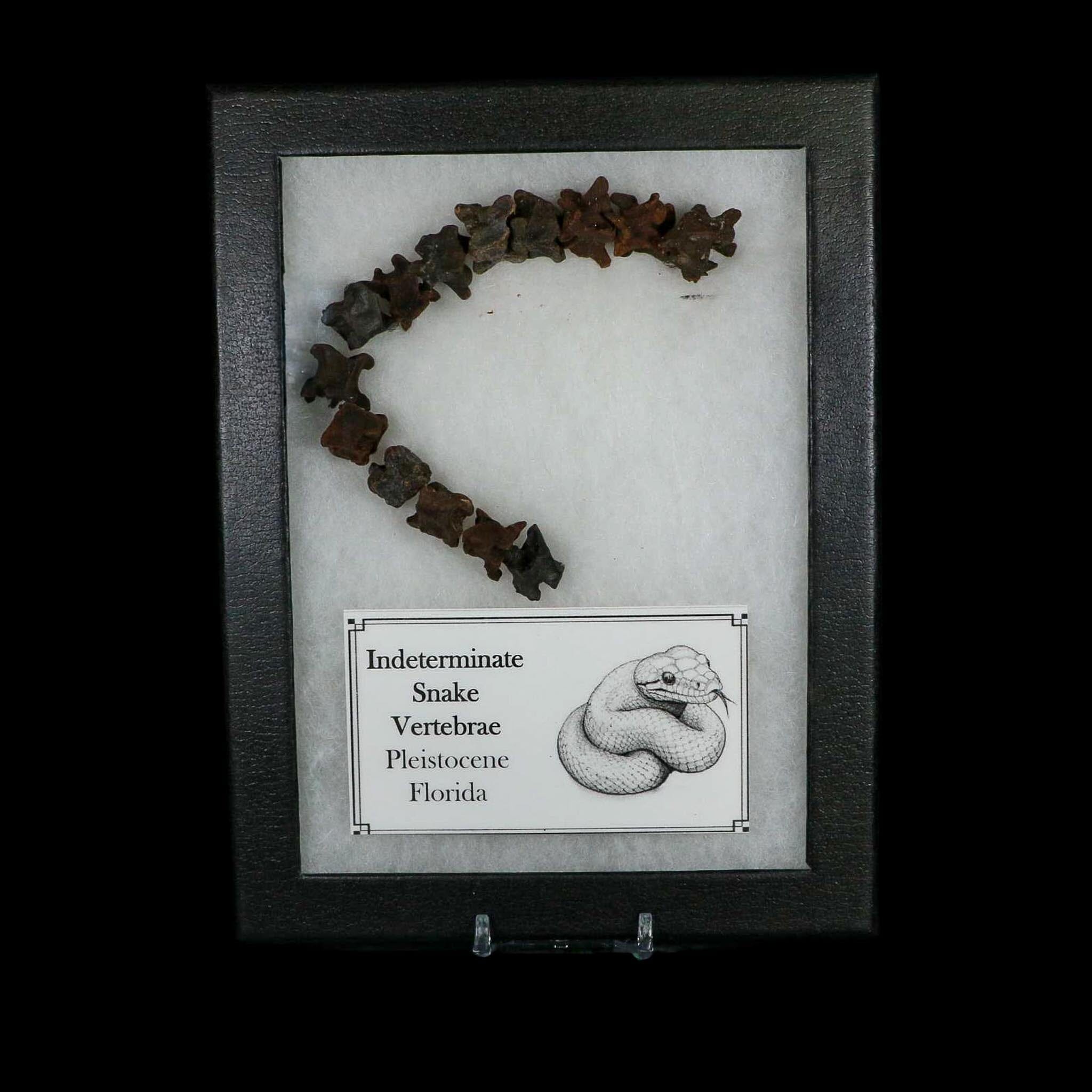


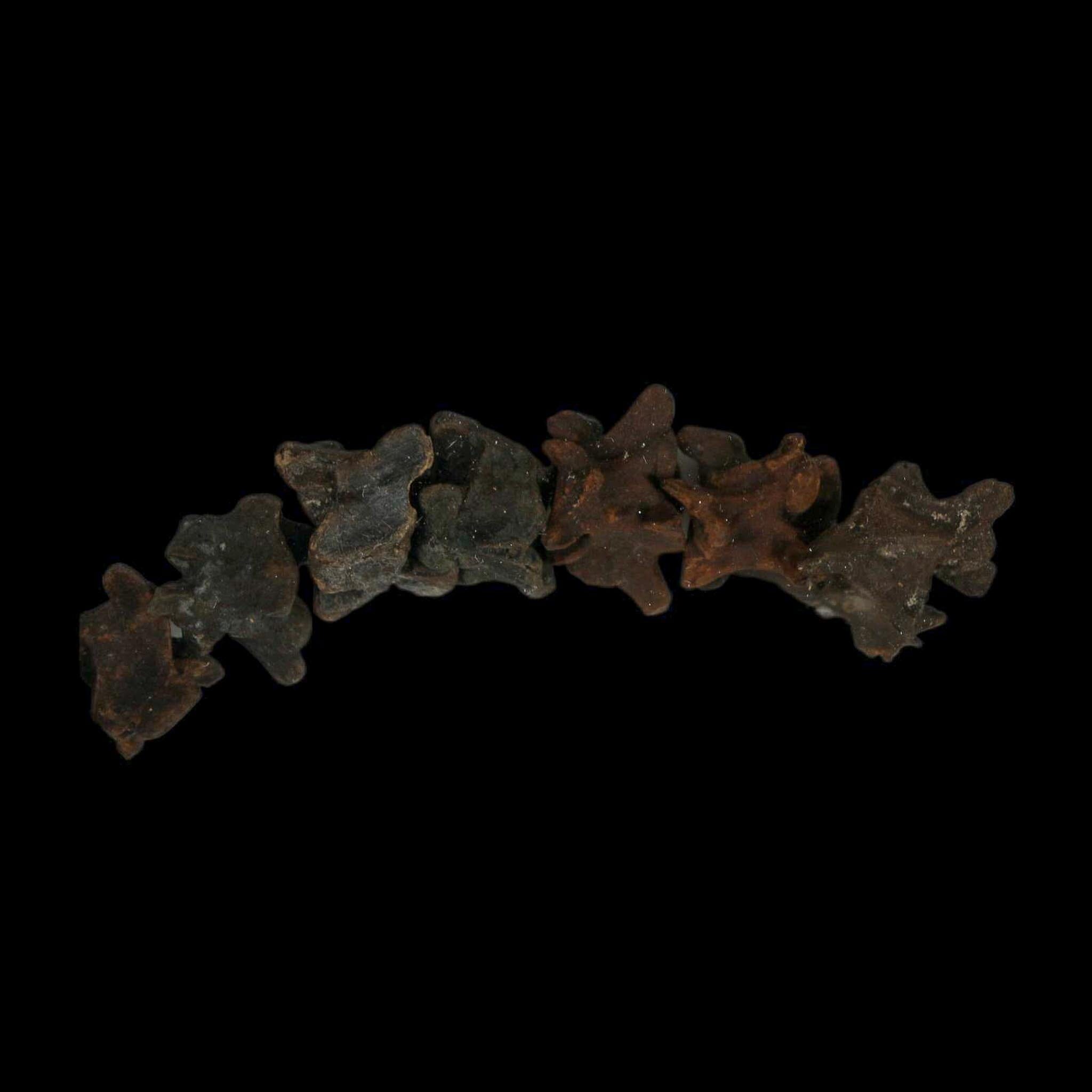


Description
Location: Florida
Weight: 11.9 Ounces
Dimensions: 8.1 Inches Long, 6.2 Inches Wide, 1 Inch Thick
Vertebrae Dimensions: 7.7 Inches long
Comes with a free Ricker Display.
Comes with a Certificate of Authenticity.
The item pictured is the one you will receive.
The greater siren (Siren lacertina) is a large, fully aquatic salamander belonging to the family Sirenidae, characterized by its eel-like body, lack of hind limbs, and persistent external gills. During the Pleistocene epoch, this species inhabited the freshwater ecosystems of Florida, where its presence is well-documented in the fossil record. Paleontological evidence suggests that Siren lacertina has remained morphologically stable for approximately 2.5 million years, occupying similar ecological niches in slow-moving or stagnant aquatic environments alongside other amphibians, reptiles, and fish.
The fossil distribution of Siren lacertina in Florida spans several significant sites, including the Arredondo 2A and Haile 1A localities in Alachua County, as well as the Leisey Shell Pit in Hillsborough County. These findings indicate that the species was a persistent component of the Florida vertebrate fauna throughout the late Blancan land mammal age and into the Holocene. Anatomically, the Pleistocene specimens are consistent with modern populations, which currently range from Maryland to Alabama, reflecting a long-term evolutionary success in the southeastern United States. The species' reliance on permanent water bodies, such as marshes and swamps, has likely served as a buffer against the climatic fluctuations that characterized the Pleistocene, allowing the siren to maintain its specialized, paedomorphic body plan over geological time scales.