


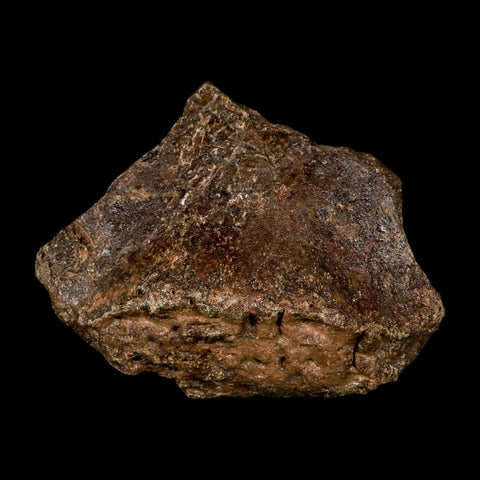
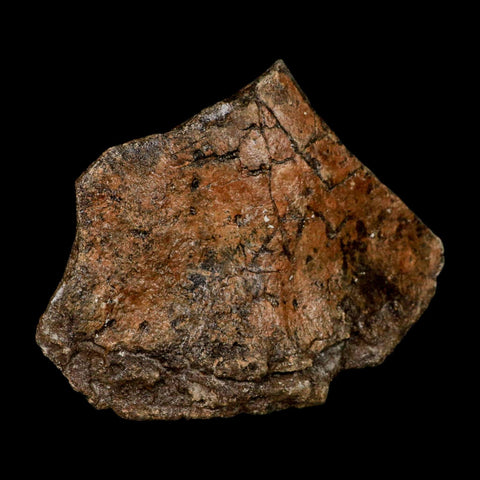
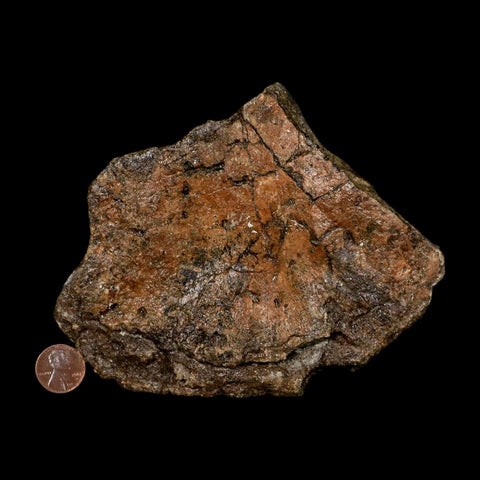
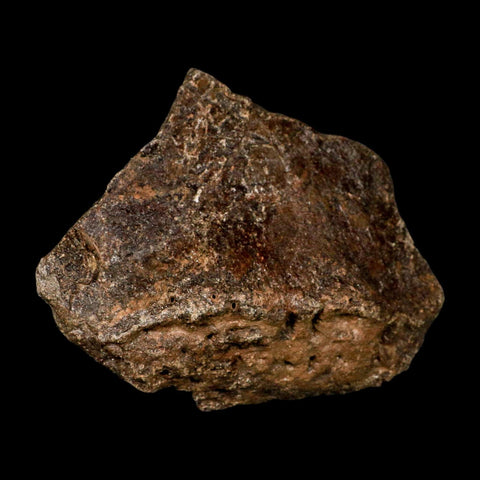
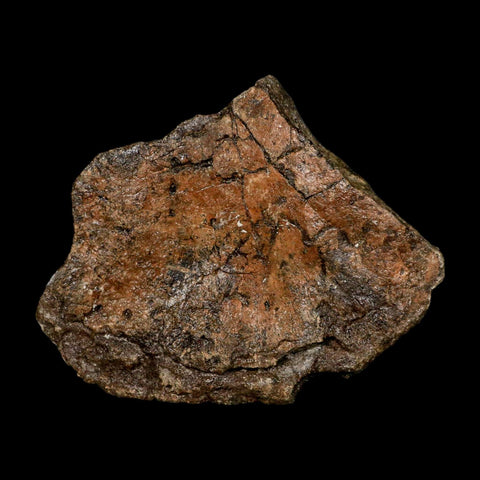
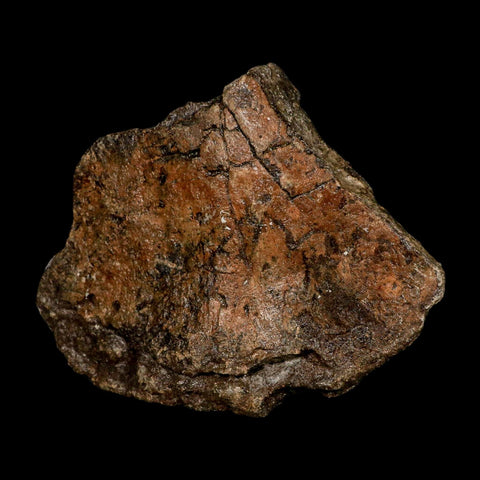
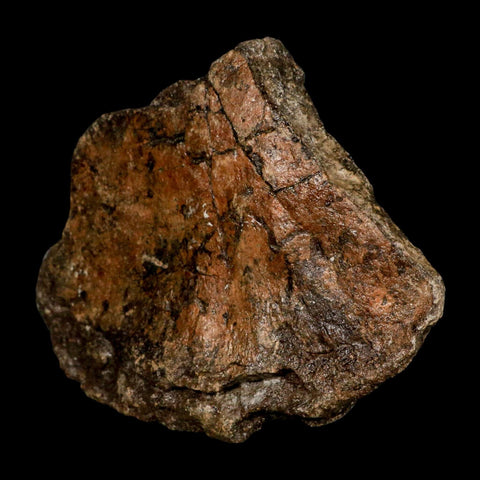
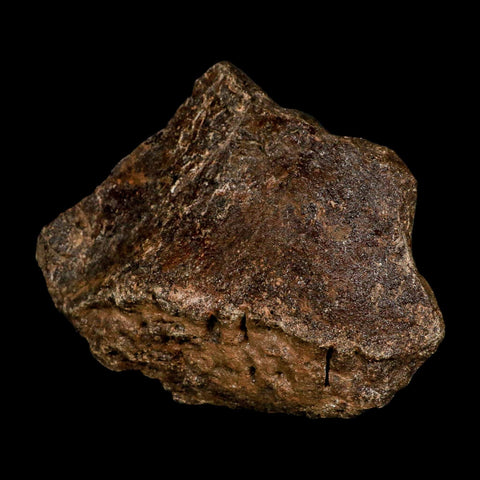
5.7" Ichthyosaurus Fossil Bone Section Dorset England Jurassic Marine Reptile COA
Location: Dorset, England (Dorset Coast)
Weight: 1 Pound, 3.5 Ounces
Dimensions: 5.7 Inches Long, 4.5 Inches Wide, 1.5 Inches Thick.
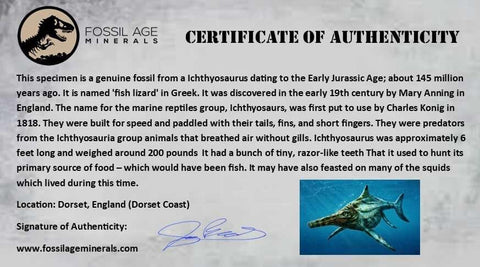
Comes with a Certificate of Authenticity.
The item pictured is the one you will receive.
Upper Jurassic Age, 145 Million Years old.
Time Period
Ichthyosaurs lived approximately 145 million years ago, reaching their peak during the Early Jurassic period. During this time, Earth’s oceans were warm and teeming with life, providing ideal conditions for fast-swimming marine predators.
Name & Discovery
The name Ichthyosaur comes from Greek, meaning “fish lizard,” a reference to their fish-like shape despite being reptiles. Some of the earliest and most important fossils were discovered along the coast of England in the early nineteenth century, largely through the efforts of Mary Anning, whose finds helped revolutionize early paleontology. The term ichthyosaur was formally introduced in 1818 by Charles König.
Classification
Ichthyosaurs belong to the reptilian group Ichthyosauria, a lineage of marine reptiles fully adapted to life in the ocean. During the nineteenth century, most ichthyosaur fossils were placed in the genus Ichthyosaurus, which had grown to include more than fifty species by 1900, reflecting both their abundance and the early challenges of classification.
Physical Characteristics
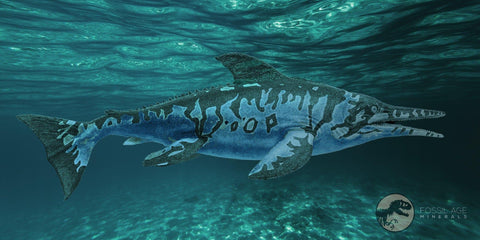
These reptiles had sleek, streamlined bodies remarkably similar to modern dolphins, an adaptation for efficient, high-speed swimming. Movement through the water was driven by powerful tail strokes, while well-developed fins and short, paddle-like fingers provided balance and maneuverability.
Size
A typical Ichthyosaurus measured about 6 feet (1.8 meters) in length and weighed around 200 pounds, making it roughly comparable to an adult human in both size and mass.
Diet & Lifestyle
Although entirely marine, ichthyosaurs were air-breathing predators, surfacing regularly to inhale. Their jaws were lined with numerous tiny, razor-sharp teeth, perfectly suited for gripping slippery prey. Fish made up the bulk of their diet, along with squid and other cephalopods that flourished in Jurassic seas.
Significance
Ichthyosaurs represent one of the most successful reptilian adaptations to marine life. Their speed, agility, and specialized feeding strategies allowed them to dominate ancient oceans and stand as a classic example of how reptiles repeatedly evolved to thrive in aquatic environments.
