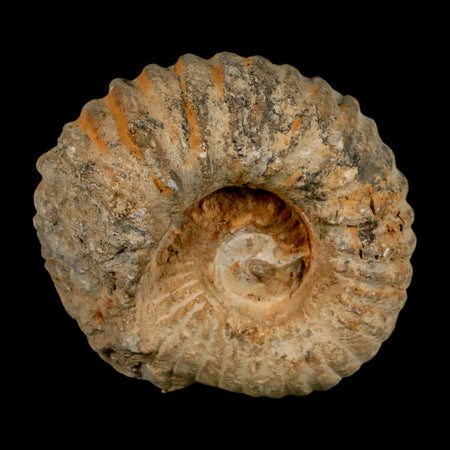
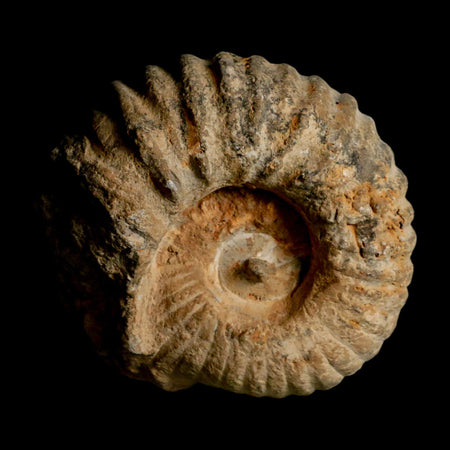
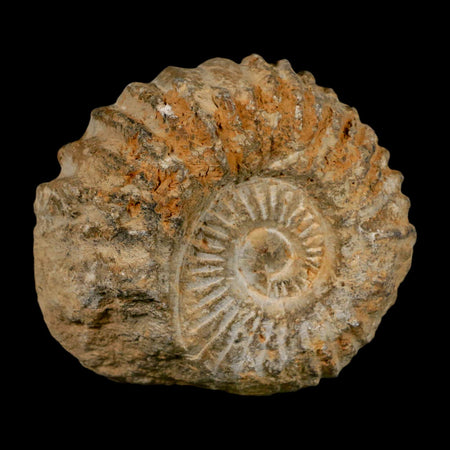
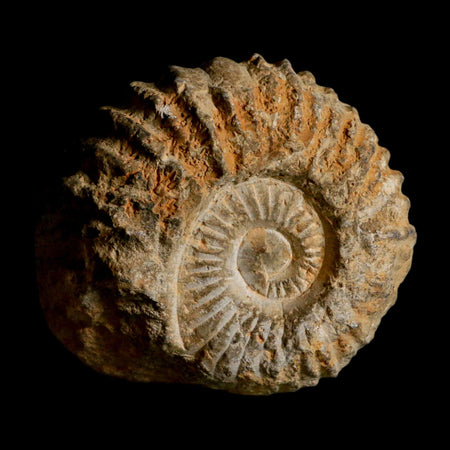
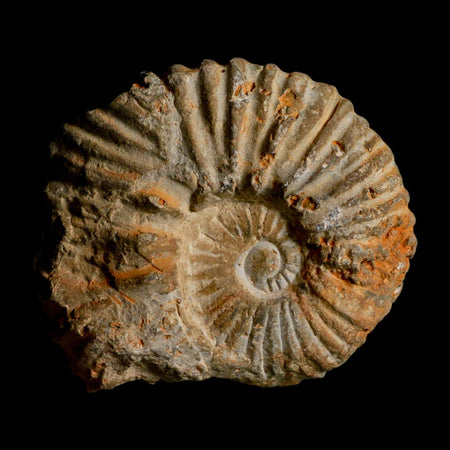
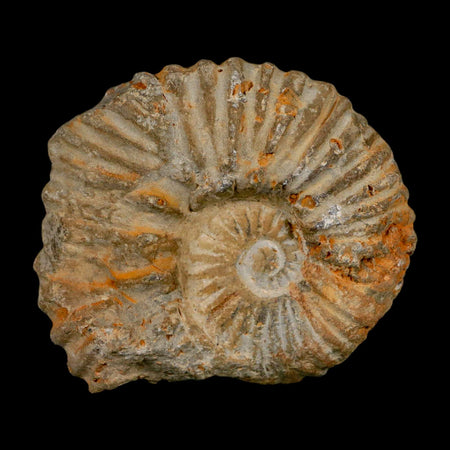
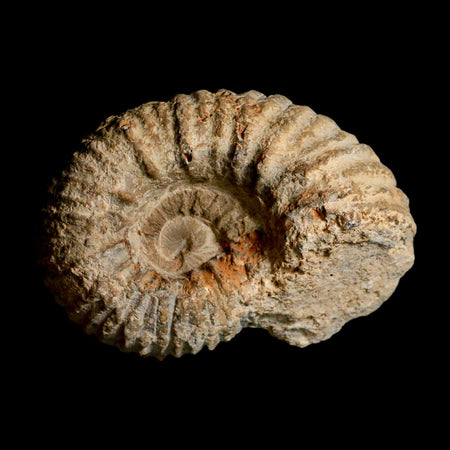
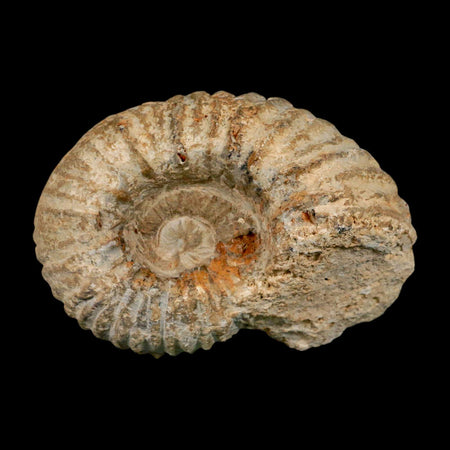
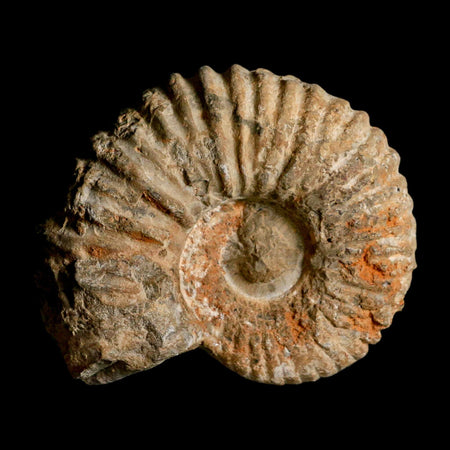
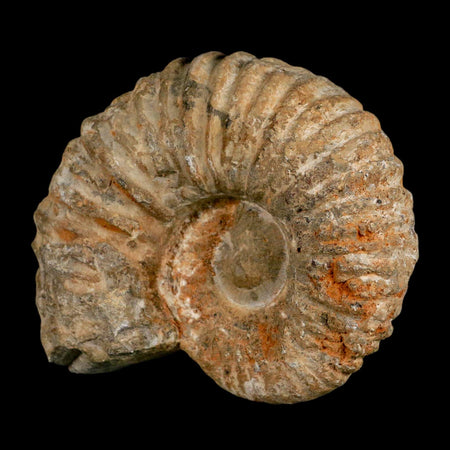
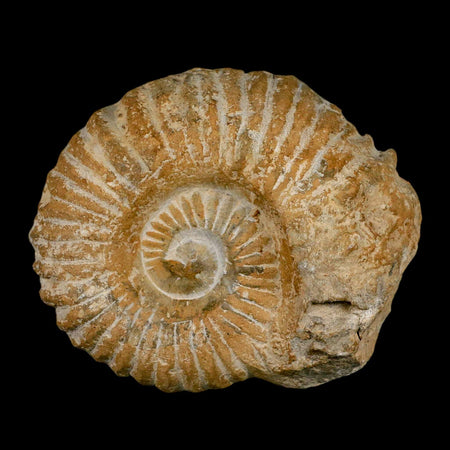
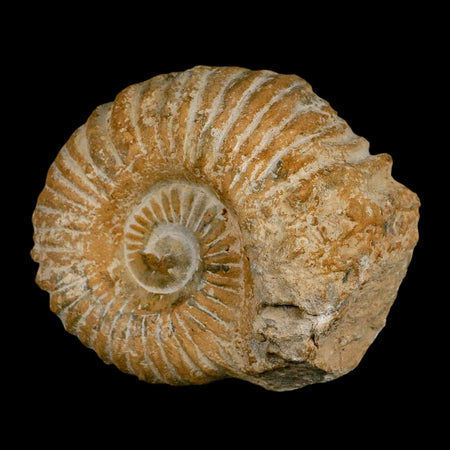
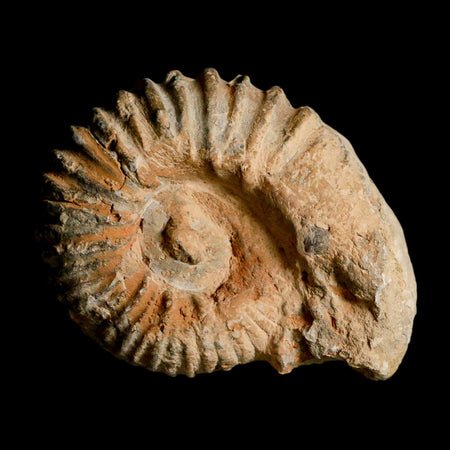
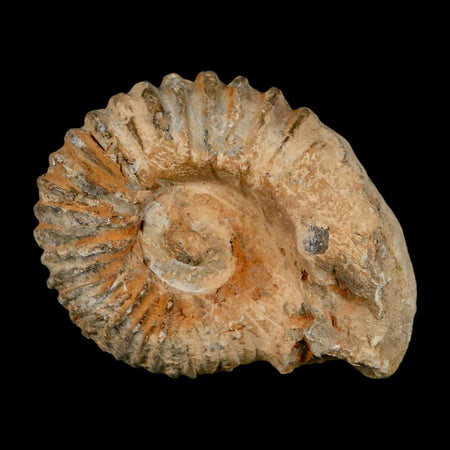
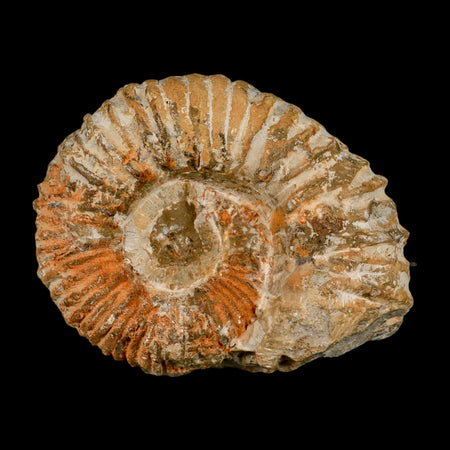
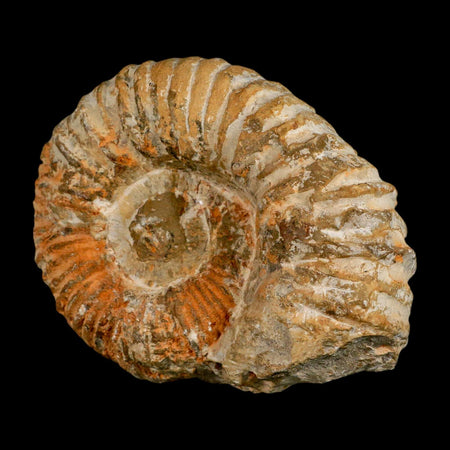
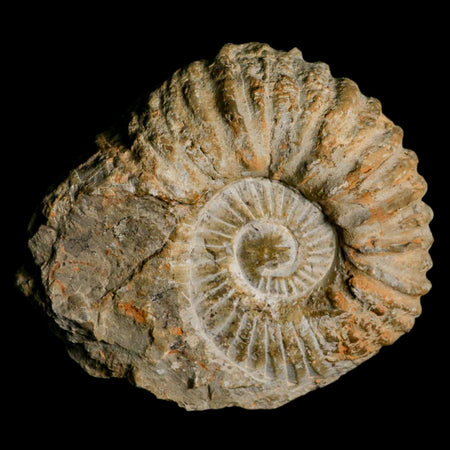
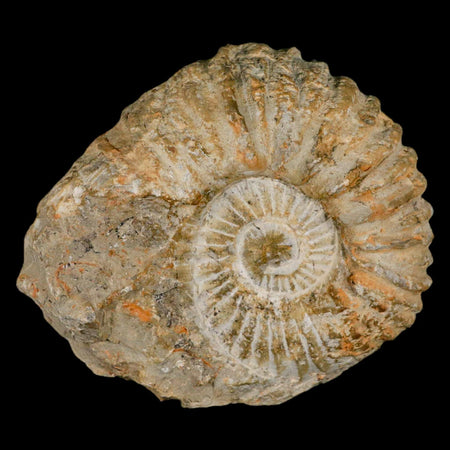
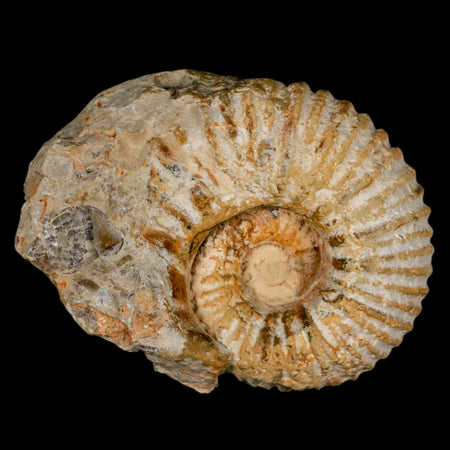
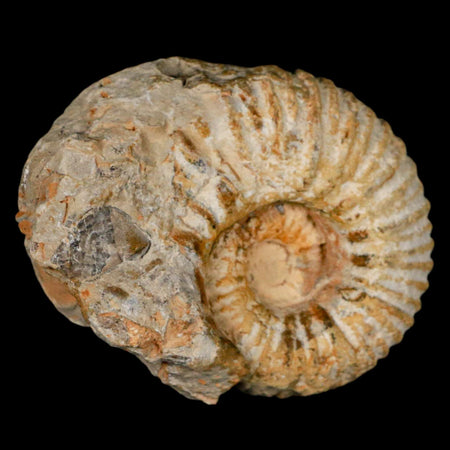
3.2" Acanthoceras Ammonite Fossil Agadir Morocco 360 Million Year Old COA
Location: Agadir, Morocco
Weight: 10.3 Ounces
Dimensions: 3.2 Inches Long, 2.7 Inches Wide, 1.5 Inches Thick
Comes with a Certificate of Authenticity.
The item pictured is the one you will receive.
360 million years old.
Acanthoceras Ammonite
Ammonoids were an extinct group of marine cephalopods that thrived in Earth’s oceans from the Devonian through the Cretaceous periods. Their coiled, spiral shells, resembling a ram’s horn, inspired their name—derived from the Egyptian god Amun (or Ammon), who was depicted with ram’s horns. Though they look similar to modern Nautiloids, Ammonoids are actually more closely related to octopus, squid, and cuttlefish, showcasing an ancient link to today’s soft-bodied sea creatures.
Their shells were divided into internal chambers by thin walls called septa, and the junctions of these septa with the shell’s outer wall formed distinctive suture patterns used to classify species. Early Goniatites displayed a simple zigzag or “Goniatitic” suture pattern with smooth lobes and saddles, while later Ammonites evolved highly complex, fern-like patterns, reflecting both evolutionary advancement and natural beauty. Today, Ammonoid fossils are prized by collectors and scientists for their intricate details and insight into prehistoric marine ecosystems.