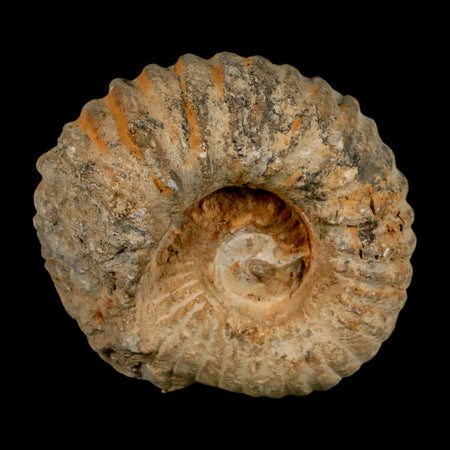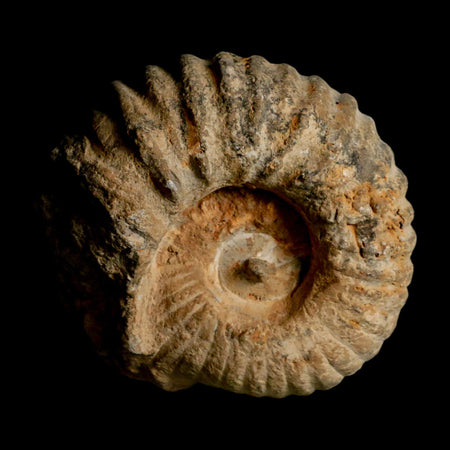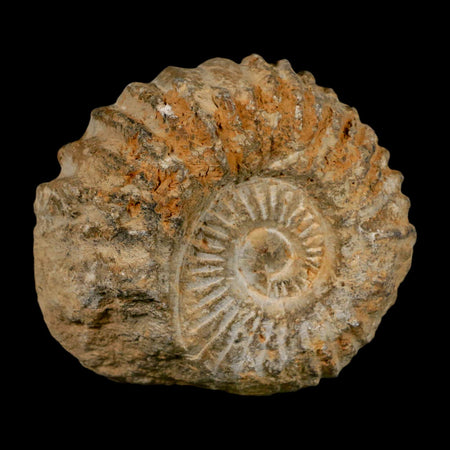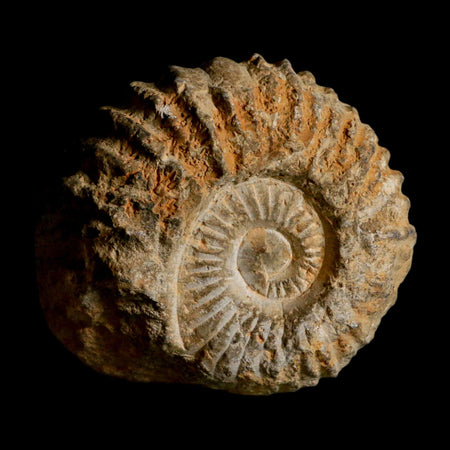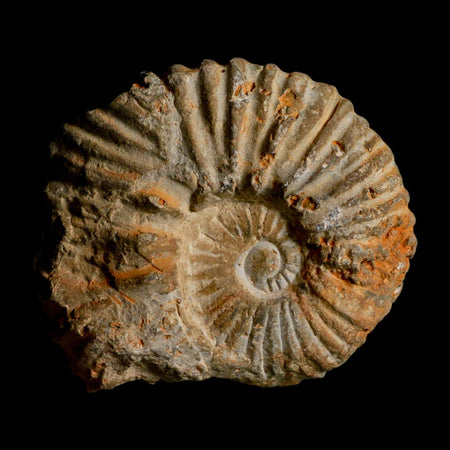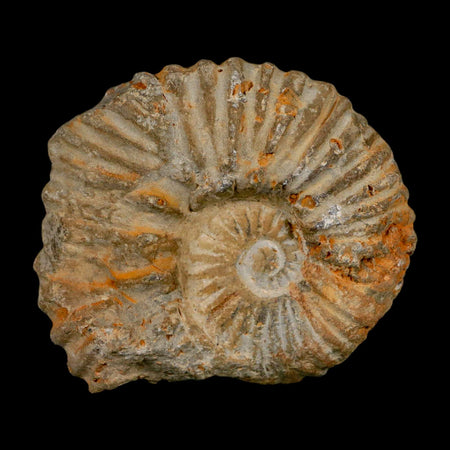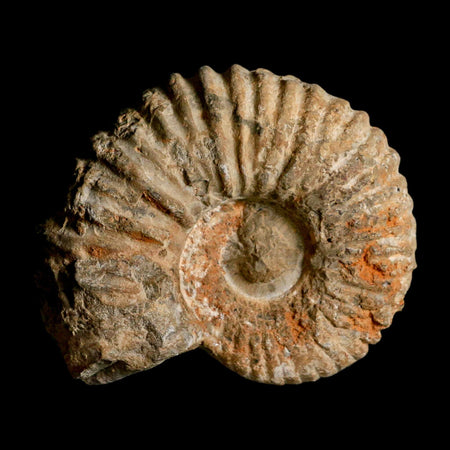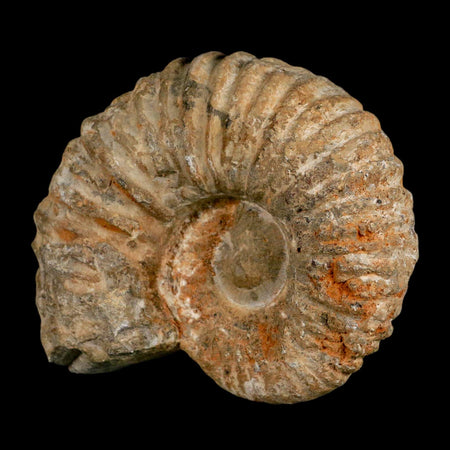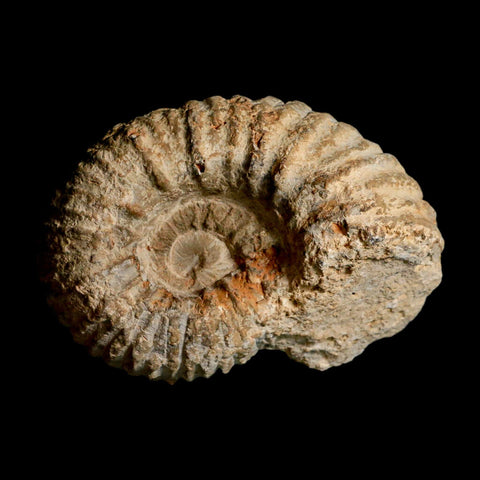
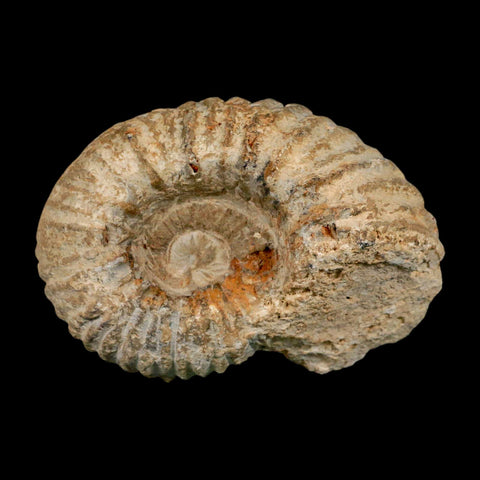
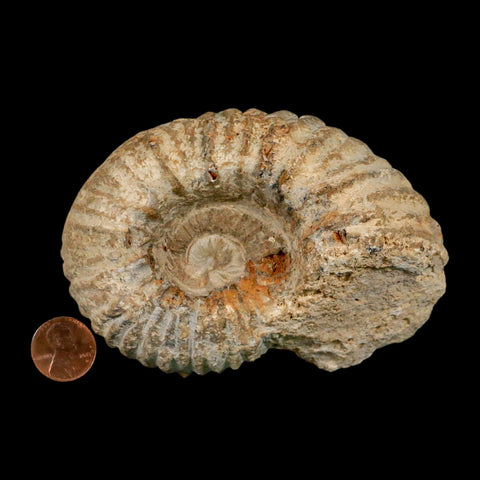
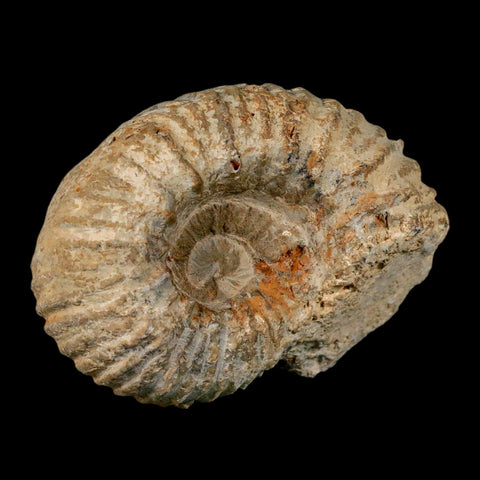
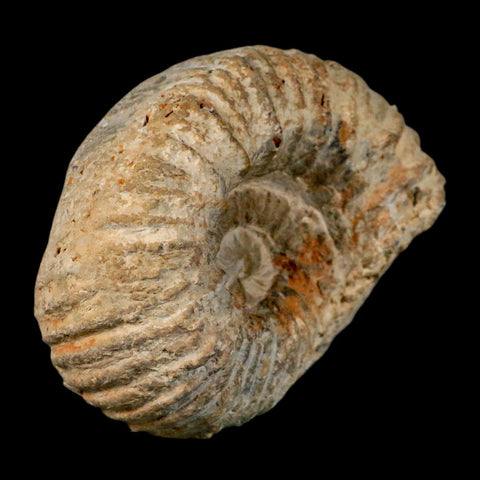
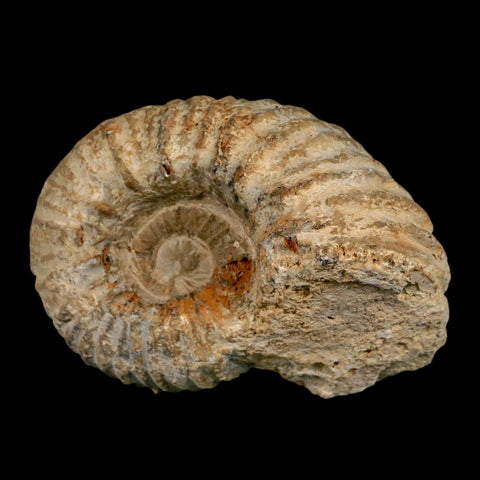
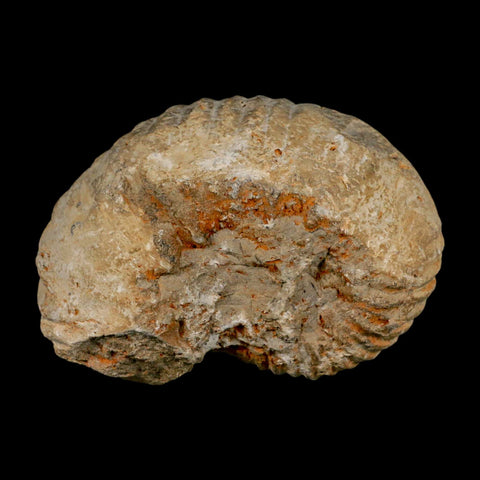
4.3" Acanthoceras Ammonite Fossil Agadir Morocco 360 Million Year Old COA
Location: Agadir, Morocco
Weight: 1 Pound 3 Ounces
Dimensions: 4.3 Inches Long, 2.9 Inches Wide, 2.4 Inches Thick
Comes with a Certificate of Authenticity.
The item pictured is the one you will receive.
360 million years old.
Acanthoceras Ammonite
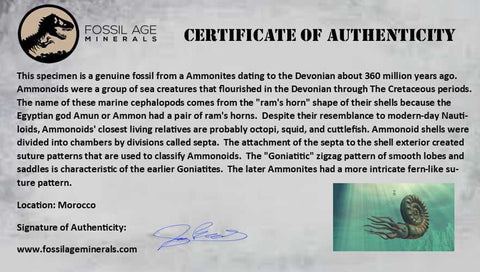
Ammonoids were ancient marine cephalopods that thrived in the world’s oceans from the Devonian through the Cretaceous periods. Their beautifully coiled shells, shaped like a ram’s horn, inspired their name—derived from the Egyptian god Amun (or Ammon), who was depicted with ram’s horns. Though they resemble modern Nautiloids, Ammonoids are actually more closely related to octopus, squid, and cuttlefish. Highly sought after by fossil collectors and studied by paleontologists, these extinct sea creatures provide a fascinating glimpse into the evolution and diversity of prehistoric marine life.
Ammonoid shells were complex and beautifully structured, divided into internal chambers by thin walls called septa. The junctions where these septa met the outer shell formed distinctive suture patterns, which scientists use to classify Ammonoids. Early forms, known as Goniatites, displayed a simple zigzag or “Goniatitic” pattern with smooth lobes and saddles. In contrast, later Ammonites developed elaborate, fern-like suture designs, showcasing their evolutionary sophistication. These intricate patterns not only reveal the diversity of ancient marine life but also make Ammonoid fossils highly prized among collectors and paleontologists.