



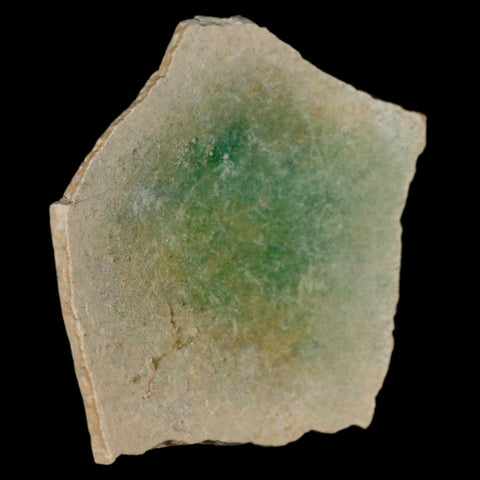
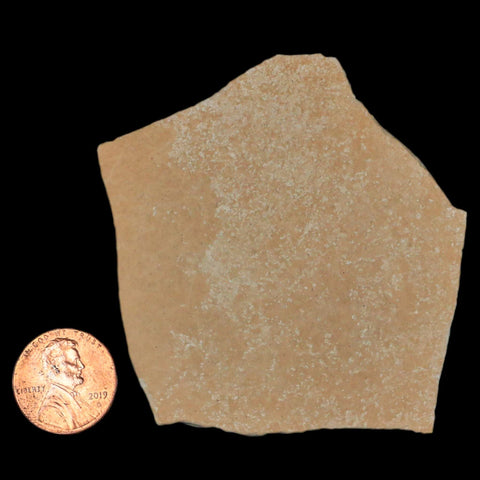


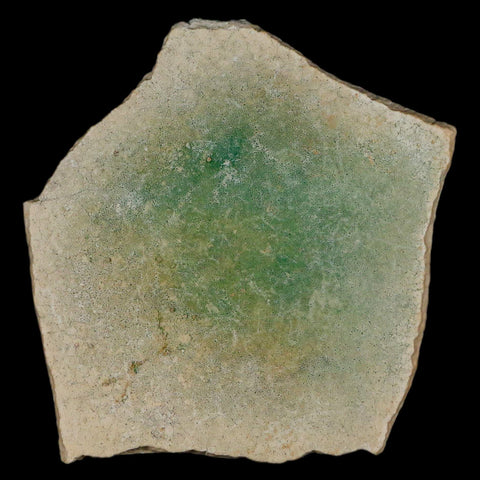
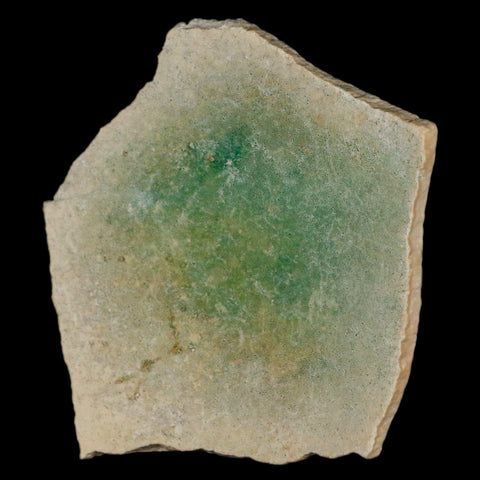
2.7" Elephant Bird Aepyornis Maximus Egg Shell Specimen Late Pleistocene Madagascar
Location: Madagascar Coast
Weight: 0.9 Ounces
Dimensions: 2.7 Inches Long, 2.4 Inches Wide, 0.15 Inches Thick
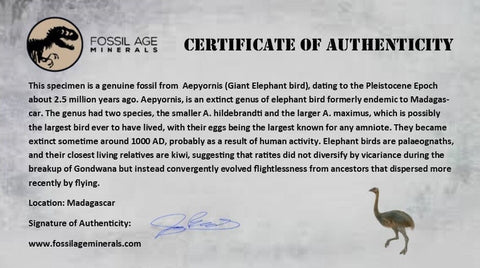
Comes with a Certificate of Authenticity.
The item pictured is the one you will receive.
Lived during the Late Pleistocene and Holocene epochs. They are thought to have existed from around 43,000 years ago until their extinction approximately around 1000–1200 CE.
The Elephant Bird, scientifically known as Aepyornis, was an extraordinary genus of giant flightless birds that once thrived on the island of Madagascar. Renowned for their colossal size, some species stood up to three meters tall (around 10 feet) and weighed over 500 kilograms (approximately 1,100 pounds), making them among the largest birds to ever live.
One of the most remarkable features of the elephant bird is its massive egg, the largest known egg ever laid by a terrestrial animal. These eggs could hold up to 1.9 gallons (7 liters)—a size that far surpasses any modern bird species and continues to fascinate scientists, collectors, and natural history enthusiasts alike.
Size and Structure
Elephant bird eggshells are characterized by their impressive thickness, averaging around 3.3 mm for larger specimens. This robust structure is essential for protecting the developing embryo inside, allowing it to grow until hatching. The strength of these eggshells has been compared to pottery due to their durability and resilience against environmental factors.
Preservation and Research
Fossilized elephant bird eggshells have been found abundantly across Madagascar, particularly in coastal regions where they litter dunes and beaches. Unlike skeletal remains, which are often poorly preserved in Madagascar’s humid climate, eggshells provide a more reliable source for genetic analysis. Recent studies have successfully extracted ancient DNA from these shells, enabling researchers to explore the evolutionary history and diversity within the Aepyornis lineage.
Diet and Ecology
Stable isotope analyses conducted on the eggshells have revealed insights into the diets of elephant birds. Different species exhibited distinct dietary preferences based on isotopic signatures found in their eggshells, indicating whether they primarily consumed grasses, shrubs, or succulents. This information helps reconstruct the ecological niches occupied by these giant birds during their existence.
Extinction Factors
The extinction of the elephant bird is widely attributed to human impact following the arrival of people in Madagascar around 2,000 years ago. Archaeological and environmental evidence indicate that a combination of hunting pressure, habitat destruction, and broader landscape changes played a major role in the rapid decline of these massive birds. By approximately 1,000 years ago, the last known populations of Aepyornis had disappeared, marking the end of one of the most extraordinary birds to ever inhabit the island.
