


XL 5.8" Tylosaurus Mosasaur Fossil Vertebrae Cretaceous Dinosaur Era TX Ozan FM COA
Location: Ozan Formation, Fannin County, Texas
Weight: 4 Pounds 11.8 Ounces
Dimensions: 5.8 Inches Long, 5.3 Inches Wide, 4.1 Inches Thick
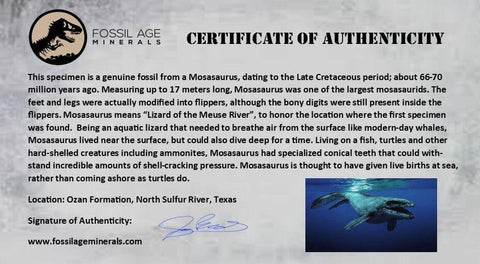
Comes with a Certificate of Authenticity.
The item pictured is the one you will receive.
100-66 Million Years old, Upper Cretaceous, Maastrichtian Epoch.
Name: Mosasaurus
Named By: Dollo - 1889.
Diet: Carnivore.
Size: Depending on the species, Mosasaurs could range from 6 to just under 14 meters in length.
Known locations: Fossil locations suggest a worldwide distribution, but are especially well-known from Europe and North America.
Time period: Campanian to Maastrichtian of the Cretaceous.
Mosasaurs were massive lizard giants, reaching nearly 60 feet in length with skulls up to 6 feet long. These formidable sea predators exclusively stayed in the water, gliding through the ocean with their snake-like, powerful bodies designed for speed. Their finned tails propelled them forward, while small, webbed feet served as accurate rudders. During the late Cretaceous period, approximately 96 to 65 million years ago, they thrived by hunting fish, turtles, and shellfish with relentless efficiency. Living alongside dinosaurs, they ultimately met their dramatic extinction during the mass extinction event that ended the Cretaceous era.

Please be aware of the nature of fossils:
Being buried underground for millions of years under tons of pressure can be rough. No fossil emerges from the ground completely intact and perfect. Most fossils have undergone some restoration, while others are altered by humans simply to enhance their appearance in various ways. Workers in the United States do a very professional job of unearthing and preserving these natural treasures. However, natural cracks are often visible on the surface. These are part of the natural beauty of the fossil and are not considered defects.