


1.7" Extinct Cave Bear Ursus Spelaeus Molar Tooth Rooted Pleistocene Age COA
Location: Romania
Weight: 0.7 Ounces
Dimensions: 1.7 Inches Long, 1.1 Inches Wide, 0.8 Inches Thick
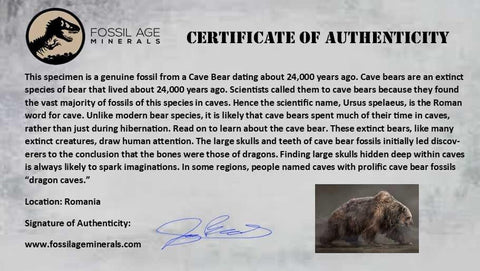
Comes with a Certificate of Authenticity.
The item pictured is the one you will receive.
Ursus spelaeus, or Cave bear, an extinct Pleistocene megafauna species dating to approximately 24,000 years ago, acquired its nomenclature from the preponderance of fossilized remains discovered within cave systems throughout its Eurasian range. The Latin designation "spelaeus" directly references this cave-centric distribution pattern. Paleontological evidence suggests these bears maintained permanent or semi-permanent subterranean habitation, distinguishing them from modern ursids that utilize caves seasonally. The imposing cranial dimensions and formidable dentition of early fossil discoveries prompted initial misidentifications as legendary creatures, with certain paleontologically significant sites acquiring regional appellations such as "dragon caves." Contemporary paleobotanical and dental morphological analyses reveal a subsistence strategy predominantly centered on fibrous vegetation, with dental wear patterns indicating specialized adaptation to processing coarse plant material. While opportunistic omnivory likely supplemented their diet when circumstances permitted, isotopic and taphonomic evidence substantiates herbivory as their primary ecological niche. This specimen exemplifies the paleontological significance of cave bear dentition in reconstructing Pleistocene megafaunal ecology and behavioral adaptation patterns.
