


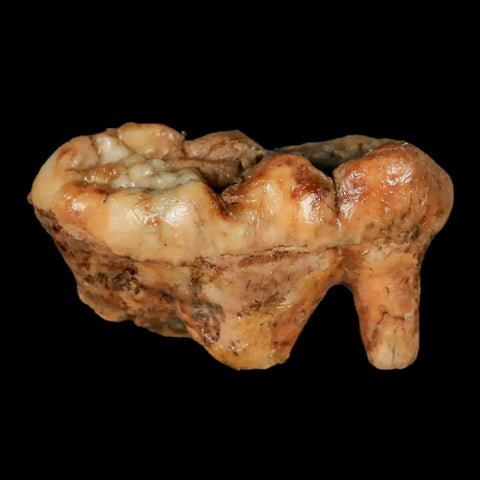
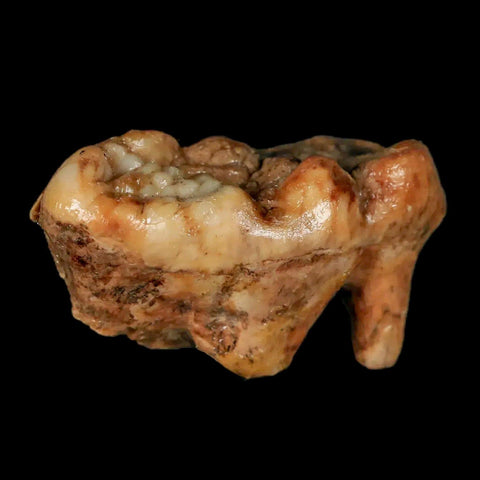
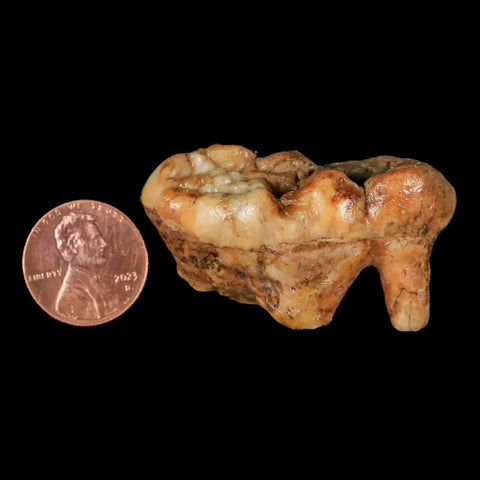
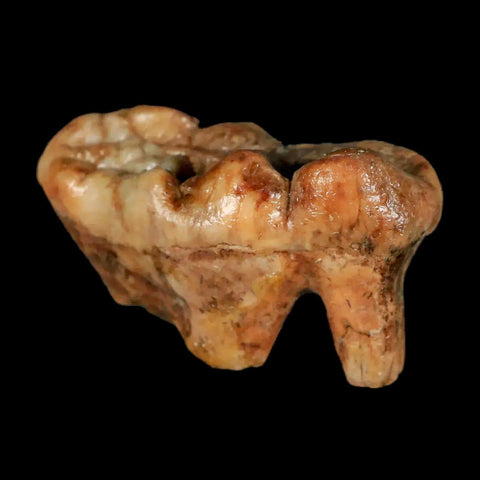
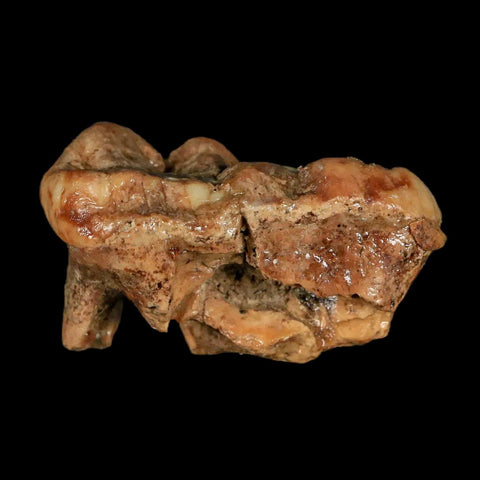
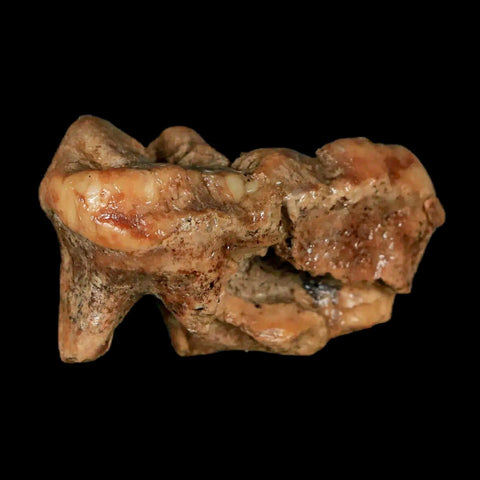
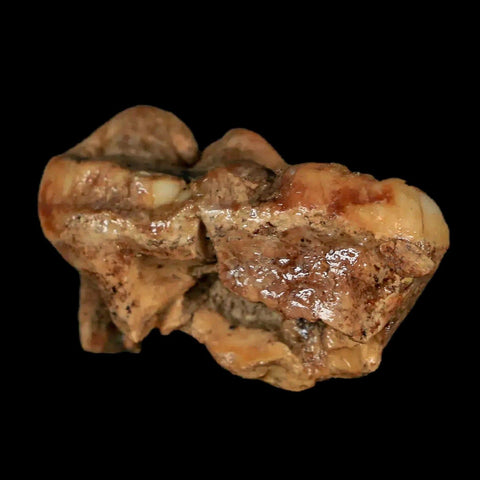
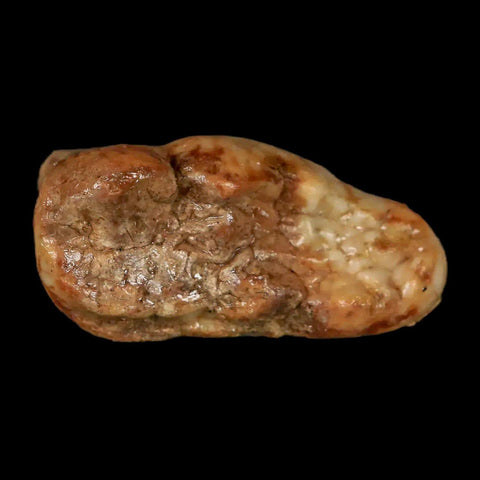
1.8" Extinct Cave Bear Ursus Spelaeus Molar Tooth Rooted Pleistocene Age COA
Location: Romania
Weight: 0.6 Ounces
Dimensions: 1.8 Inches Long, 1.1 Inches Wide, 0.9 Inches Thick
Comes with a Certificate of Authenticity.
The item pictured is the one you will receive.
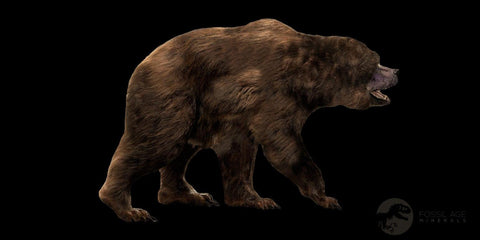
Cave bears are an extinct species of bear that lived about 24,000 years ago. Scientists called them cave bears because they found the vast majority of fossils of this species in caves. Hence, the scientific name, Ursus Spelaeus, is the Roman word for cave. Unlike modern bear species, it is likely that cave bears spent much of their time in caves, rather than just during hibernation. Read on to learn about the cave bear.
Like many extinct creatures, cave bears continue to capture human fascination. Their mysterious existence and the stories surrounding their presence on Earth spark curiosity, inspiring wonder about a world long past.
The enormous skulls and teeth of cave bear fossils once led early discoverers to believe they had uncovered the remains of dragons. Encountering these massive skulls hidden deep within caves naturally ignited the imagination. In some regions, caves rich with cave bear fossils were even nicknamed “dragon caves,” highlighting the awe these prehistoric giants inspired and the enduring sense of mystery surrounding them.
Despite their enormous size and formidable teeth, cave bears are believed to have been primarily herbivorous. While they may have occasionally eaten meat, similar to modern bear species, the bulk of their diet consisted of plant matter. Studies of fossilized teeth suggest that cave bears mainly fed on tough vegetation, including leaves, grasses, and roots, allowing them to thrive in the Ice Age environments of Europe and Asia.


