
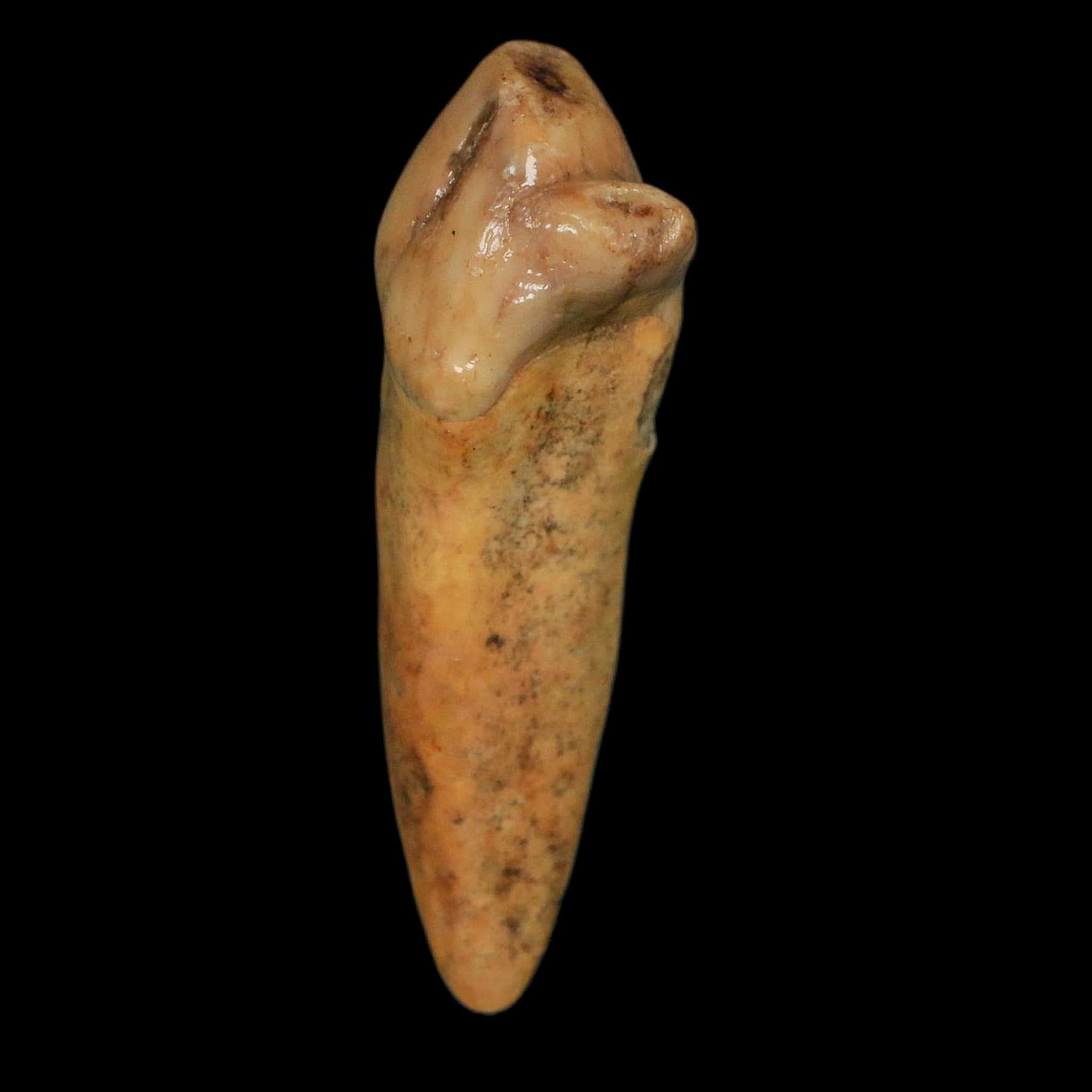
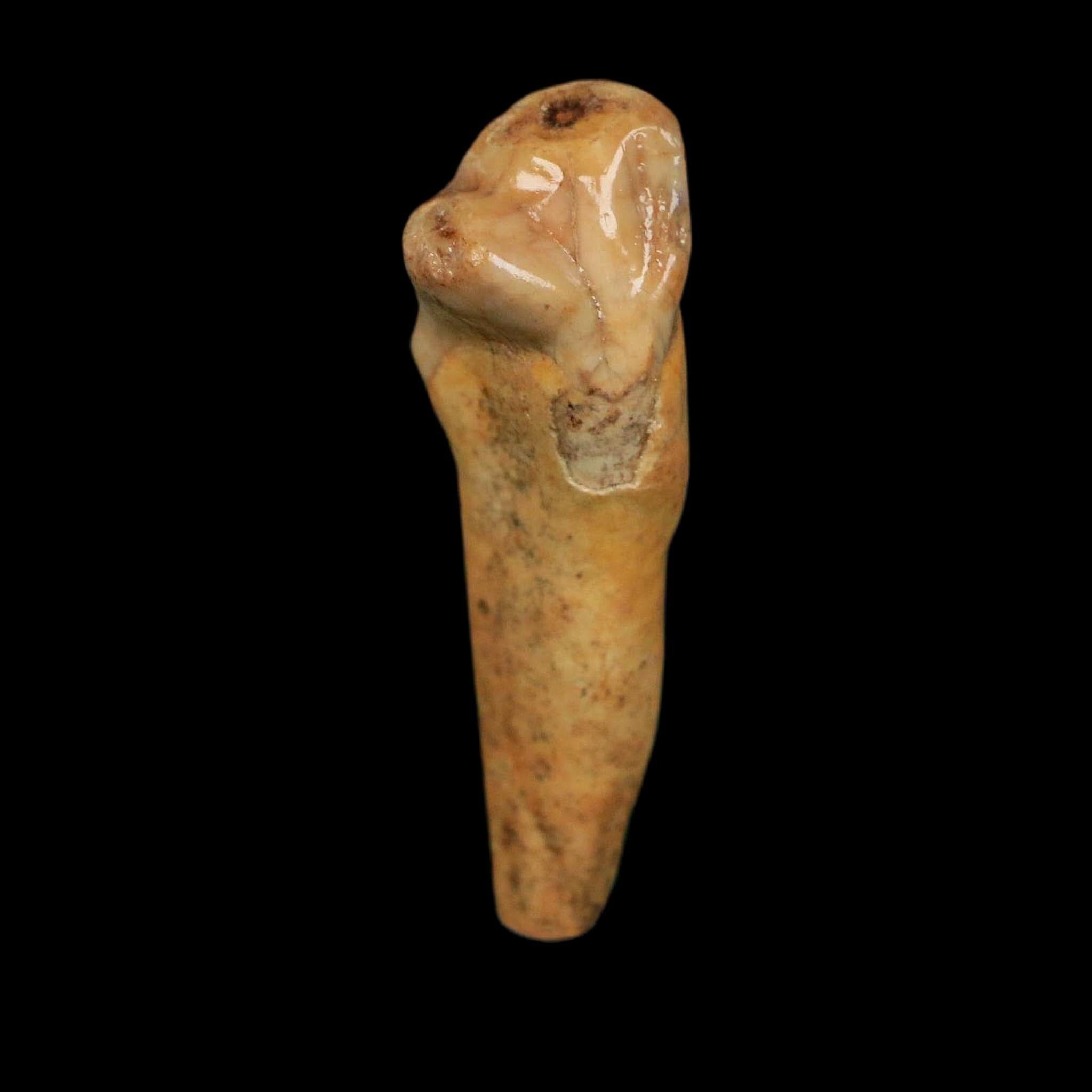
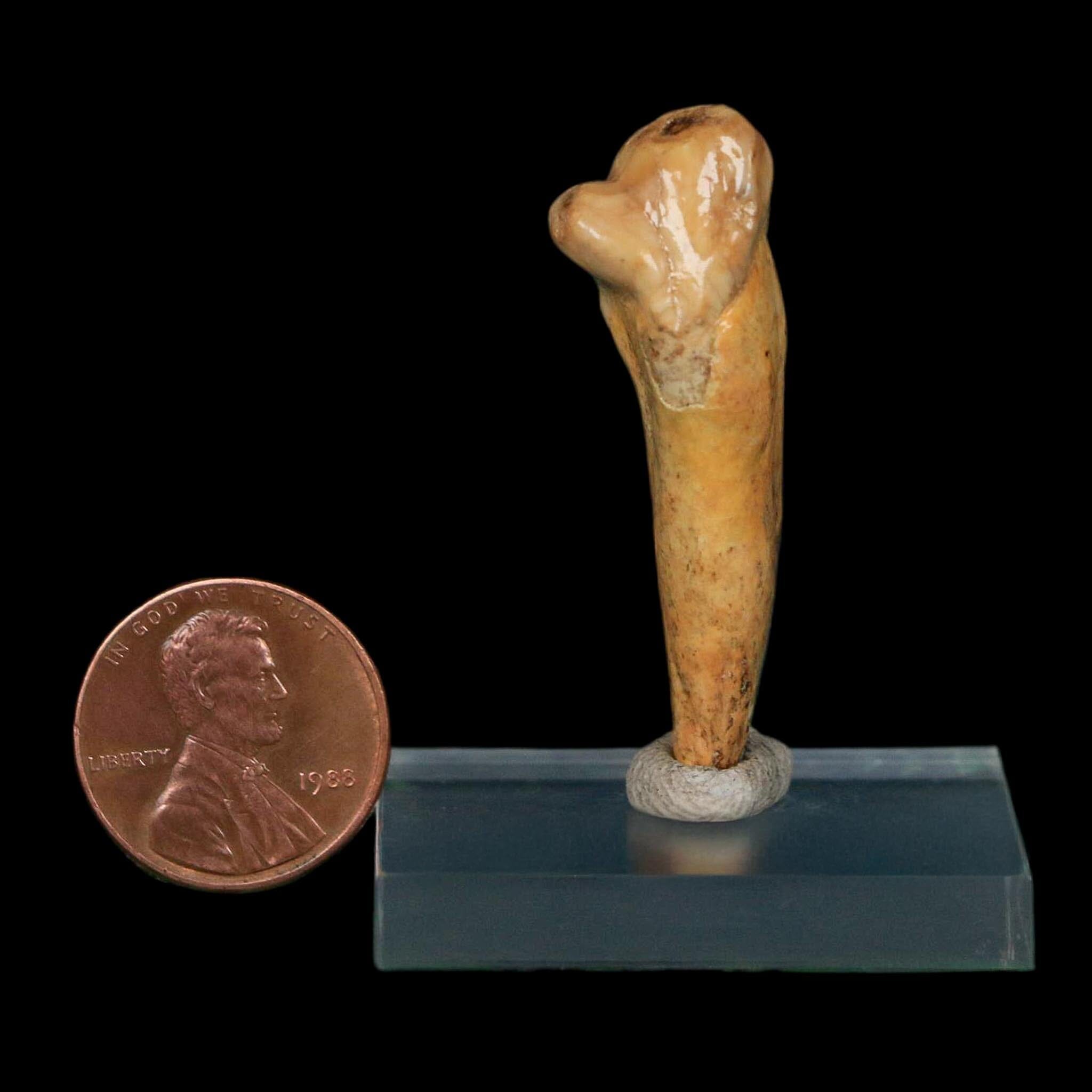
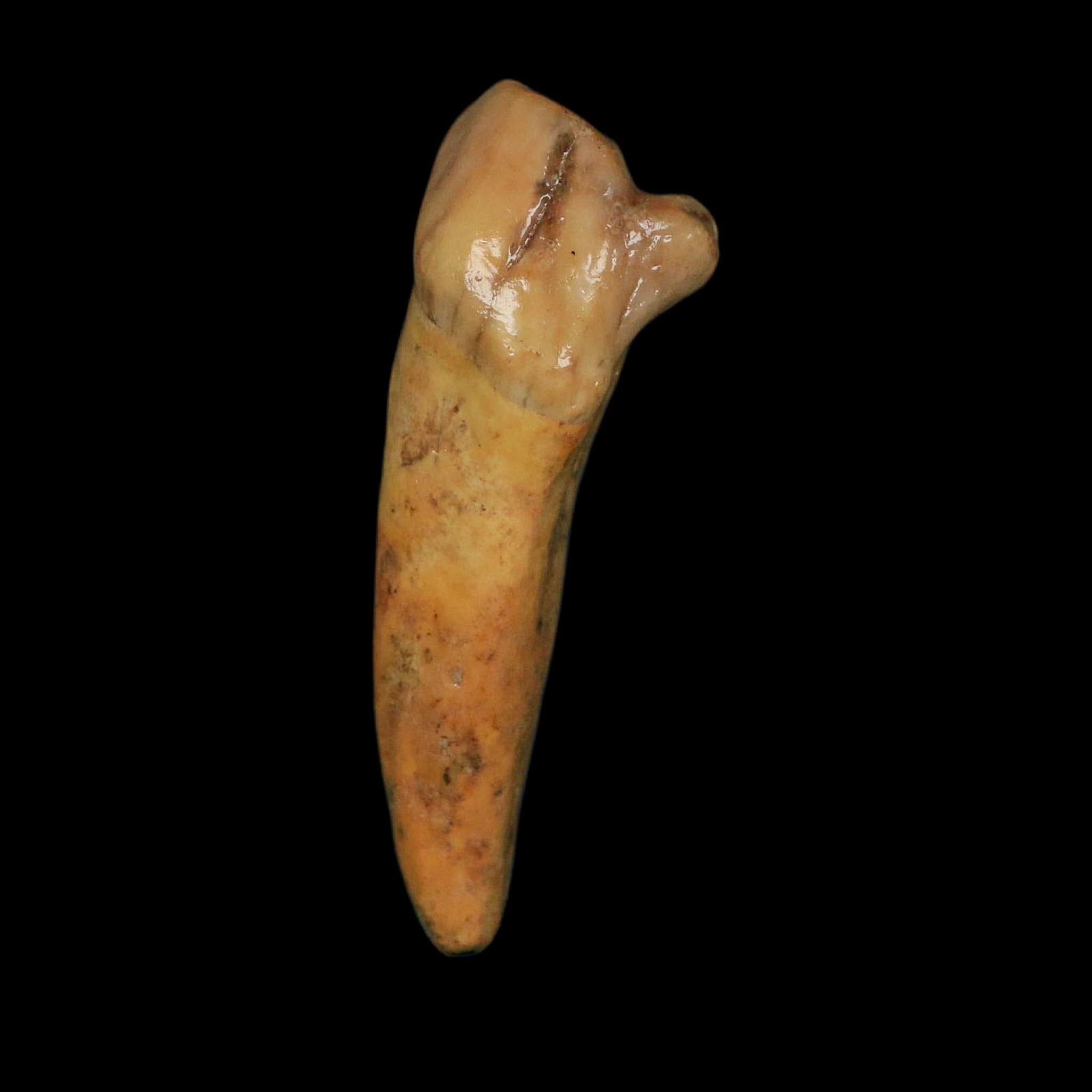



Description
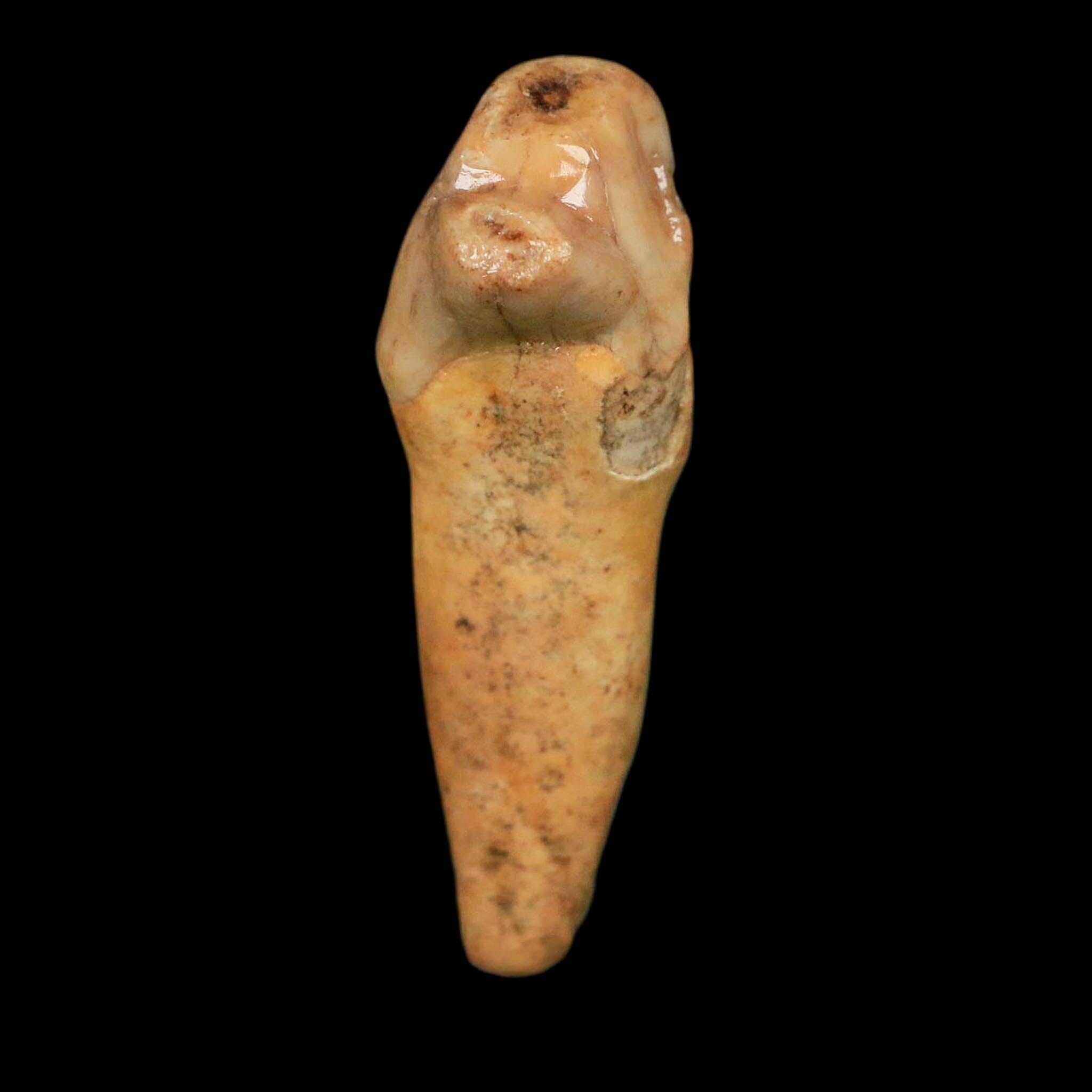
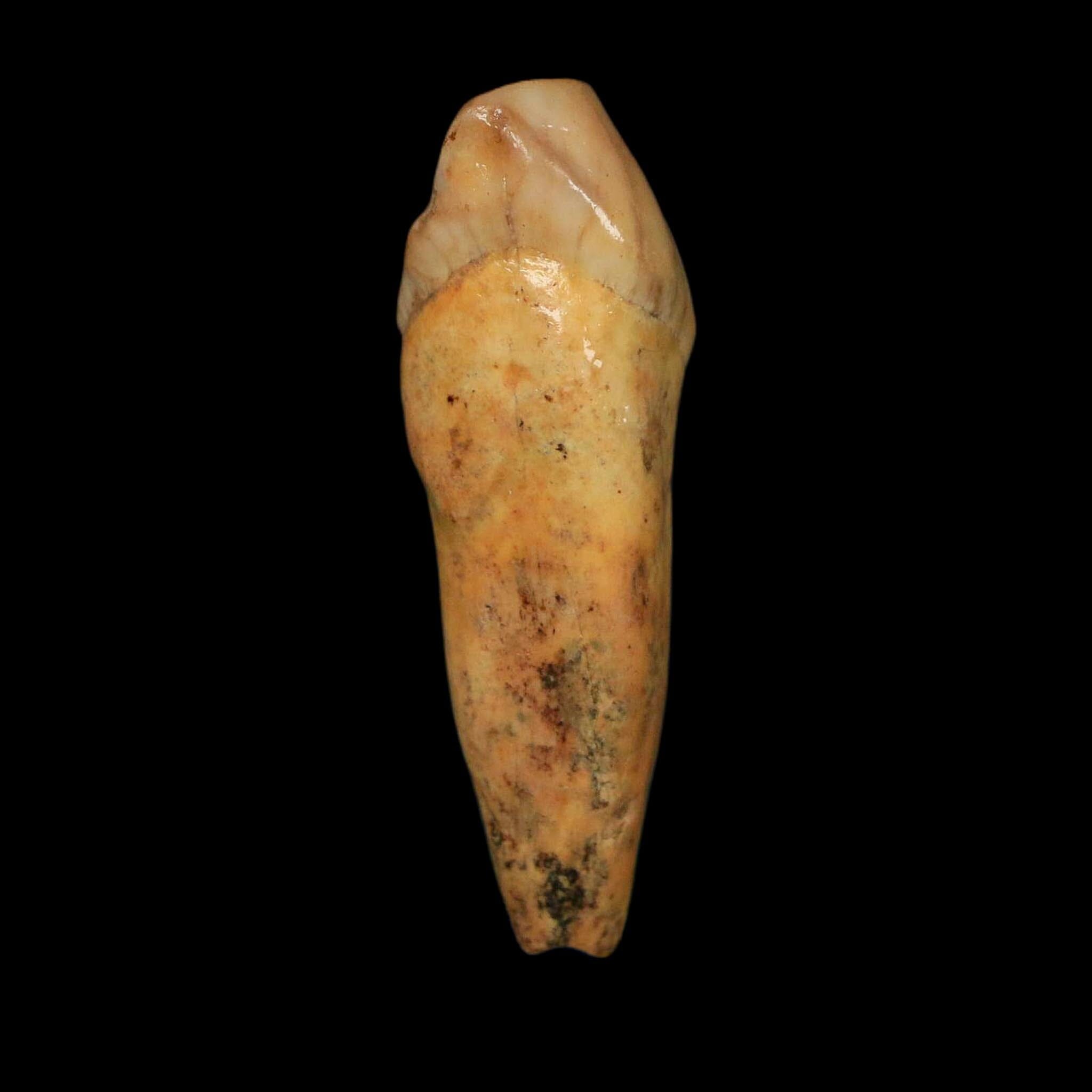
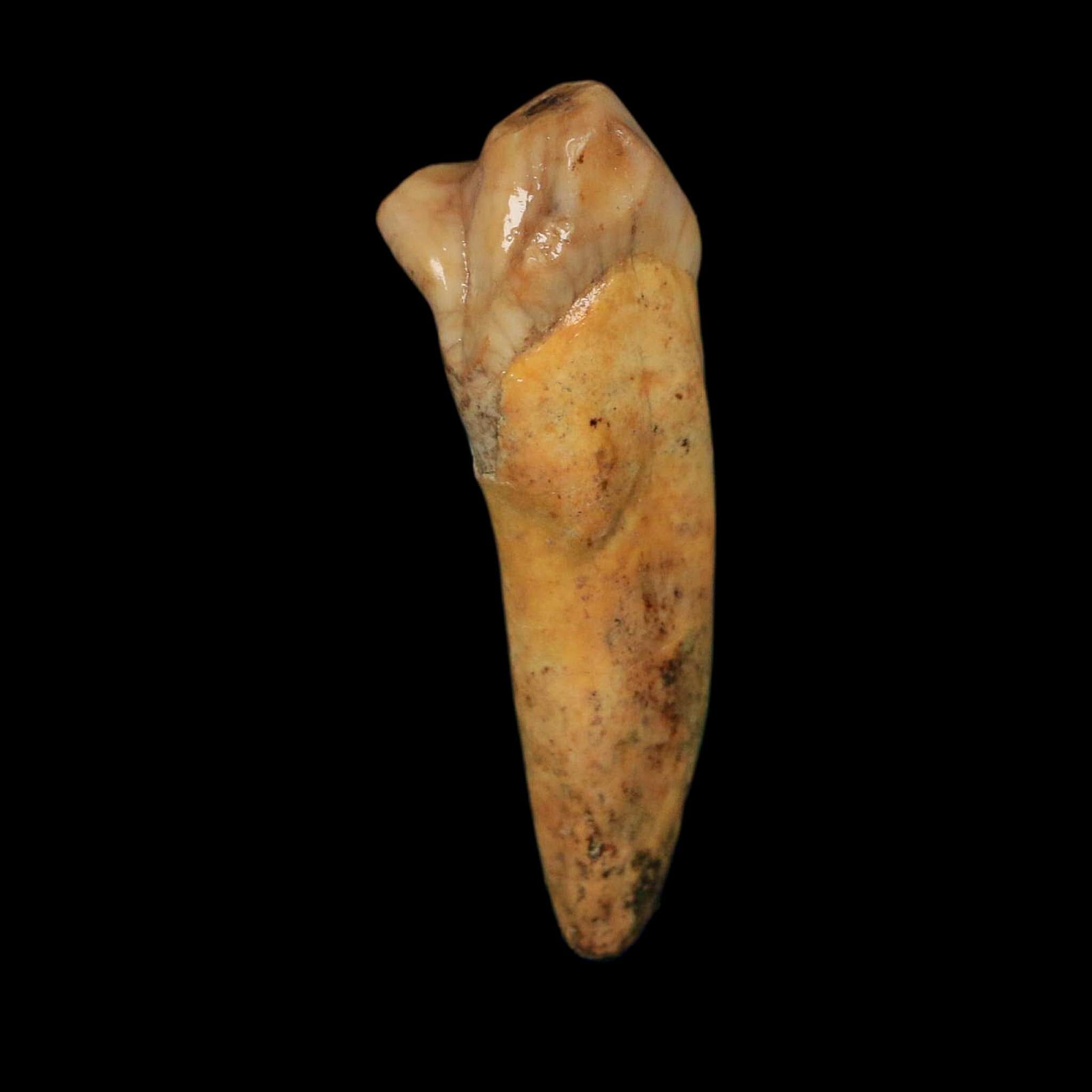
Location: Romania
Weight: 0.4 Ounces
Dimensions: 1.6 Inches Long, 0.5 Inches Wide, 0.5 Inches Thick
Comes with a Free Acrylic Base (Stand) & Mineral Tack.
Comes with a Certificate of Authenticity.
The item pictured is the one you will receive.
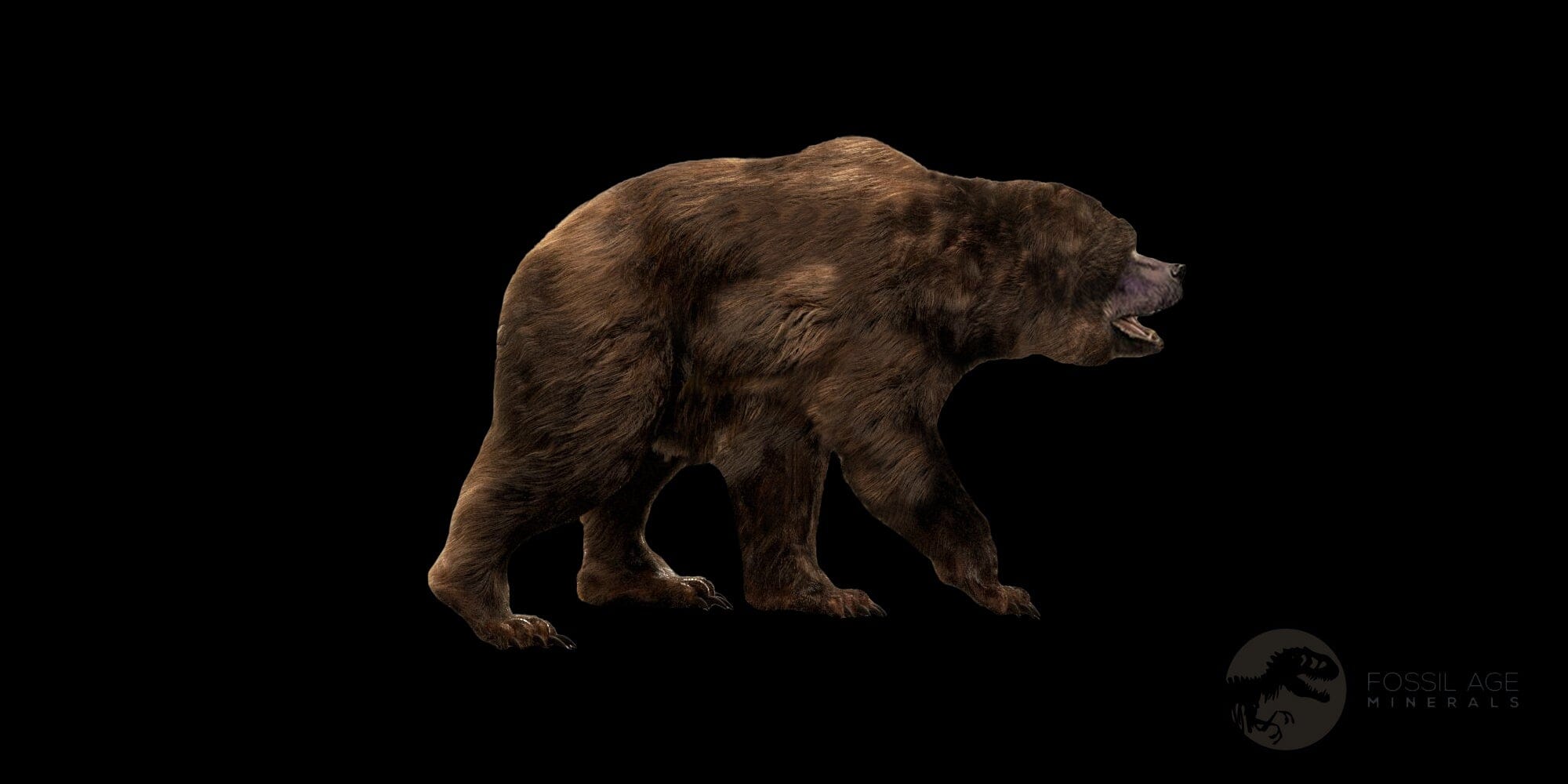
Ursus spelaeus, commonly known as the cave bear, was one of the most impressive large mammals of the Ice Age, roaming Europe until its extinction approximately 24,000 years ago. The species earned its name from the abundance of its remains discovered deep within limestone cave systems across the continent. Unlike most modern bears, which use caves primarily for winter denning, cave bears appear to have relied heavily on caves as long-term or even permanent shelters, resulting in the remarkable concentration of fossils found in subterranean environments.
These enormous bears possessed massive bodies, powerful limbs, and exceptionally large skulls, making them among the largest terrestrial carnivorans of their time. Early human explorers who ventured into dark cave chambers often encountered towering skulls and oversized teeth embedded in cave floors and walls. Such discoveries fueled medieval and local folklore, leading to myths of dragons and monstrous beasts inhabiting so-called “dragon caves.” These legends reflect the awe inspired by the sheer size and unfamiliar appearance of cave bear remains.
Despite their formidable build and heavy teeth, scientific studies of tooth wear, jaw structure, and isotopic evidence suggest that cave bears were primarily herbivorous, feeding largely on tough plant material such as roots, grasses, and other coarse vegetation. While they may have occasionally consumed animal matter, their overall diet appears to have been dominated by plant-based foods. Today, Ursus spelaeus stands as one of the most iconic representatives of European Pleistocene megafauna, providing valuable insight into Ice Age ecosystems and continuing to fascinate paleontologists, museums, and fossil collectors around the world.
