


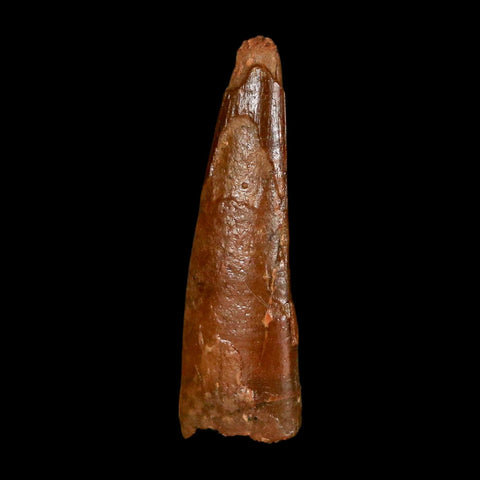
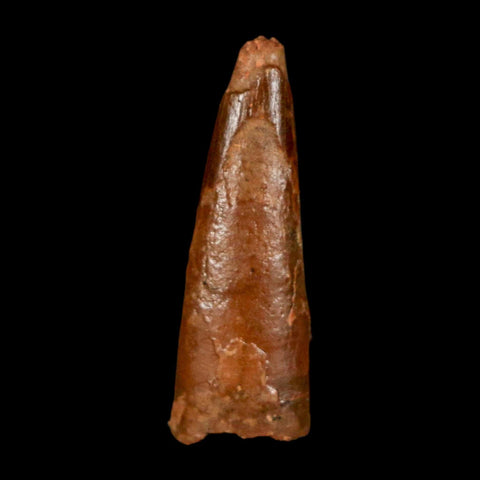
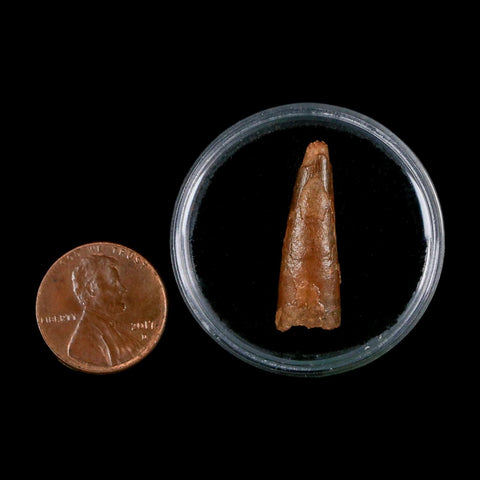
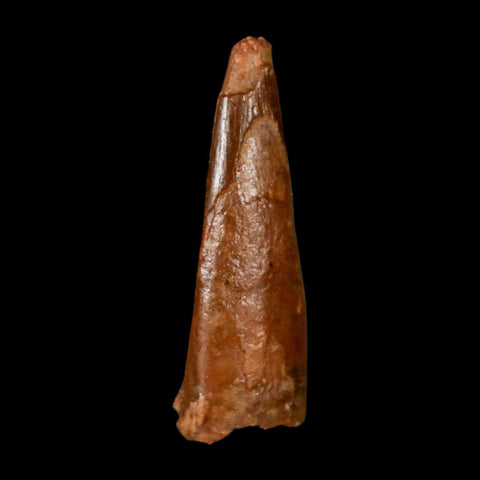

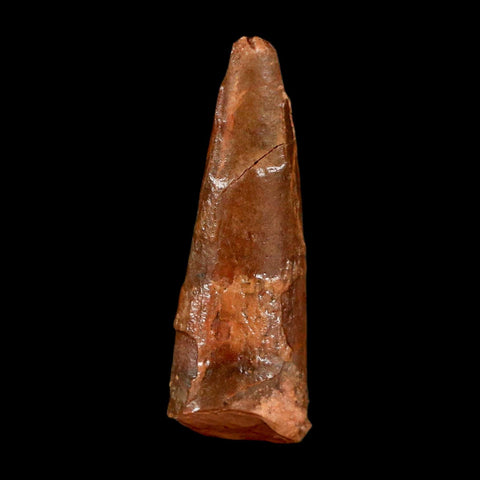
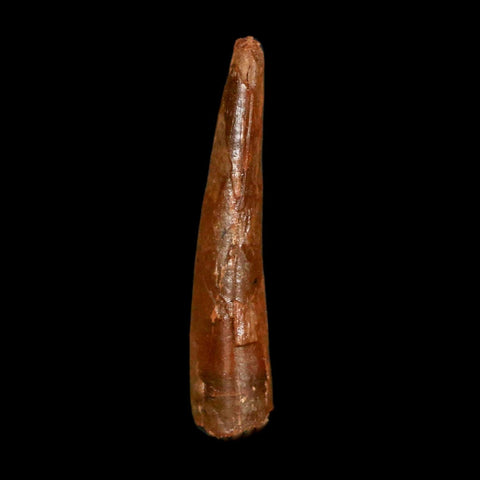

1.1" Pterosaur Coloborhynchus Fossil Tooth Upper Cretaceous Morocco COA & Display
Location: Kem Kem Basin, Morocco
Weight: 0.3 Ounces
Dimension: 1.1 Inches Long, 0.3 Inches Wide
Comes with a Certificate of Authenticity.
Comes with a free Display.
The item pictured is the one you will receive.
Upper Cretaceous 96 Million Years Old
Name: Pterosaur
Type: Carnivore
Size: 10 to 12 meters in length
Pterosaurs, part of the extinct group Pterosauria, were the first vertebrates to achieve powered flight, dominating the skies during the Triassic, Jurassic, and Cretaceous periods of the Mesozoic Era (228–66 million years ago). These flying reptiles displayed incredible diversity, from small agile species to giant forms with wingspans exceeding 10 meters.
Pterosaur wings were formed from a membrane of skin, muscle, and connective tissue that extended from the hind limbs to an elongated fourth finger, enabling efficient gliding and active flight. Early species had long, toothed jaws and extended tails, while later species developed shorter tails and, in some cases, toothless beaks, demonstrating adaptations for improved aerodynamics and diverse diets.
Their skeletal structure was perfectly adapted for flight. Hollow, air-filled bones reduced weight without sacrificing strength, while thin bone walls provided flexibility. A large keeled breastbone anchored powerful flight muscles, and an enlarged brain allowed complex coordination for hunting, navigation, and aerial maneuvers.
With their specialized anatomy, remarkable wing design, and evolutionary success, pterosaurs remain one of the most fascinating examples of prehistoric Mesozoic flying reptiles, illustrating the ingenuity of Pterosauria in conquering the skies long before birds evolved.
