



Description
Location: Kiowa County, Kansas
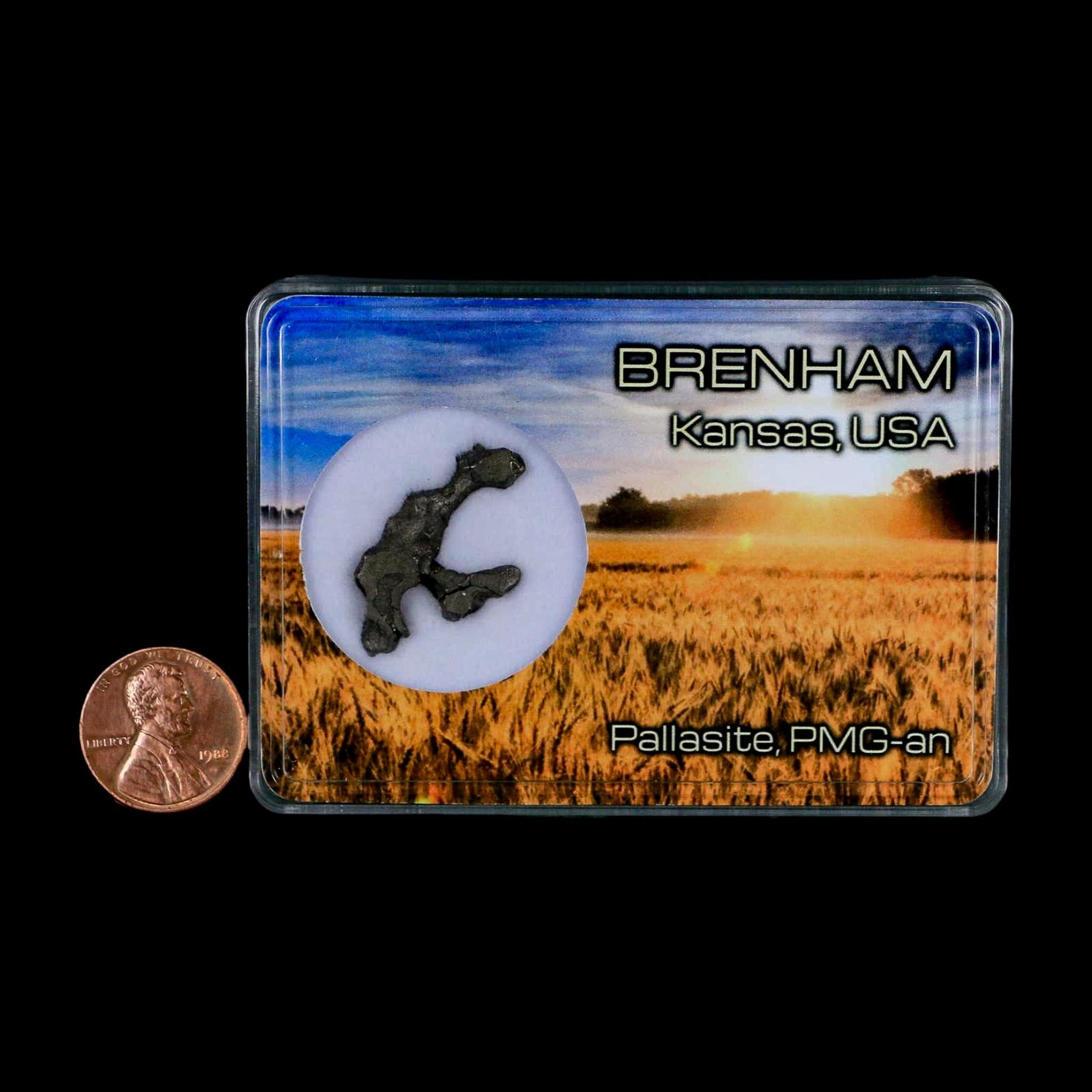
Weight: 1.3 Ounces (Display)
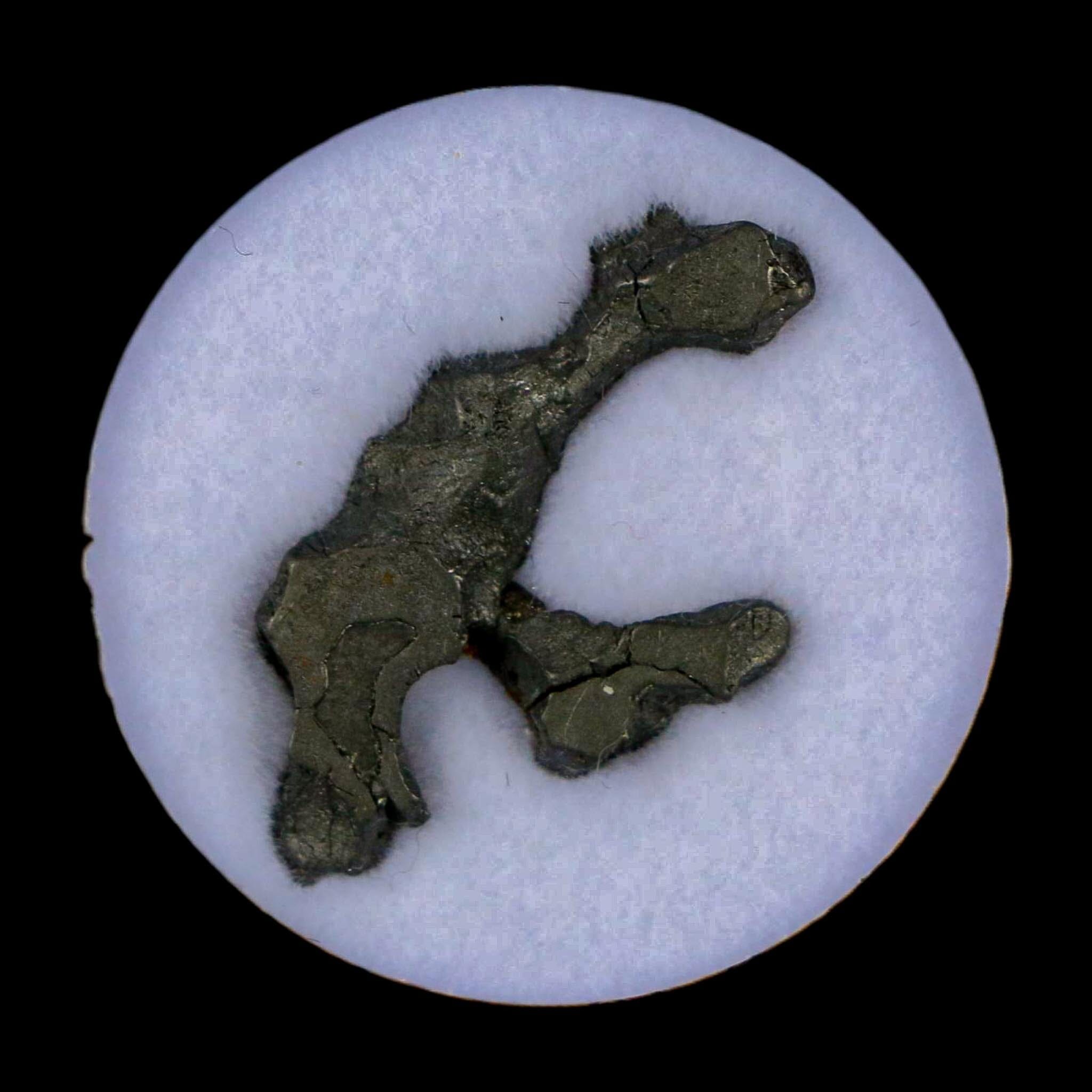
Meteorite Weight: 2.71 Grams
Dimensions: 3.3 Inches Long, 2.3 Inches Wide, 1 Inch Thick (Display)
Meteorite Dimensions: 1.1 Inches Long, 0.6 Inches Wide, 0.1 Inches Thick
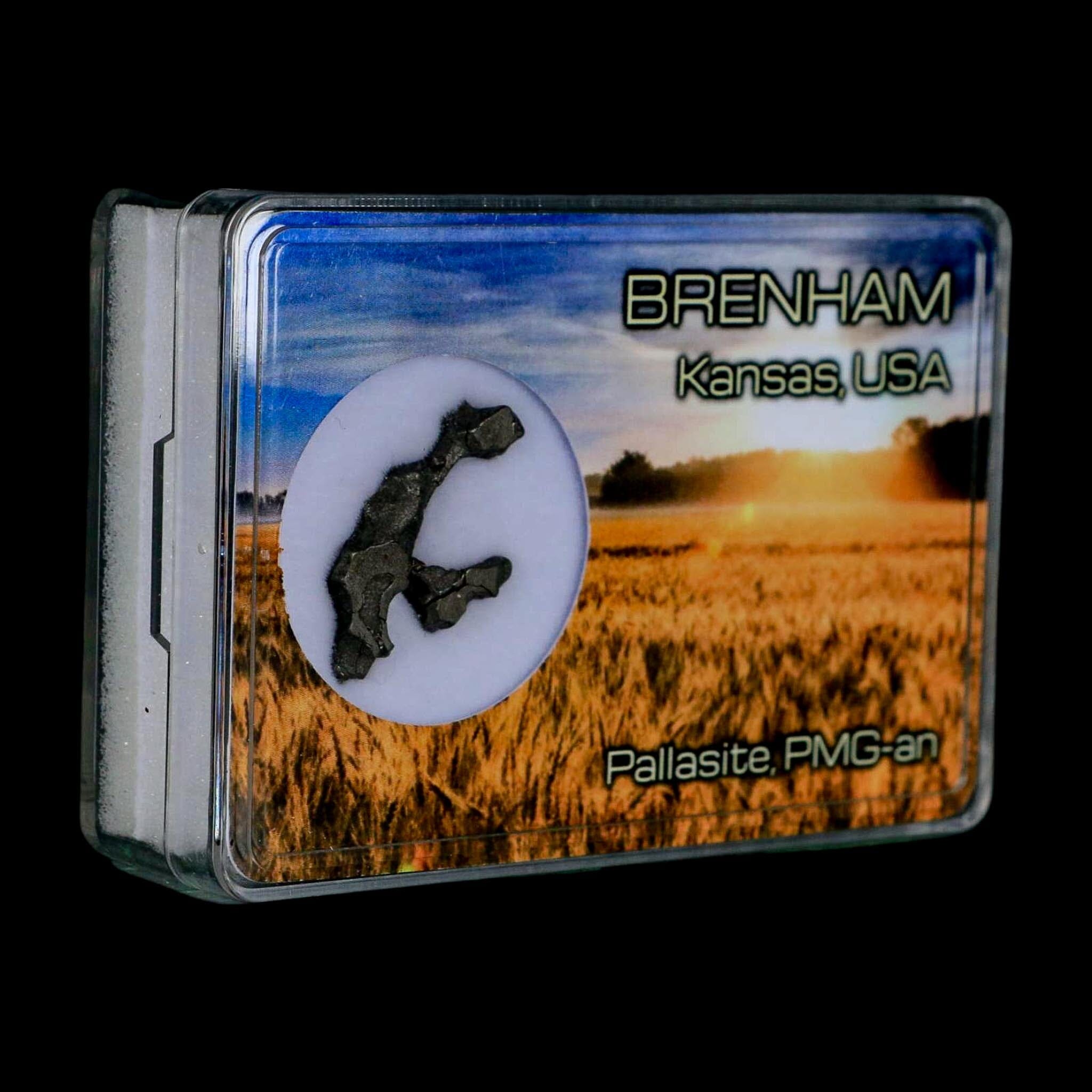
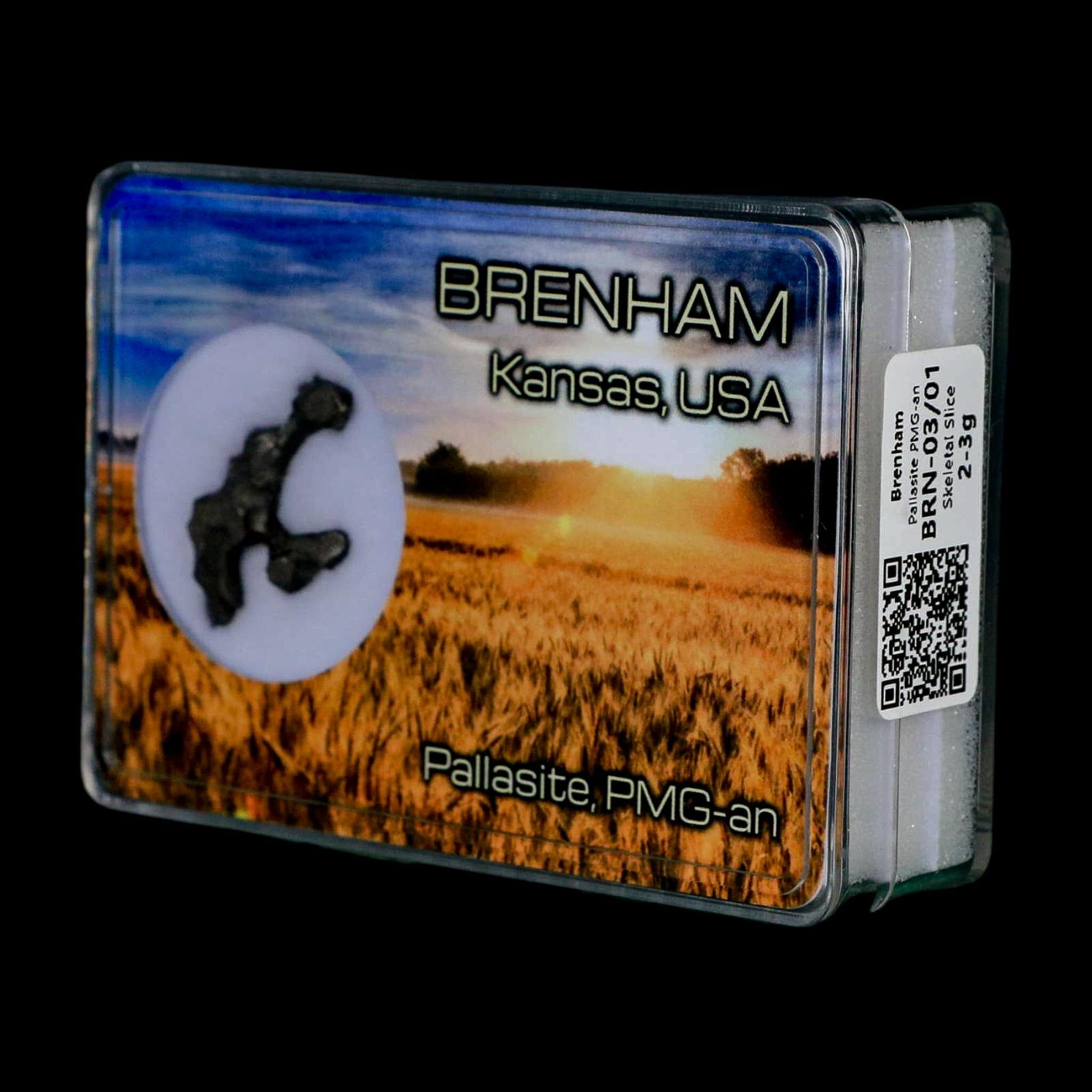
Comes with a Display Case.
The item pictured is the one you will receive.
The Brenham meteorite is a renowned pallasite, a rare type of stony-iron meteorite composed of nearly equal parts nickel-iron metal and translucent, magnesium-rich olivine (peridot) crystals. Discovered in 1882 in Kiowa County, Kansas, it is linked to the Haviland Crater, a notable example of a "pallasite strewn field" Where a large meteoroid broke apart in the atmosphere, dispersing thousands of fragments across the prairie. Pallasites are scientifically important because they are thought to have originated from the core-mantle boundary of differentiated asteroids, offering insight into the internal layering of planetary bodies. The discovery story of the Brenham meteorite involves Eliza Kimberly, a homesteader who identified the "heavy black rocks" on her farm as something more than common terrestrial stones. Despite skepticism from her husband and neighbors, she collected nearly a ton of material over the years before Dr. F.W. Cragin from Washburn University confirmed their extraterrestrial origin in 1890. This event turned the Kimberly farm into the "Meteorite Farm," attracting scientists like F.H. Snow and George F. Kunz, who published the first detailed account of the fall in Science journal. Brenham is classified as an anomalous pallasite (Pallasite-an). While most pallasites belong to the Main Group, Brenham exhibits distinctive chemical signatures in its metal, particularly in trace elements such as germanium and iridium. The meteorite has a matrix of Fe-Ni metal (kamacite and taenite) surrounding rounded to angular olivine crystals. In rare cases, olivine is entirely absent, leaving only the nickel-iron structure, which exhibits a Widmanstätten pattern when etched with acid.