

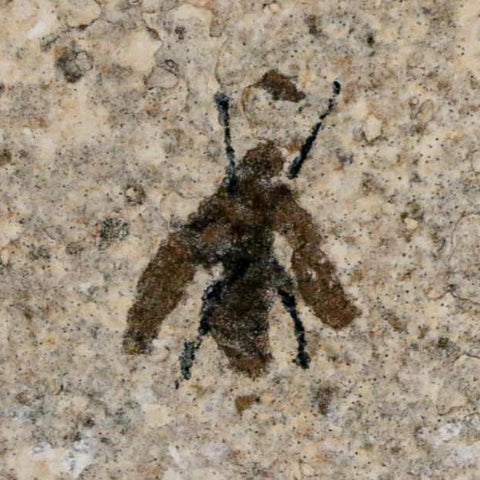
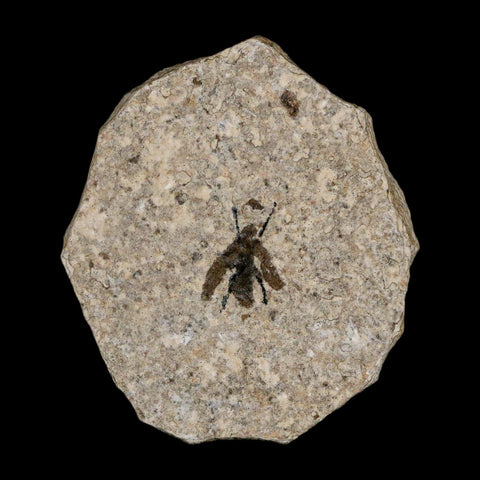
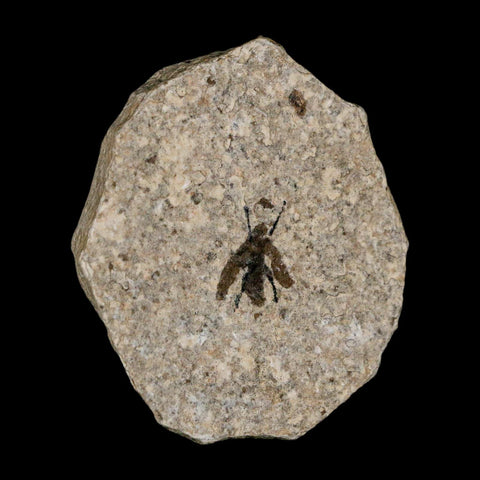
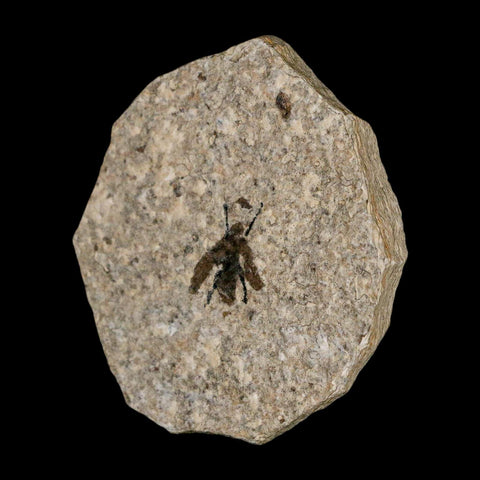
0.6 Detailed Fossil March Fly Insect Green River FM Uintah County UT Eocene Age
Location: Uintah County, Utah
Weight: 1.1 Ounces
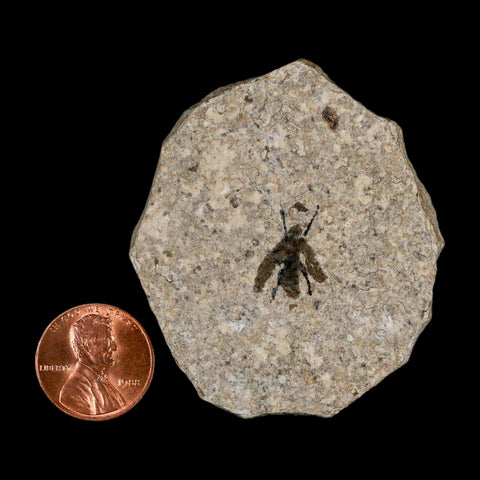
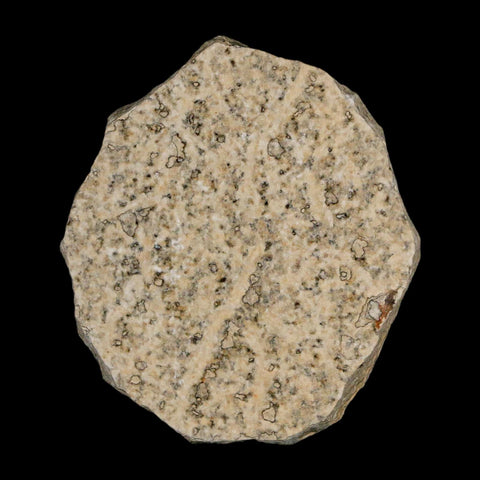
Dimensions: 2.2 Inches Long, 1.9 Inches Wide, 0.3 Inches Thick (Plate)
Insect Dimensions: 0.6 Inches Long, 0.4 Inches Wide
The item pictured is the one you will receive.
50 million years old, Eocene age
March Fly Insect
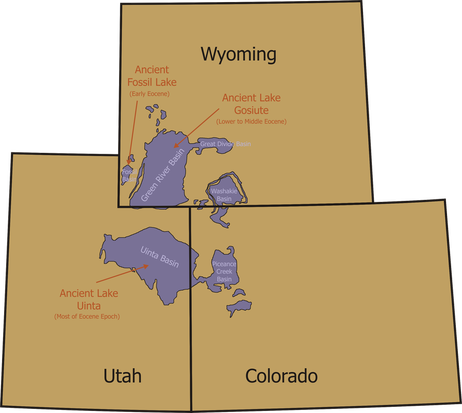
About 50 million years ago, Fossil Lake existed in what is now southwest Wyoming. Of its estimated 930-square-mile area, roughly 500 square miles of sediment remain. The central 230 square miles of the ancient lake bed are exceptionally rich in fossils and feature deltas, beaches, springs, and rocks from both deep and nearshore environments.
The lake’s unusual chemistry prevented decay and scavenging, allowing millimeter-thick layers of laminated limestone to form slowly. These layers preserve the world’s highest concentration of fossil fish. Together with other aquatic life and geological features, Fossil Lake provides the best Paleogene record of a freshwater ecosystem.
Since their discovery in the 1870s, many perfectly preserved fossil fish have been recovered. The lake also preserves a complete aquatic ecosystem, including cyanobacteria, plants, insects, crustaceans (shrimp, crawfish, ostracods), amphibians (frogs, primitive salamanders), alligators, turtles, birds, and mammals such as the oldest pantolestid, an otter-like creature.
The surrounding subtropical terrestrial ecosystem is represented by rare fossils, including horses, snakes, lizards, bats, birds, apatemyids (arboreal insectivores), miacids (primitive carnivores), insects, and over 325 types of leaves, seeds, and flowers. Fossil Lake offers an extraordinary glimpse into an ancient ecosystem, capturing both aquatic and terrestrial life in remarkable detail.