
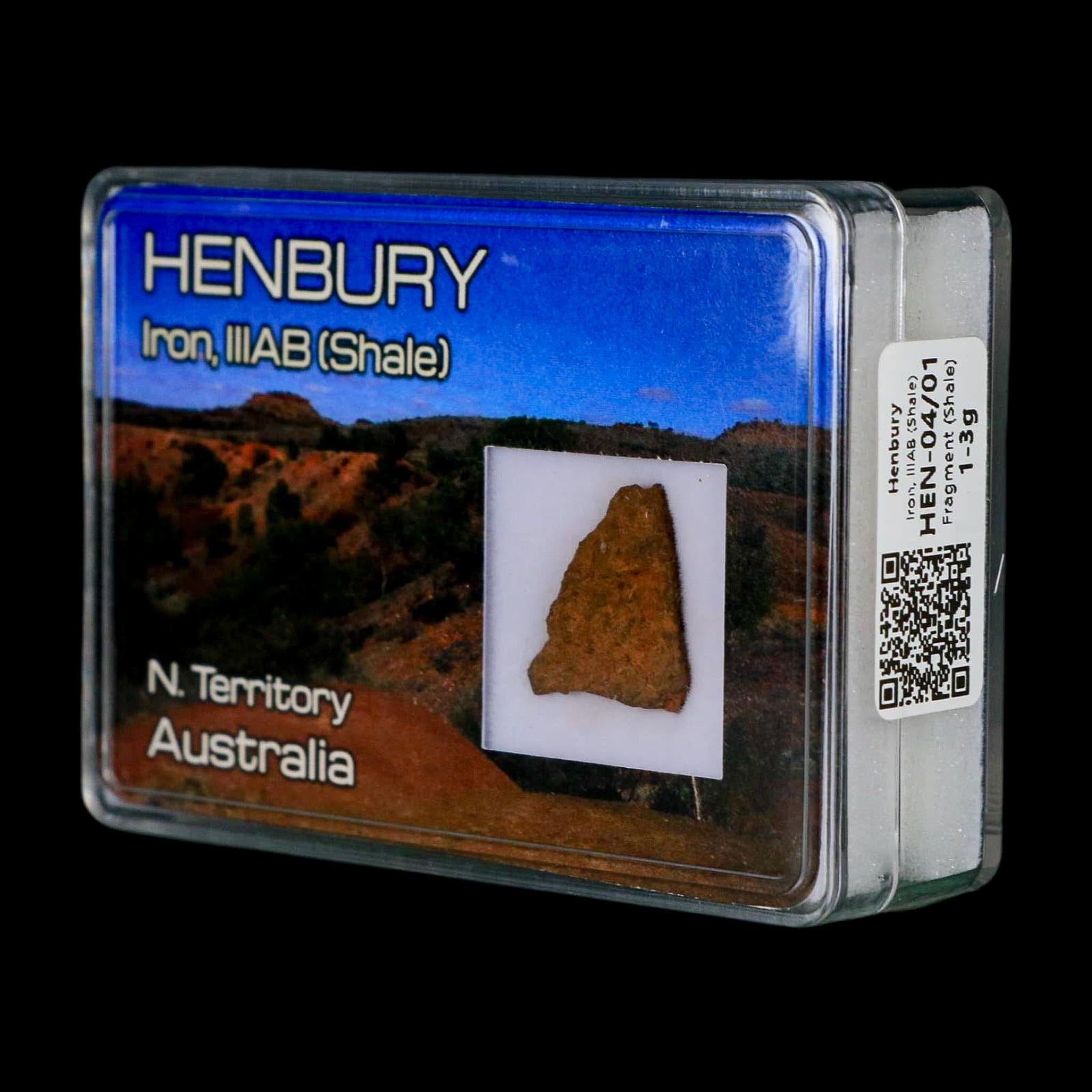


Description
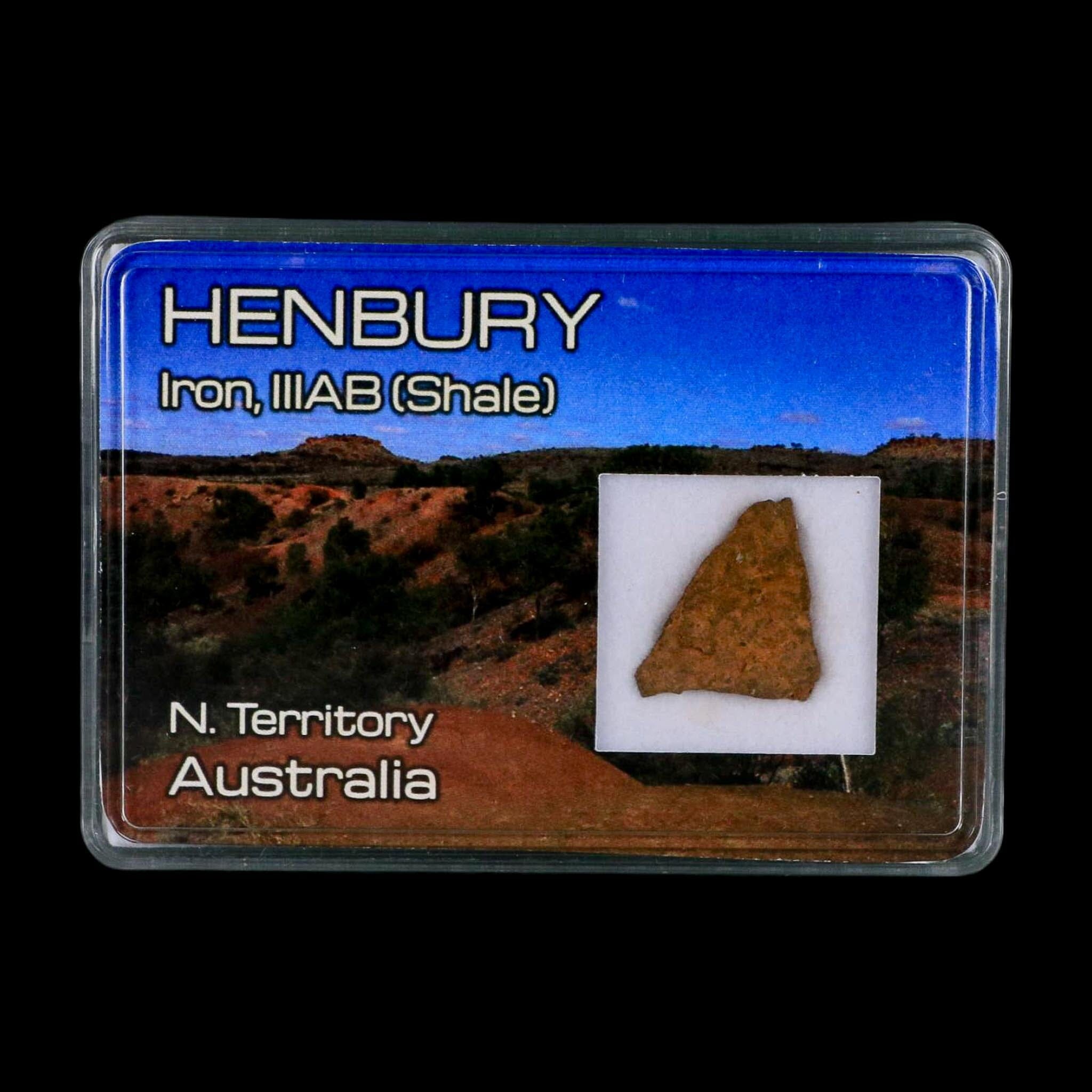
Location: Australia's Northern Territory
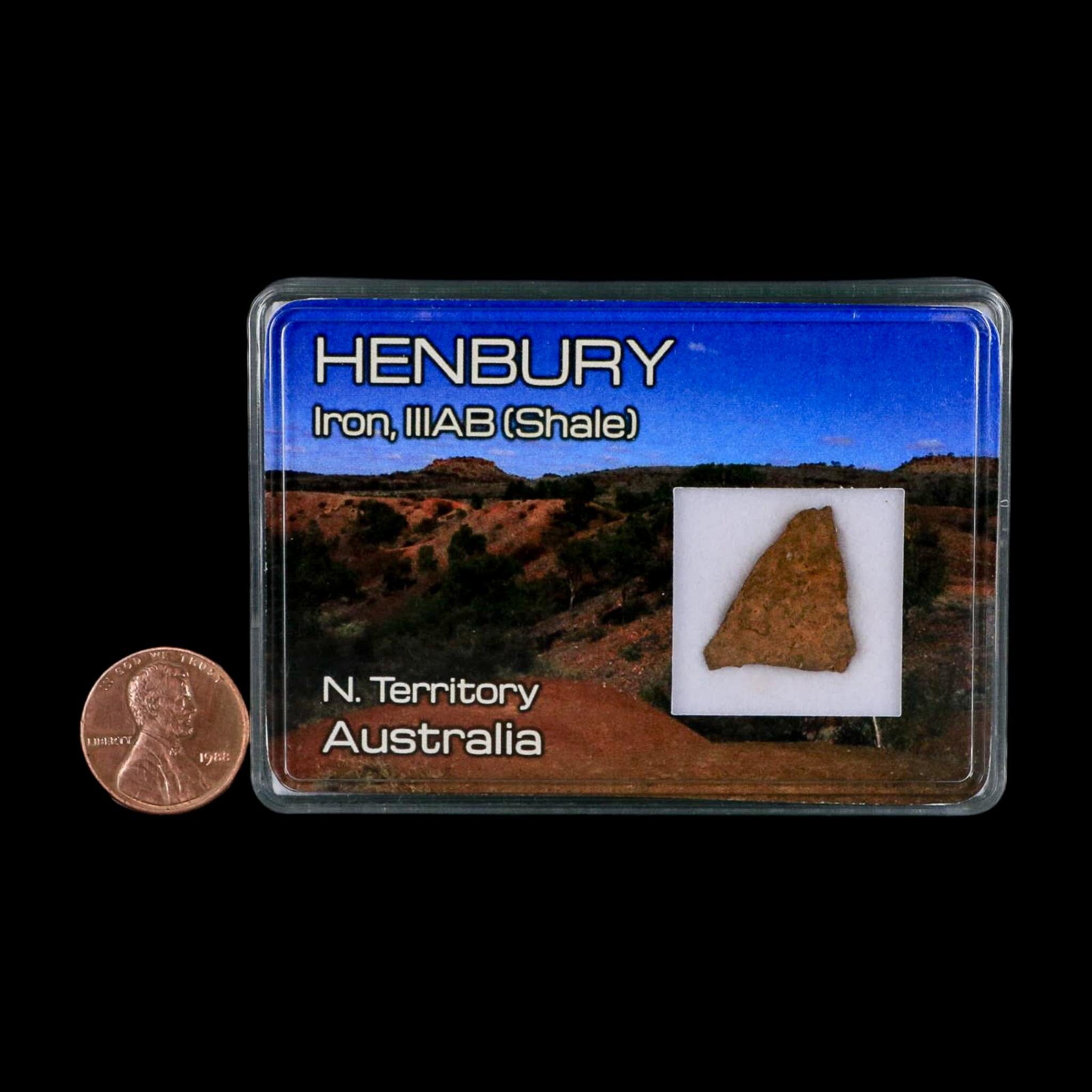
Weight: 1.2 Ounces (Display)
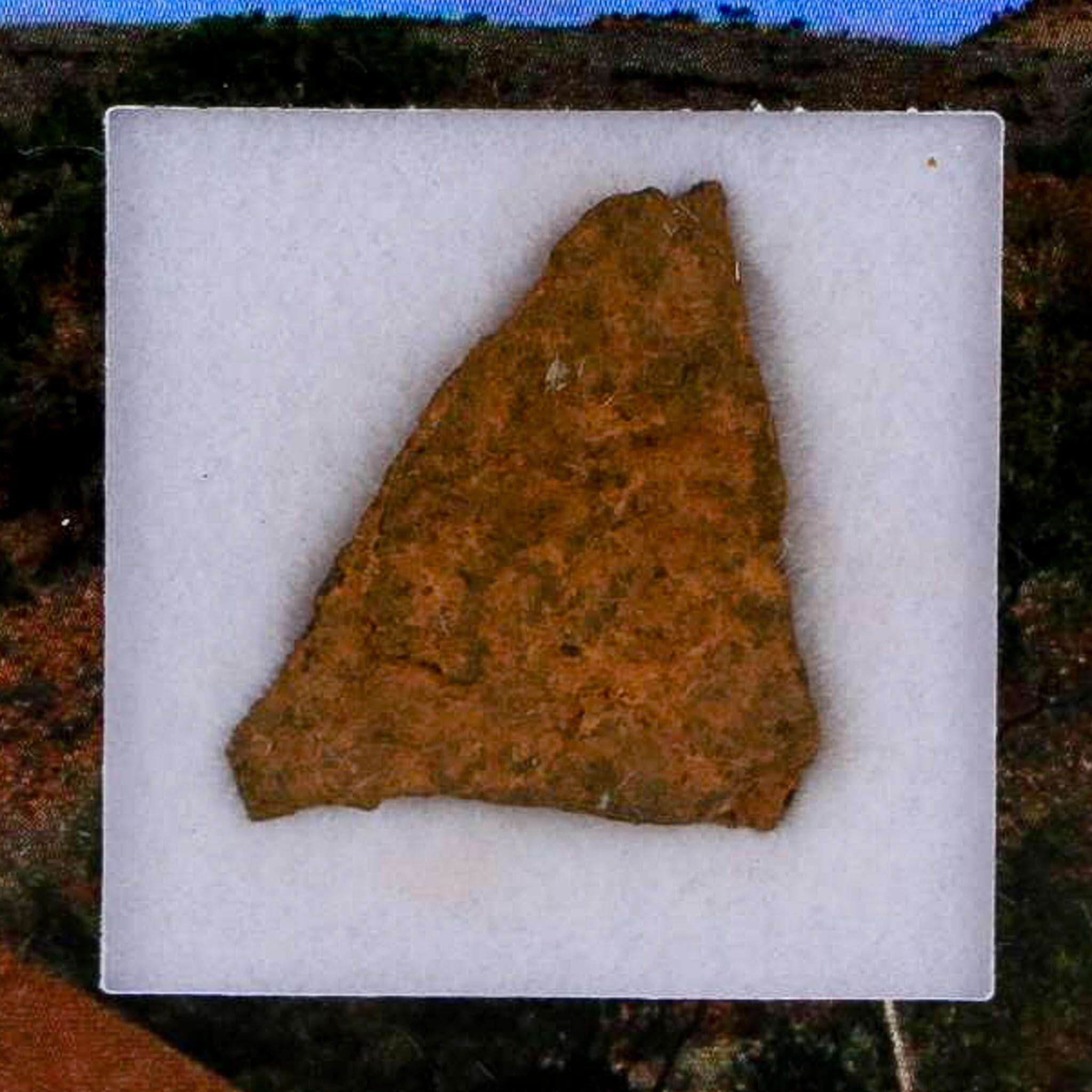
Meteorite Weight: 1.61 Grams
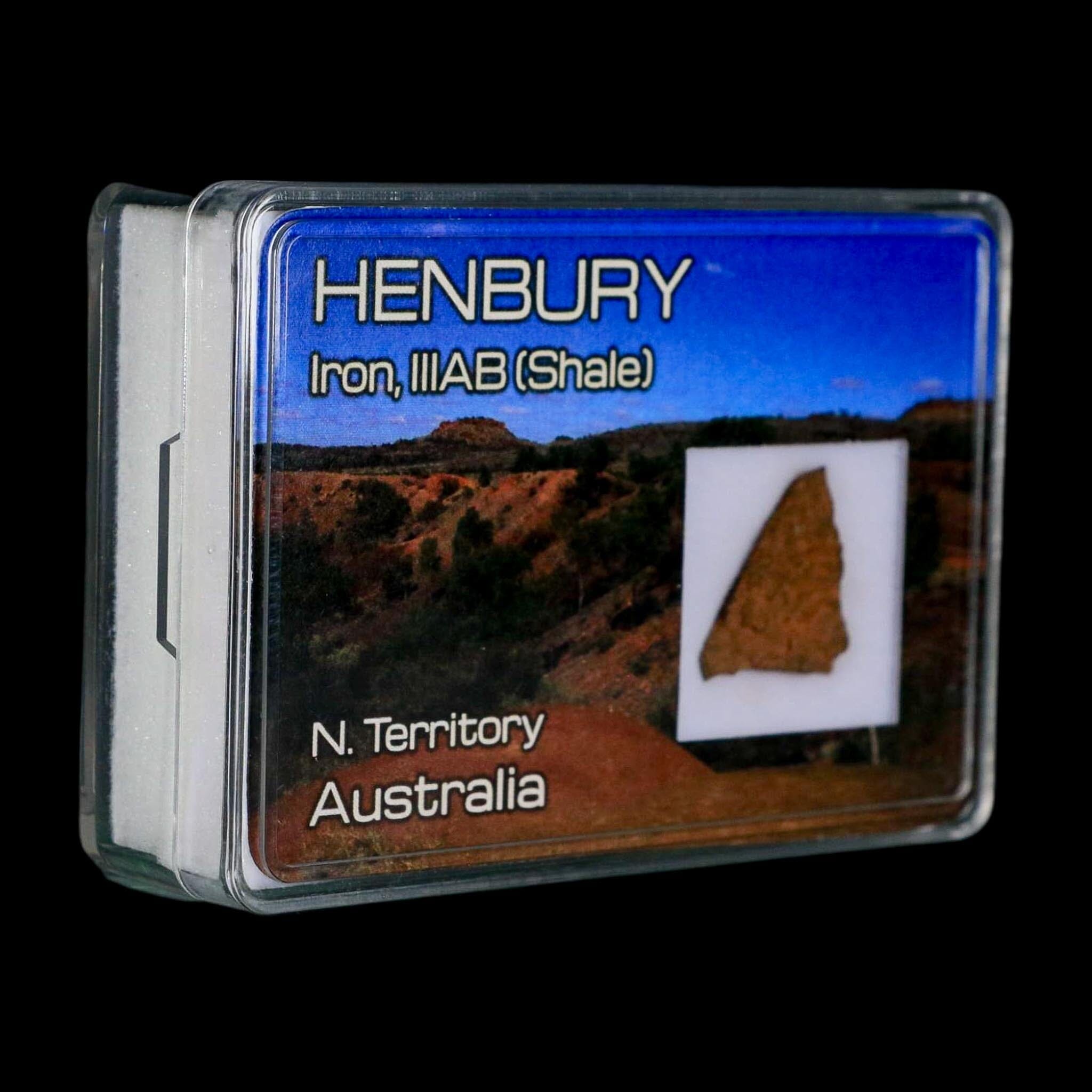
Dimensions: 3.3 Inches Long, 2.3 Inches Wide, 1 Inch Thick (Display)
Meteorite Dimensions: 0.7 Inch Long, 0.7 Inches Wide, 0.2 Inches Thick
Comes with a Display Case.
The item pictured is the one you will receive.
The Henbury meteorite impact site, in Australia's Northern Territory, about 145 kilometers southwest of Alice Springs, is one of the best-preserved small impact crater fields on Earth. It features 13 craters formed when a large nickel-iron bolide fragmented upon entering the atmosphere during the Holocene epoch. Scientific estimates, supported by carbon-14 dating of charcoal beneath the ejecta and cosmogenic nuclide dating, suggest the event occurred several thousand years ago. The craters range from just 6 meters in diameter to a combined structure roughly 180 meters long and 15 meters deep, created by the merging of three fragments.
The Henbury meteorites are classified as IIIAB medium octahedrites, composed mainly of about 90% iron and 8% nickel, with trace amounts of cobalt, phosphorus, and iridium. The meteoroid, estimated to weigh several hundred tonnes and traveling over 40,000 km/h, shattered into thousands of fragments upon impact. Over 2,000 kilograms of meteoritic material have been recovered, including small shrapnel pieces deformed by the explosion and larger, smoother fragments that survived passage through the atmosphere.
First brought to Western scientific attention in 1931 by R.A. Alderman of the South Australian Museum, the site was reported by local residents and Aboriginal traditions. The Arrernte people called it chindu chinna waru chilla, meaning "sun walk fire devil rock," indicating the impact may have been witnessed by indigenous groups. Today, the site is protected as the Henbury Meteorites Conservation Reserve. Its relatively young age makes it valuable for planetary science, allowing researchers to study impact processes and ejecta patterns not yet obscured by erosion.