


Description
Location: Kemmerer, Wyoming
Weight: 14.2 Ounces
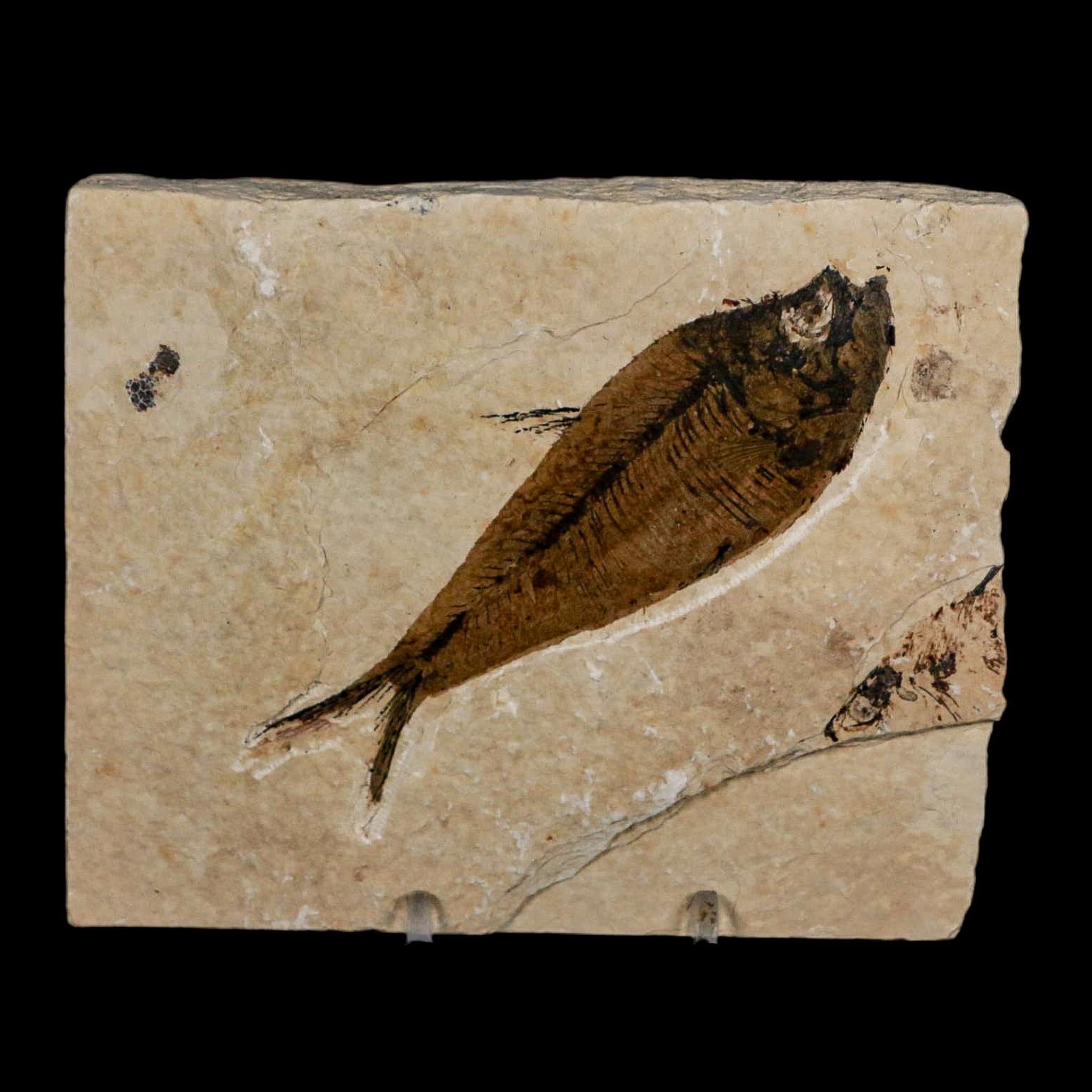
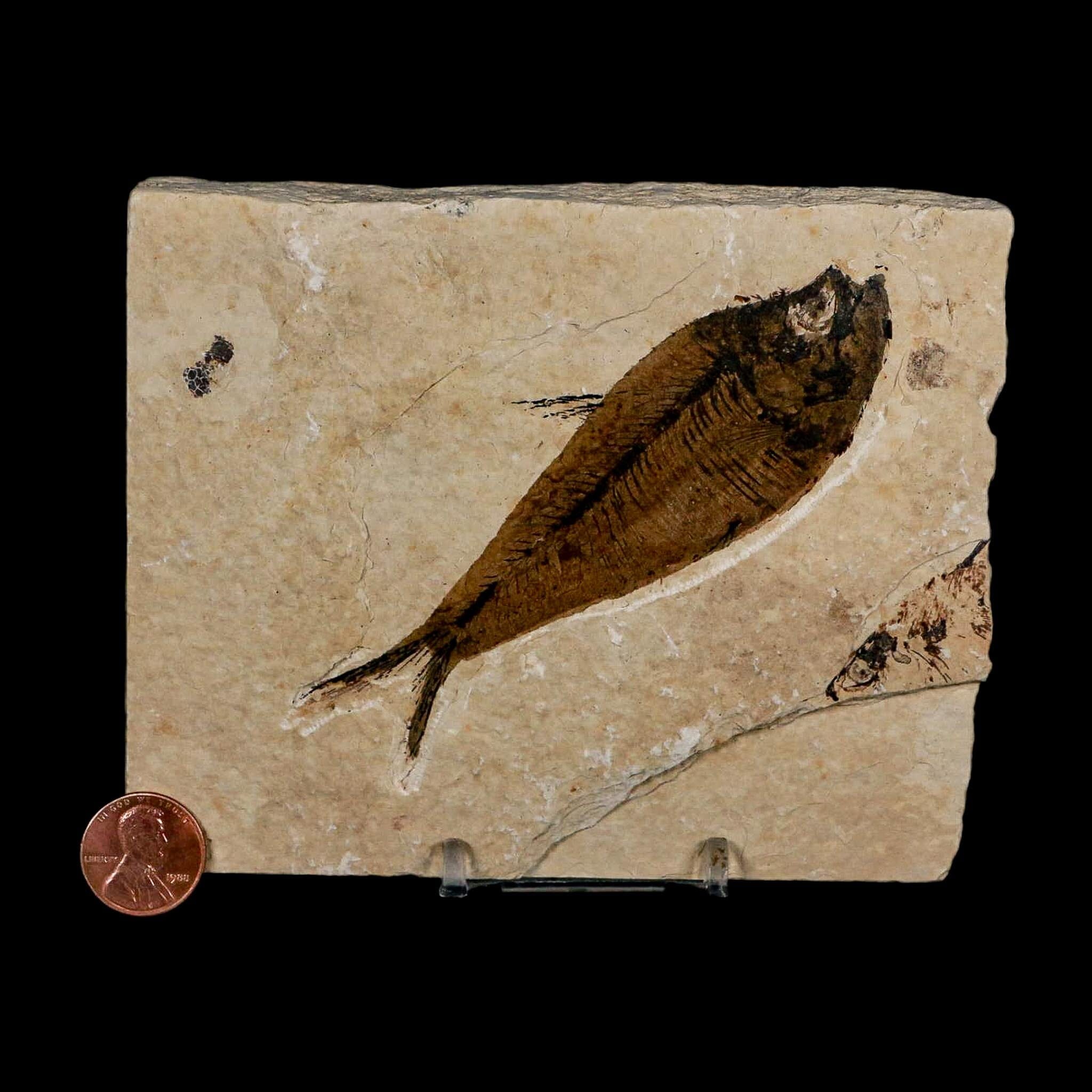
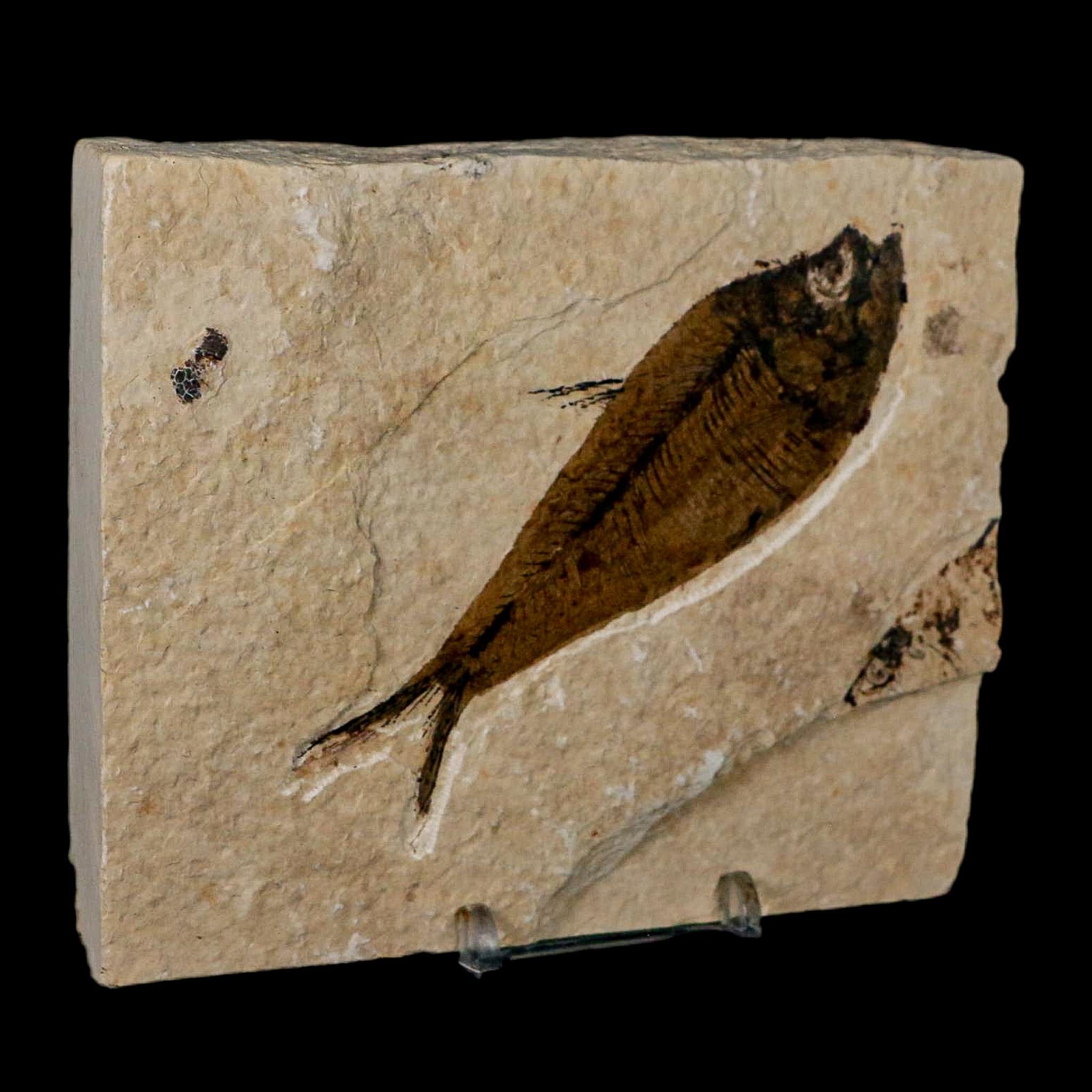
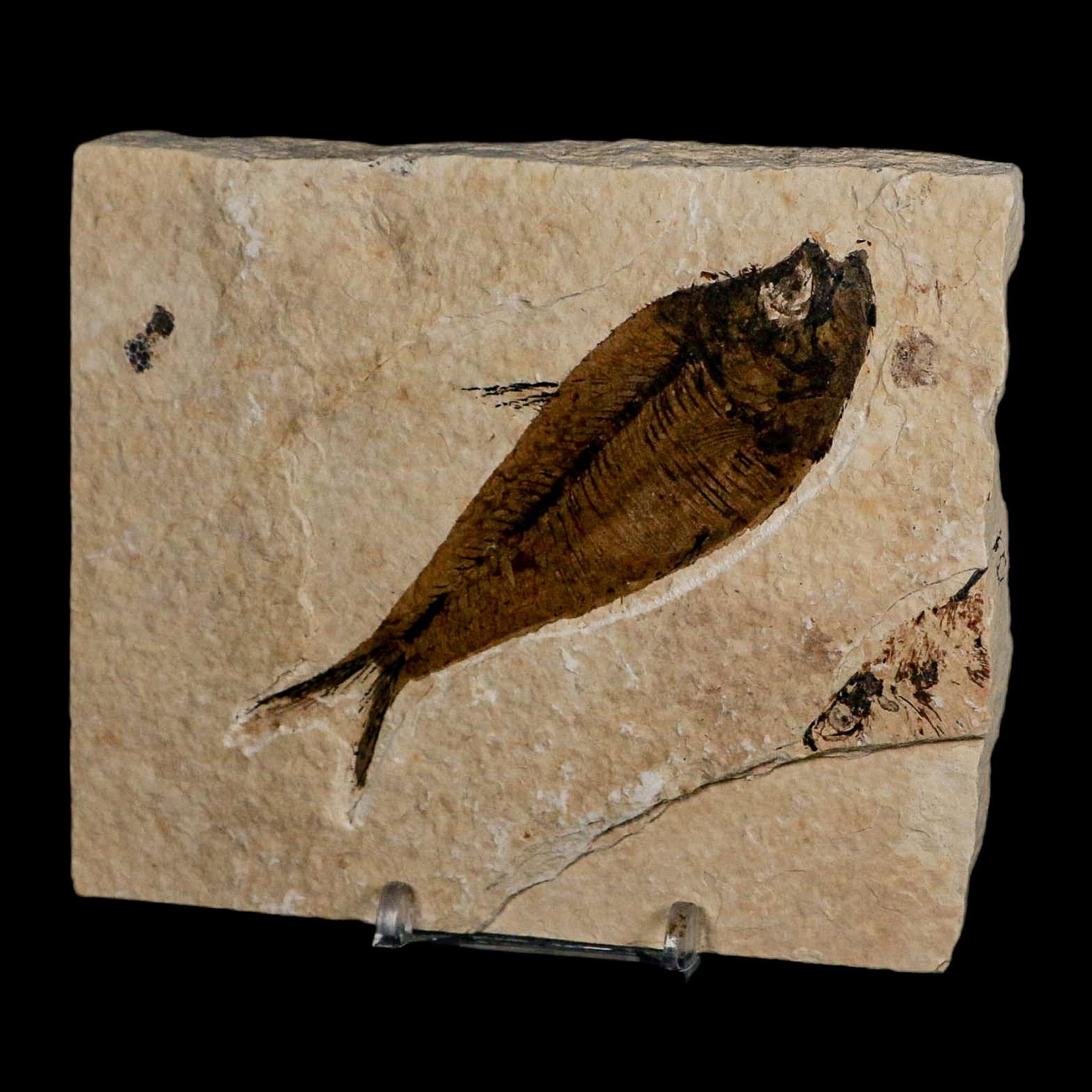
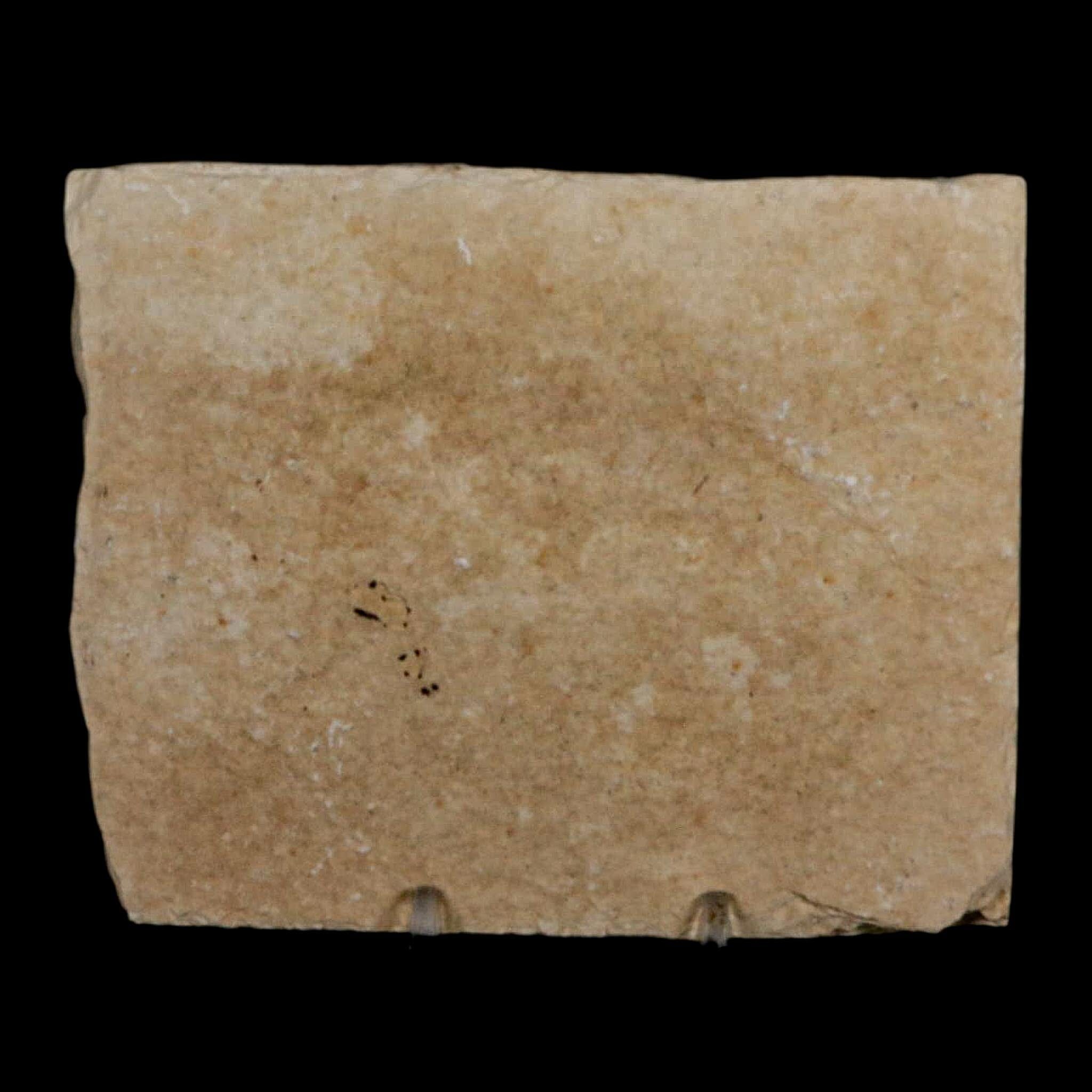
Dimensions: 7 Inches Long, 5.5 Inches Wide, 0.6 Inches Thick (Plate)
Fish Dimensions: 4.3 Inches Long, 1.5 Inches Wide
Comes with a Free Stand.
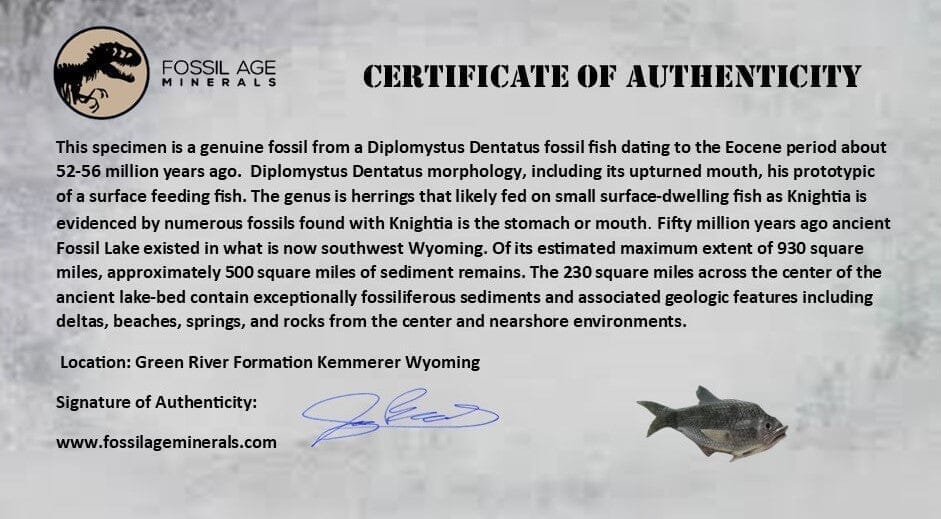
Comes with a Certificate of Authenticity.
The item pictured is the one you will receive.
56 million years old, Eocene age.
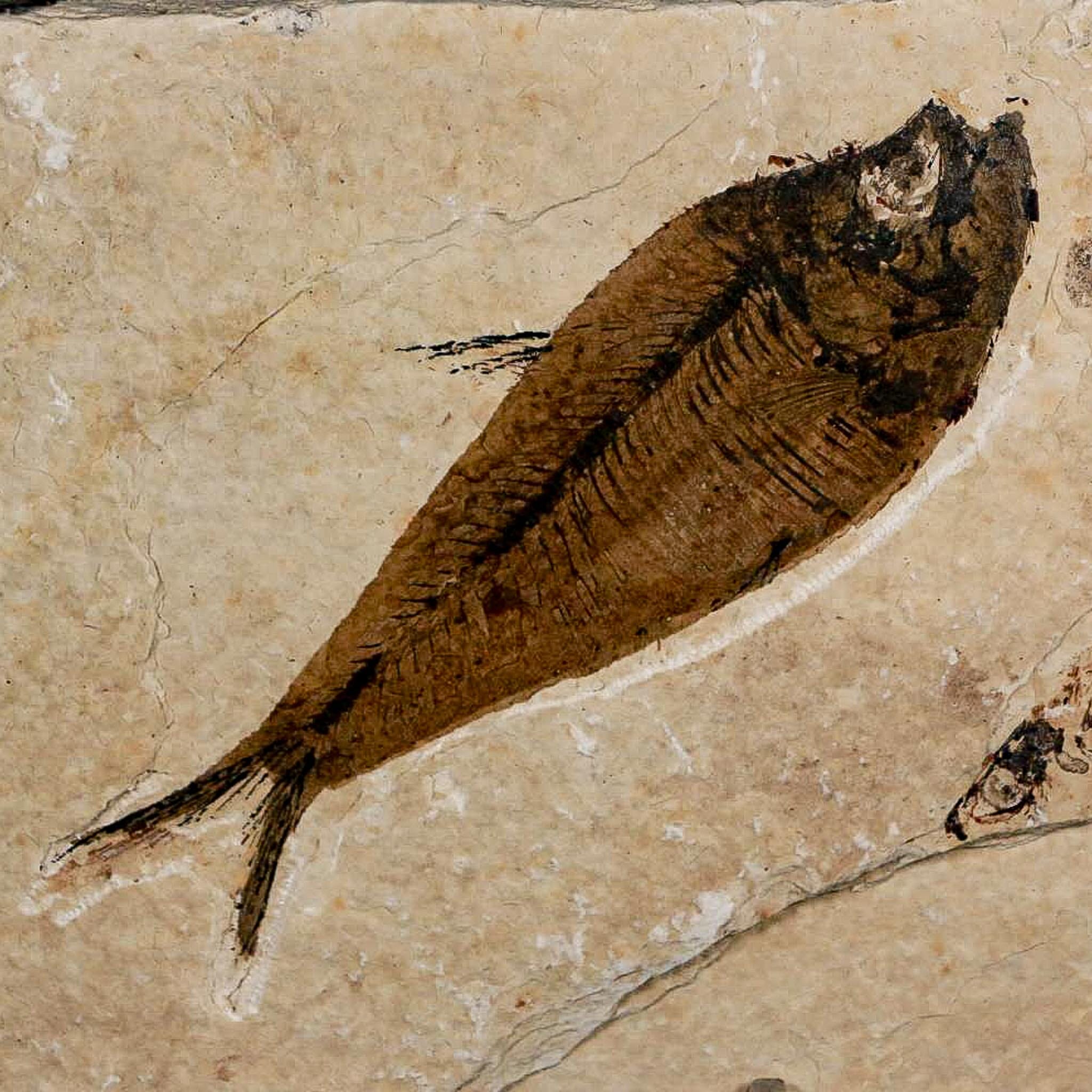
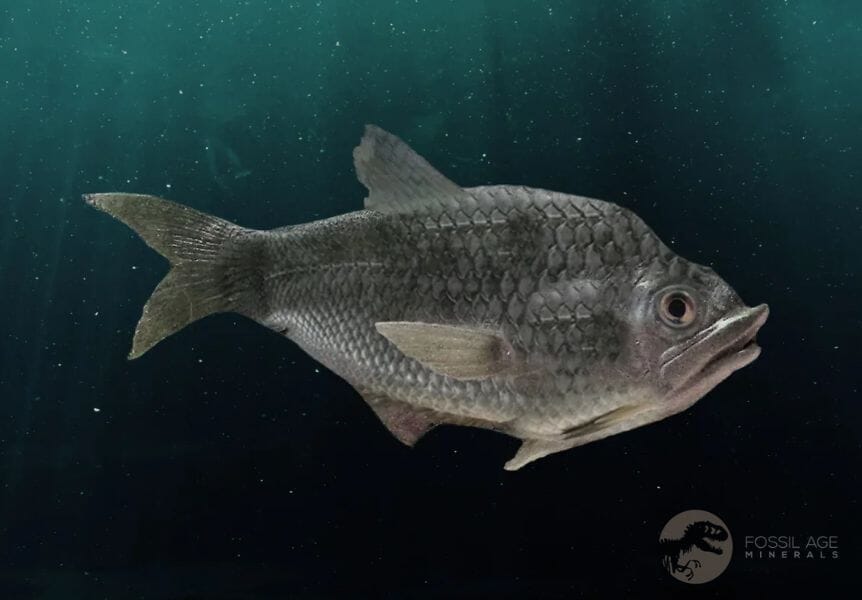
The fossil fish Diplomystus dentatus is characterized by an upward-facing mouth, a feature that clearly reflects its specialization for feeding at the water’s surface. This morphology suggests that Diplomystus targeted prey swimming near the top of the lake, much like modern surface-feeding fish species. Closely related to herrings, it is believed to have preyed primarily on small fish. This interpretation is strongly supported by fossil specimens that preserve Knightia within the body cavity, offering rare, direct evidence of predator-prey relationships in Fossil Lake.
Around 50 million years ago, Fossil Lake formed part of a large freshwater basin in what is now southwestern Wyoming. At its greatest size, the lake covered approximately 930 square miles, creating a vast aquatic habitat. Although erosion has reduced the exposed area of lake sediments, nearly 500 square miles of deposits are still preserved today. Of particular scientific importance are the central lake-bed sediments, totaling about 230 square miles, which are famous for their finely layered limestone and exceptional fossil preservation.
The lake’s unique chemical environment played a critical role in preserving organisms in extraordinary detail. Low oxygen levels and unusual water chemistry slowed decay and limited scavenger activity, allowing delicate remains to be rapidly buried in thin sediment layers. As a result, Fossil Lake contains the world’s largest concentration of fossil fish, along with a remarkably complete record of aquatic and nearshore life, providing a detailed snapshot of a Paleogene freshwater ecosystem.

Please be aware of the nature of fossils:
Being buried underground for millions of years under immense pressure is a tough process. Rarely does a fossil emerge intact and perfect. Most fossils require some restoration, and some are modified by humans to improve their appearance. These features are part of the fossil's natural charm and should not be seen as flaws.