


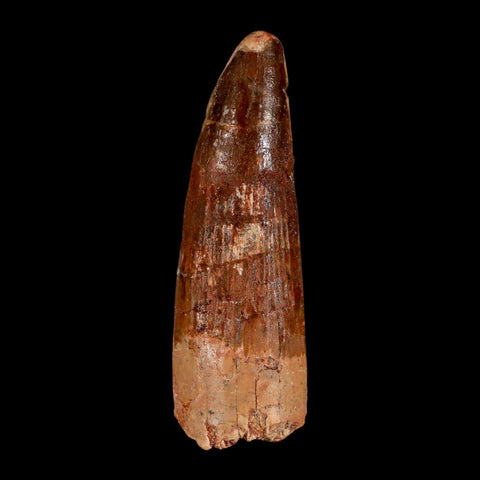
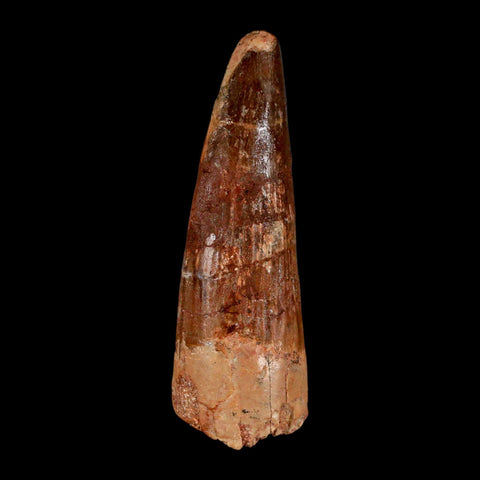
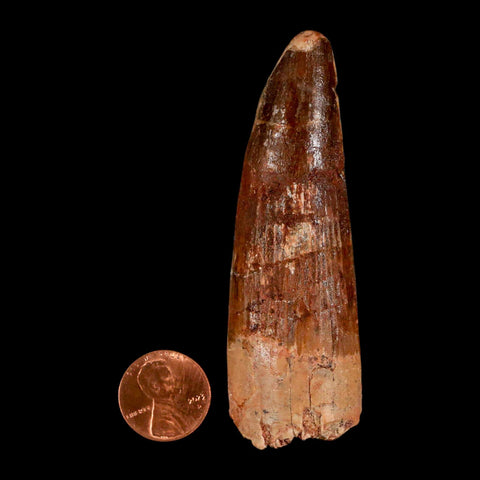
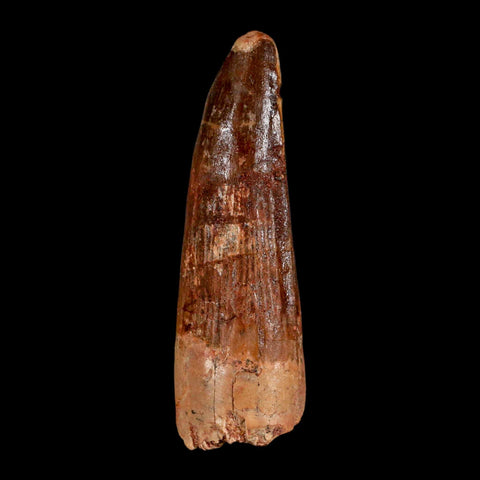
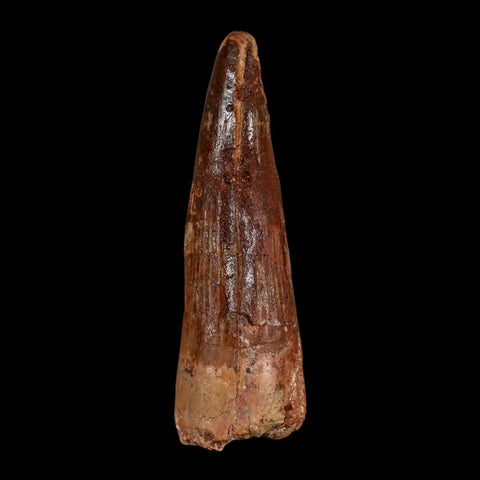
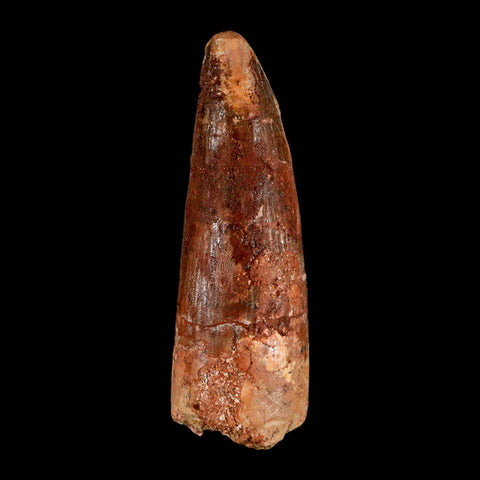

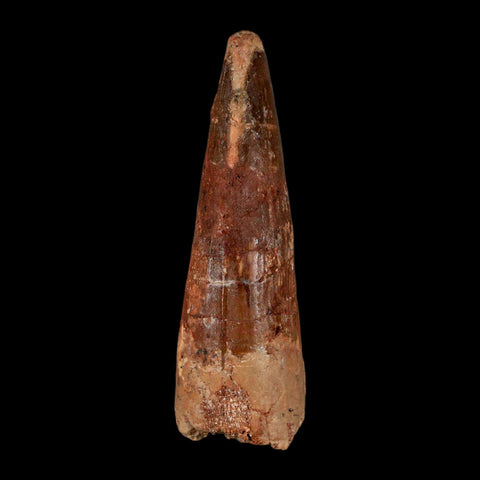
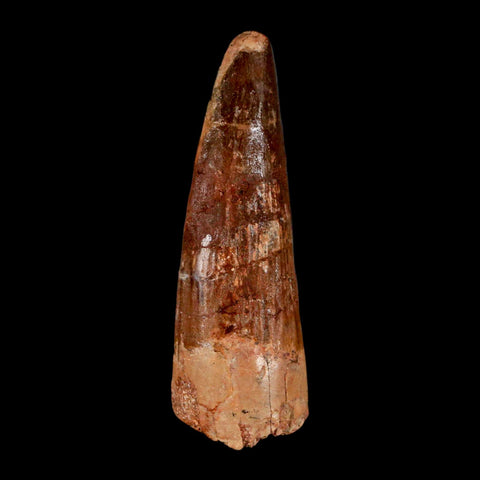
XL 3.3" Spinosaurus Fossil Tooth 100 Million Years Old Cretaceous Dinosaur COA
Location: Oued Zem, Morocco
Weight: 1.9 Ounces
Dimensions: 3.3 Inches Long, 1.1 Inches Wide
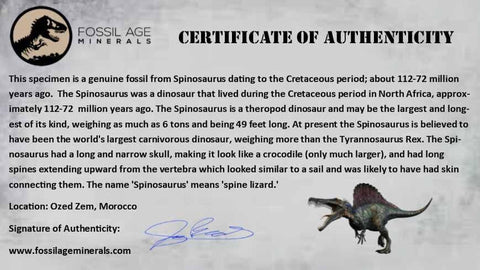
Comes with a Certificate of Authenticity.
The item pictured is the one you will receive.
Name: Spinosaurus (Spine lizard).
Named By: Ernst Stromer - 1915.
Diet: Piscivore/Carnivore.
Size: Estimated between 12.6 and 18 meters long.
Known locations: North Africa, particularly Egypt - Bahariya Formation, and Morocco - Kem Kem Beds.
Time period: Albian to Cenomanian of the Cretaceous.
Fossil representation: To date, at least six partial specimens of the skull, mandible, neural spines, and other fragmentary postcranial remains. Teeth, however, are considerably more common.
Spinosaurus is one of the most extraordinary carnivorous dinosaurs known from the Cretaceous period, living in North Africa around 100 million years ago. Classified as a massive theropod, it is widely considered the largest meat-eating dinosaur ever discovered, with estimates placing its length at up to 49 feet and its weight approaching 6 tons, exceeding the size of Tyrannosaurus rex.
This giant predator is instantly recognizable by its long, slender skull, which closely resembles that of a crocodile and distinguishes it from other large theropods. Along its back rose a series of tall vertebral spines that formed a prominent sail-like structure, likely covered in skin. This sail may have played a role in display, communication, or environmental adaptation, contributing to Spinosaurus’ unique silhouette.
The name Spinosaurus, meaning “spine lizard,” directly references this remarkable dorsal sail. Combining immense size with highly specialized anatomical features, Spinosaurus represents a unique evolutionary path among predatory dinosaurs. Its unusual adaptations and dominance within Cretaceous ecosystems have made it one of the most iconic and fascinating prehistoric predators known to science.

Please be aware of the nature of fossils:
Being buried under the ground for millions of years under tons of pressure tends to be rough. No fossil comes out of the ground whole and perfect. Most fossils have undergone some restoration, while others are altered by man simply to enhance their presentation in different ways. The workers in Morocco do a very professional job of unearthing and preserving these natural treasures; however, natural cracks are commonly visible on the surface. These are part of the natural beauty of the fossil and are not considered defects.


